Travel guides
Plan a better Morocco trip.
Honest, practical guides from a Marrakech atelier — the questions every traveller asks, answered with real numbers and local knowledge.
57 guides available
Itineraries
Itineraries guides
Day-by-day routes our concierge builds, from first-timers to slow travellers.
 Itineraries
Itineraries · One week
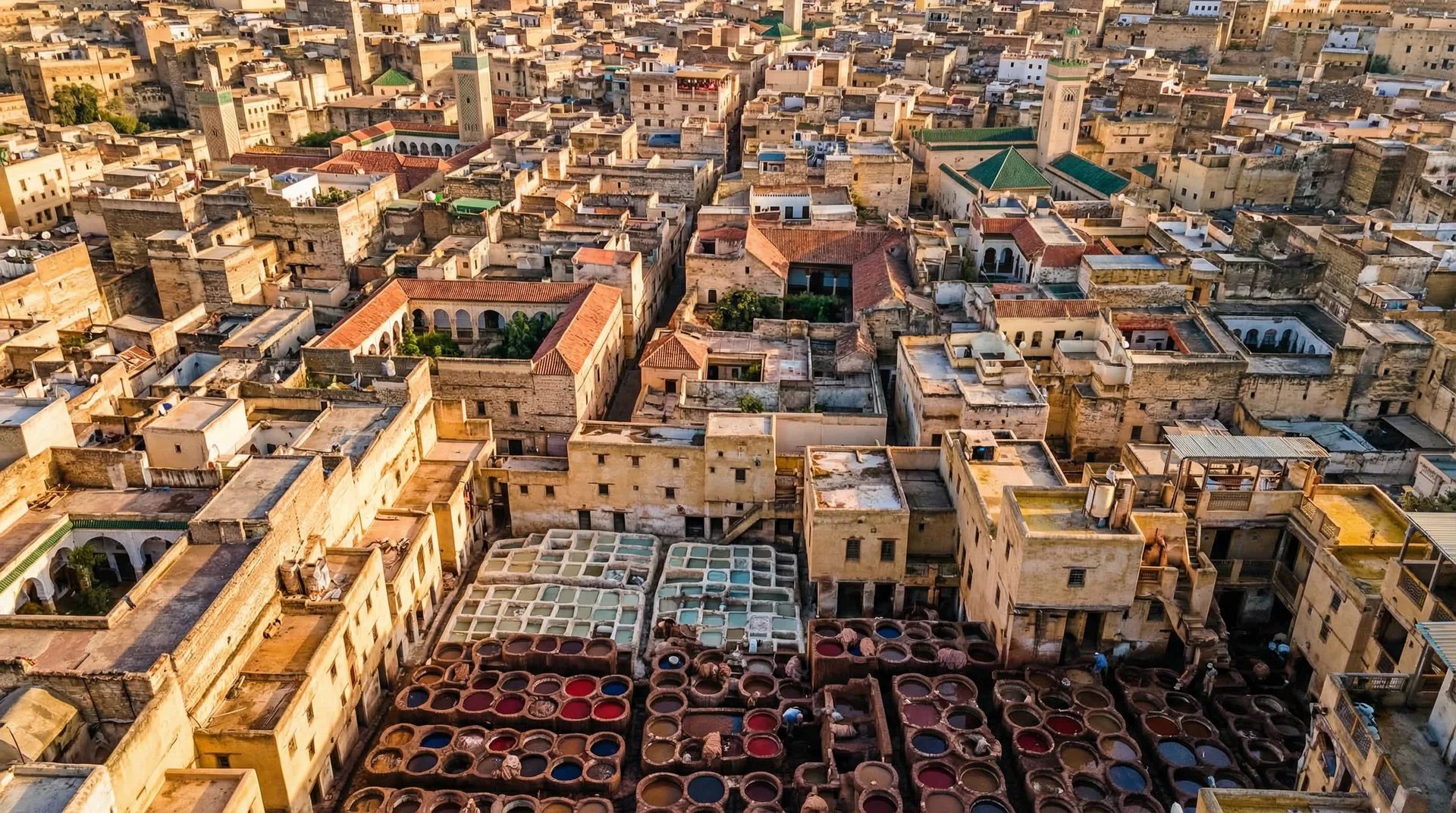
Fes & Northern Morocco Itinerary: 7 Days
A week based in Fes is enough to go deep on the imperial north — the medina, the imperial-city loop and the blue city — or to pair Fes with a Sahara crossing. Here are two proven 7-day itineraries from Fes, and how to choose between them.
 Itineraries
Itineraries · Ten days
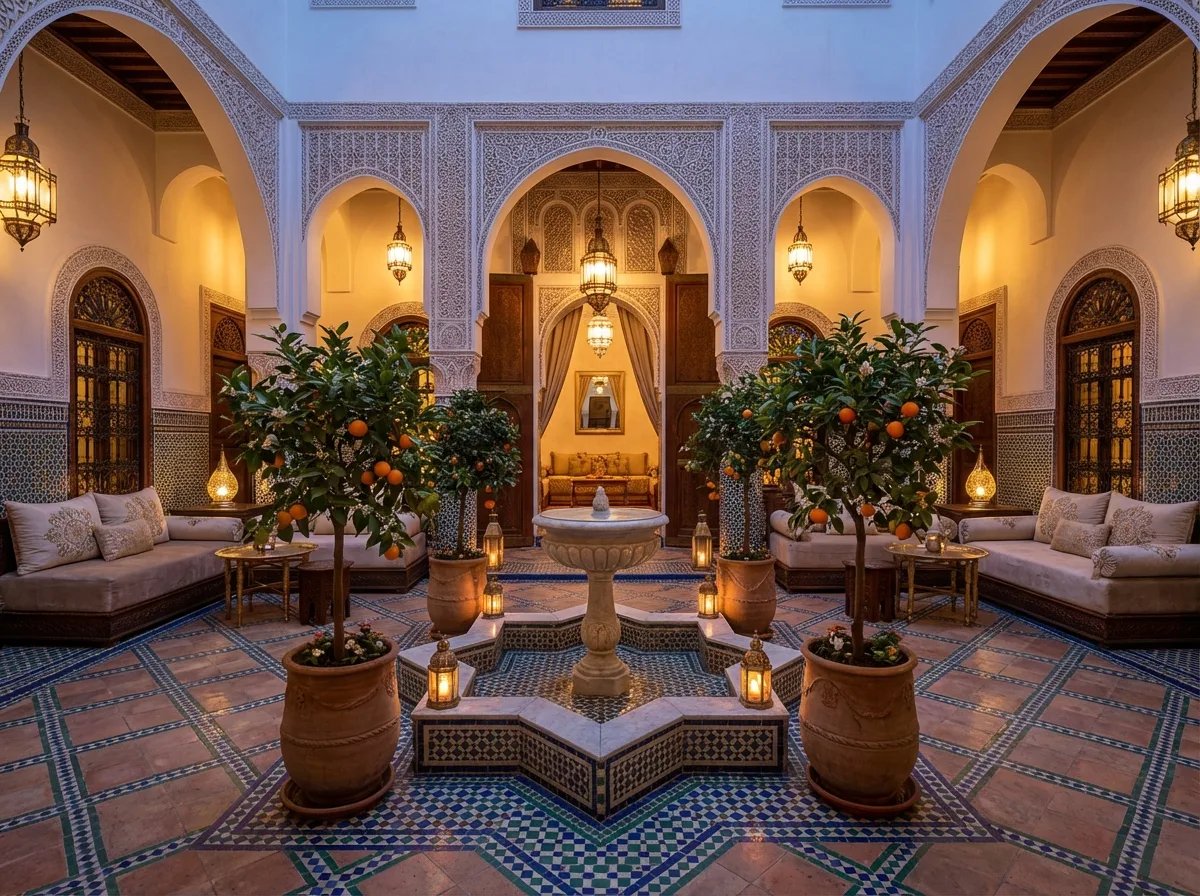
Fes & Morocco Itinerary: 10 Days
Ten days is the sweet spot — long enough to root yourself in Fes and the imperial north, drop south to the Sahara, and finish in Marrakech in one unhurried loop, with Chefchaouen or the coast as an optional add-on.
 Itineraries
Itineraries · Two weeks
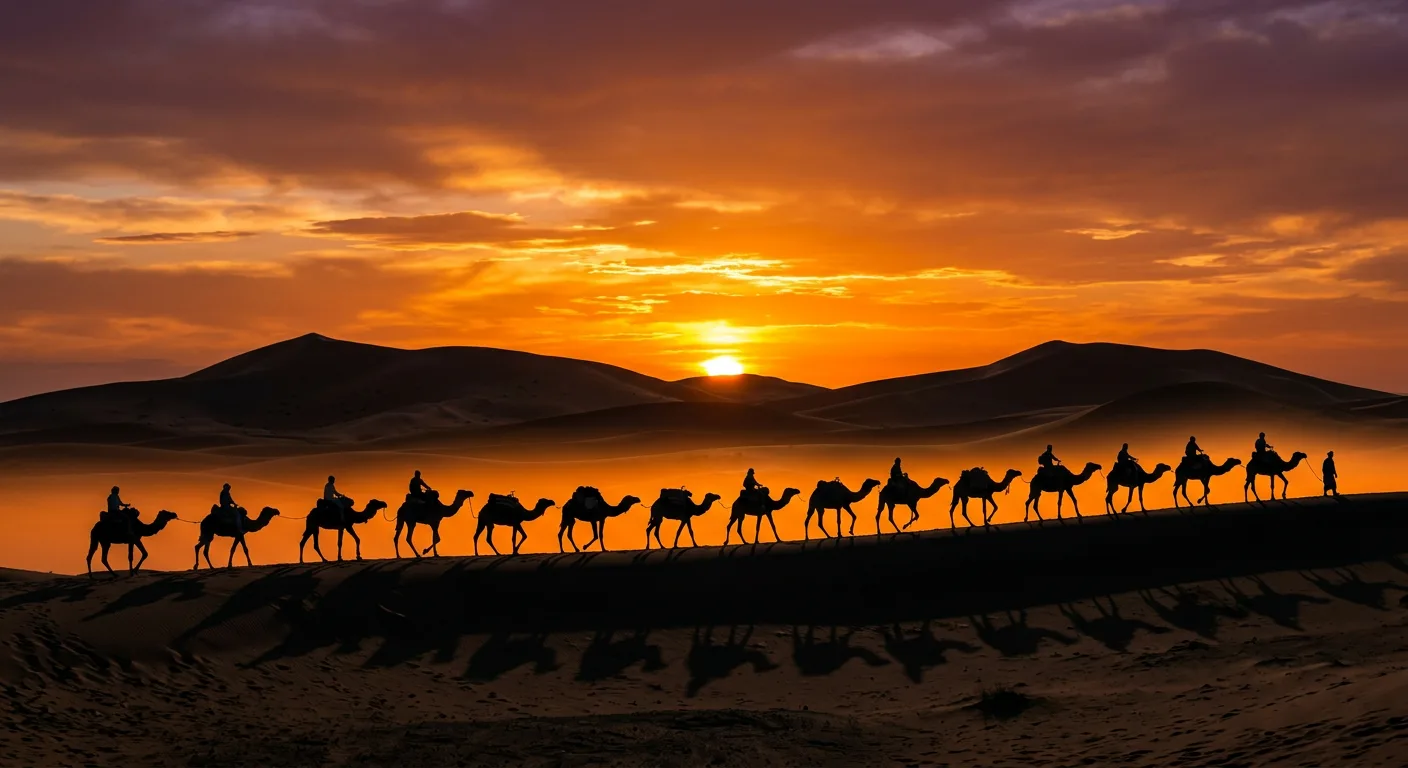
Morocco Itinerary: 14 Days — The Grand Two-Week Route
Two weeks is enough to cover Morocco's full sweep, starting in Fes: the imperial cities of the north, Chefchaouen, the Middle Atlas, the kasbah road, a night in the Sahara and the High Atlas down to Marrakech — all at a genuinely unhurried pace.
 Itineraries
Itineraries · Family
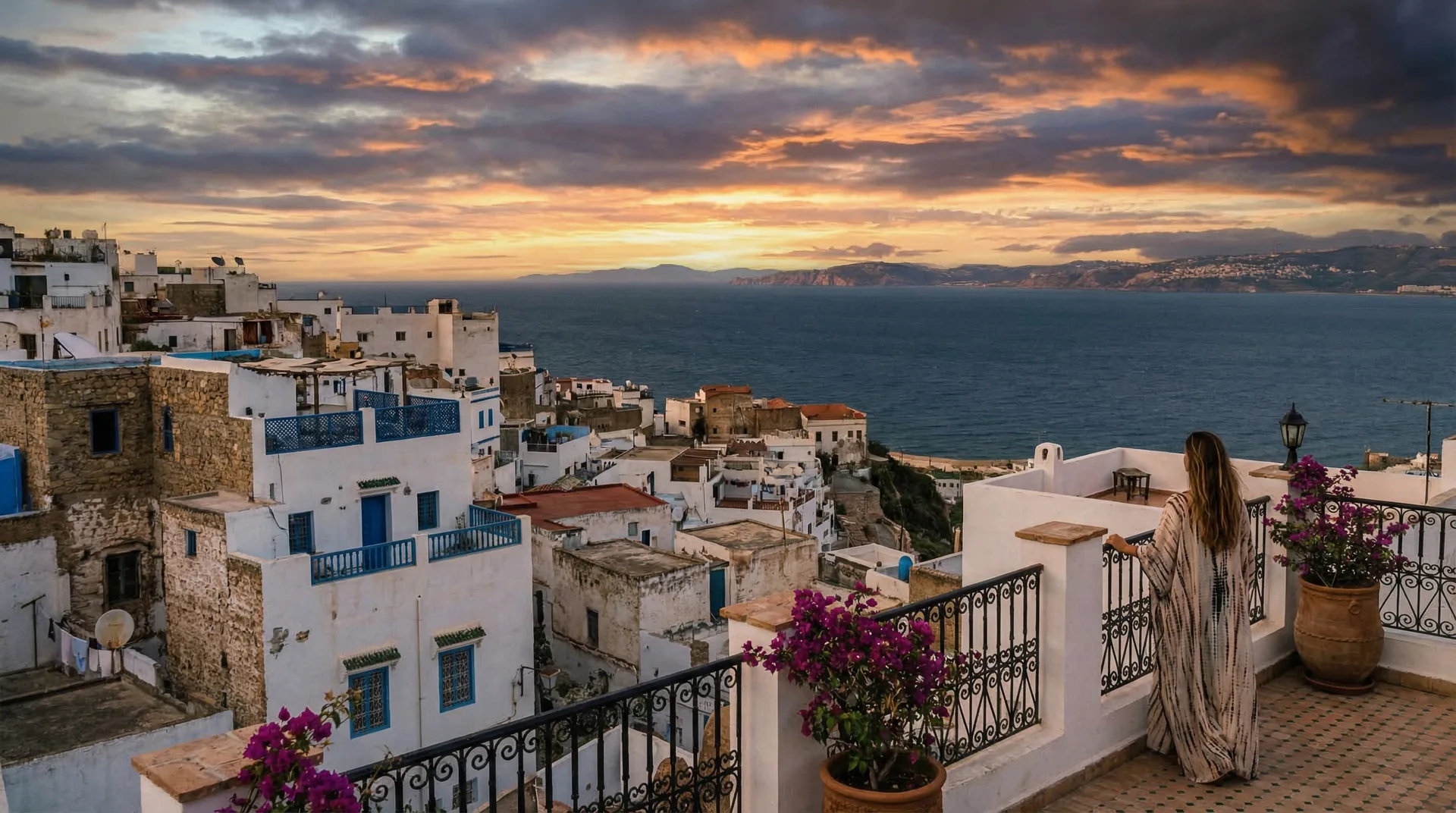
Fes & Morocco Family Itinerary: 10 Days with Children
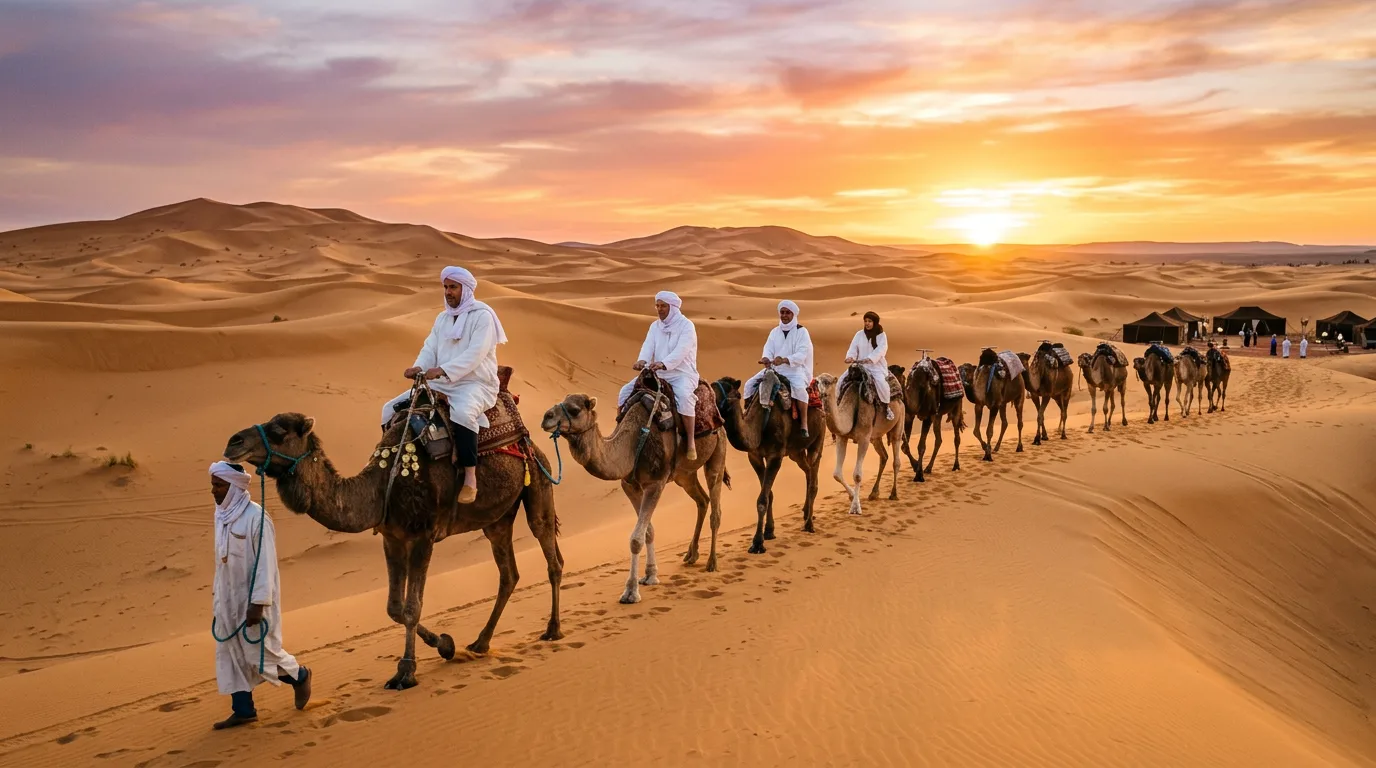
A 10-day family itinerary starting in Fes — the imperial-city medina and artisans, the Middle Atlas, the Sahara and on to Marrakech — designed around children's energy and the practical realities of family travel: riads with courtyards or pools, manageable drives and the camel ride that every child remembers.
ItinerariesItineraries · Trip length
How Many Days Do You Need in Morocco?
The ideal Morocco trip is 7–14 days. Five days is a workable minimum for Fes and one excursion; ten days is the sweet spot that lets you root yourself in Fes and the imperial cities, drop south to the Sahara, and finish in Marrakech without rushing.
 Itineraries
Itineraries · Road trip
Morocco Road Trip Guide: Routes, Tips & What to Expect
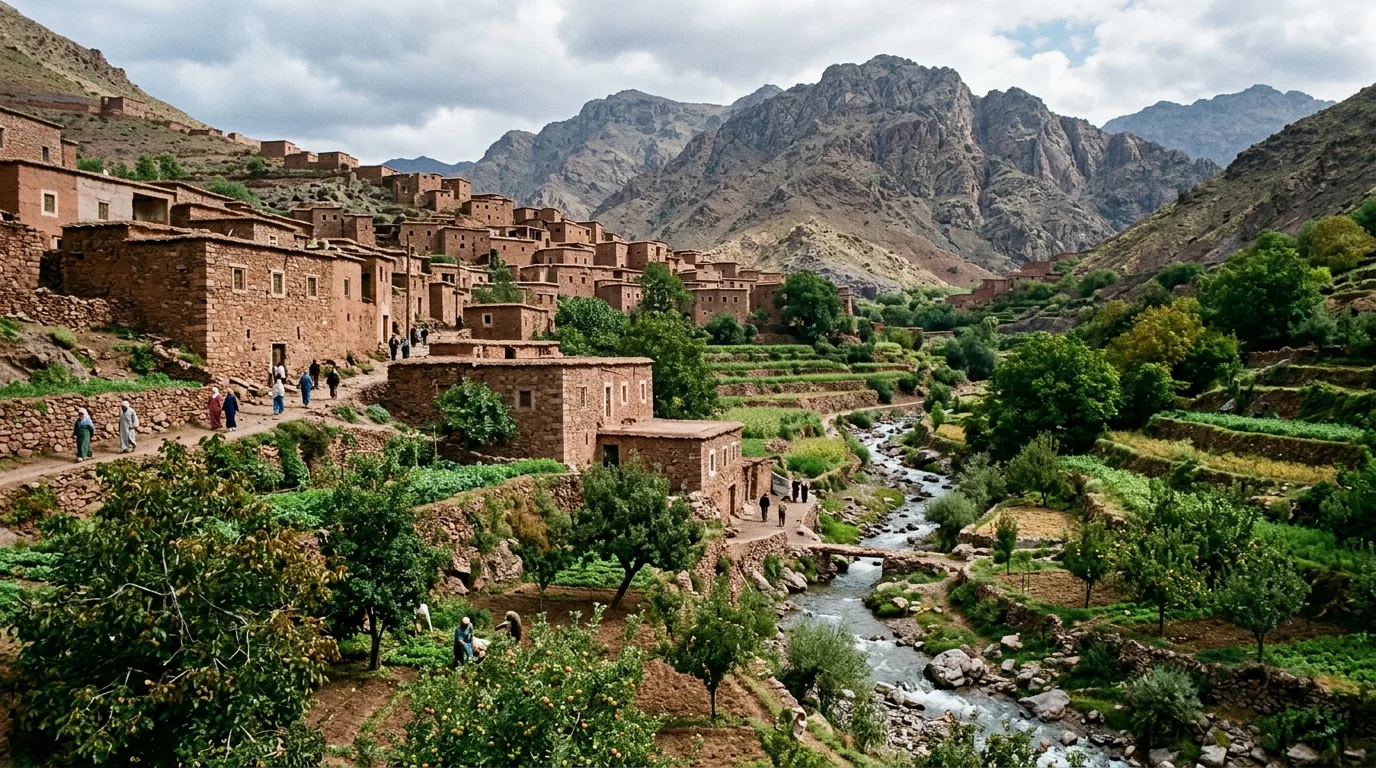
A Morocco road trip is one of the great drives of the world, and Fes makes a superb starting point — the imperial-city loop to Meknes and Volubilis, the Middle Atlas cedar forests and Ziz Valley down to the Sahara, and the Rif road north to Chefchaouen all radiate from the city. Here is how to plan it, what the roads are really like and which routes reward a self-driver.
ItinerariesItineraries · Desert tour
Morocco Desert Tour from Marrakech: The Complete Route Guide
The desert tour from Marrakech — over the Tizi n'Tichka pass, through the kasbahs and gorges, and out to the Sahara at Merzouga — is one of the world's great overland journeys. If you are based in Fes, the same dunes are reached by a shorter, different route through Ifrane and the Ziz Valley, and many travellers drive down from Fes and out via Marrakech to combine both. This guide covers every stage, with real timings and practical advice.
Planning
Planning guides
When to come, what it costs and how to shape the trip before you fly.
 Planning
Planning · When to go
The Best Time to Visit Morocco
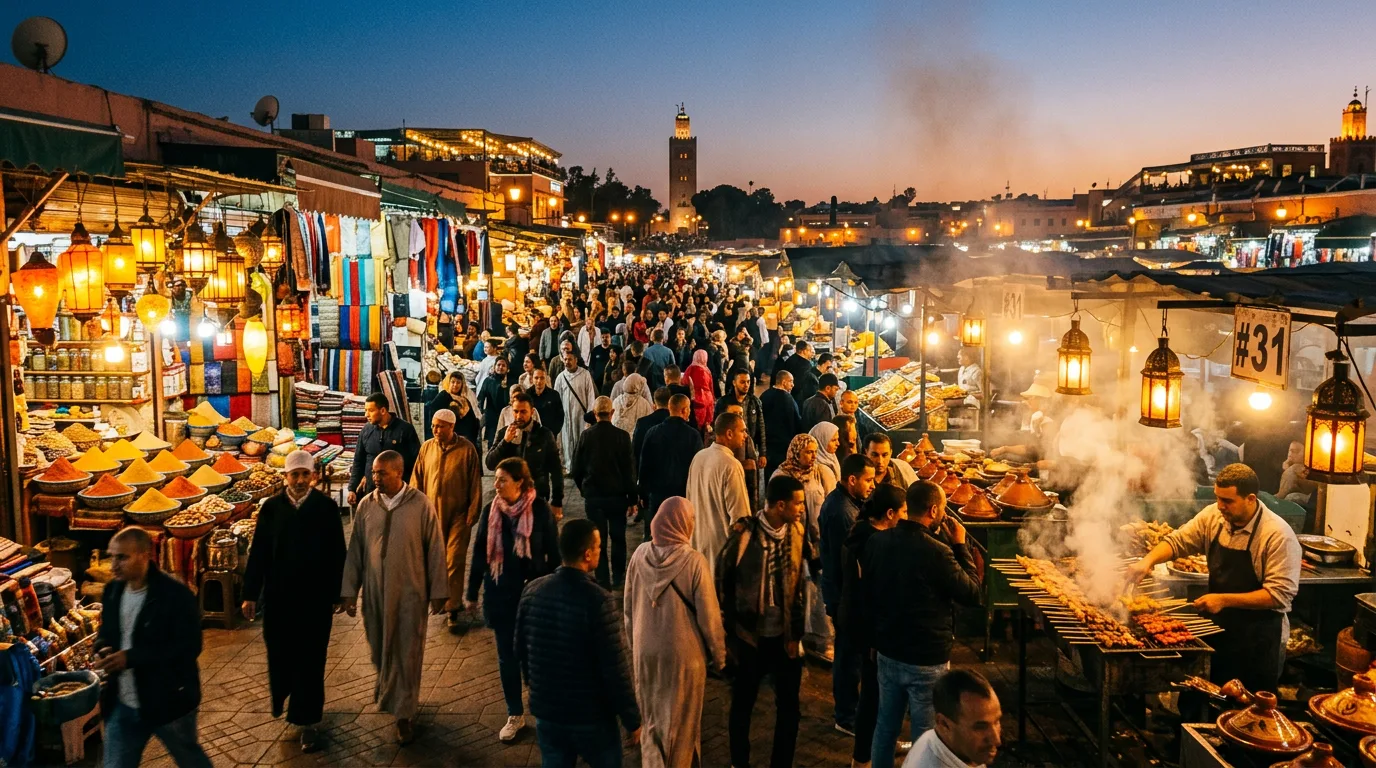
Spring (March–May) and autumn (September–November) are the best all-round times to visit Morocco and to base yourself in Fes — warm days, cool evenings and comfortable conditions for long hours on foot in the Fes el-Bali medina, plus easy day trips to Volubilis, Meknes and the Middle Atlas.
 Planning
Planning · Safety
Is Morocco Safe to Visit?
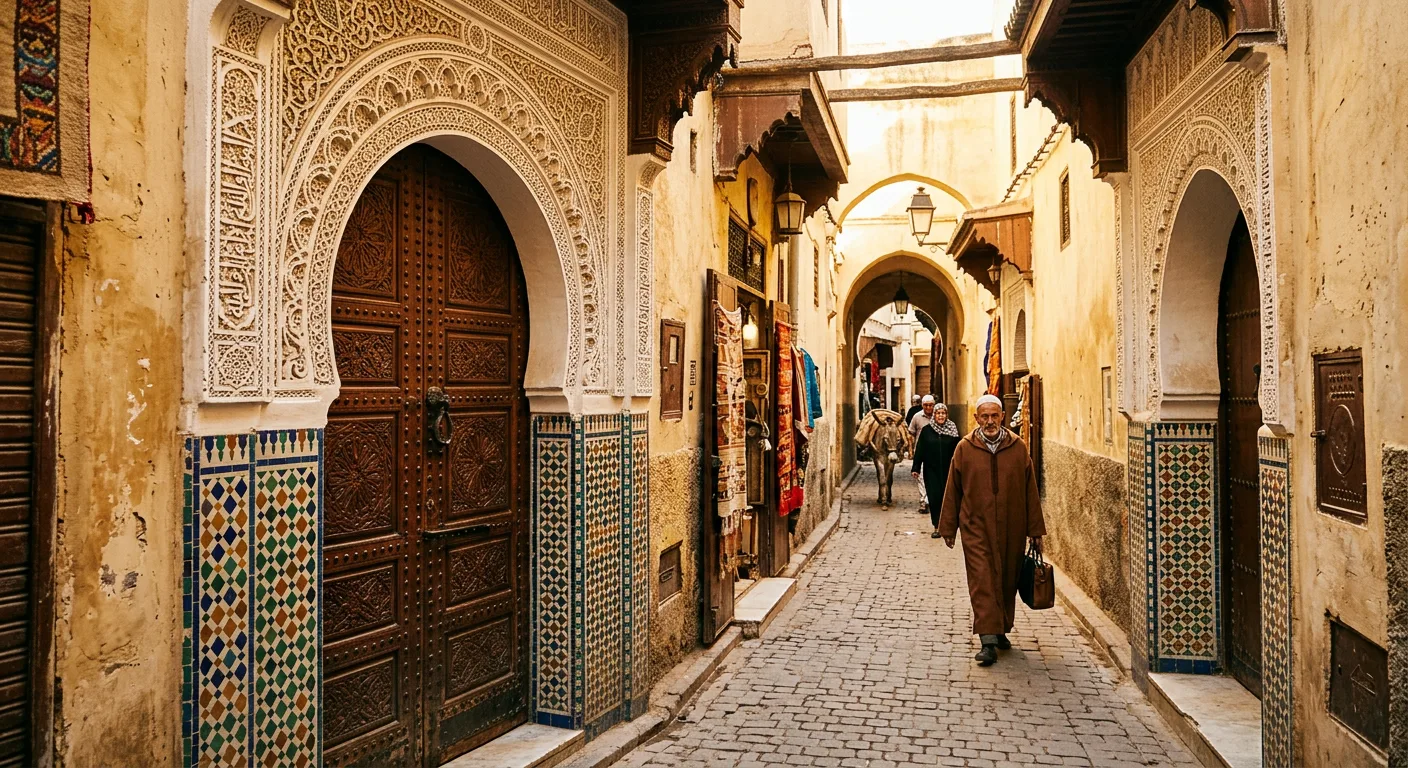
Yes — Morocco is one of the safest and most welcoming countries in North Africa for travellers, and Fes is a deeply traditional city used to visitors. The main day-to-day issues are petty scams and the hustle of getting lost in the vast Fes el-Bali medina, both easily managed.
 Planning
Planning · Visa & entry
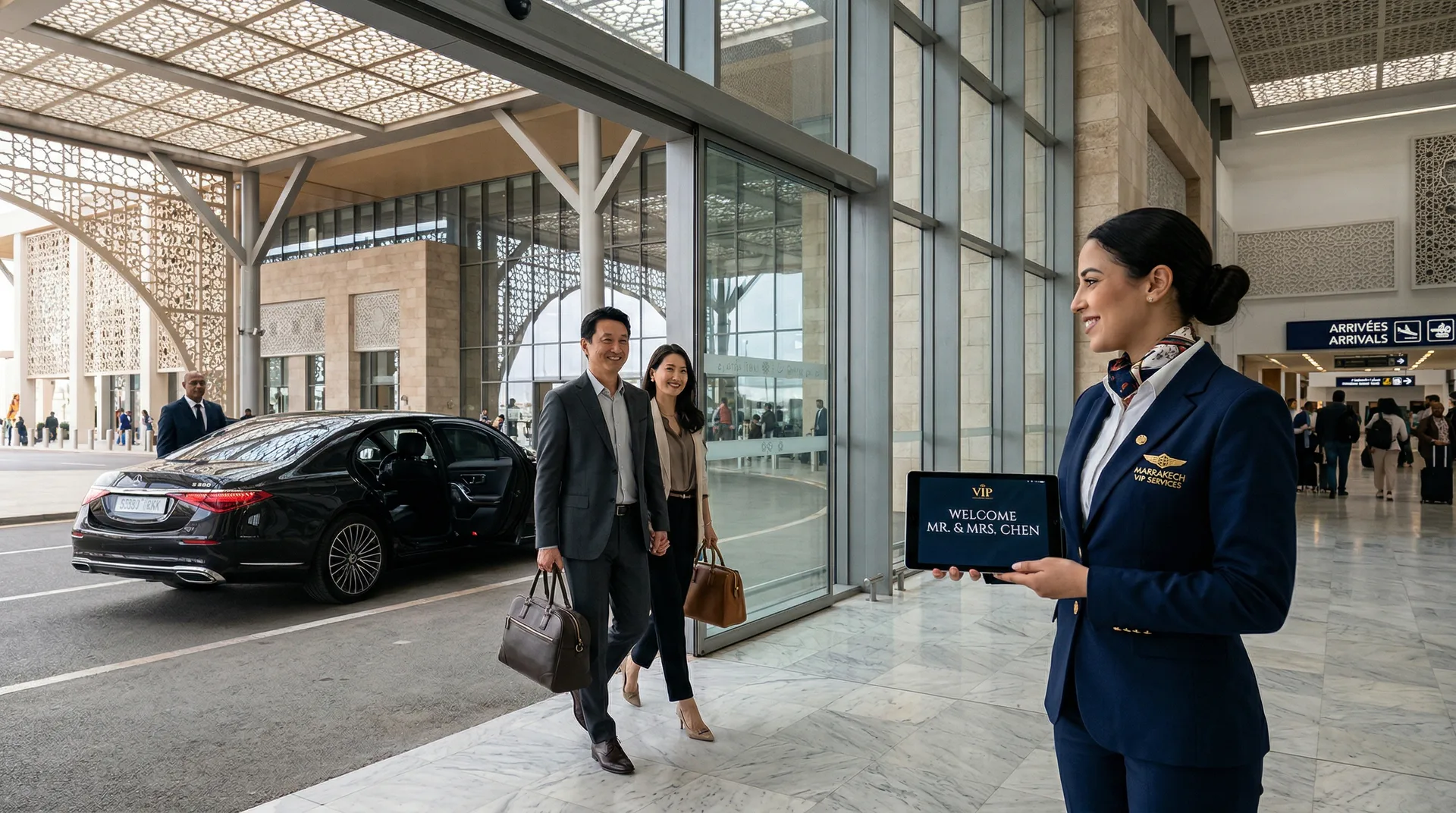
Morocco Visa & Entry Requirements
Most travellers — including US, Canadian, UK, EU/Schengen, Australian, New Zealand and Japanese passport holders — enter Morocco visa-free for up to 90 days, whether they land at Fès–Saïss or arrive overland. You need a passport valid for at least six months beyond arrival.
PlanningPlanning · Money
Morocco Travel Costs & Budget
Fes can be done on almost any budget. Mid-range travellers spend roughly US$80–150 per person per day; private, riad-based trips with a local guide and driver typically run US$200–400+ per day depending on season and style.
 Planning
Planning · Ramadan
Travelling in Morocco During Ramadan
Ramadan transforms the rhythm of Fes in ways that can be unexpectedly wonderful — and in such a spiritual, scholarly city the holy month is felt deeply. Expect late-night medina lanes, spectacular breaking-fast meals and a powerful sense of community. The key is knowing what changes and planning around it.
PlanningPlanning · Solo & Women
Morocco for Women Travellers
Fes welcomes large numbers of women travelling solo and in small groups every year. The city is safe, but street attention in the medina is real — knowing what to expect and how to handle it makes the difference between a frustrating and a thoroughly rewarding trip.
PlanningPlanning · Family travel
Morocco with Kids: A Family Travel Guide
Fes and the imperial cities work well with children — riads have private courtyards, the tanneries and artisan workshops fascinate, the desert is within reach, and Moroccan culture is genuinely warm towards families. Pacing and planning are everything.
PlanningPlanning · Honeymoon
Morocco Honeymoon Guide
Fes is one of the world's most atmospheric honeymoon bases: restored palace-riads hidden in the medina, candlelit rooftop dinners above the old city, traditional hammams, and the romance of getting happily lost in a thousand-year-old labyrinth. Here is how to plan an unforgettable romantic trip with Fes at its heart.
PlanningPlanning · Sahara
Sahara Desert Tour Guide: Merzouga, Chigaga & Zagora
From Fes, the Sahara is a deeply rewarding extension, and Erg Chebbi at Merzouga is the natural choice — the drive south through Ifrane and the Ziz Valley leads to the grandest dunes in Morocco. Here is how Merzouga compares to Chigaga and Zagora, what the camps are like, and when to go.
 Planning
Planning · Trekking
Trekking the Atlas Mountains: Toubkal, Imlil & Beyond
The High Atlas rises to 4,167 metres at Jbel Toubkal, North Africa's highest peak. It pairs naturally with a Fes-and-imperial-cities trip as a southern add-on around Marrakech. Whether you want a single-day walk from Imlil, a multi-day village traverse or a summit attempt, the Atlas rewards it — with the right season, guide and preparation.
 Planning
Planning · Surf
Surfing in Morocco: Taghazout, Agadir & Imsouane
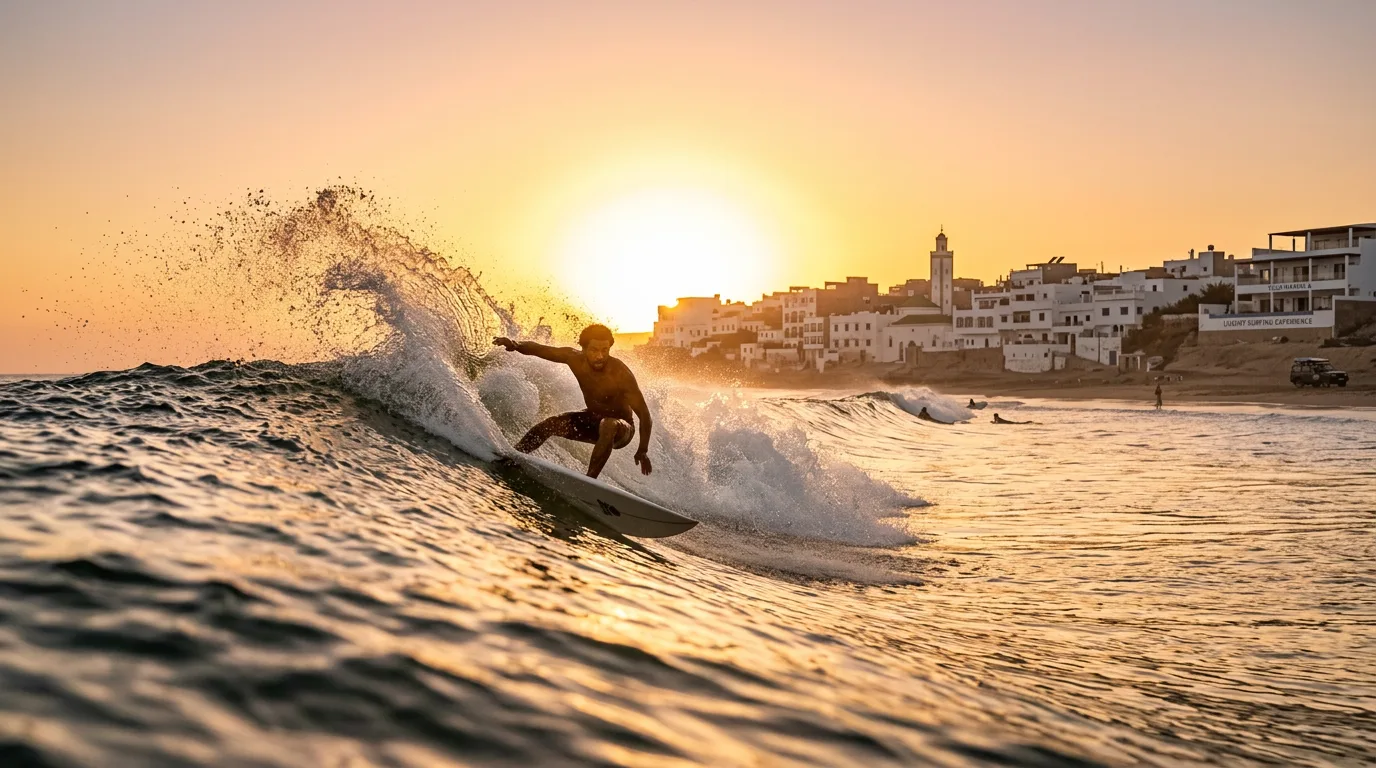
Morocco's Atlantic coast offers consistent surf from September to April — a popular coastal counterpoint to the inland culture of Fes and the imperial cities. The scene centres on Taghazout, with long right-hand points at Imsouane and beginner-friendly beaches in Agadir.
PlanningPlanning · Marrakech
Things to Do in Marrakech: The Essential Guide
Marrakech is the natural southern companion to a Fes trip — a louder, more theatrical imperial city with world-class gardens, hammam rituals, rooftop dinners and a square that transforms nightly into one of the world's great open-air spectacles. If your Fes itinerary ends in the Red City, here is where to spend your time.
PlanningPlanning · Fes
Things to Do in Fes: The Essential Guide
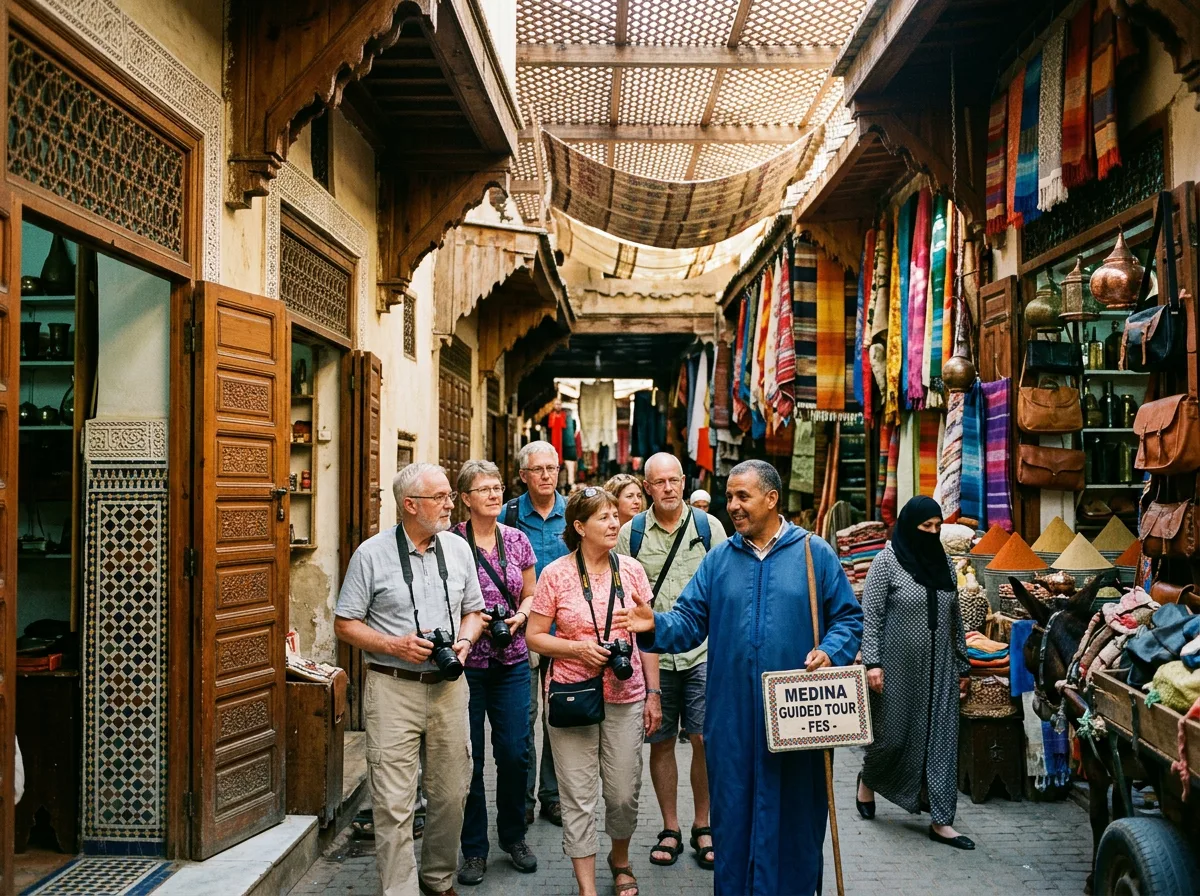
Fes el-Bali is the world's largest inhabited medieval city — a UNESCO World Heritage medina of 9,400 lanes, 14th-century madrasas, the planet's oldest university and the Chouara tanneries. It demands a good guide, unhurried time and genuine curiosity.
 Planning
Planning · Chefchaouen
Things to Do in Chefchaouen: The Essential Guide
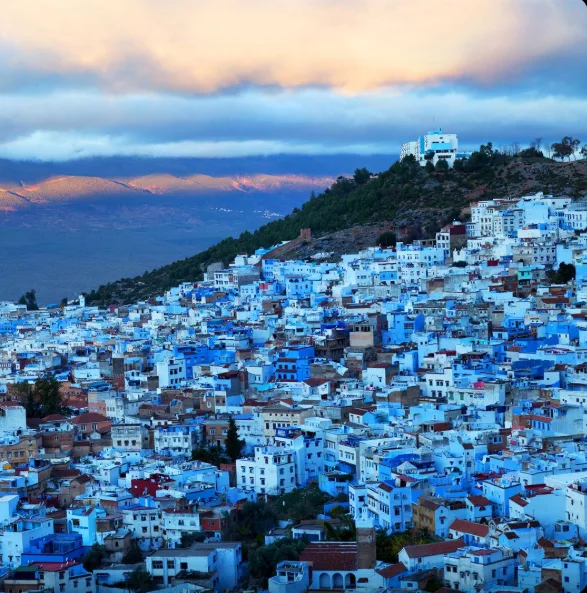
Chefchaouen — Morocco's famous blue city tucked into the Rif Mountains — is the classic two-night escape from Fes, around 3.5–4 hours north through mountain scenery. Its medina is small, walkable and genuinely beautiful; its mountains reward hikers; its food is distinctively Rifian; and its pace is the slowest in the country.
 Planning
Planning · Essaouira
Things to Do in Essaouira: The Essential Guide
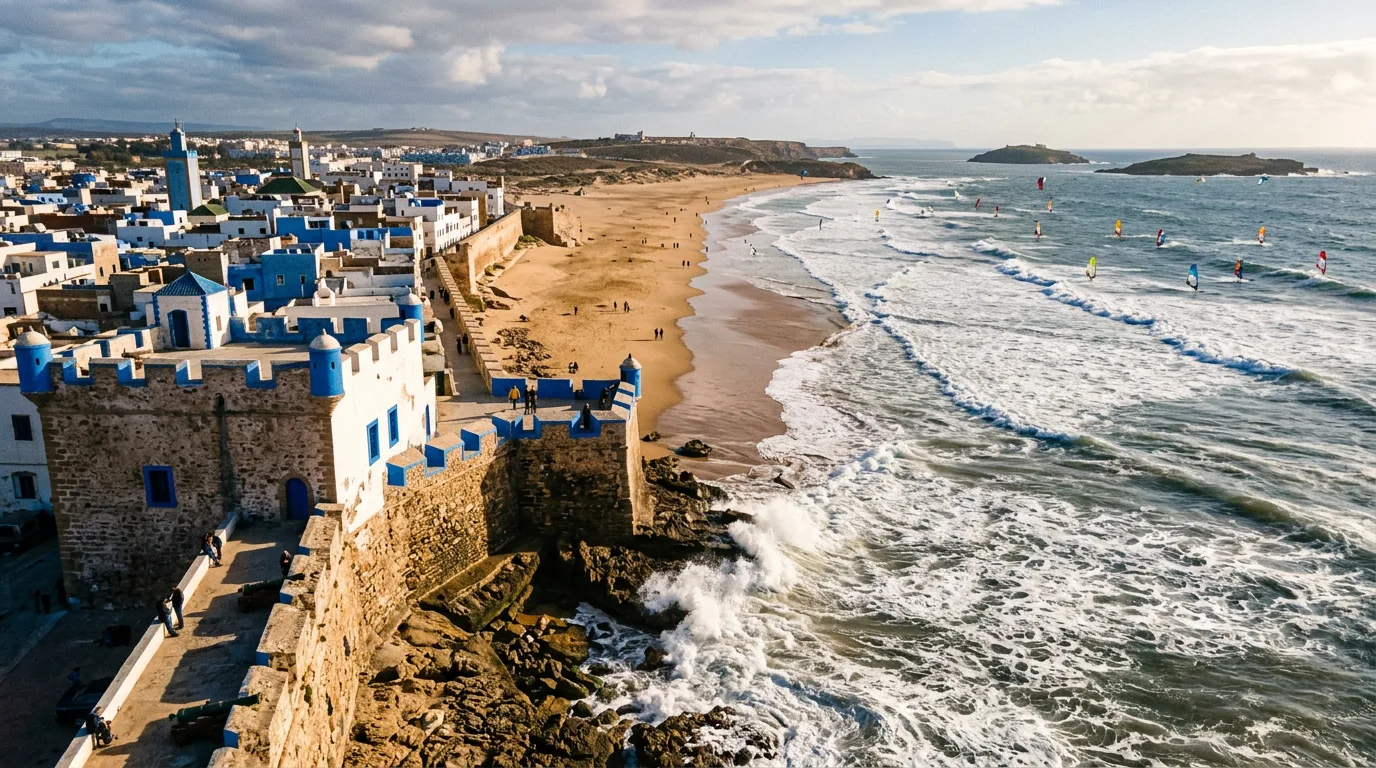
Essaouira is Morocco's Atlantic counterpoint to the inland imperial cities — a fortified white-and-blue port with ramparts, a working fishing harbour, outstanding grilled seafood, world-class windsurfing and a calm, liveable medina. A popular coastal finish to a trip that began in Fes, reached via Marrakech, and entirely different in character.
PlanningPlanning · Agadir
Things to Do in Agadir: The Essential Guide
Agadir is Morocco's beach resort capital and the polar opposite of the historic Fes medina — rebuilt from scratch after a 1960 earthquake and shaped around 10 km of Atlantic sand, year-round sunshine and resort infrastructure. For Fes-based travellers it is a far-south add-on, and the gateway to the Souss Valley, the argan forests and the surf coast at Taghazout.
PlanningPlanning · Rabat
Things to Do in Rabat: The Essential Guide
Rabat, Morocco's understated capital, is a comfortable 1.5-hour train ride west of Fes and rewards visitors with UNESCO-listed monuments, a royal kasbah, Roman ruins and a genuine daily-life rhythm entirely free from medina tourist pressure — a relaxed addition to a Fes-and-imperial-cities trip.
PlanningPlanning · Tangier
Things to Do in Tangier: The Essential Guide
Tangier — reachable from Fes by train via the Al Boraq high-speed line — has transformed from a faded, edgy gateway into one of Morocco's most interesting cities, with its kasbah restored, its seafront rebuilt, and its literary history as a city of expatriate writers and artists consciously reclaimed. A natural northern bookend to a Fes itinerary.
PlanningPlanning · Casablanca
Things to Do in Casablanca: The Essential Guide
Casablanca is Morocco's economic capital and largest city — modern and cosmopolitan, built on Atlantic commerce rather than imperial history. Many Fes-bound travellers land here and continue by train, but the Hassan II Mosque, the Corniche and the Art Deco centre reward those who linger beyond the airport transfer. It makes a useful arrival or departure point for a Fes trip.
PlanningPlanning · Ouarzazate
Things to Do in Ouarzazate: The Essential Guide
Ouarzazate — 'the door of the desert' — sits at the junction of the High Atlas and the Saharan south, and is a natural stop on the loop between the Sahara and Marrakech at the end of a Fes-to-desert itinerary. It is the gateway to Aït Ben Haddou, Africa's most famous film set, and the Drâa Valley; its Atlas Studios produce more major films than almost anywhere outside Hollywood.
PlanningPlanning · Meknes
Things to Do in Meknes: The Essential Guide
Meknes — the fourth of Morocco's imperial cities and the least visited — is the classic full-day trip from Fes, just 45 minutes away by train. It rewards the traveller who lingers: a UNESCO medina, the monumental gates and granaries of Sultan Moulay Ismail's 17th-century capital, and the Roman city of Volubilis 33 km to the north, usually combined with the shrine town of Moulay Idriss.
PlanningPlanning · Winter travel
Morocco in Winter: What to Expect & Where to Go
Winter (December–February) is an underrated season for Fes and Morocco — the medina is quietest and most atmospheric, riad rates drop, the Sahara is at its most comfortable, and the Middle Atlas above Ifrane turns white. Knowing what to expect and what to pack makes a winter Fes trip one of the most rewarding.
PlanningPlanning · Summer travel
Morocco in Summer: Heat, Coast & What Still Works
Summer in Morocco (June–August) means extreme heat inland, and Fes in its basin gets very hot. But the Middle Atlas around Ifrane, the Rif and Chefchaouen, and the Atlantic coast offer genuine relief. Know how to handle a Fes medina day in the heat, where to escape, and how to travel smart in the hottest months.
PlanningPlanning · Solo travel
Morocco Solo Travel: An Honest Guide
Solo travel in Fes and Morocco is rewarding, affordable and genuinely feasible — millions of people do it every year. The Fes medina demands a little more awareness than group travel (and a guide for the first day), but the freedom, the encounters with artisans and the depth of experience are not available any other way.
PlanningPlanning · Marrakech season
Best Time to Visit Marrakech
March to May and September to November are the best months to visit Marrakech — comfortable warmth, long days and pleasant evenings. The seasons mirror Fes closely, so a Fes-and-Marrakech trip works in the same windows. Summer is hot but workable; winter is mild and crowd-free.
PlanningPlanning · Sahara season
Best Time to Visit the Sahara in Morocco
October to April is the Moroccan Sahara's golden window — comfortable days, cold clear nights and dunes lit by low golden light. It is also the ideal season to pair a Fes medina trip with a desert run down to Merzouga. July and August are brutal and best avoided.
PlanningPlanning · Beaches
Best Beaches in Morocco
Morocco has over 3,000 km of Atlantic and Mediterranean coastline — the natural sea-air counterpoint to an inland Fes trip. From the windswept ramparts of Essaouira to the calm family beaches of Agadir, the surf breaks of Taghazout and the Mediterranean coves north of the Fes–Chefchaouen circuit, here is where to go and when.
PlanningPlanning · Accommodation
Where to Stay in Morocco: Riads, Hotels & Desert Camps
Fes offers one of the world's great accommodation experiences — restored Fassi palace-riads with zellige courtyards, plunge pools and private chefs deep in Fes el-Bali — and a Fes-based trip pairs naturally with a luxury Sahara camp at Merzouga and the imperial-city loop. Knowing which type suits your trip, and what to look for, makes a significant difference.
PlanningPlanning · Baby & toddler travel
Morocco with a Baby or Toddler: A Practical Guide
Travelling to Fes with a baby or toddler is entirely possible and often surprisingly smooth — Fassi culture is genuinely warm towards small children, a courtyard riad in Fes el-Bali makes an ideal secure base, and the practical logistics are manageable with the right preparation.
PlanningPlanning · When to go
Best Time to Visit Fes: Weather, Crowds & What to Expect
Spring (March–May) and autumn (September–November) are the best times to visit Fes — mild weather, manageable crowds and ideal conditions for walking the labyrinthine medina. This guide breaks down what every season brings to Morocco's spiritual capital.
PlanningPlanning · Desert activities
Morocco Camel Trekking: How to Plan the Perfect Sahara Ride
A camel trek in the Moroccan Sahara is one of the most iconic travel experiences in North Africa, and the classic overnight on a desert extension from Fes — the Erg Chebbi dunes at Merzouga are the shorter run south through Ifrane and the Ziz Valley. This guide covers the best locations, what to expect physically, how long to book and what a night in a desert camp really feels like.
PlanningPlanning · When to go
Best Time to Visit Chefchaouen: Season, Weather & Practical Tips
Chefchaouen is beautiful year-round, but spring (March–May) and autumn (September–October) deliver the best combination of mild weather, manageable crowds and perfect light for the city's famous blue-washed medina. Here is what each season brings.
Practical
Practical guides
Safety, visas, money, packing and the ground-truth that makes a trip seamless.
PracticalPractical · Packing
What to Pack for Morocco
Pack light, modest and layered. A Fes trip swings from hot, dusty medina lanes to cool evenings and chilly desert or Middle Atlas nights, so breathable layers, genuinely comfortable walking shoes and a warm top cover almost everything.
PracticalPractical · Transport
Getting Around Morocco
Fes sits squarely on Morocco's best rail line, so trains link it easily to Meknes, Rabat, Casablanca, Marrakech and Tangier. For Chefchaouen, Volubilis, the Middle Atlas and the desert, you'll want a private driver. The right mix depends on your route and pace.
PracticalPractical · Connectivity
SIM Cards & Internet in Morocco
Staying connected in Fes is cheap and easy. A local SIM or eSIM from Maroc Telecom, Orange or Inwi gives you fast 4G across the city for a few dollars — genuinely useful for navigating the maze of Fes el-Bali — and Wi-Fi is common in riads and cafés.
PracticalPractical · Getting there
Marrakech to Merzouga: Routes, Times & Transport Options
Merzouga and the Erg Chebbi dunes can be reached from Fes (about 380 km north through the Middle Atlas and Ziz Valley, the shorter run) or from Marrakech (about 560 km via the High Atlas and the kasbah road, the more scenic run). Many travellers drive down from Fes and out to Marrakech, doing both. Here are the options, the route differences, realistic timings and how to choose.
PracticalPractical · Pre-trip checklist
Morocco Travel Checklist: Everything to Do Before You Go
A complete pre-departure checklist for a Fes and Morocco trip: documents, riad and medina-guide bookings, money, health, connectivity and packing — everything to confirm before you board so nothing is left to chance.
PracticalPractical · Airport transfers
Getting from Casablanca Airport (CMN) to Your Destination
Casablanca Mohammed V Airport (CMN) is Morocco's busiest international gateway and a common arrival point for Fes — though a direct flight into Fès–Saïss (FEZ) is simpler if available. From CMN, an ONCF train or a private transfer reaches Fes; here are all the onward options.
PracticalPractical · Insurance
Morocco Travel Insurance: What You Need & Why
Travel insurance for a Fes and Morocco trip is not optional if you plan a Sahara extension, a camel trek or a Middle Atlas day, or simply want coverage for cancelled flights and luggage lost in transit. Here is what to look for, what it costs and which activities require specialist cover.
PracticalPractical · Connectivity
eSIMs for Morocco: The Traveller's Guide to Staying Connected
An eSIM lets you activate a Moroccan data plan before you land at Fès–Saïss, skip the airport SIM queue and keep your home number available on the same device — handy the moment you reach the Fes medina gate and want maps and WhatsApp. Here is how eSIMs work in Morocco, which providers to use and where coverage is reliable.
PracticalPractical · Health
Is Tap Water Safe to Drink in Morocco?
Tap water in Fes and Morocco's major cities is treated and technically meets national standards, but travellers — particularly on short visits — are strongly advised to drink bottled or filtered water. Stomach upsets from the change in local bacteria are common even when the water is not technically contaminated.
 Practical
Practical · Dress code
What to Wear in Morocco: Dress Code for Travellers
Morocco does not have a legal dress code for tourists, but in a deeply traditional city like Fes, dressing modestly — covering shoulders and knees in the medina, the souks and around the religious sites — is respectful, practically effective and makes travel smoother. Here is exactly what to wear, where, and why.
Culture
Culture guides
Food, etiquette, craft and the customs worth knowing before you arrive.
 Culture
Culture · Food
Moroccan Food & Drink
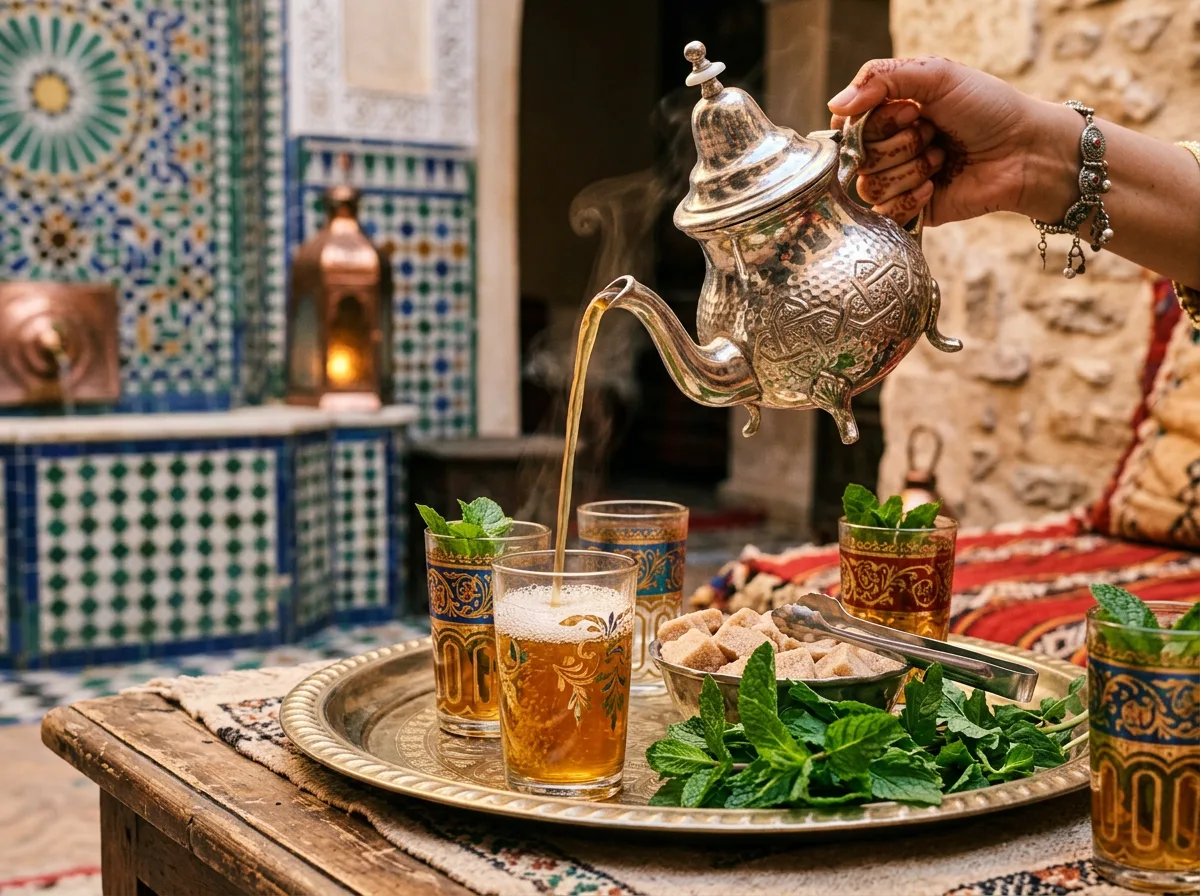
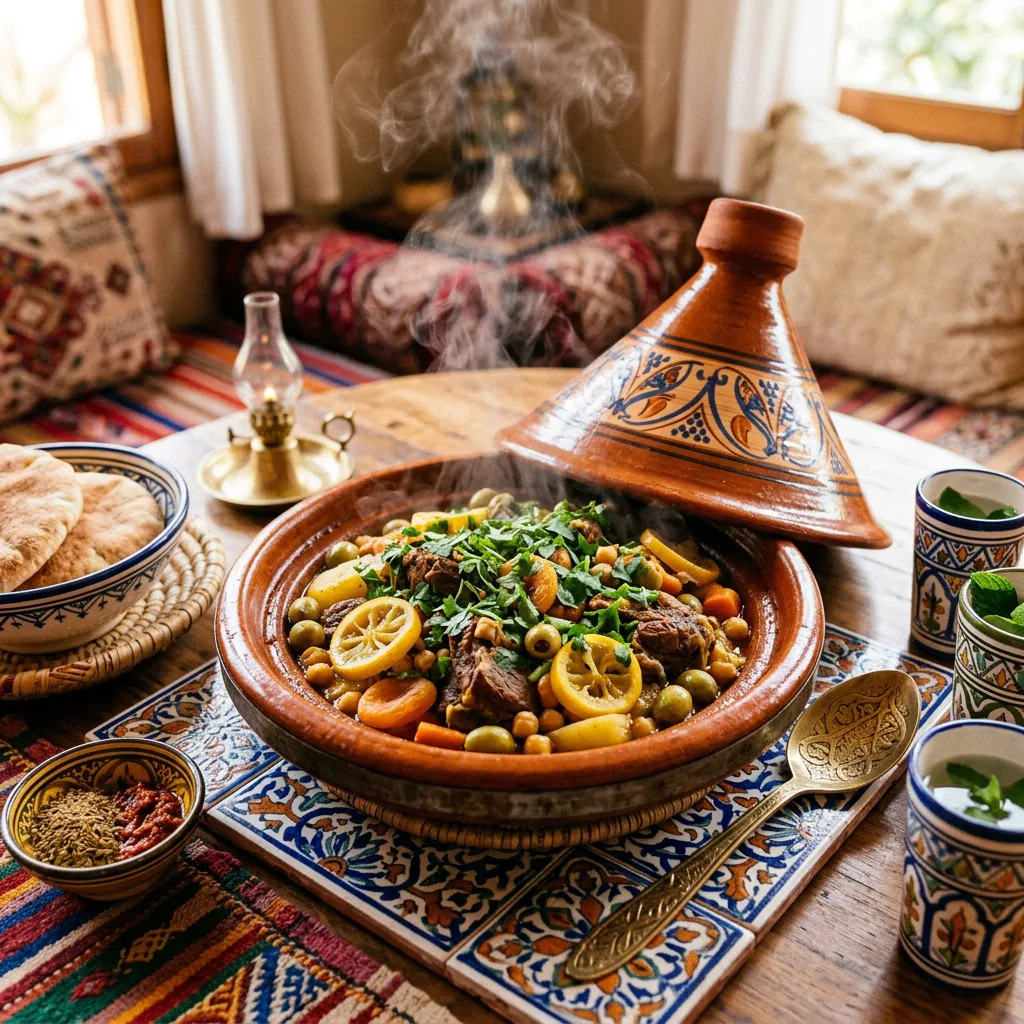
Fes is widely considered the culinary capital of Morocco — the refined home of pastilla, slow-cooked tagines, couscous Fridays and a deep repertoire of medina street food, all washed down with the endless ritual of sweet mint tea.
CultureCulture · Etiquette
Morocco Etiquette & Customs
A little cultural awareness goes a long way in Fes, one of Morocco's most traditional and spiritual cities. Dress modestly, greet warmly, ask before photographing people, use your right hand, and embrace the unhurried pace of mint tea and conversation in the medina.
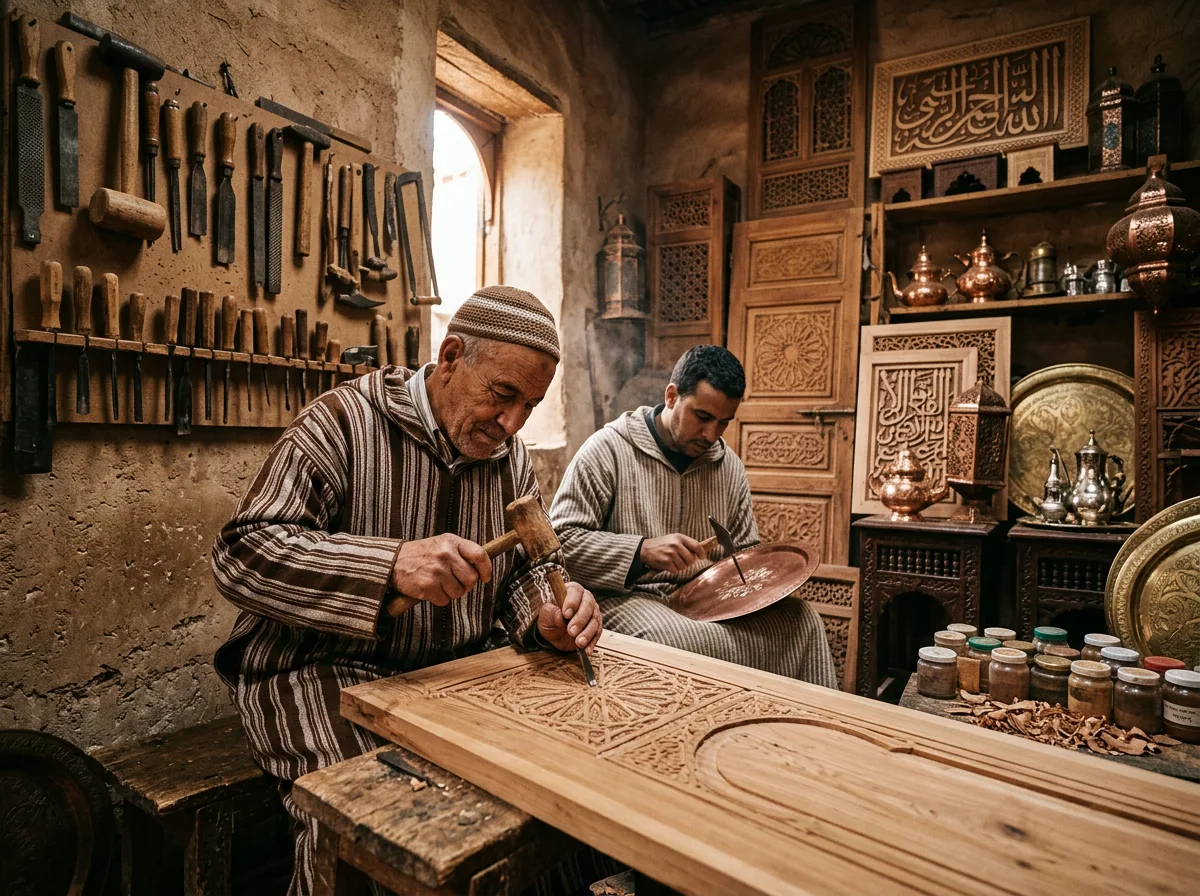 Culture
Culture · Photography
Morocco Photography Guide
Fes is one of the world's great photographic cities: extraordinary light falling into the tannery vats, intricate Marinid zellige and carved cedar, the labyrinth of Fes el-Bali, and craftsmen at work in the artisan quarters. Knowing where to go, when, and how to engage respectfully makes all the difference.
CultureCulture · Language
Moroccan Arabic & French Phrases for Travellers
Fes runs on Darija (Moroccan Arabic) in the medina and French in business and signage — plus Classical Arabic, the language of the Kairaouine's scholarship, and Tamazight in the surrounding countryside. A handful of phrases opens doors in the souks that money alone cannot.
CultureCulture · Shopping
Shopping in the Souks: What to Buy, Fair Prices & Tips
Fes is Morocco's artisan capital, and its souks are among the world's great shopping experiences — but they reward preparation. Knowing what to look for in leather, zellige ceramics, brass, woodwork and rugs, what fair prices look like in the Fes el-Bali lanes, and how to bargain and ship makes the difference between a satisfying haul and buyer's regret.
CultureCulture · Festivals & events
Morocco Public Holidays & Festivals
Morocco's calendar blends Islamic holy days that shift annually with the moon, fixed national holidays and a rich programme of festivals — led, for a Fes trip, by the Fes Festival of World Sacred Music each June and the Moussem of Moulay Idriss II in the medina. Knowing the calendar helps you plan around closures and unlock the country's most vivid cultural events.
CultureCulture · Souvenirs
Moroccan Souvenirs: What to Buy & Where
The best souvenirs from Morocco are things made there, by Moroccan hands, that you will actually use at home — not plastic camels. From hand-knotted Berber rugs and Fes leather to argan oil, hand-painted ceramics and thuya wood, here is what to buy and where to find the real thing.
CultureCulture · Culinary
Moroccan Cooking Classes: What to Expect & Where to Book
A cooking class in Fes — widely regarded as the culinary capital of Morocco and the home of pastilla — is one of the most immersive ways to connect with the country's culture: shopping the Fes el-Bali souks for saffron and preserved lemons, then slow-cooking a tagine over charcoal in a riad courtyard. This guide covers what you will learn, how to choose the right class and what the experience actually involves.