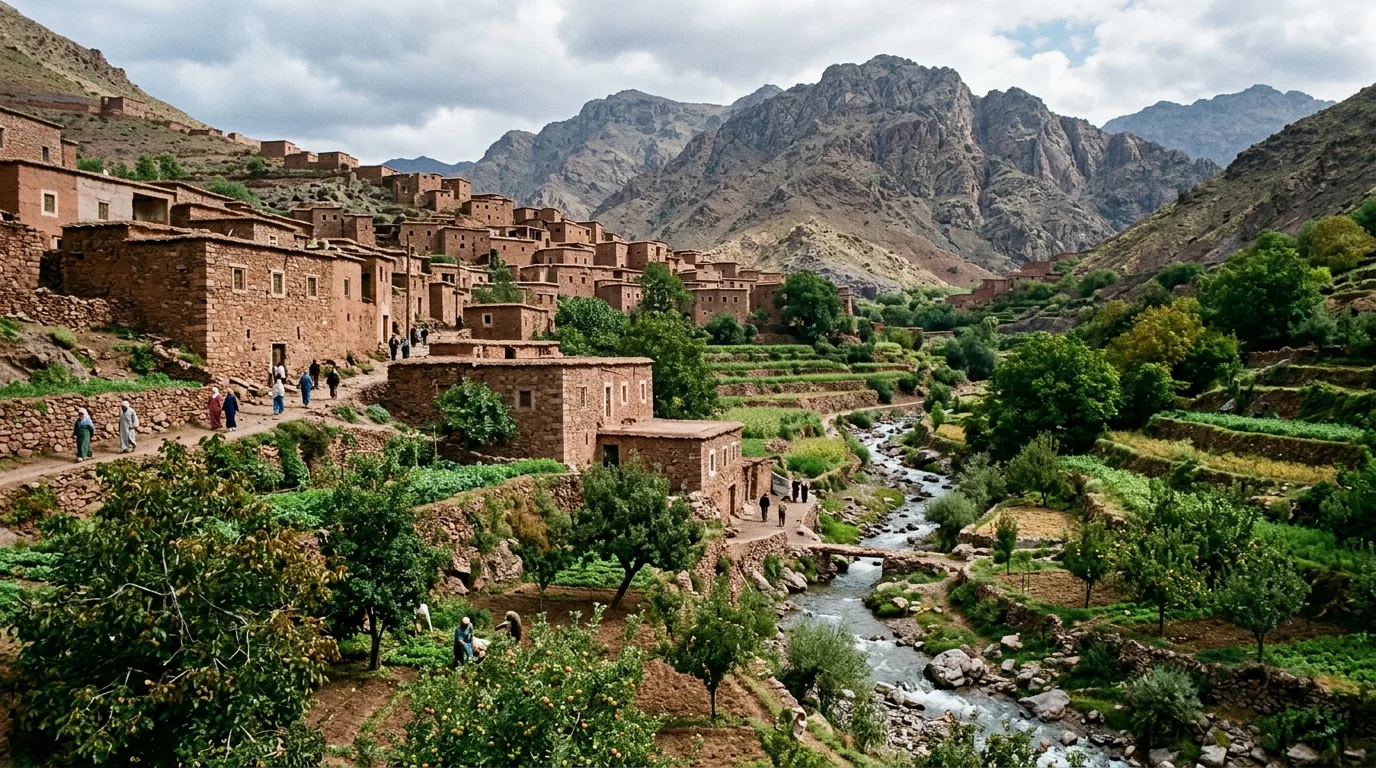
A Morocco road trip is one of the great drives of the world, and Fes makes a superb starting point — the imperial-city loop to Meknes and Volubilis, the Middle Atlas cedar forests and Ziz Valley down to the Sahara, and the Rif road north to Chefchaouen all radiate from the city. Here is how to plan it, what the roads are really like and which routes reward a self-driver.
In this guide
Is it worth self-driving in Morocco?
Self-driving in Morocco rewards those who go in prepared. The motorway network (autoroutes) connecting Fes, Meknes, Rabat, Casablanca and Marrakech is modern, fast and well-signposted. National roads (RN) across the Atlas passes and into the south are paved and in reasonable condition, though narrower and occasionally damaged. The desert pistes south of M'Hamid and the remote Saharan tracks require a 4WD and local knowledge.
Fes el-Bali — the world's largest car-free urban area — and the other historic medinas are unreachable by car beyond the gates. In Fes you park at the edge of the medina near a gate such as Bab Bou Jeloud or Bab Rcif and walk or take a petit taxi in; many riads send a porter to meet you at a designated drop-off point. This is not a problem, simply part of the rhythm of a Moroccan road trip.
For travellers who want total freedom of schedule, prefer to stop spontaneously at a viewpoint or a roadside co-operative, and are comfortable with a manual car on mountain switchbacks, self-driving is deeply rewarding. For those who want local context, cultural interpretation and to arrive at their riad without navigation stress, a private driver-guide is the better choice.
What are the best road-trip routes in Morocco?
The northern imperial-cities loop anchored on Fes — Fes, Meknes and Volubilis, Chefchaouen through the Rif, and on to Tangier and the coast — is the classic drive for a Fes-based trip, with good motorway connections and short, manageable driving days. It suits a first trip without desert ambitions, or a tighter time frame that still wants the medieval imperial cities and the blue city. Many travellers begin and end at Fès–Saïss (FEZ).
From Fes you can also point south into the Sahara: through Ifrane and the Middle Atlas cedar forests, down the dramatic Ziz Valley to Erfoud, and out to the orange dunes of Erg Chebbi at Merzouga — the shorter northern approach to the desert. The famous southern loop from Marrakech over the Tizi n'Tichka pass, Aït Ben Haddou, the Dadès and Todra gorges and on to Merzouga is the other half: an extraordinary sequence of High Atlas passes, pisé kasbahs and date-palm oases. The grand circuit drives down from Fes by the north and out via Marrakech, combining both.
- Northern loop (Fes base): Fes → Meknes & Volubilis → Chefchaouen → Tangier → coast; 5–7 days, 700–900 km.
- Fes-to-Sahara run: Fes → Ifrane → Ziz Valley → Merzouga (Erg Chebbi) → return; the shorter desert approach.
- Southern loop (Marrakech): Tizi n'Tichka → Ouarzazate → Gorges → Merzouga; 6–8 days, 1,000–1,200 km.
- Full grand circuit (open-jaw): Fes in, Marrakech out, via north and south; 12–14 days, 2,000+ km.
What are the roads actually like in Morocco?
The autoroutes (motorways) are dual-carriageway, well-maintained, and have petrol stations and rest areas at reasonable intervals. Tolls apply; keep small dirham notes for the peajes. National roads (N routes) on the Atlas passes — including the Tizi n'Tichka (N9), the Tizi n'Test (N10) and the Tizi n'Tizgui east of Ouarzazate — are narrower, occasionally potholed and involve steep switchbacks, but are entirely manageable in a standard car. The N9 Tizi n'Tichka is the busiest and most reliable; the Tizi n'Test is more dramatic and less trafficked.
In the far south, once you leave the tarmac, pistes (sandy tracks) require a 4WD with high clearance. The most commonly self-driven piste is the approach to the Erg Chigaga dunes from M'Hamid (approximately 50 km of sand and gravel); without 4WD, camp operators will transfer you in their vehicles from M'Hamid. At Merzouga, the approach from Hassi Labied village to most camps is manageable in a standard car for the first few kilometres.
Practical tips for self-driving in Morocco
Fuel: petrol and diesel are widely available in cities and on the main routes; fill up in Ouarzazate and Errachidia before heading into the desert, as stations become sparse. Accept payment only in cash at rural stations. Download offline maps before you set off — Google Maps coverage deteriorates off the main roads and in the Atlas, and mobile data is intermittent.
Driving style: Moroccan road culture involves heavy horn use, passing on blind corners on mountain roads, and pedestrians, mules and livestock sharing the road in rural areas. Drive defensively, anticipate the unexpected and do not rush the mountain passes. Speed cameras are active on the autoroutes; speed limits are enforced (120 km/h motorway, 100 km/h national road, 40–60 km/h in towns).
Documents: bring your driving licence, passport and rental agreement at all times. Gendarmerie checkpoints are common in the south — stop calmly, hand over your passport, and you will be waved through in seconds.
- Car hire: a standard automatic hatchback covers all paved routes; 4WD needed only for Erg Chigaga piste.
- Rental companies: international brands (Hertz, Europcar, Sixt) at Marrakech RAK and Casablanca CMN airports are reliable.
- Fuel: fill up before the desert; keep a 10-litre jerry can for very remote piste driving.
- Offline maps: download Google Maps Morocco or Maps.me offline before leaving the city.
- Road police: gendarmerie checkpoints are routine — stop, be polite, and produce documents on request.
What is the best season for a Morocco road trip?
March to May and September to November are the ideal road-trip seasons. Spring brings wildflowers in the Atlas valleys and the rose harvest in the Dadès in late April; autumn brings golden light on the gorges and the Sahara season at its best. Summer (July–August) makes inland driving genuinely uncomfortable — the car heats up fast, rest stops are scarce and air-conditioned, and the Sahara becomes an ordeal rather than a highlight.
The Tizi n'Tichka pass can close in January and February after heavy snowfall, which affects the Marrakech–Ouarzazate route. Check road conditions (the Gendarmerie Royale or Google Maps often shows closures in near-real time) if your trip falls in winter. An alternative in case of pass closure is the longer route via Agadir and the Souss plain.
Frequently asked
Can you self-drive in Morocco?
Yes — Morocco is entirely feasible to self-drive on the paved road network. The motorways are modern, national roads across the Atlas are manageable in a standard car, and the south's paved routes reach all the main desert gateways. Only the far-south pistes to Erg Chigaga require a 4WD. Medinas are car-free; park at the gates and walk or take a petit taxi.
Do I need a 4WD for a Morocco road trip?
Not for the main southern circuit via the Tizi n'Tichka pass, the gorges and Merzouga. A standard car comfortably covers all paved routes. A 4WD adds access to the remote Erg Chigaga piste from M'Hamid, certain high Atlas tracks and some rough pistes near the Jbel Saghro. For a first road trip, a standard automatic is sufficient.
How long does the Tizi n'Tichka pass take to drive?
Approximately 2 hours from Marrakech to Ouarzazate via the Tizi n'Tichka pass (2,260 m) — the switchback sections are scenic and slow, with viewpoints worth stopping at. The pass itself (the summit) takes about 45 minutes from the last major town on either side. Allow extra time for vehicles pulled over for photos or livestock on the road.
Is it safe to drive in Morocco at night?
Night driving is not recommended in the Atlas or on rural roads south of Ouarzazate. Livestock, mopeds without lights, unmarked speed bumps and the absence of road markings in mountain sections create genuine hazards. On the motorway between cities (Casablanca–Marrakech, etc.), night driving is safe. Plan to arrive at your overnight stop before dark when on mountain or desert routes.
What fuel does a rental car use in Morocco, and how much does it cost?
Most rental cars use petrol (essence) or diesel (gasoil). Petrol costs approximately 12–14 MAD per litre (mid-2026); diesel is slightly cheaper. Rental cars almost universally require you to return them full; fill up close to the return location to avoid airport forecourt surcharges. Cash is the norm at rural and roadside stations.
Planning a trip?
Let a Marrakech atelier handle the details.
Tell us your dates and style and we'll send a written itinerary and a transparent quote within 24 hours.
Request an itineraryKeep reading
Itineraries
Morocco Itinerary: 14 Days — The Grand Two-Week Route
Two weeks is enough to cover Morocco's full sweep, starting in Fes: the imperial cities of the north, Chefchaouen, the Middle Atlas, the kasbah road, a night in the Sahara and the High Atlas down to Marrakech — all at a genuinely unhurried pace.
Practical
Getting Around Morocco
Fes sits squarely on Morocco's best rail line, so trains link it easily to Meknes, Rabat, Casablanca, Marrakech and Tangier. For Chefchaouen, Volubilis, the Middle Atlas and the desert, you'll want a private driver. The right mix depends on your route and pace.
Planning
Sahara Desert Tour Guide: Merzouga, Chigaga & Zagora
From Fes, the Sahara is a deeply rewarding extension, and Erg Chebbi at Merzouga is the natural choice — the drive south through Ifrane and the Ziz Valley leads to the grandest dunes in Morocco. Here is how Merzouga compares to Chigaga and Zagora, what the camps are like, and when to go.