What is Heri es-Souani and the Moulay Ismail imperial complex?
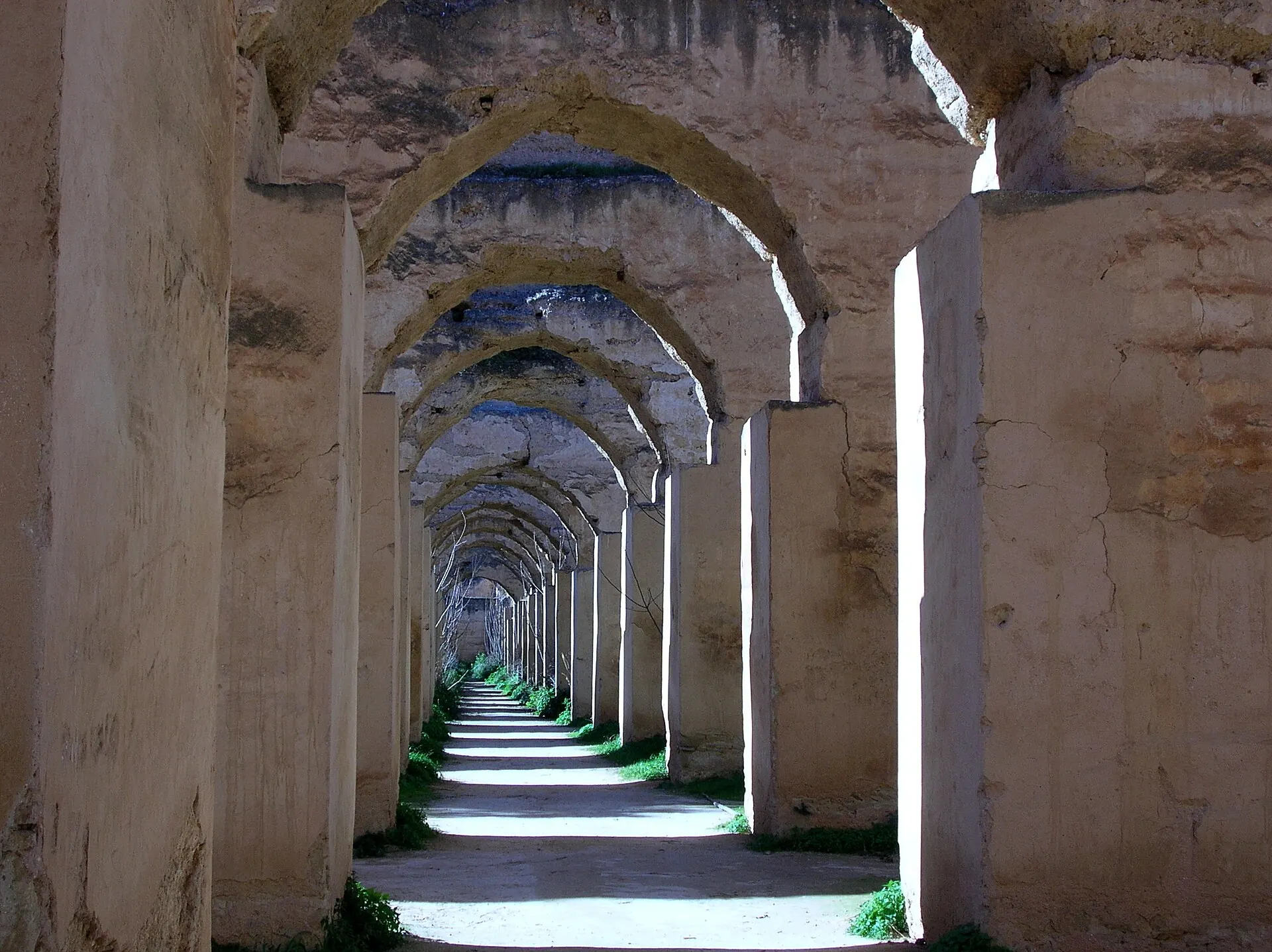
Heri es-Souani — the royal granary and stable complex built by Moulay Ismail in the late 17th century — is one of the most striking architectural achievements of the Alaoui dynasty. The granary consists of a vast series of vaulted storage chambers, built with massive walls (over 2 m thick) designed to maintain a constant cool temperature regardless of the desert heat outside; the scale of the construction reflects a court that was reputed to house 12,000 horses. Much of the roof has collapsed, creating a ruined grandeur — great barrel-vaulted stone chambers open to the sky, with the original underground cisterns still visible below.
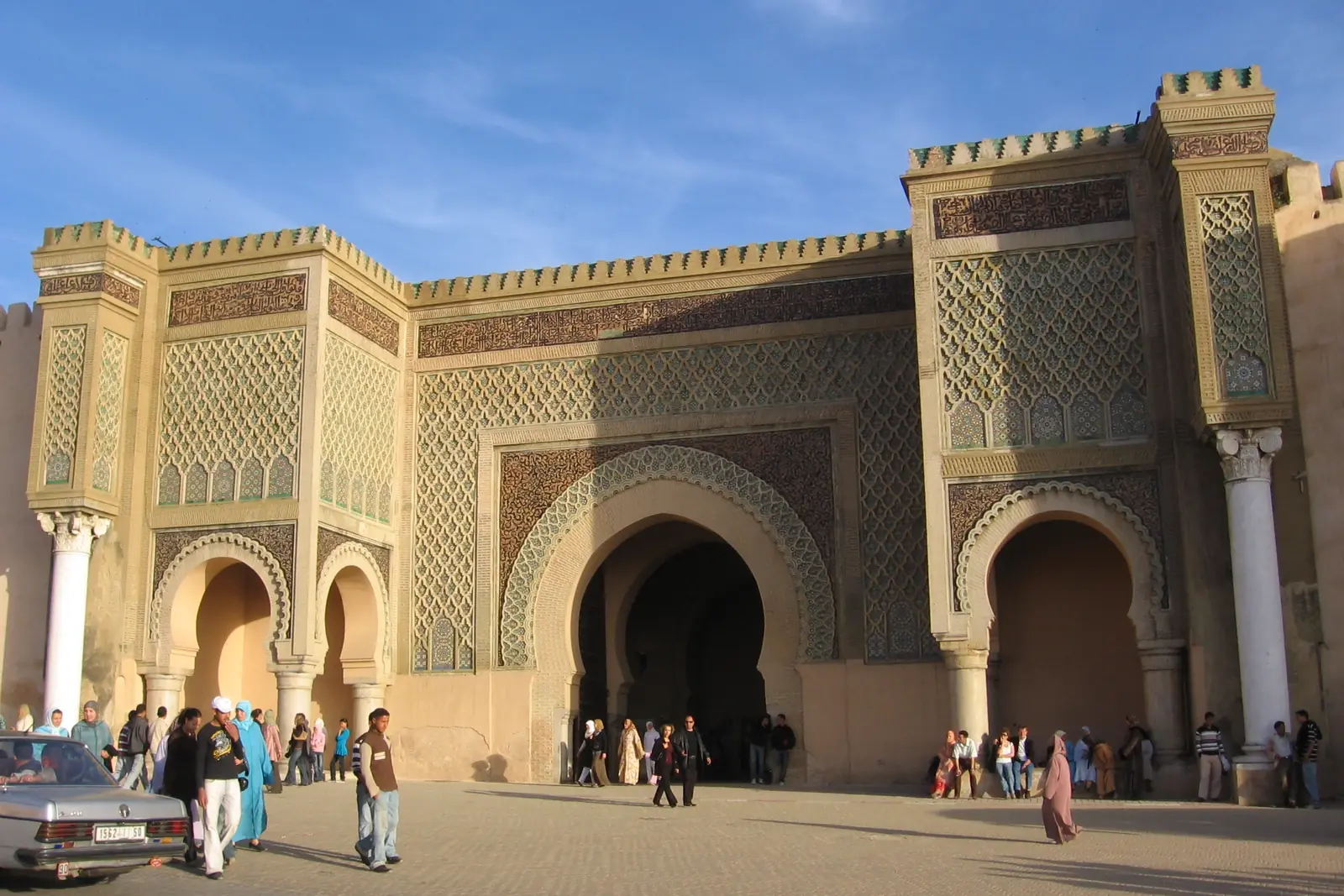
The Agdal basin — an enormous ornamental lake beside the granary — was created to supply the palace complex with water and to provide a picturesque setting for royal recreation. It is one of the largest man-made reservoirs of the pre-industrial Islamic world. The surrounding walls of Moulay Ismail's imperial city (kasbah) stretch for 40 km — most are still standing — and can be followed on foot or by bicycle for a sense of the city's original scale.