The best months
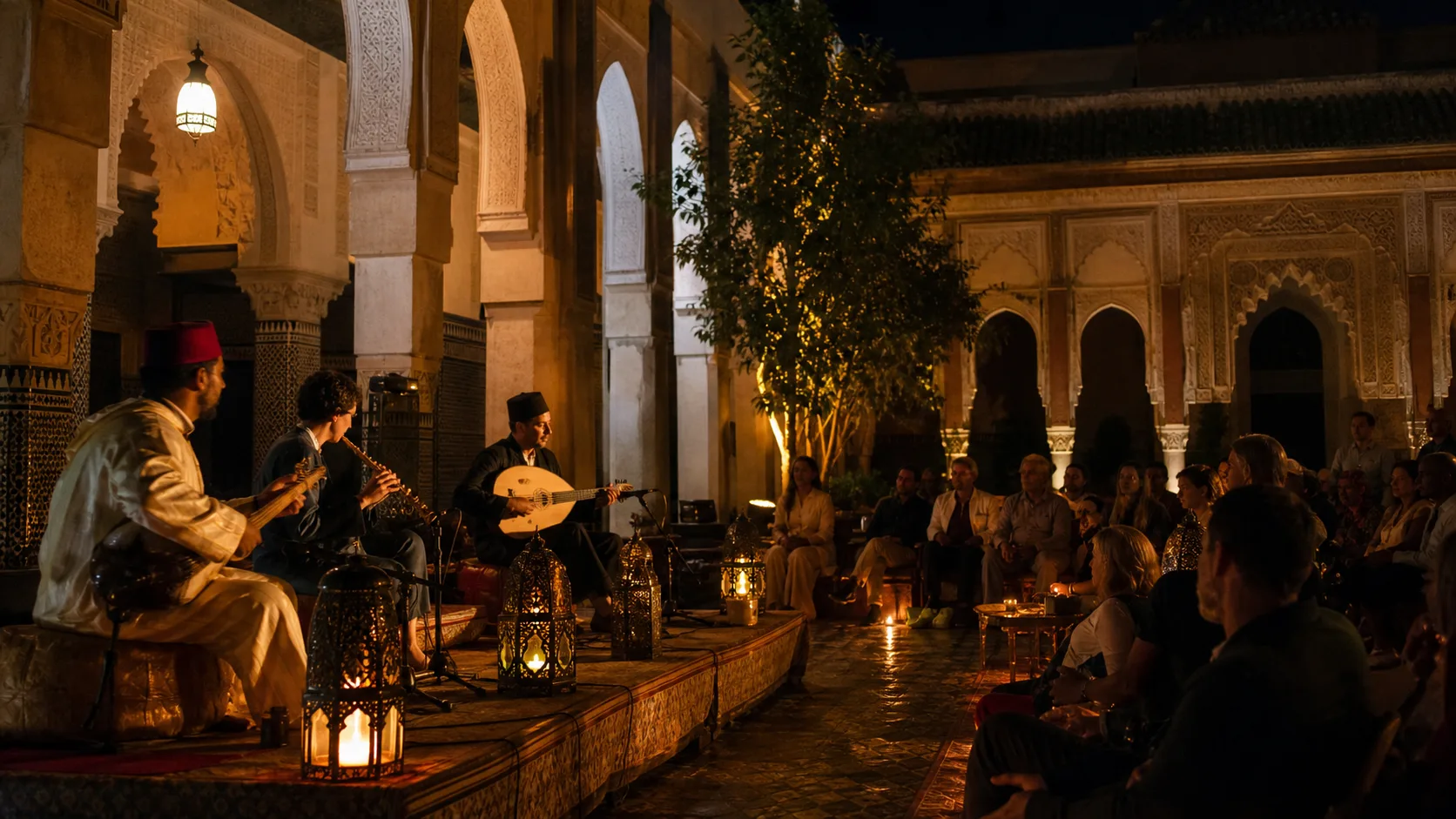
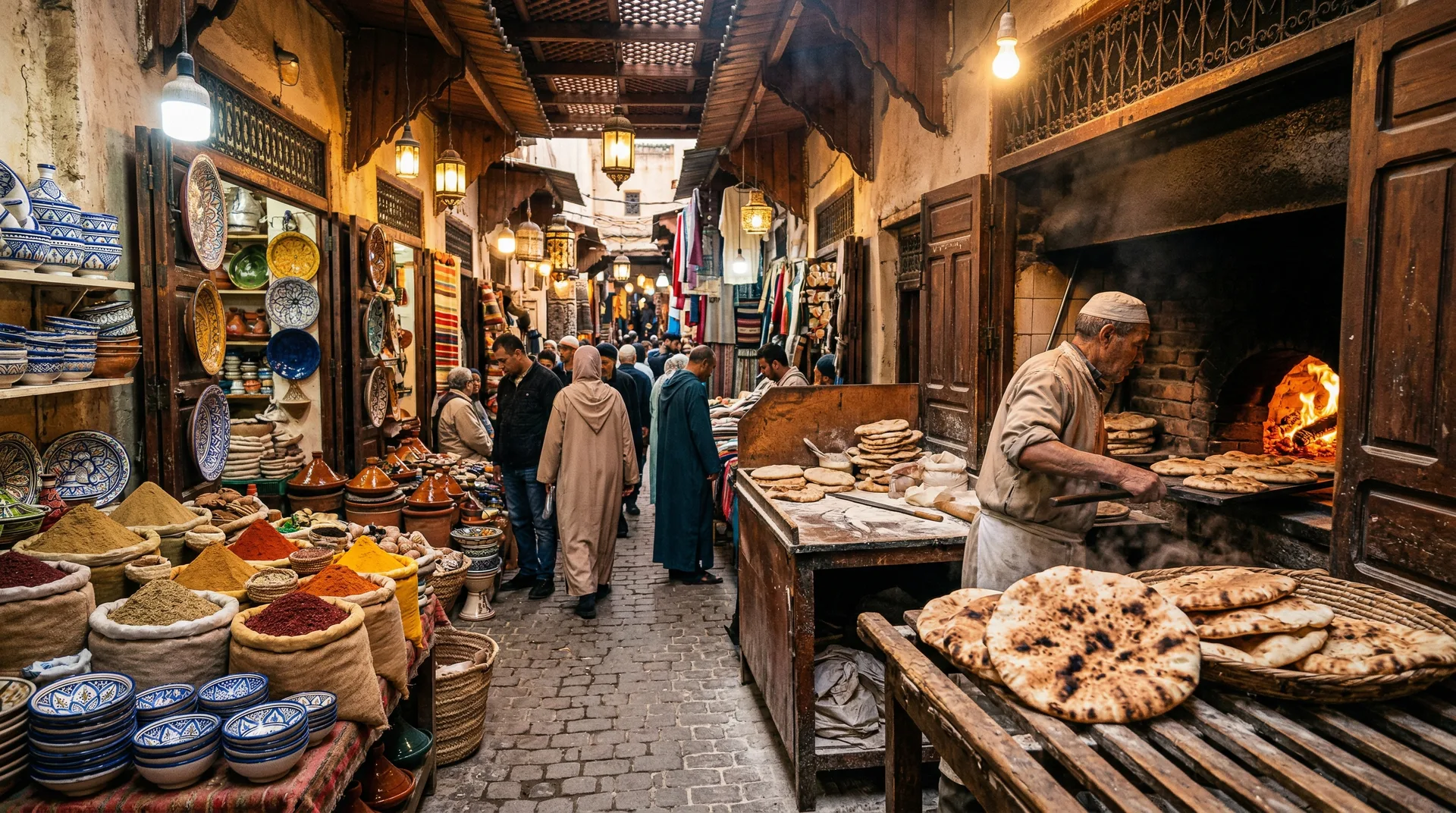
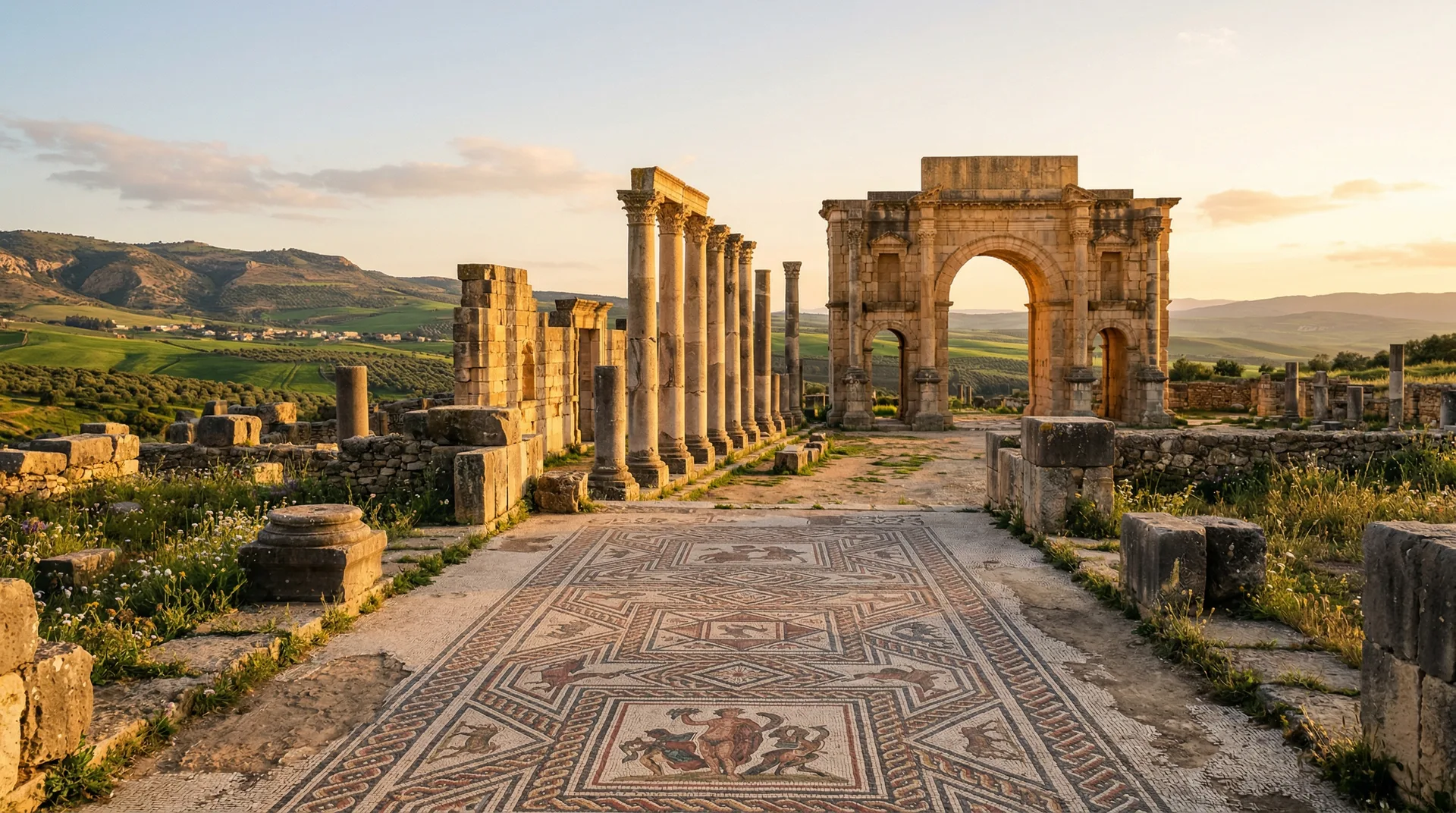
Fes has two long windows. Mid-September to mid-November is our favourite: the medina exhales after summer, the tanneries are busy again, and the light over the Kairaouine rooftops is clean and gold. March to mid-May is the second — blossom on the Zerhoun hills above Volubilis, mild days for the long Meknes walls, and cool stone in the medersas.
Where to start
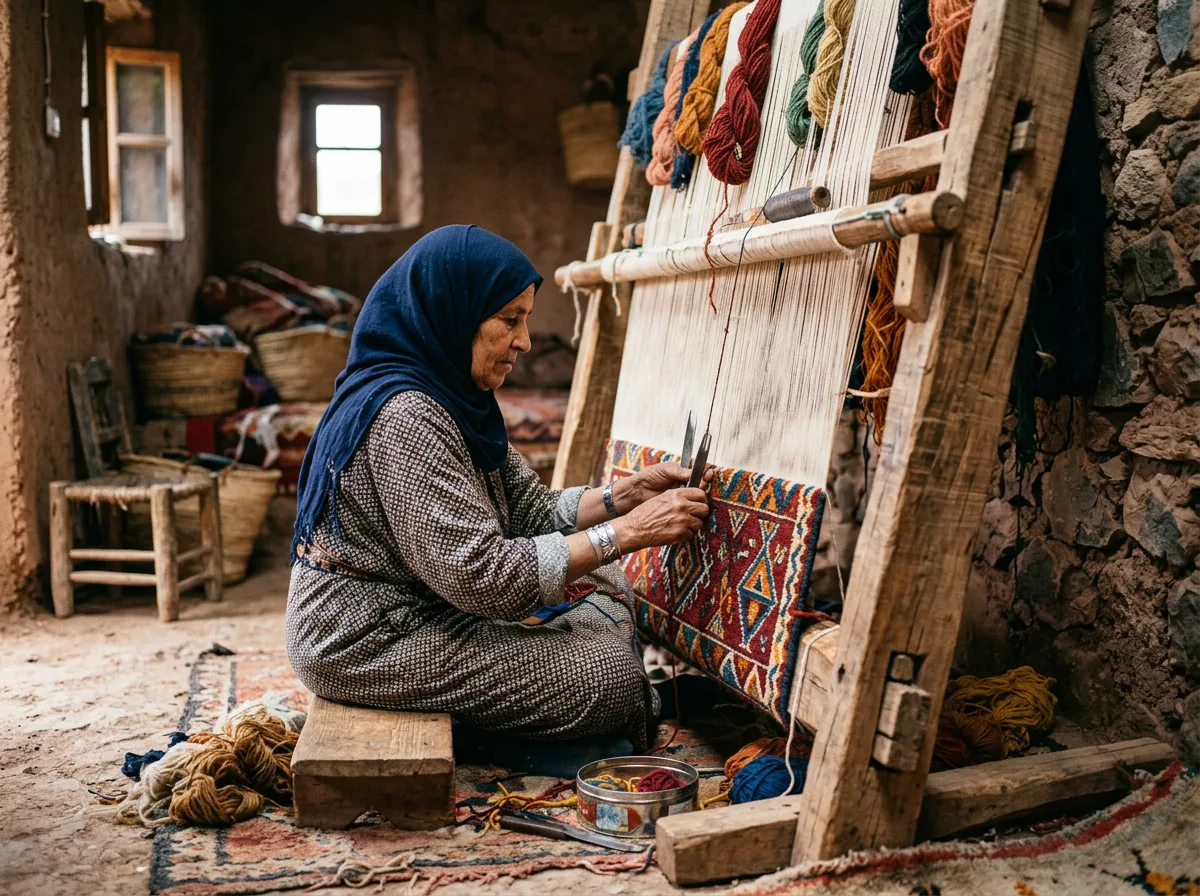
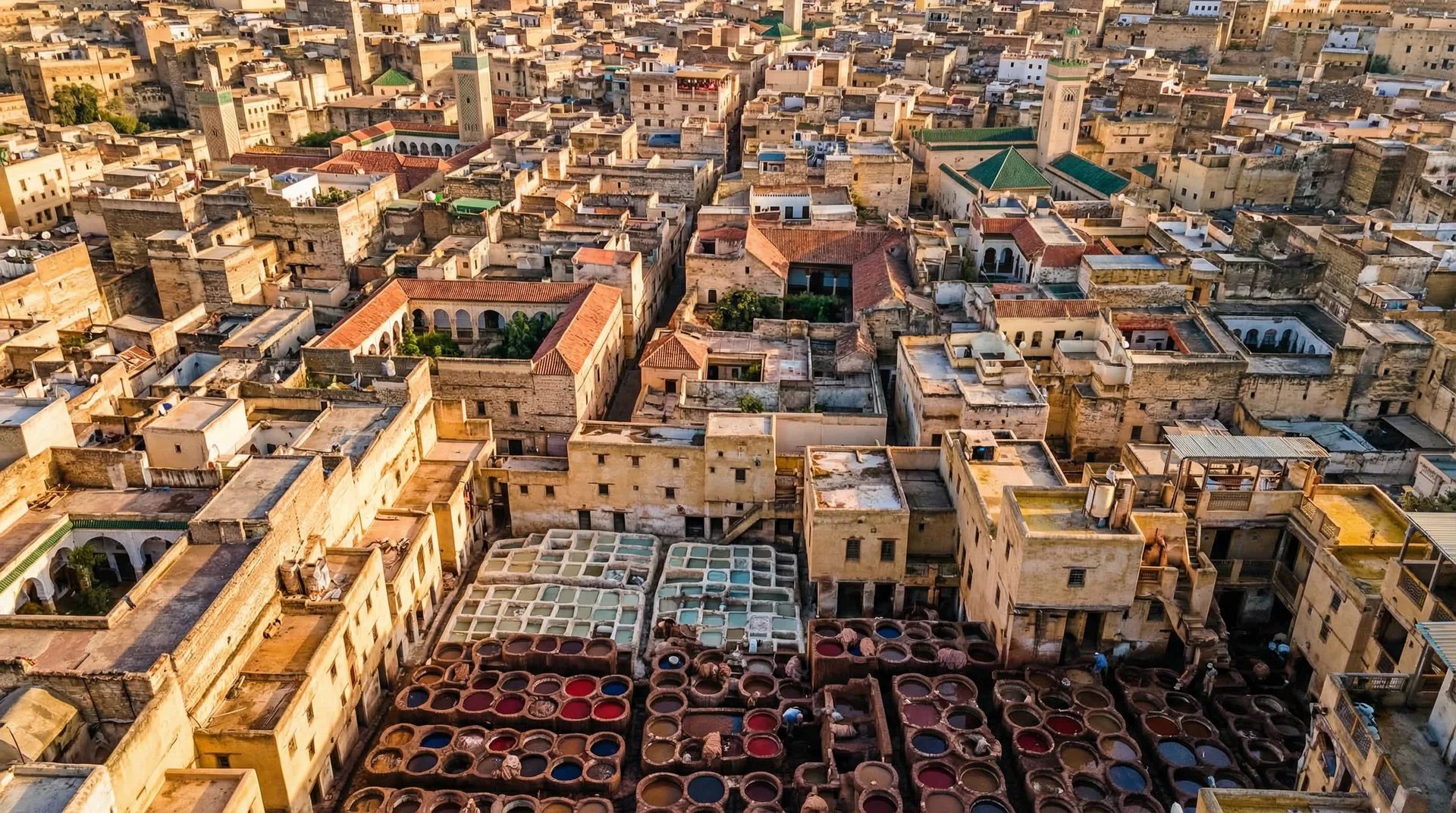
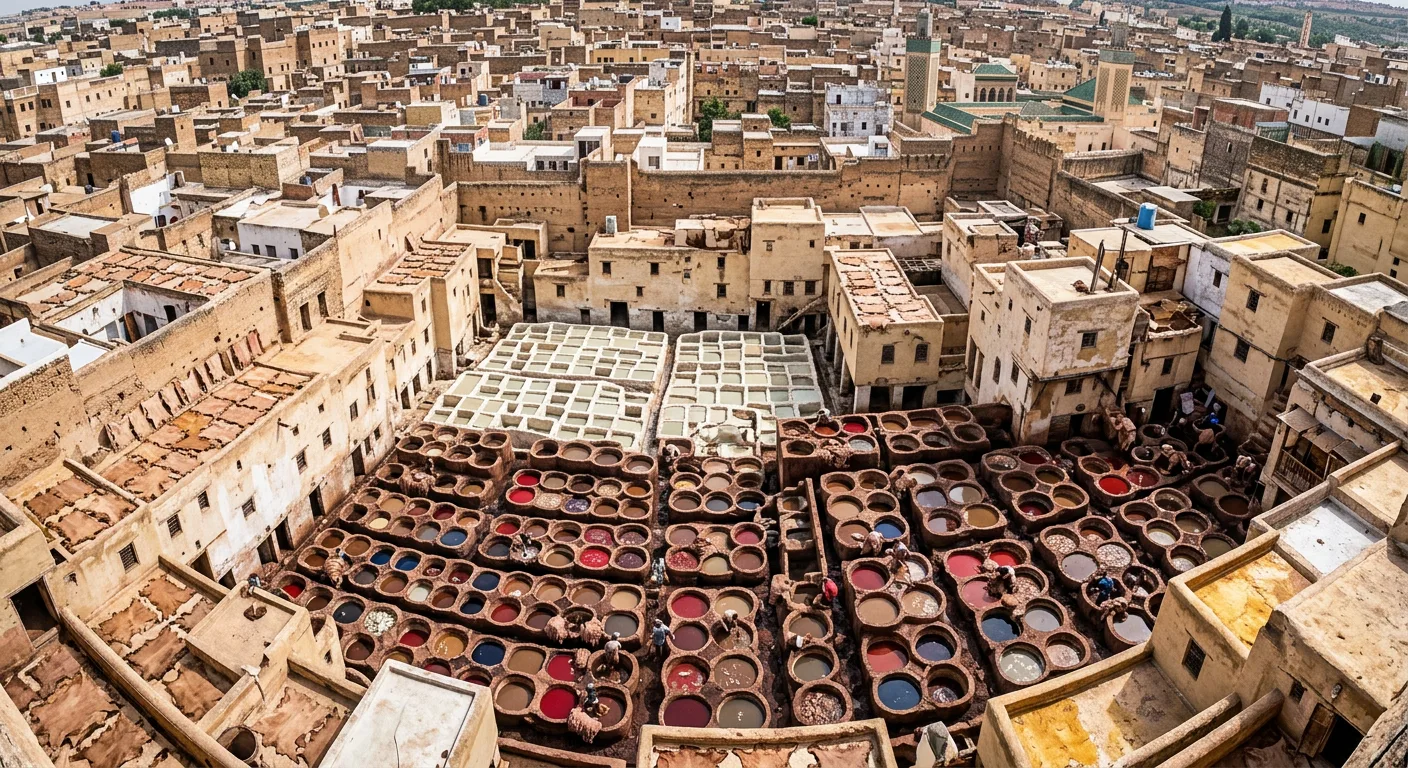
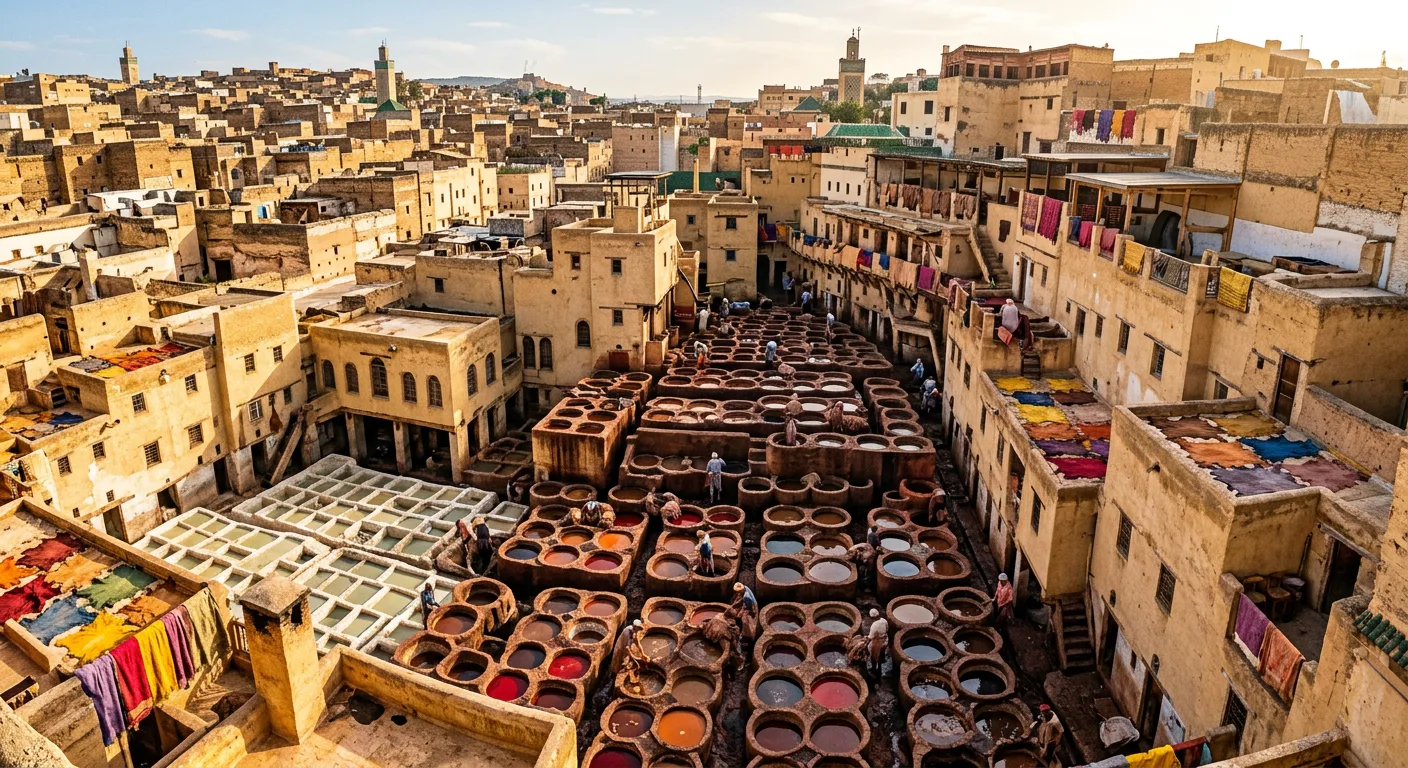
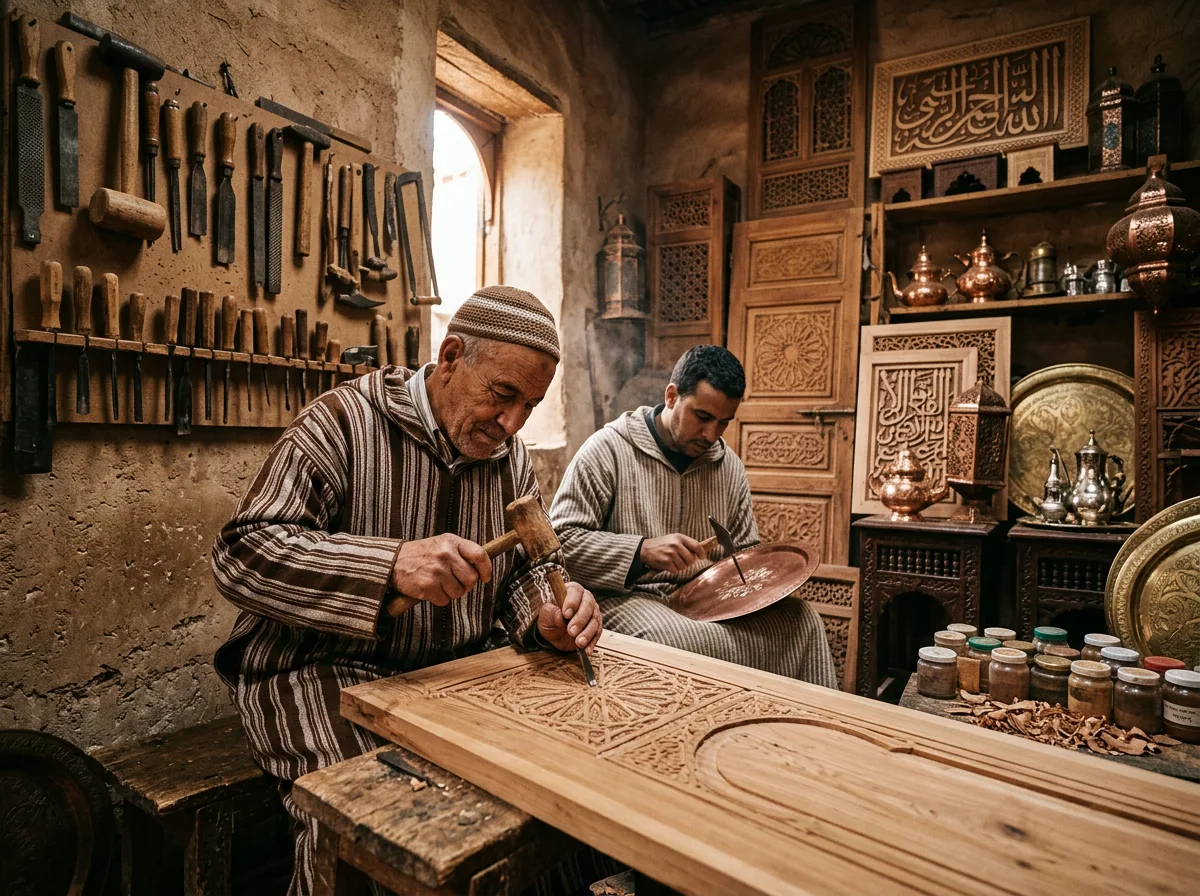
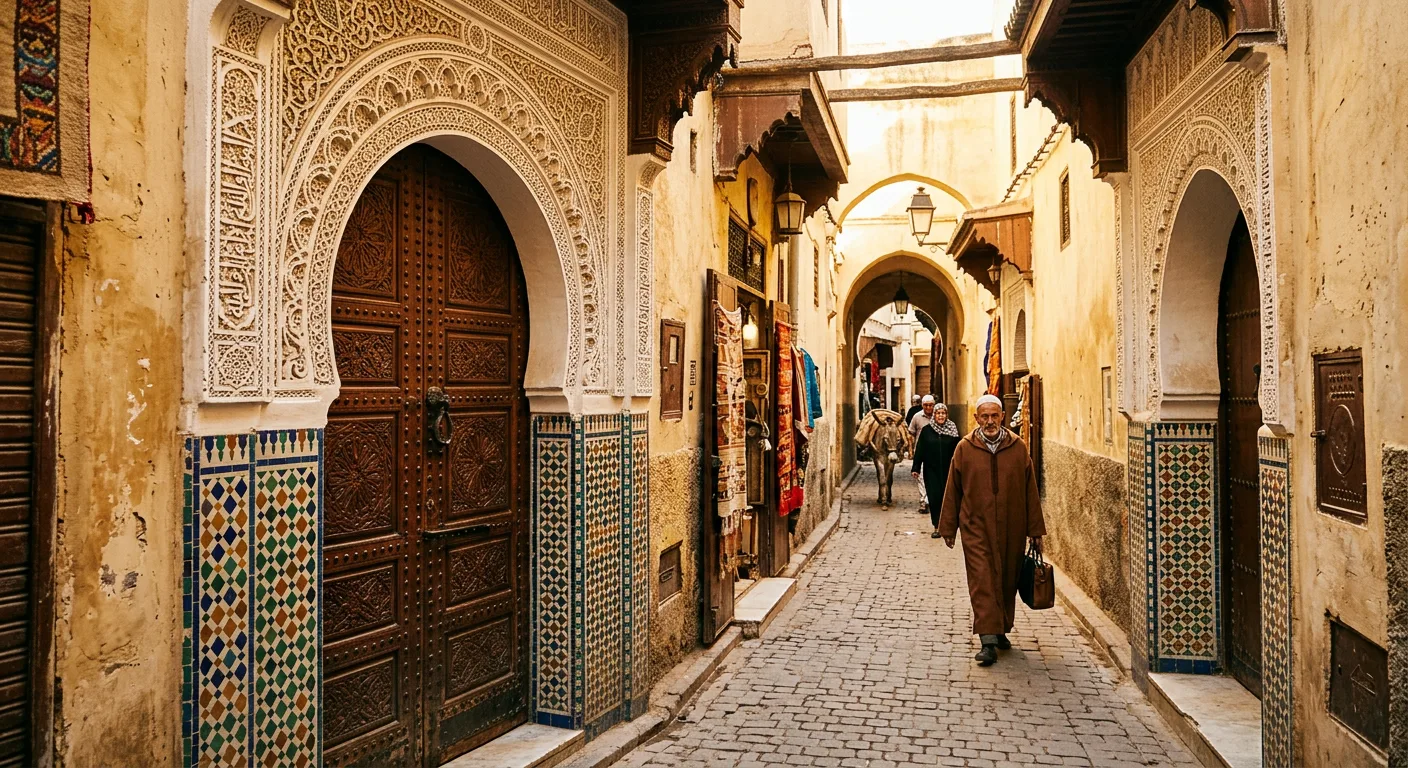
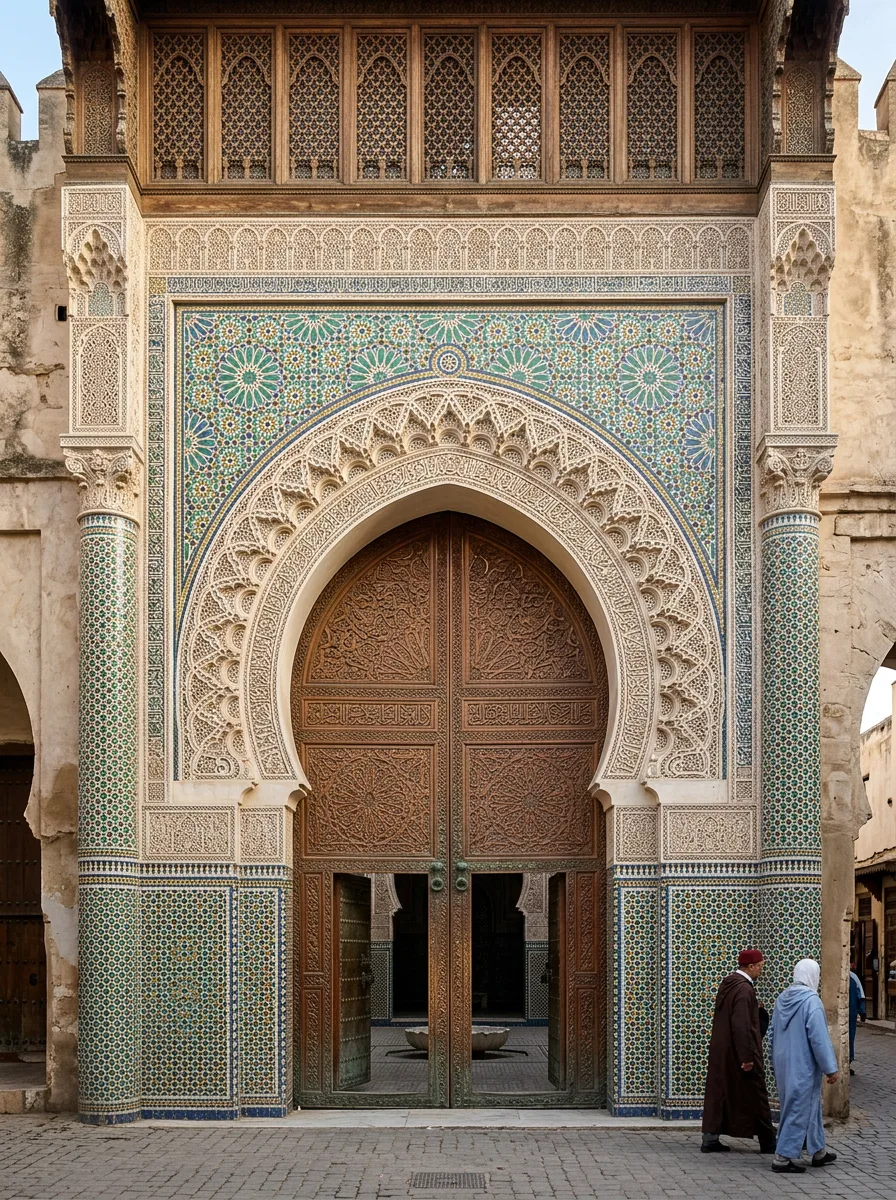
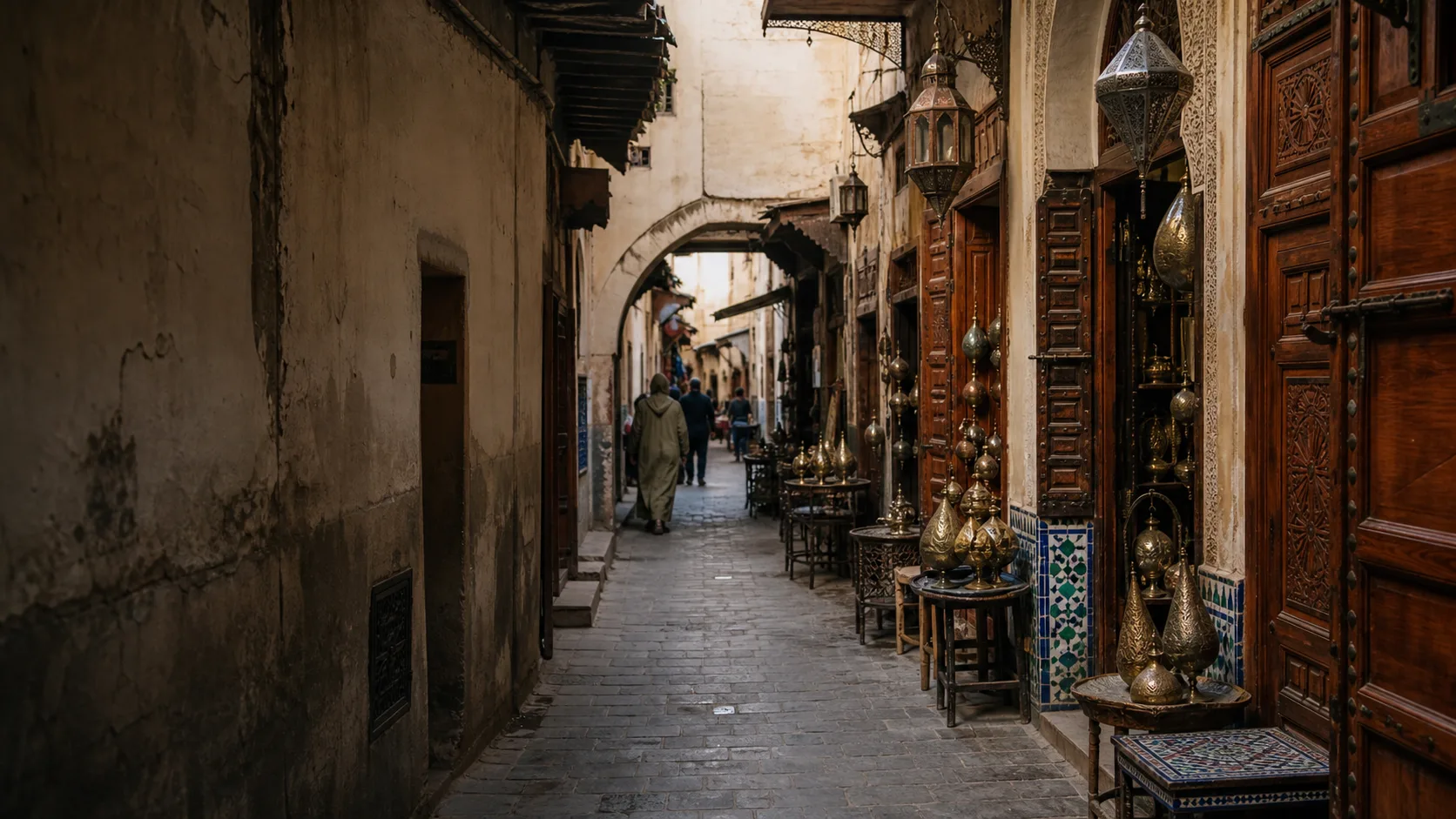
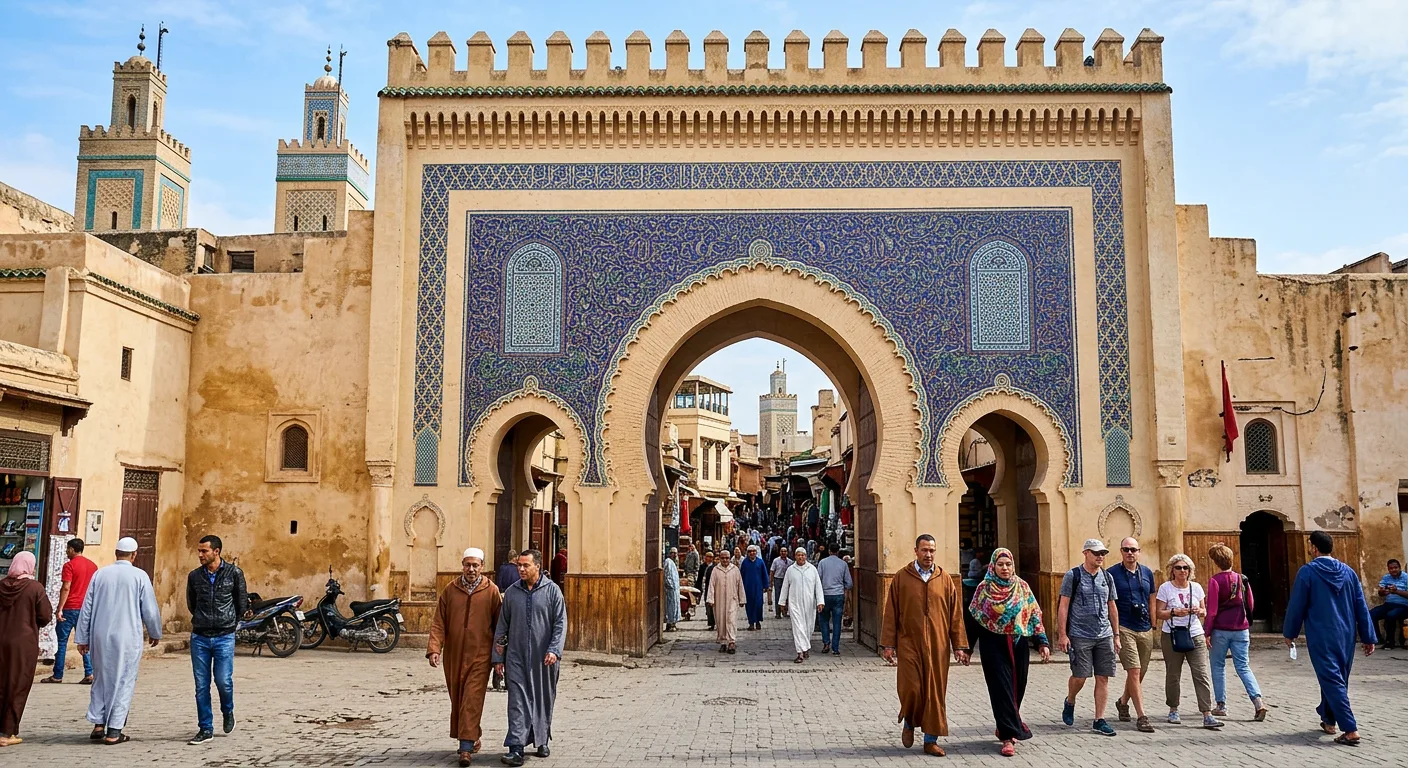
Give Fes el-Bali two full days with a licensed Fassi historian. Day one reads the spine of the medina — the Kairaouine quarter, the Chouara tanneries, the Bou Inania and Al-Attarine medersas, the coppersmiths of Place Seffarine. Day two slows down: a weaver's loom, a calligrapher's desk, the Nejjarine woodwork museum. Save a third day for Volubilis and Meknes, often paired with the holy town of Moulay Idriss.
What we wouldn't do
- Try to "do" Fes el-Bali in half a day. Nine thousand lanes need more than that.
- Walk the medina without a guide on day one — you will get lost, and not the good kind.
- Skip the tanneries because of the smell. Go early, take the mint, and watch the dye vats from a leather-shop balcony.
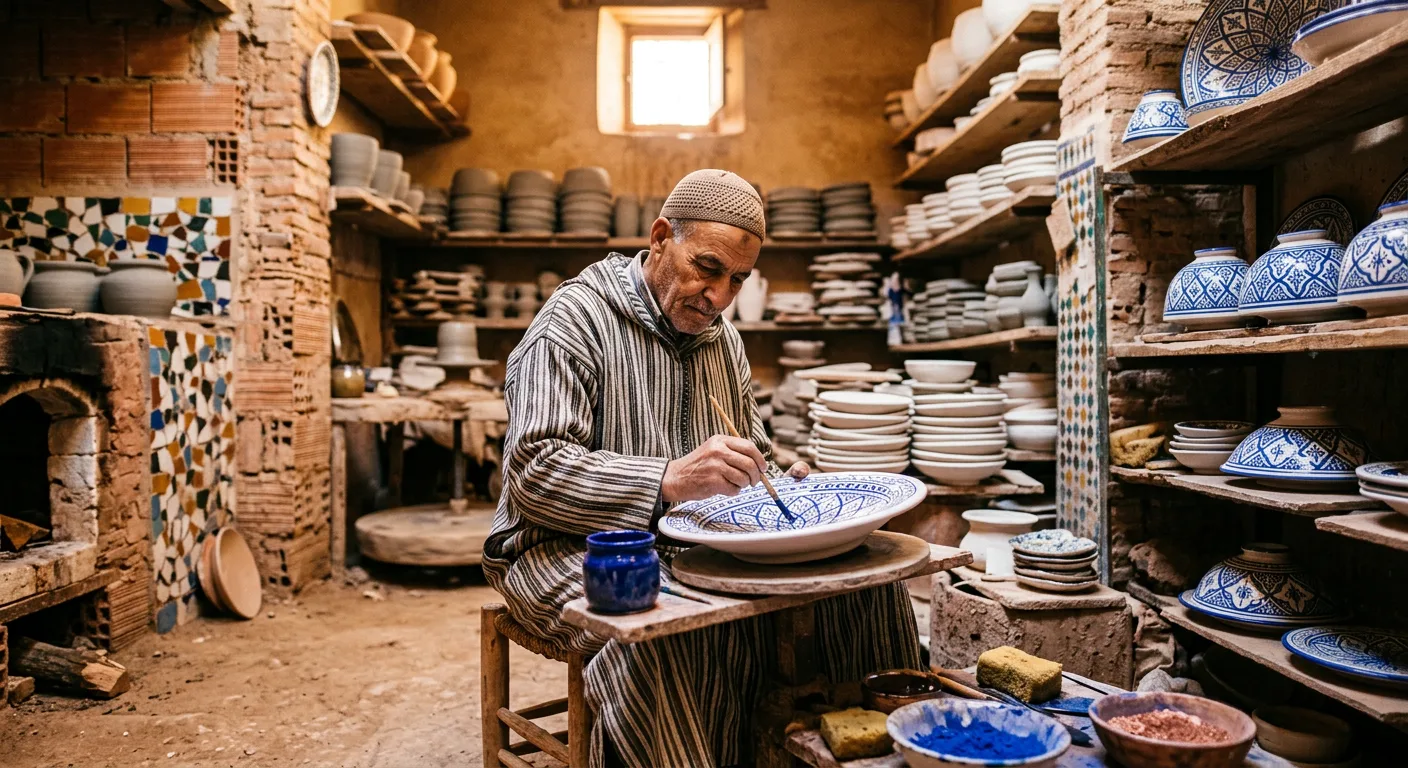
- Buy zellige or a rug on arrival. Spend a morning with the maâlems first, then buy once you know what good work costs.
A note on budget
A private full day in Fes el-Bali with a licensed historian and all monument entries generally lands between $90 and $160 per person; a Volubilis-and-Meknes day trip with a private car runs a little more. Multi-day imperial routes and craft workshops move that number. We will always tell you the truth before you book.
 Most booked