Fes, Morocco· Concierge · Mon–Sat · 09:00–18:00 GMT+1
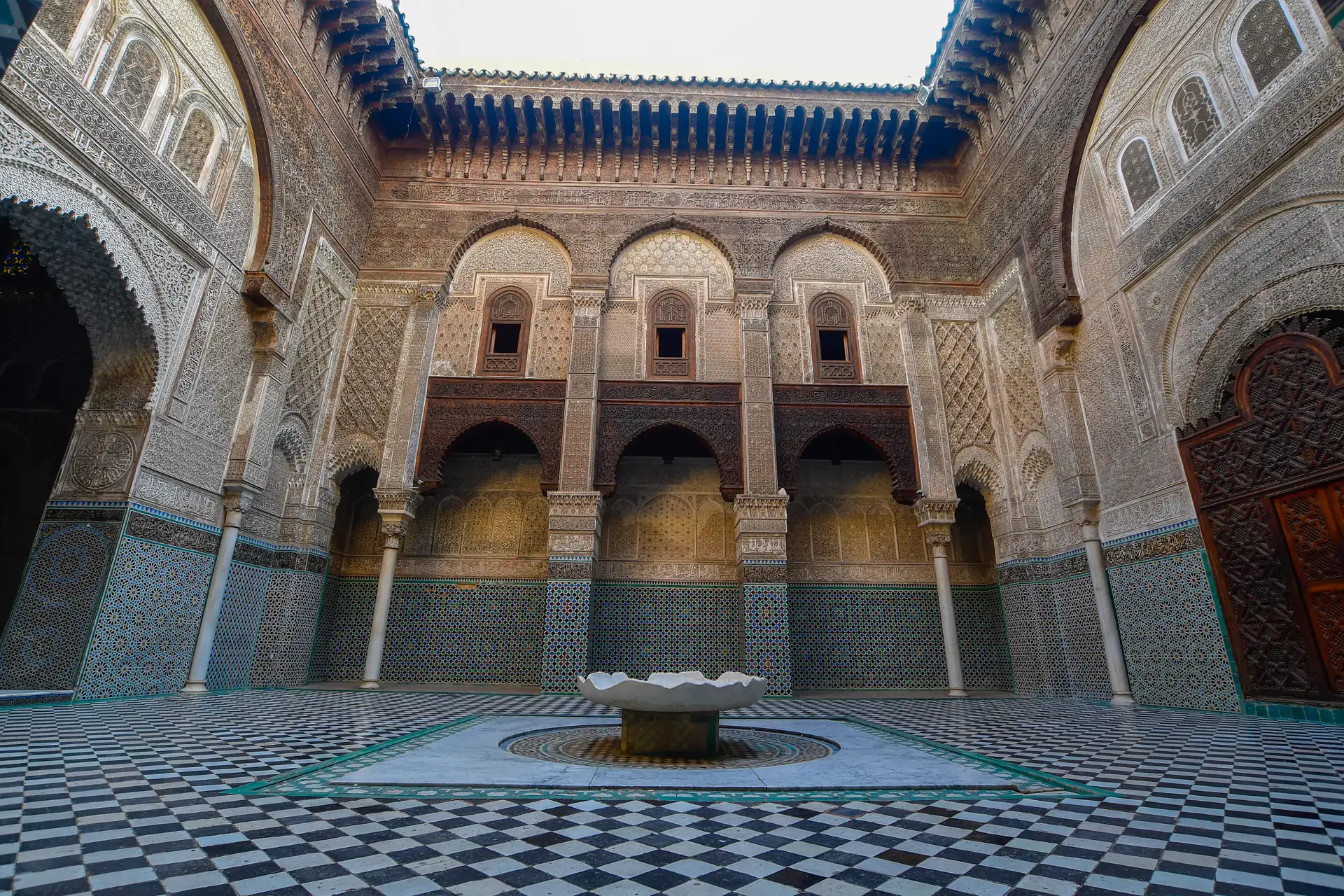
Al-Attarine Madrasa, Fes · Photo: Houssain tork, CC BY-SA 4.0
Morocco public holidays and festivals
Morocco's calendar mixes fixed national holidays with Islamic holy days that move earlier each year with the moon. For a Fes trip, the headline events are the Fes Festival of World Sacred Music each June and the Moussem of Moulay Idriss II in the medina. Riads, restaurants and tourist sites stay open on most holidays.
- Updated June 2026
- 6 min read
- Culture
Morocco's calendar blends Islamic holy days that shift annually with the moon, fixed national holidays and a rich programme of festivals — led, for a Fes trip, by the Fes Festival of World Sacred Music each June and the Moussem of Moulay Idriss II in the medina. Knowing the calendar helps you plan around closures and catch the country's big festivals.
What are Morocco's national public holidays?
Morocco observes a mixture of fixed national holidays (Gregorian calendar) and moveable Islamic holidays (Hijri lunar calendar). On public holidays, government offices, banks and some businesses close, though tourist sites, riads and restaurants largely remain open. The following fixed dates are observed every year.
- 1 January — New Year's Day
- 11 January — Manifesto of Independence Day (commemorating the 1944 independence document)
- 1 May — Labour Day
- 30 July — Throne Day (anniversary of King Mohammed VI's accession in 1999 — one of the country's most celebrated holidays)
- 14 August — Oued Ed-Dahab Allegiance Day
- 20 August — Revolution of the King and the People Day
- 21 August — Youth Day (King's birthday)
- 6 November — Green March Day (commemorating the 1975 march into Western Sahara)
- 18 November — Independence Day (from French Protectorate, 1956)
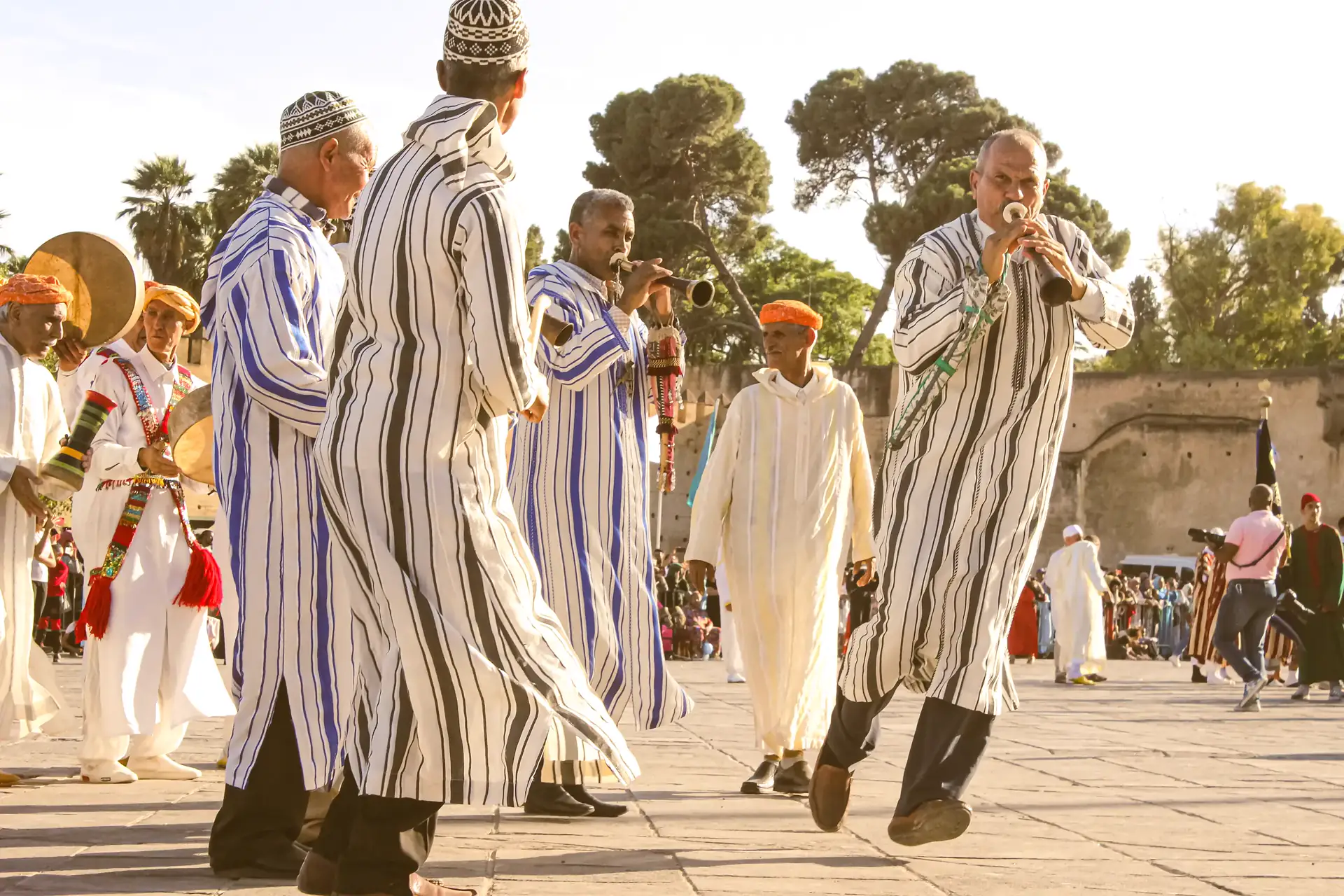
Ramadan shifts roughly eleven days earlier each Gregorian year.
Place Boujloud, FesWhich Islamic holidays affect travel in Morocco?
The Islamic calendar is lunar and approximately 11 days shorter than the Gregorian year, so Islamic holidays move earlier each year. The following occasions have the most noticeable impact on travel.
- Ramadan: the month of fasting; restaurants adjust hours, the pace of life changes in the afternoon and evenings become festive. See the dedicated Ramadan travel guide for detail.
- Eid al-Fitr (end of Ramadan): a 1–3 day public holiday when Morocco essentially closes; many Moroccans travel home to family. Riads and tourist sites remain open but staffed lightly.
- Eid al-Adha (Feast of Sacrifice): the larger of the two Eid celebrations; 1–3 days of public holiday approximately 70 days after Eid al-Fitr. Livestock markets are colourful and atmospheric in the days before.
- Islamic New Year (Ras as-Sana): 1 Muharram; a quieter holiday than the two Eids.
- Mawlid an-Nabi (Prophet's Birthday): celebrated in Morocco with particular warmth; street processions, music and sweets in many medinas.
- Yennayer (Amazigh New Year): 13 January; an increasingly public celebration of Berber cultural heritage, particularly in the Atlas and the south.
What are the major annual festivals in Morocco?
Beyond the public holidays, Morocco hosts a rich festival calendar that draws international visitors and offers genuine insight into Moroccan culture.
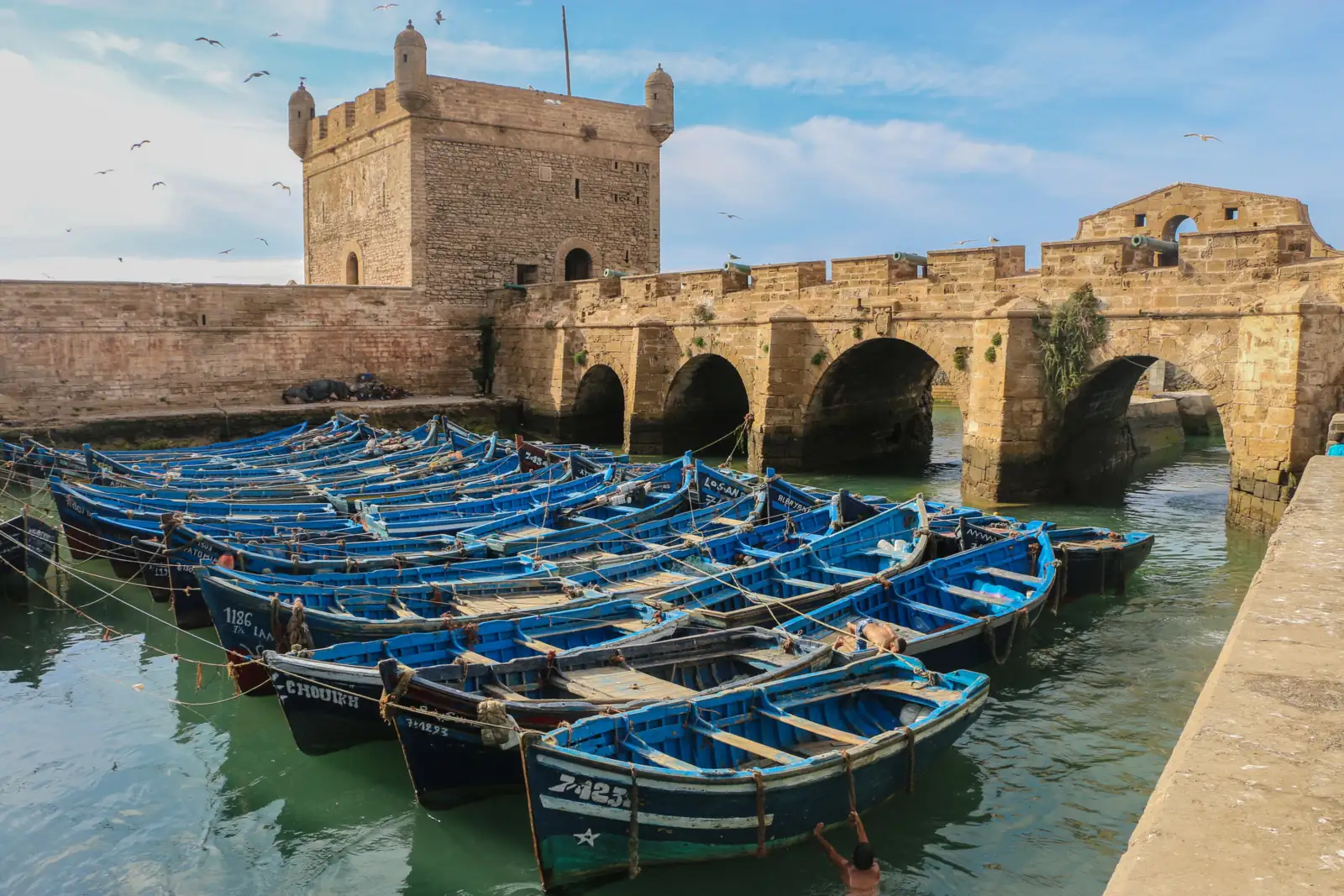
- Gnaoua World Music Festival, Essaouira (late June): four days of free outdoor concerts pairing Gnaoua master musicians with international artists in the medina squares and on the ramparts. One of Africa's finest music festivals. Book accommodation a year ahead.
- Marrakech International Film Festival (late November/early December): ten days of international and Arab cinema in the medinas and the Palais des Congrès; red-carpet events draw global stars to Jemaa el-Fnaa.
- Rose Festival, Kelaât M'Gouna (May): three days of parades and rose-water sales in the Dadès Valley town that processes 90% of Morocco's rose harvest. A small-town festival, held for the town itself.
- Fes Festival of World Sacred Music (June): ten days of Sufi music, gospel, classical Indian and spiritual traditions from around the world performed in the gardens and courtyards of old Fes palaces.
- Tan-Tan Moussem (variable, April–May): a UNESCO-listed nomadic tribal gathering in the deep south; camel races, traditional music and Saharan and Mauritanian culture in one place.
- Moussem of Moulay Idriss II, Fes (variable, August–September): an annual saint's festival centred on the medina shrine; religious processions and traditional music fill the quarter for several days.
How do public holidays affect visiting Morocco?
Throne Day (30 July) is the most significant fixed holiday, with festivities, parades and fireworks in Marrakech, Rabat and other cities. Government offices close for 1–2 days, but tourist infrastructure is largely unaffected — riads and restaurants stay open and often join the celebration. Eid al-Fitr and Eid al-Adha are the occasions when Morocco most visibly pauses: transport is crowded in the days before as Moroccans travel home; many shops close; and the usually busy streets become unexpectedly quiet on the day itself.
For travellers, these moments — particularly the quiet of Eid morning in a medina — can be unexpectedly moving. The reduced tourist infrastructure is temporary and offset by the experience of seeing Morocco in a genuinely festive or reflective mode. The key practical advice is to book restaurants and transport in advance for the days immediately around the major Islamic holidays, as availability shrinks.
When is Ramadan in Morocco in the coming years?
Ramadan shifts roughly eleven days earlier each Gregorian year. Dates depend on the moon sighting and are confirmed by Morocco's Ministry of Habous only a day or two in advance of the start. The approximate windows for the coming years are as follows.
- 2027: approximately 28 January — 26 February
- 2028: approximately 17 January — 15 February
- 2029: approximately 6–25 January
Quick answers
Short answers to what travellers ask us about this.
What is Throne Day in Morocco?
What is the Gnaoua Festival and when does it take place?
Can you travel during Eid al-Adha in Morocco?
Is the Rose Festival in Morocco worth attending?
What Islamic holidays should I avoid when planning a Morocco trip?
What is the Fes Festival of World Sacred Music and when is it?
Keep reading
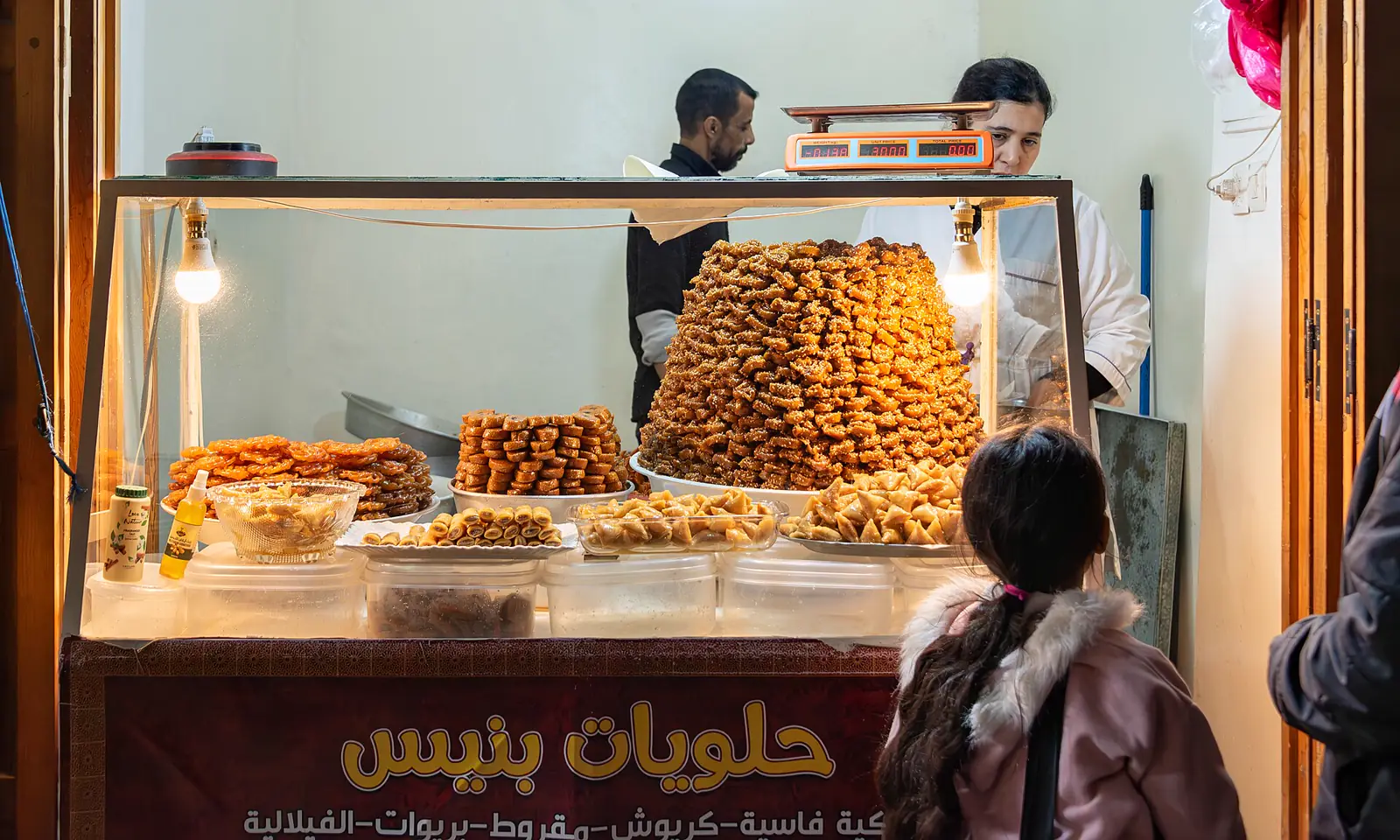 Ramadan in MoroccoRamadan transforms the rhythm of Fes in ways that can be unexpectedly wonderful — and in such a spiritual, scholarly city the holy month is felt deeply.Read the guide
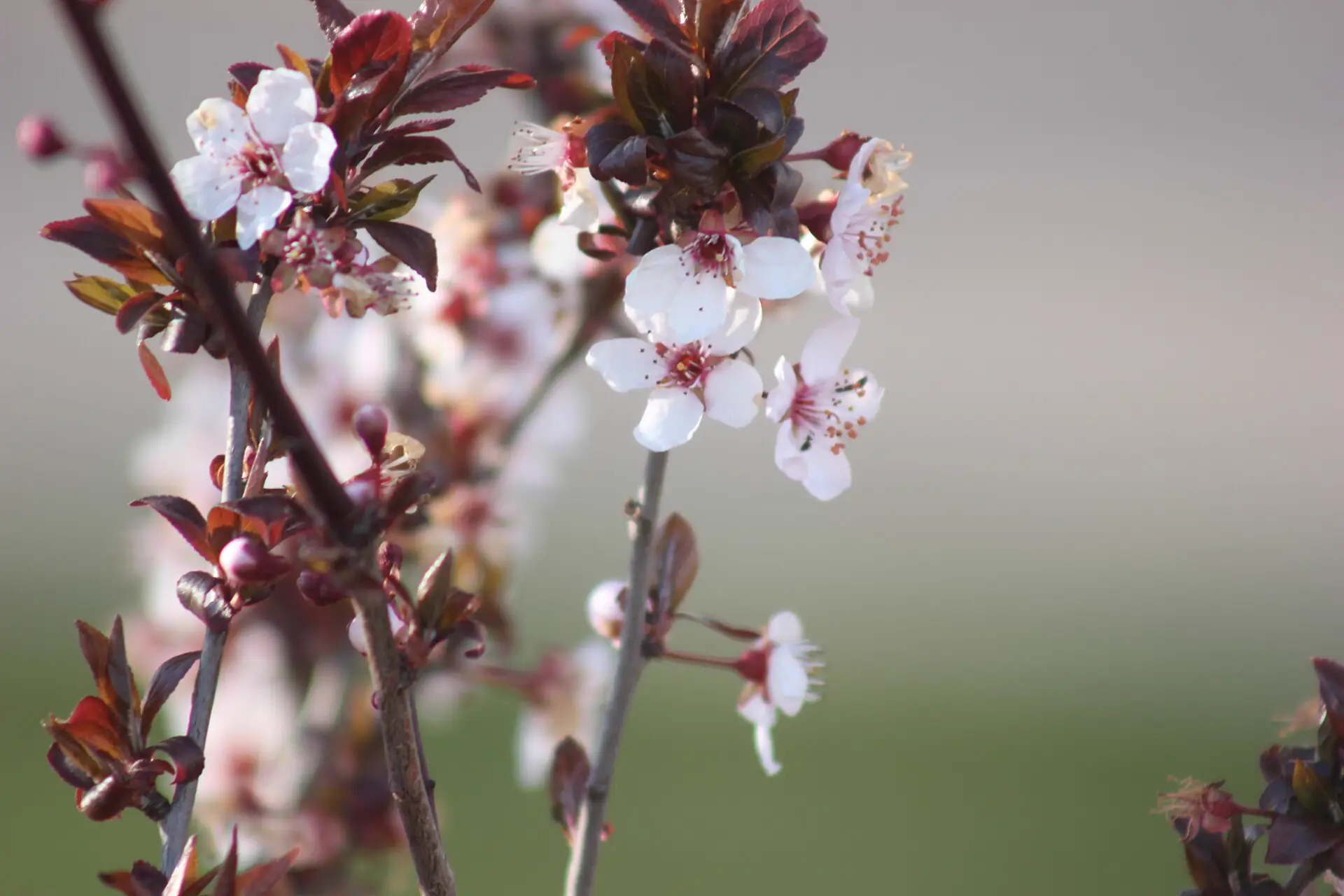 The best time to visit MoroccoSpring (March–May) and autumn (September–November) are the best all-round times to visit Morocco and to base yourself in Fes — warm days, cool evenings and comfortable conditions for long hours on foot in the Fes el-Bali medina, plus easy day trips to Volubilis, Meknes and the Middle Atlas.Read the guide
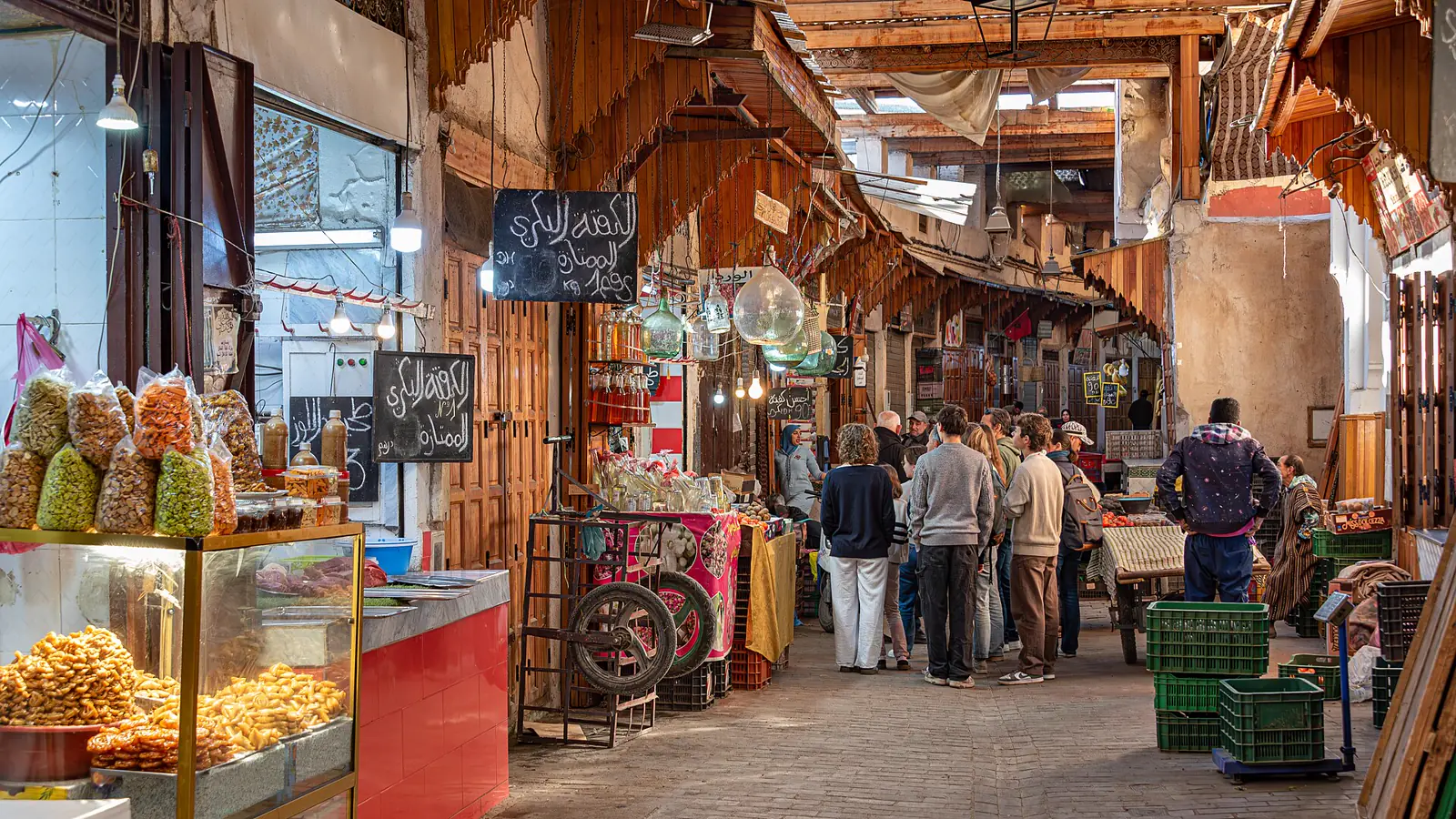 Moroccan food and drinkFes is widely considered the culinary capital of Morocco — the refined home of pastilla, slow-cooked tagines, couscous Fridays and a deep repertoire of medina street food, all washed down with the endless ritual of sweet mint tea.Read the guide
Tell us your dates. We'll plan it with you.
- Tell us what drew you in. Your dates, who is travelling and what you want to see.
- A person reads it. We write a day-by-day plan for your group, private or small-group.
- You change anything. Then we confirm the guides, drivers and riads.