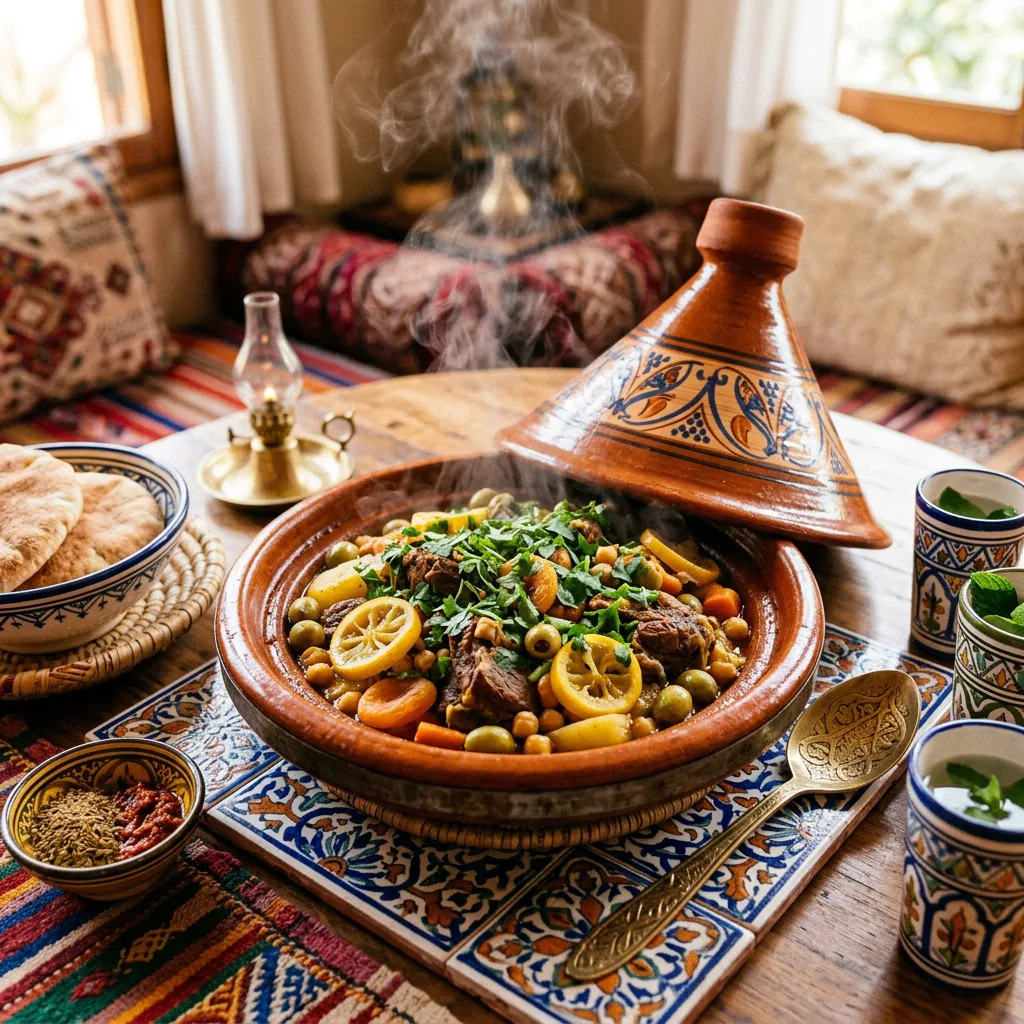
A cooking class in Fes — widely regarded as the culinary capital of Morocco and the home of pastilla — is one of the most immersive ways to connect with the country's culture: shopping the Fes el-Bali souks for saffron and preserved lemons, then slow-cooking a tagine over charcoal in a riad courtyard. This guide covers what you will learn, how to choose the right class and what the experience actually involves.
In this guide
What do you learn in a Moroccan cooking class?
A well-structured Fes cooking class typically covers three to five dishes over a three to four hour session: a tagine (often chicken with preserved lemon and olives, or lamb with prunes and almonds), a couscous dish, Moroccan salads (zaalouk, taktouka or makouda), and — fittingly in its home city — pastilla, the elaborate savoury-sweet pigeon or chicken pie in warka pastry that is the pride of Fassi cooking, plus msemen (layered flatbread). Classes that include a souk visit add a spice lesson in the Fes el-Bali lanes — how to identify and use ras el hanout, cumin, turmeric, ginger, paprika and saffron, and where to buy them at fair prices.
Most classes end with a communal meal of what you cooked, with mint tea and seasonal fruit. You leave with a printed or emailed recipe booklet. The better classes teach technique — how to build a chermoula marinade from scratch, how to layer a tagine so it does not dry out, how to roll couscous by hand — rather than simply following pre-measured ingredients.
Where are the best places for a cooking class in Fes and beyond?
Fes is the natural place to take a cooking class: the Fassi culinary tradition is considered by many Moroccans the most refined in the country, and classes here tend to be smaller and more intimate than elsewhere, often run by local women's associations or in family homes inside the medina, using wood-fired clay ovens and charcoal braziers. A Fes class typically pairs a souk walk through Fes el-Bali with hands-on cooking in a riad courtyard. If your trip extends south, Marrakech has the highest sheer concentration of cooking schools, while Essaouira, Chefchaouen and Ouarzazate offer classes with their own regional character.
In Fes, classes range from small riad sessions with a host family to women's co-operative experiences with a maximum of four to six guests cooking together. The most intimate formats — where you do the chopping, marinating and layering yourself rather than watching — are considerably more valuable and cost only modestly more.
- Fes: the culinary capital — intimate riad and women's co-operative classes; pastilla and Fassi cuisine speciality.
- Marrakech: the widest sheer choice, riad or school-based, groups of 2–15 people.
- Essaouira: Atlantic seafood focus; fish tagine, chermoula and coastal salads.
- Chefchaouen: mountain Rif cuisine; bean stews, kefta and herbs.
What does a Moroccan cooking class typically include?
Most classes in the mid-to-upper price range include a souk shopping tour of one to two hours, during which your instructor buys fresh ingredients and explains the spice market. The cooking session then takes three to four hours and covers multiple dishes. A communal meal of everything you cooked follows. Some classes offer a recipe booklet; the better ones include a follow-up email with adapted recipes for a home kitchen (where a clay tagine and a wood fire are unavailable).
Classes targeted specifically at vegetarians, vegans or those with dietary restrictions exist in Fes and Marrakech — request this when booking. Moroccan cuisine is naturally rich in vegetable dishes; a vegetarian class is not a compromise.
- Included in most: souk tour, all ingredients, cooking session, communal meal, mint tea.
- Often included: printed recipe booklet, apron to keep.
- Check ahead: vegetarian/vegan options, children's participation policy, class size.
- Not included as standard: alcohol (Morocco is a Muslim country; wine is available in some tourist-oriented riads on request).
How much does a Moroccan cooking class cost?
Group classes (6–15 people) in Fes or Marrakech cost USD 35–60 per person including the souk tour and communal meal. Private classes for one to two people from a Fes riad host or specialist school cost USD 80–150 per person for the same programme. Specialist classes focusing on pastilla — a Fassi speciality — bread making or a full Moroccan feast for a larger private group range from USD 120–200 per person.
Classes marketed to day-trippers and organised through large hotels tend to be more expensive (USD 80–120 per person for a group session) and less authentic in feel; booking directly with a Fes riad or a local food tour operator is usually both cheaper and more intimate.
Tips for getting the most from your cooking class
Book early: the best small-group and private classes in Fes fill up two to four weeks ahead during high season (March–May, October–November), and faster still around the Fes Festival of World Sacred Music in June. Ask the instructor what the class ratio of instruction to hands-on cooking is — the best classes have you doing the chopping, mixing and seasoning, not watching. If you have specific dietary restrictions, mention them at booking and confirm again the day before.
Wear clothes you do not mind getting splattered: tagine sauce and turmeric are both enthusiastic. Arrive hungry — the meal at the end is substantial.
Frequently asked
Is a cooking class in Morocco worth it?
For most travellers, yes — especially the classes that include a souk walk. Cooking a tagine from scratch with a local instructor, eating the result with mint tea in a riad courtyard, and leaving with recipes you can recreate at home is a genuinely enriching experience. It is also one of the better ways to have an extended, natural conversation with a Moroccan host in a non-commercial setting.
Can children do a Moroccan cooking class?
Most riad-based classes welcome children aged six and above; check the specific school's policy. Children typically enjoy the souk tour and the bread-making element most. Avoid very high-heat charcoal sessions with young children; many classes use gas or induction hobs for the main cooking.
What is the difference between a tagine and a couscous?
A tagine is a slow-cooked stew of meat, poultry or vegetables with aromatics, cooked in and named after the conical clay vessel. A couscous is a dish of fine semolina grains steamed over a broth of meat and root vegetables (seven vegetables is the traditional number); it is traditionally served at Friday family lunches. Both are pillars of Moroccan cuisine and most cooking classes cover at least one of each.
Do I need any cooking experience before a Morocco cooking class?
None at all. The best classes are designed for complete beginners and explain everything from scratch. Experienced home cooks will find the class equally valuable — Moroccan spice combinations, preserved lemon technique and the layering method for a tagine are genuinely different from European or American cooking traditions.
What spices should I buy in Morocco to recreate the dishes at home?
Ras el hanout (a complex blend of 20–30 spices), whole cumin, smoked paprika, ground turmeric, ground ginger, cinnamon sticks, dried rose petals and saffron threads. Preserved lemons are easy to find internationally or to make at home with lemons and salt. Buy spices in the Fes el-Bali souk from a reputable stall, ideally one your cooking instructor recommends.
Planning a trip?
Let a Marrakech atelier handle the details.
Tell us your dates and style and we'll send a written itinerary and a transparent quote within 24 hours.
Request an itineraryKeep reading
Culture
Moroccan Food & Drink
Fes is widely considered the culinary capital of Morocco — the refined home of pastilla, slow-cooked tagines, couscous Fridays and a deep repertoire of medina street food, all washed down with the endless ritual of sweet mint tea.
Planning
Things to Do in Marrakech: The Essential Guide
Marrakech is the natural southern companion to a Fes trip — a louder, more theatrical imperial city with world-class gardens, hammam rituals, rooftop dinners and a square that transforms nightly into one of the world's great open-air spectacles. If your Fes itinerary ends in the Red City, here is where to spend your time.
Culture
Morocco Etiquette & Customs
A little cultural awareness goes a long way in Fes, one of Morocco's most traditional and spiritual cities. Dress modestly, greet warmly, ask before photographing people, use your right hand, and embrace the unhurried pace of mint tea and conversation in the medina.