The story of Bab Mahrouk
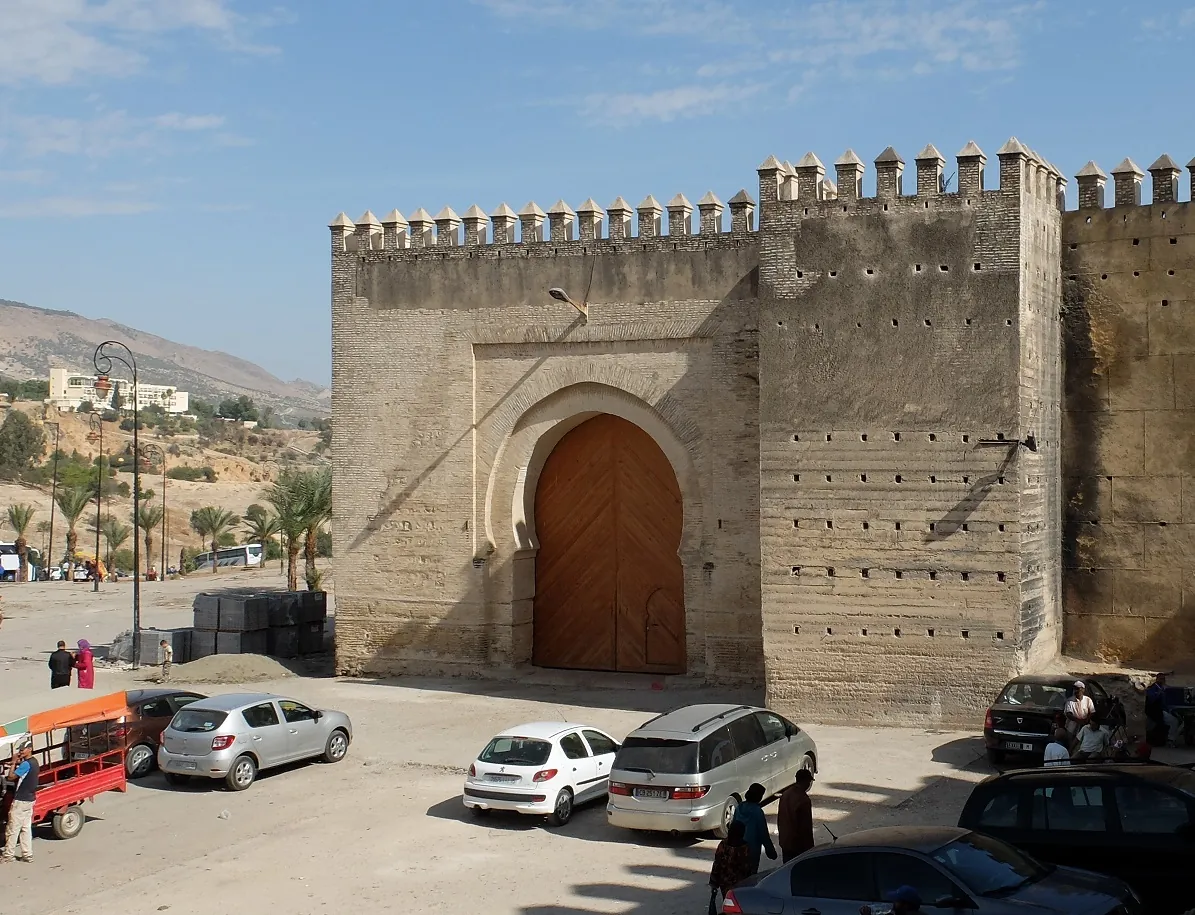
The Almohad ruler Muhammad al-Nasir built the gate in 1204 as part of his rebuilding of the city walls. en.wikipedia.org (source, opens in a new tab)
It may once have been called Bab ash-Shari'a, roughly "Gate of the Law". It became Bab Mahrouk, "Gate of the Burnt", after the body of a rebel, al-'Ubaydi, was burned here in 1203–04. The heads of executed rebels were displayed at the gate, a practice that continued on occasion into the early 20th century. en.wikipedia.org (source, opens in a new tab)
Bab Mahrouk and Bab Guissa are the two fortified gates of Fes el-Bali that keep their Almohad form. en.wikipedia.org (source, opens in a new tab)
Outside the gate lies the Bab Mahrouk Cemetery. It holds the mausoleum of the 12th-century scholar Abu Bakr ibn al-Arabi and the grave of the Granadan poet Ibn al-Khatib, killed in prison in Fes in 1375. en.wikipedia.org (source, opens in a new tab)