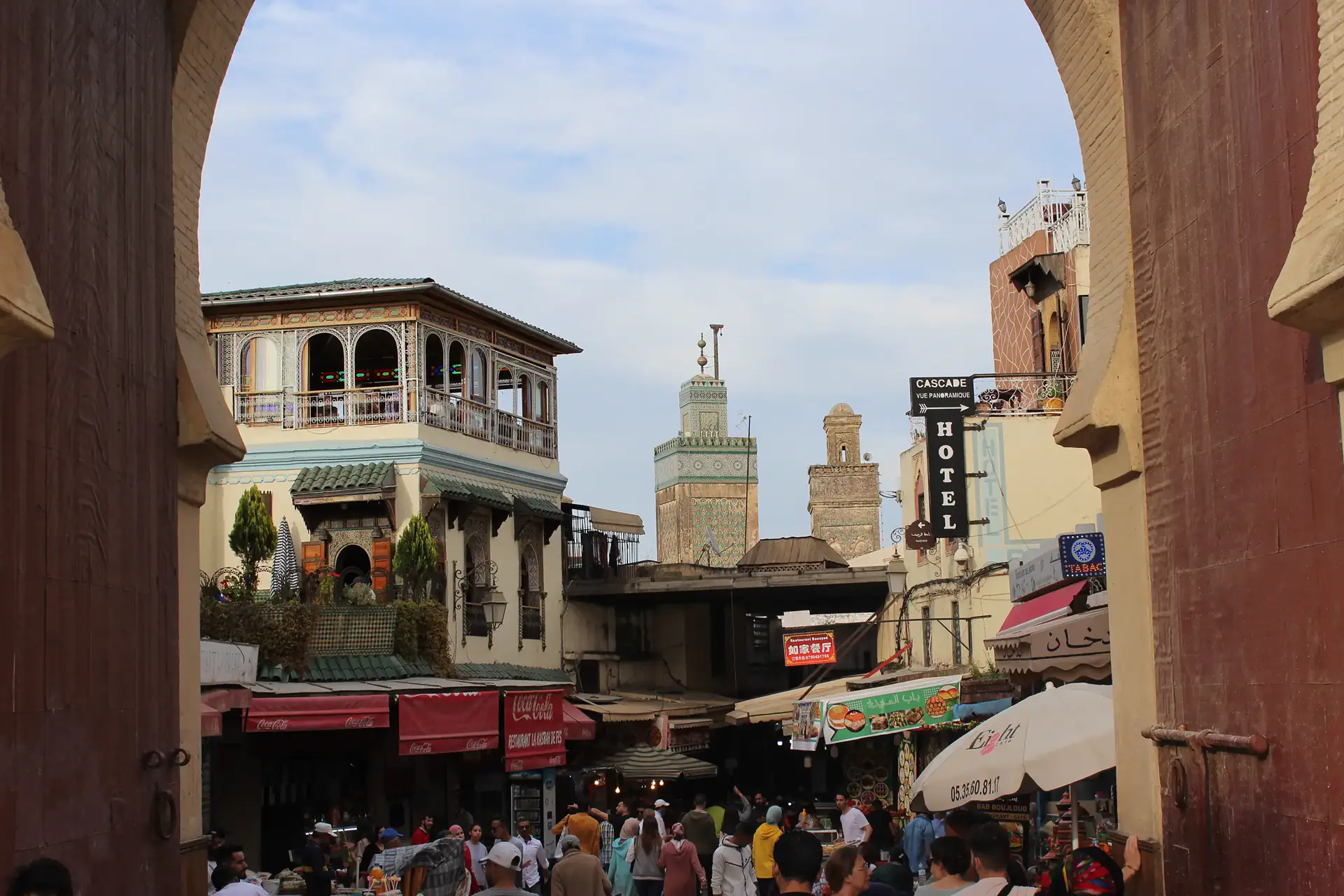
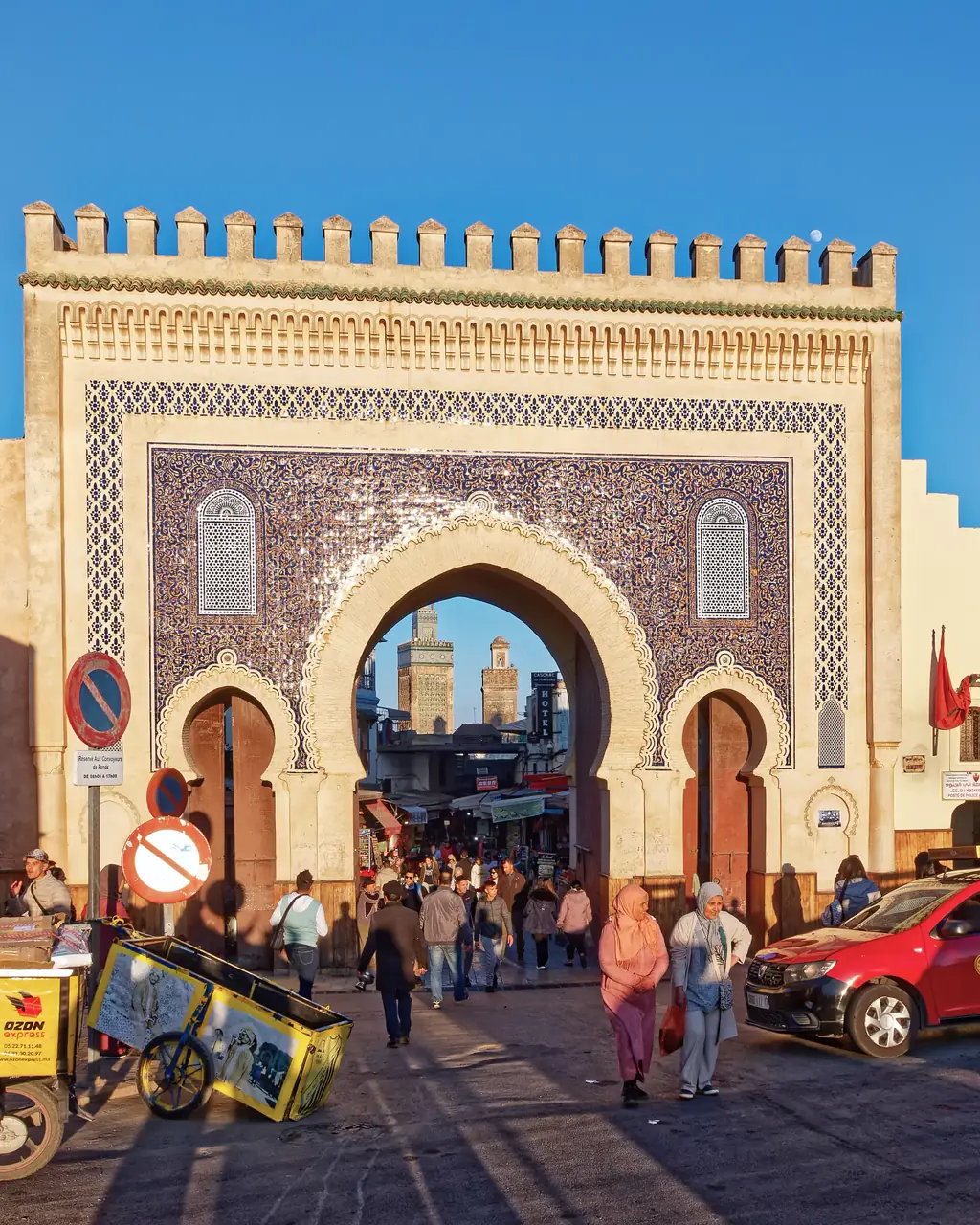
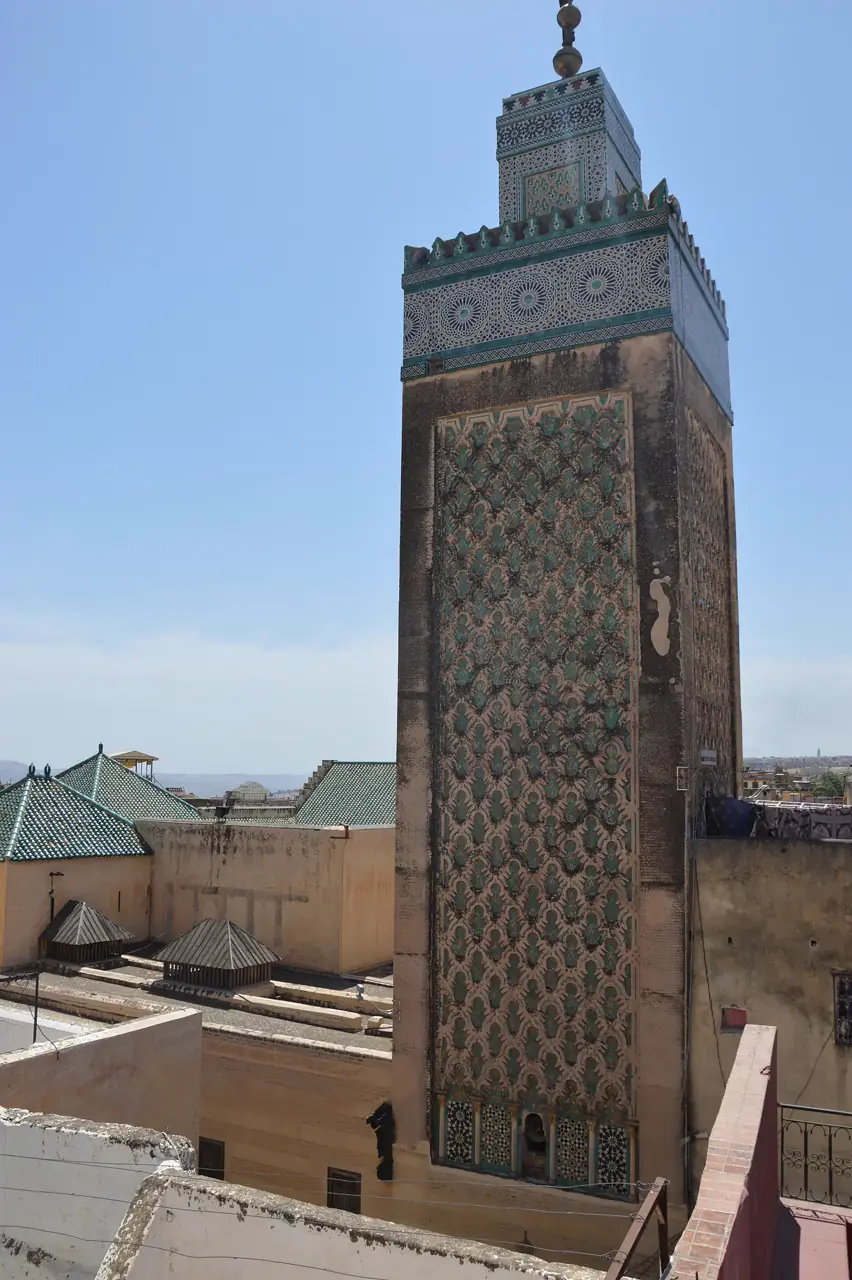
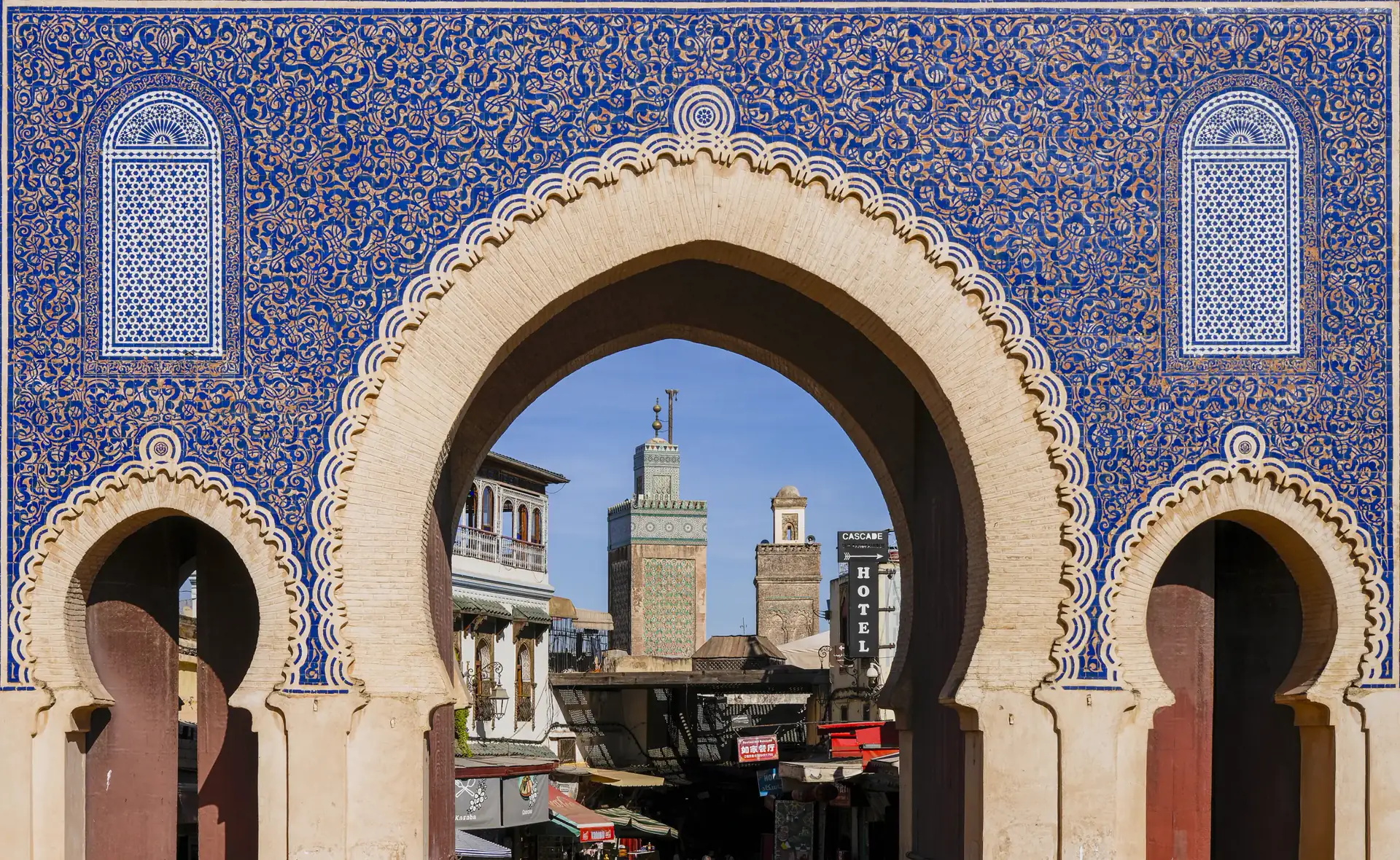
The blue-tiled horseshoe arch of Bab Boujloud framing the minaret of the Bou Inania madrasa, Fes

Bab Boujloud, Fes · Photo: Timothy A, CC BY-SA 4.0

Bab Boujloud

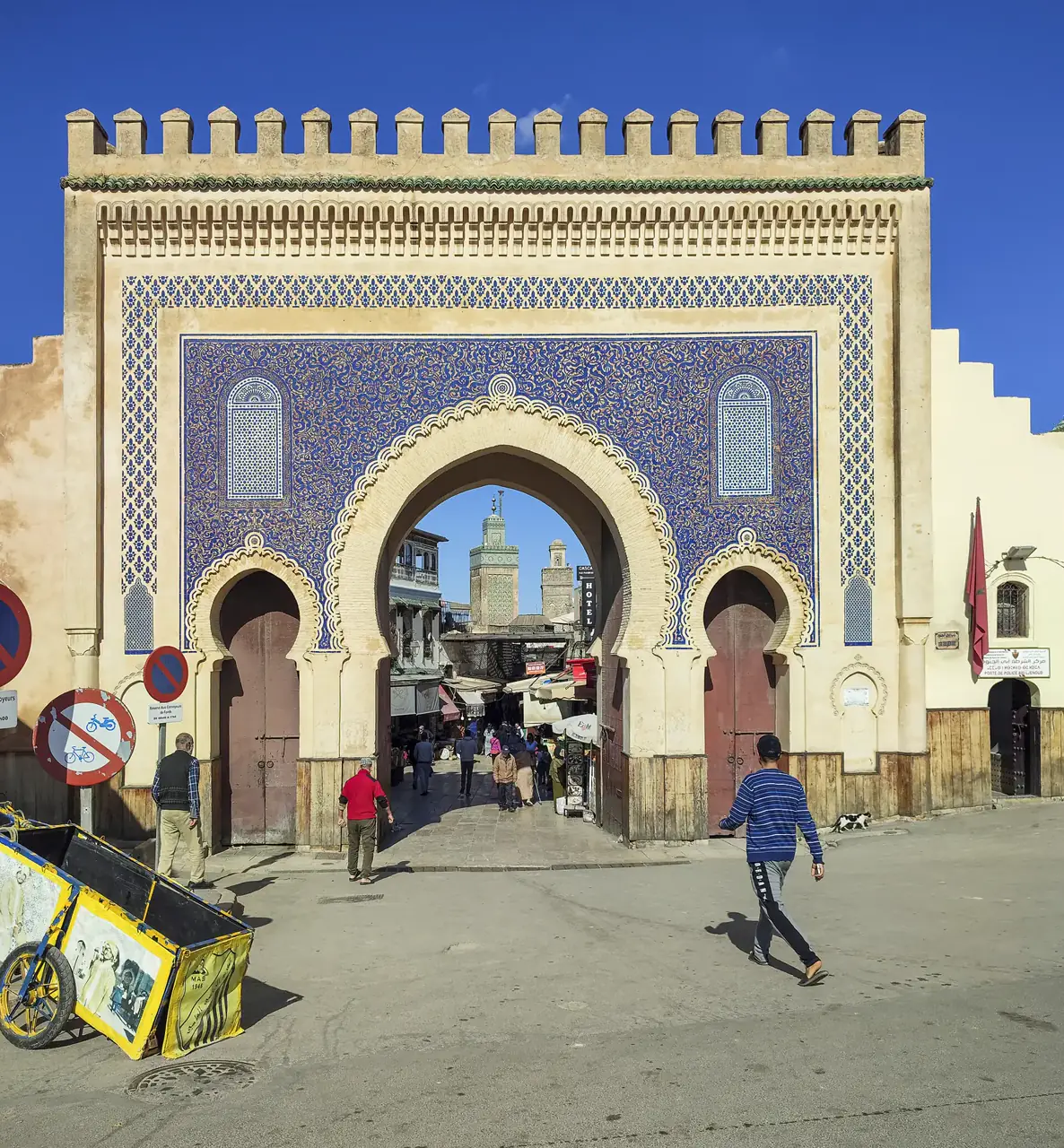
Bab Boujloud is the western gateway into Fes el-Bali, built in 1913 and tiled blue on the outside and green on the inside. Look through its three horseshoe arches and you see the minarets of Bou Inania and Sidi Lahcen. The gate opens onto Talaa Kebira and Talaa Seghira, the two main streets of the old medina.

  • Written by our Fes team
  • Private or small-group
  • A written quote for your dates

What you'll see

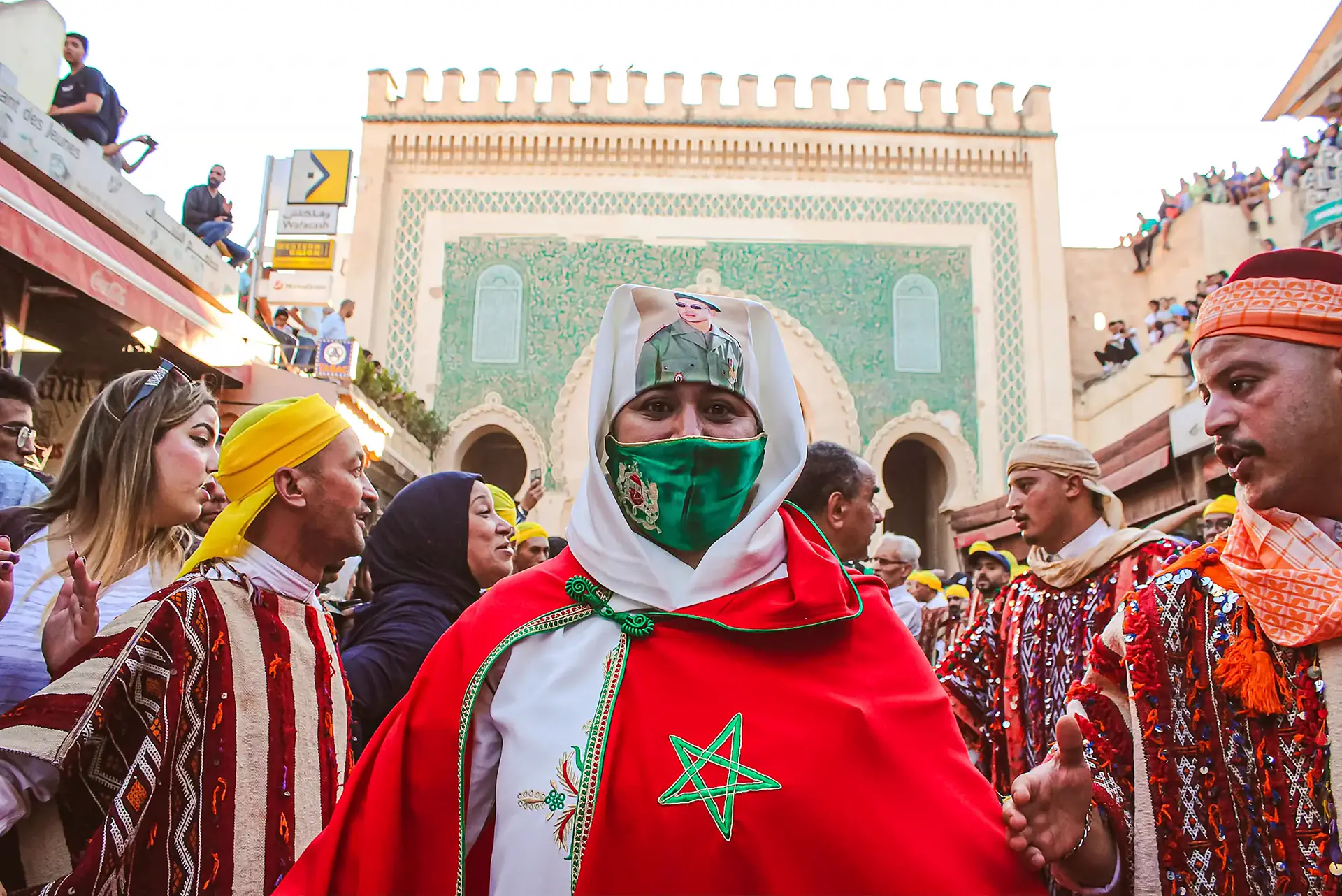
Bab Boujloud — also written Bab Bou Jeloud — is the grand western gateway into Fes el-Bali and the medina's most recognisable landmark. The ornate monumental gate seen today was built in 1913, during the early French protectorate, in a Moorish and Marinid-revival style, replacing a plainer older entrance. It is famous for its glazed zellige tilework: predominantly blue on the outer, city-facing side, which gives it the nickname the "Blue Gate", and green on the inner, medina-facing side, green being the colour associated with Islam and with Fes itself. Frame your view through its three horseshoe arches and you catch the minarets of the Bou Inania and Sidi Lahcen mosques rising beyond. The gate opens directly onto the two great arteries of the old medina, Talaa Kebira and Talaa Seghira, and is ringed by cafe terraces that make it a classic spot for a mint tea and a long session of people-watching.

The monumental Blue Gate

Bab Boujloud is the ceremonial western entrance to Fes el-Bali and the image most associated with the city. The decorative gate standing today was built in 1913 in a Moorish and Marinid-revival style, a relatively modern facade dressed in glazed tile that frames a much older threshold into the medina. Its scale and ornament mark it out from the city's plainer working gates.

Blue on the outside, green on the inside

The gate's most distinctive feature is its zellige tilework, which changes colour depending on which way you face it. The outer, city-facing side is predominantly blue, giving Bab Boujloud its popular name the Blue Gate, while the inner side facing into the medina is green — the colour associated with Islam and traditionally linked with Fes. Walking through and turning back lets you see both schemes.

The framed view of the minarets

Stand back from the outer side and look through the central arch: the opening frames the minarets of the Bou Inania madrasa-mosque and the Sidi Lahcen mosque rising in the distance. This layered view — tiled arch in the foreground, green-tiled minarets beyond — is one of the most photographed compositions in Fes and is worth lining up carefully.

Talaa Kebira and Talaa Seghira

Just inside the gate the medina splits into its two main arteries: Talaa Kebira, the larger thoroughfare, and Talaa Seghira, the smaller parallel lane. Both run downhill through the heart of the old city and rejoin further in, so the gate is the upper hinge of the medina's principal walking route past souks, madrasas and workshops.

The cafe terraces

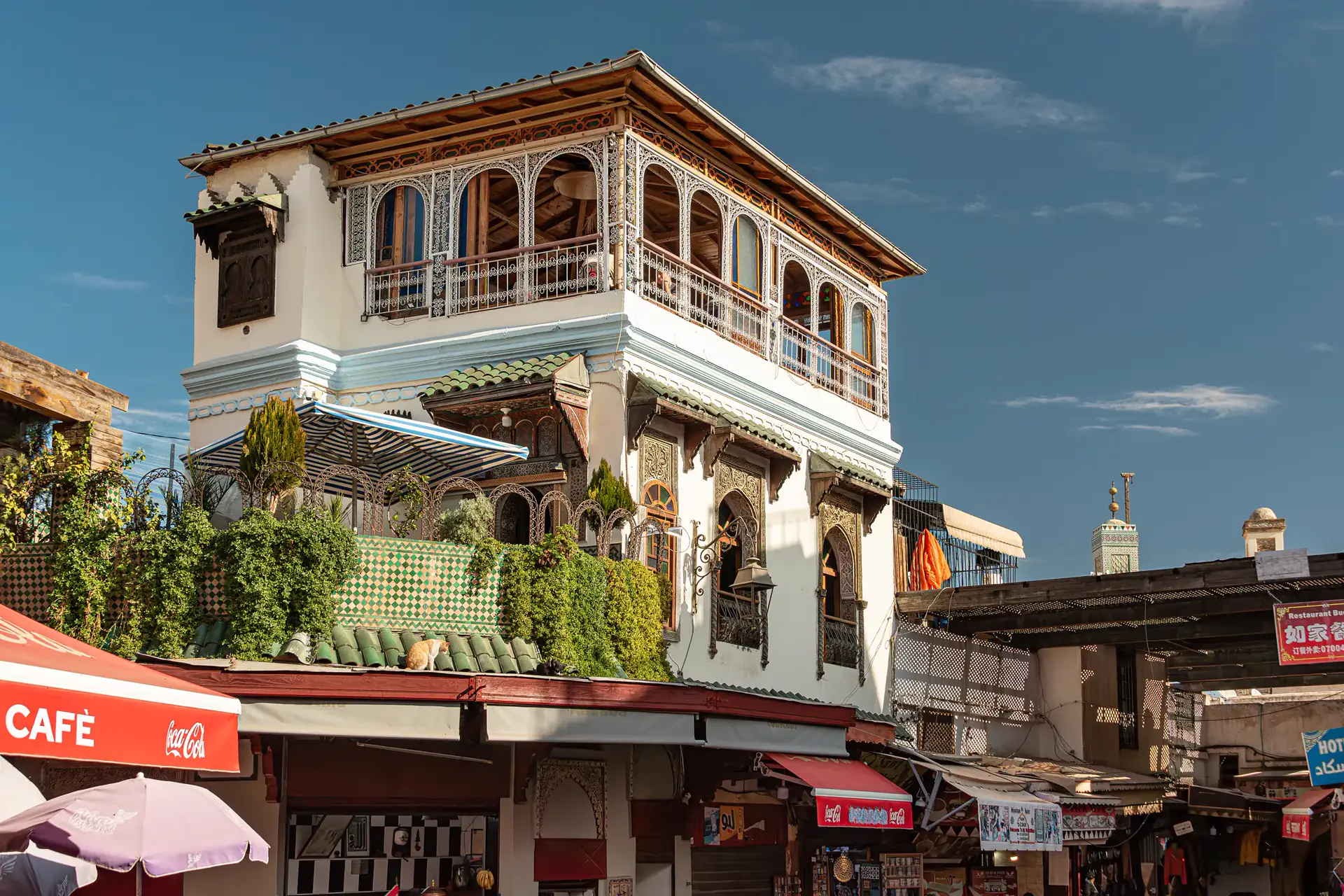
The square and lanes around Bab Boujloud are lined with cafes and rooftop terraces, several positioned to look back at the tiled gate. They are a classic place to sit with a glass of sweet mint tea, watch the constant flow of people through the arches, and get your bearings before plunging into the medina.

People-watching at the gate

Because nearly everyone entering this side of the medina passes through Bab Boujloud, it is one of the liveliest spots in Fes — porters, handcarts, guides, students and visitors all funnel through the arches. A seat at a terrace café here gives a constant, changing scene that is as much a part of the experience as the architecture.

Combining with the Talaa Kebira walk to Bou Inania

A natural plan is to enter at Bab Boujloud, then follow Talaa Kebira a short way downhill to the Bou Inania madrasa and the Dar al-Magana water clock opposite, before continuing deeper into the medina toward the souks, the Chouara tannery and the Qarawiyyin quarter. The gate makes both the start and the easiest return point for a medina walk.
Where Bab Boujloud is

Pinned on OpenStreetMap, with the walk from the nearest gate. The places around it link to their own guides.

فاس الباليFes el-BaliTalaa Kebira · الطالعة الكبيرةباب بوجلودBab Boujloudباب المحروقBab Mahroukباب عجيسةBab Guissaباب الفتوحBab Ftouhباب الجديدBab JdidالقرويينQarawiyyinالشوارةChouaraالرصيفRcifعدوة الأندلسAndalusian bankقبور المرينيينMerinid Tombsالبرج الشماليBorj NordالبوعنانيةBou Inaniaفاس الجديدFes el-Jdidواد فاسOued Fesمكناس · وليلي · الرباطMeknes · Volubilis · Rabatشفشاون · طنجةChefchaouen · the Rif · Tangierصفرو · إفرانSefrou · Ifrane · the Middle AtlasمراكشMarrakechمرزوكةMerzouga · Erg Chebbiفاس الباليFes el-Baliخارج الأسوارOut through the gatesأبعد من فاسOff the edge of the mapالرياضYour riadN500 m (schematic)باب بوجلودBab Boujloudباب بوجلودBab Boujloud

More about Bab Boujloud

The three horseshoe arches

The gate is built around three keyhole, or horseshoe, arches — a large central opening flanked by two smaller ones — set within a richly tiled facade of interlacing patterns and a band of inscription. The arches and surrounding decoration repay a slow look before you step through, and they neatly frame the lanes and rooftops of the medina beyond.

The front door to the medina

Bab Boujloud functions as the main pedestrian gateway into Fes el-Bali for most visitors, opening straight onto the medina's two principal streets. It is the natural place to begin a walk into the old city and an easy landmark to aim for when finding your way back out of the maze of lanes.

Best light for photography

For the blue, city-facing side, soft morning light tends to work best, lifting the cobalt and turquoise tiles before the square gets crowded and harsh midday sun flattens the colour. For the green inner side, photograph after you have passed through, looking back toward the arch. Early in the day also makes it easier to frame the gate without crowds.

Visiting with a local guide

Bab Boujloud is an open gateway rather than a ticketed monument, so there is no entry fee to pass through. A local guide can still add a great deal — explaining the blue-and-green tilework, pointing out the framed minarets, and using the gate as the launch point for an orientated walk so you do not lose the thread of the medina's lanes.

Before you knock

The questions people ask us most before they plan a trip.

Why is Bab Boujloud called the Blue Gate of Fes?
Bab Boujloud is nicknamed the Blue Gate because its outer, city-facing side is covered in predominantly blue glazed zellige tilework. Turn around once you pass through and the inner, medina-facing side is green — the colour associated with Islam and traditionally linked with Fes. The decorative gate seen today was built in 1913 in a Moorish and Marinid-revival style.
Is there an entry fee for Bab Boujloud?
No. Bab Boujloud is an open public gateway into Fes el-Bali, not a ticketed monument, so you can walk through it freely at any time. The cafes and terraces around it charge as normal for drinks and food, but passing through the gate itself is free.
What can you see through the arches of Bab Boujloud?
Looking through the central horseshoe arch from the outer side, the opening frames the minarets of the Bou Inania madrasa-mosque and the Sidi Lahcen mosque rising beyond. It is one of the most photographed views in Fes, with the tiled arch in the foreground and the green-tiled minarets in the distance.
Where does Bab Boujloud lead inside the medina?
The gate opens directly onto the two main arteries of Fes el-Bali — Talaa Kebira and Talaa Seghira — which run downhill through the old city. From the gate it is a short walk along Talaa Kebira to the Bou Inania madrasa, and the route continues past souks and workshops toward the Chouara tannery and the Qarawiyyin quarter.

Want to see Bab Boujloud with a local? We'll plan the day.

  1. Tell us what drew you in. Your dates, who is travelling and what you want to see.
  2. A person reads it. We write a day-by-day plan for your group, private or small-group.
  3. You change anything. Then we confirm the guides, drivers and riads.
Plan this with us