Here is the honest short answer. It is confirmed that Morocco is co-hosting the 2030 FIFA World Cup with Spain and Portugal, and that Fes is one of the announced Moroccan host cities, with an existing stadium, the Complexe Sportif de Fès. Almost everything travellers want to pin down next — the exact match schedule and dates, ticket prices, the stadium's final capacity after any renovation, and official fan-zone details — is not yet confirmed; check official FIFA and local announcements closer to the event. What you can plan around today is the city itself: how to reach it, where to stay, and the extraordinary medina and imperial-city day trips that make Fes worth the trip with or without a match ticket. The rest of this guide covers each of those.
The event
2030
Morocco · Spain · Portugal
Host city
Fes
Confirmed; details to come
Getting there
FEZ + train
High-speed not yet to Fes
What's actually confirmed about Fes hosting
Let's separate the solid facts from the speculation, because there is a lot of the latter online. Confirmed: the 2030 FIFA World Cup is a three-country co-hosted tournament shared by Morocco, Spain and Portugal, and Fes is among the Moroccan host cities that have been announced. The city already has a stadium, the Complexe Sportif de Fès, on its outskirts.
Not yet confirmed — and worth treating with healthy scepticism until official sources publish it — is essentially every specific you would build a trip around: the match schedule and the precise dates Fes will host, how many matches it will stage, the stadium's final capacity after any renovation, ticket prices and the sales process, and where official fan zones will be. We are deliberately not quoting numbers, dates or prices here, because doing so would mean inventing them. When the organisers and FIFA release the details, those are the sources to trust.
Our practical advice: get familiar with the city now and shortlist where you would stay, but keep your dates flexible until the schedule lands. That way you are ready to move quickly when ticketing opens, without having committed to non-refundable bookings on guesswork.
How to get to Fes
This is the part you can plan around with confidence today. Fes is well connected by both air and rail, with one important caveat about high-speed trains.
The city's own airport
By air — Fès–Saïss (FEZ)
Fes has its own airport, Fès–Saïss (FEZ), a short drive from the centre, with regional and seasonal international routes. For a tournament, expect schedules and capacity to be reviewed closer to the event — check live timetables rather than assuming a direct flight exists yet. Many visitors will still arrive via Casablanca (CMN), Morocco's main international gateway, and continue overland.
Casablanca · Rabat · Tangier
By train — ONCF (works today)
Conventional ONCF trains link Fes with Casablanca, Rabat and Tangier every day — comfortable, affordable and genuinely scenic. This is the dependable backbone for reaching Fes right now: fly into Casablanca, then take the train up to Fes. Book popular departures ahead during any peak period.
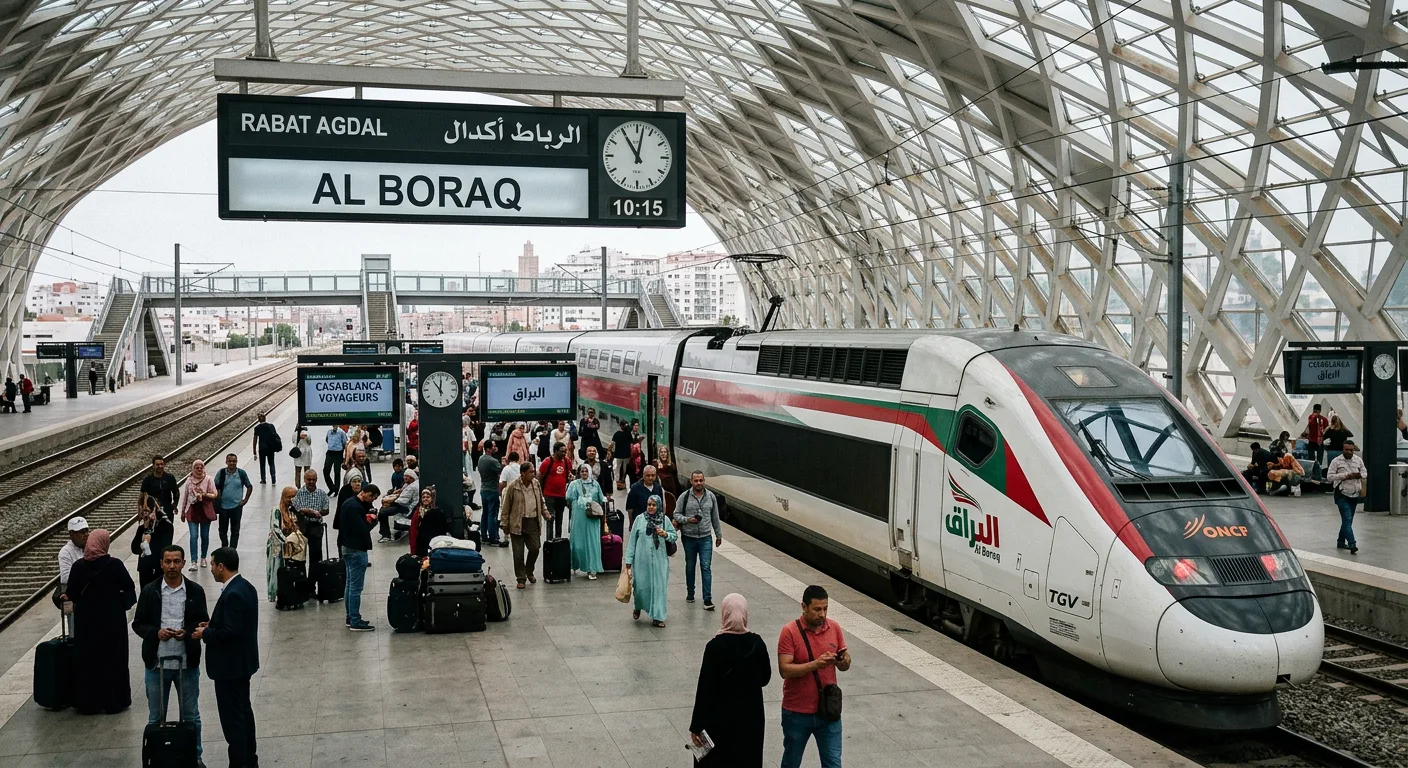
Al Boraq does not reach Fes
High-speed rail — planned, not yet running
Morocco's Al Boraq high-speed line currently runs Tangier–Kenitra–Rabat–Casablanca only — it does not yet reach Fes. An extension toward Meknes and Fes has been discussed but is not in service, so do not build your plans around high-speed rail to Fes. Watch official ONCF announcements; until then, the conventional train is your option.
Once you arrive, the medina itself is car-free, so getting around is on foot, by petit taxi to the gates, or with a driver for day trips. Our guide to getting around Fes covers taxis, the Ville Nouvelle and the medina gates in detail.
When to start planning and booking
Demand for Morocco around 2030 is likely to be strong, and Fes's best places to stay are small, characterful riads with only a handful of rooms — they fill quickly in any busy period. So it pays to research early and have a shortlist ready. But resist locking in non-refundable bookings until the official match schedule and ticketing are published, because the dates you would be committing to are not yet fixed. Plan early, commit late: shortlist now, book once the specifics are confirmed.
Where to stay — riad or Ville Nouvelle
Fes gives you two very different bases. A restored riad inside Fès el-Bali puts you in the medieval medina, moments from the sights, with a quiet tiled courtyard behind the bustle — the most atmospheric way to stay, though you will walk to reach it and may need a porter for bags through the lanes. The Ville Nouvelle, the early-20th-century new town, has more conventional hotels, easy car access and a quick taxi hop to the medina gates. For a trip built around something as special as a World Cup, most travellers choose a riad for the experience. Weigh both with our Fes neighbourhood guide.
What to do between matches — the medina
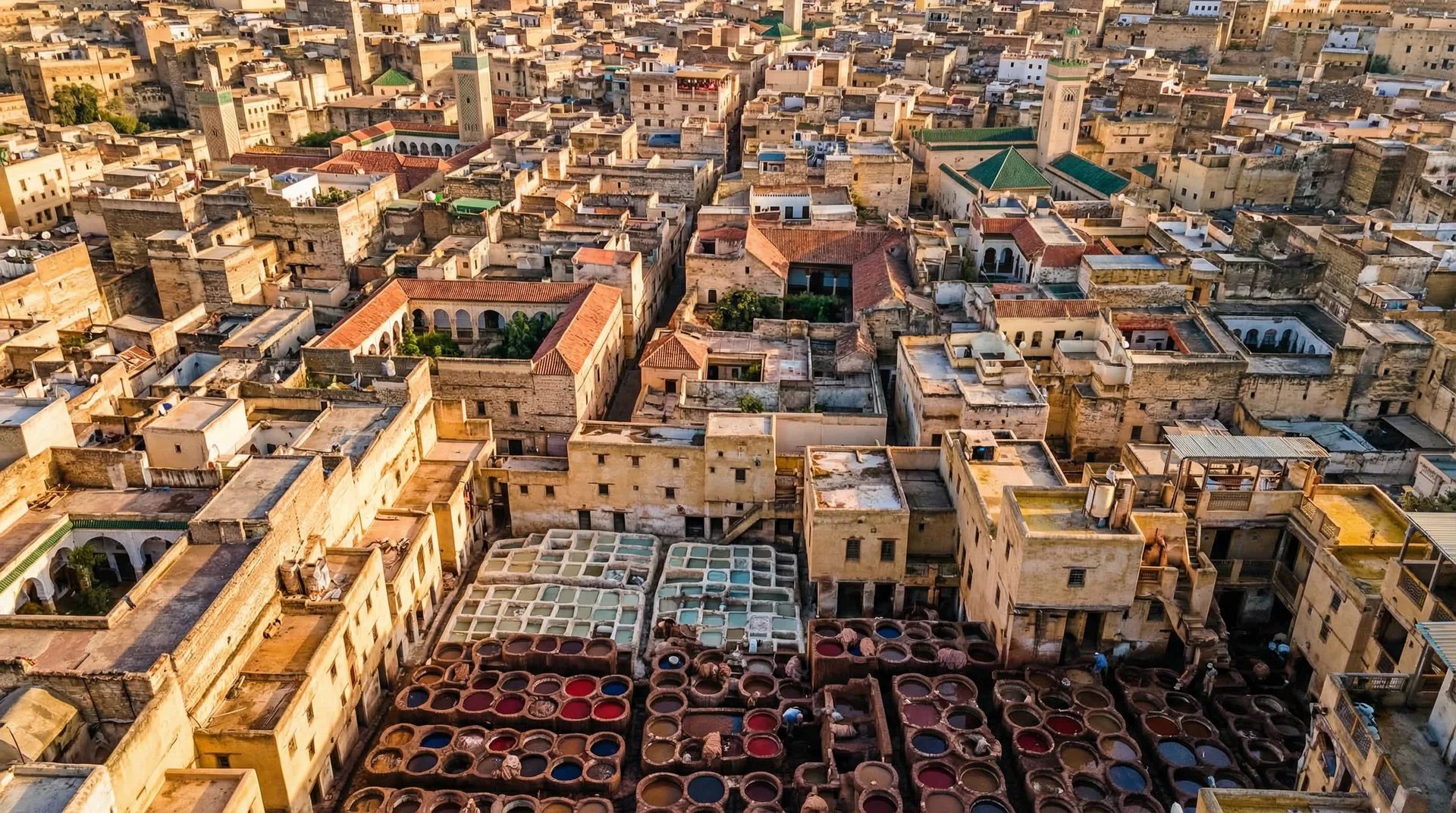
Fès el-Bali is the reason to come early and stay late. It is the world's largest car-free urban area — a labyrinth of unsigned lanes that has been a working city since the 9th century, and Morocco's spiritual and cultural capital. These are the sights to build your wandering around:
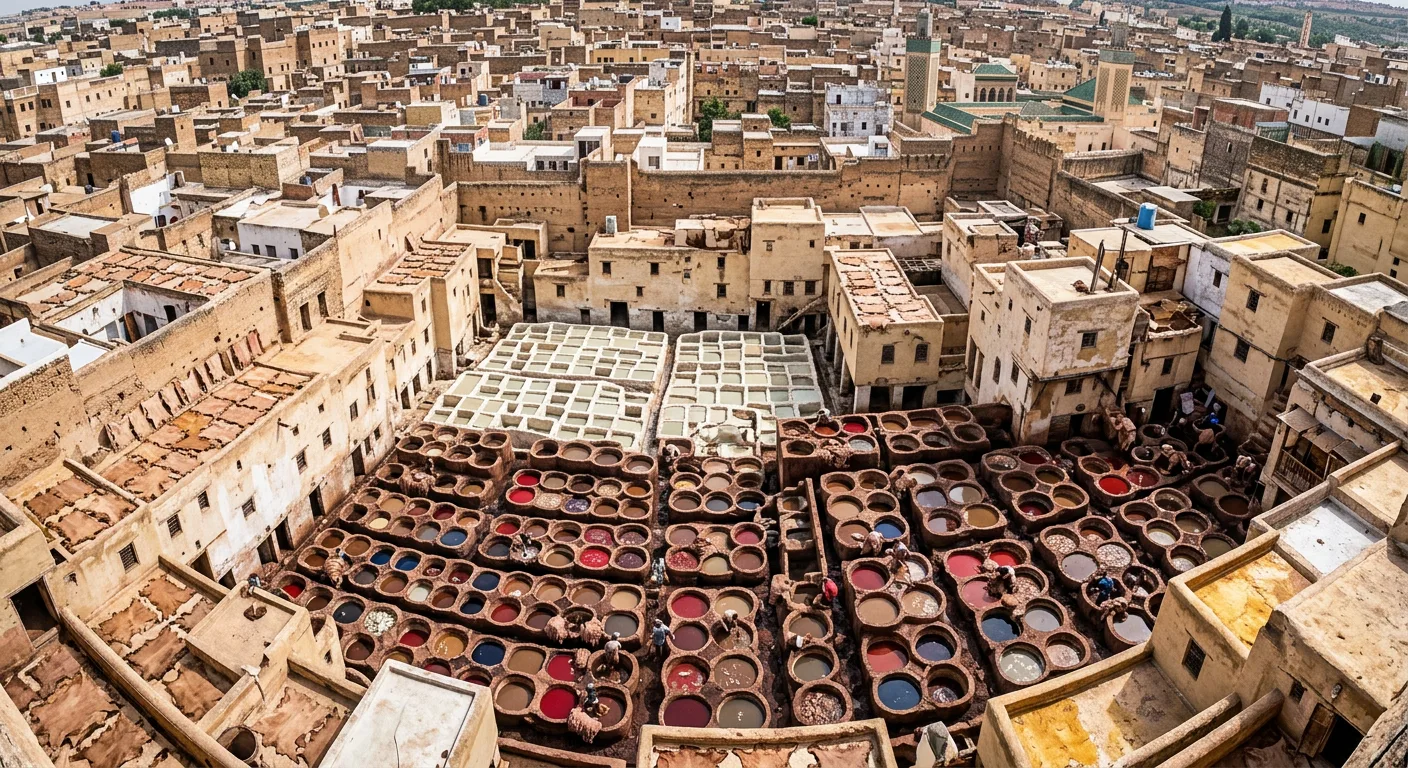
- The Chouara tanneries. The defining image of Fes: honeycomb dye pits worked by hand, viewed from the terraces of the surrounding leather shops. Late morning brings the best light and the fullest vats; you will be handed a sprig of mint for the smell.
- Al-Qarawiyyin. Founded in 859 AD and often described as the oldest continuously operating university in the world. Non-Muslims cannot enter the prayer hall, but you can glimpse the green-tiled courtyard through the doorways and walk the lanes that wrap around it.
- Bou Inania & Al-Attarine medersas. Two 14th-century Quranic schools, both masterclasses in zellige tilework, carved cedar and fine stucco. Al-Attarine sits beside the Qarawiyyin in the spice merchants' quarter.
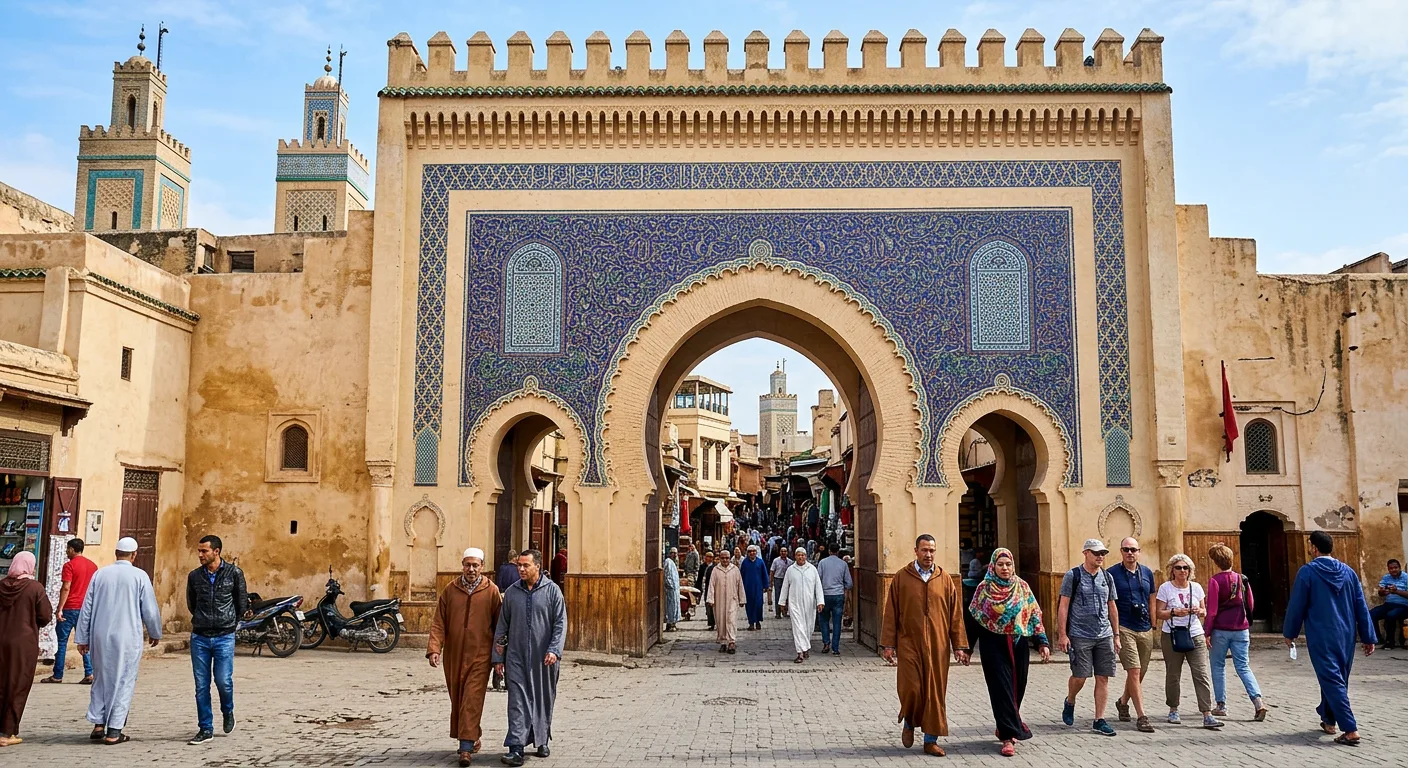
- Bab Bou Jeloud, the blue gate. The ceremonial western entrance — blue on the outside, green within — and a natural place to begin or end a day in the medina.
For the full on-foot route, see our practical Fes medina guide. A licensed guide for at least the first day is genuinely worth it here — the lanes are famously disorienting. You can also have us arrange a guided medina & tanneries tour.
Easy day trips with a clear day
A match schedule usually leaves gaps, and Fes is the gateway to a remarkably varied region: Roman ruins and imperial Meknès to the west, the cool cedar forests of the Middle Atlas to the south, and the blue Rif town of Chefchaouen to the north. Here is how they stack up, with realistic drive times.
≈ 1 hr west
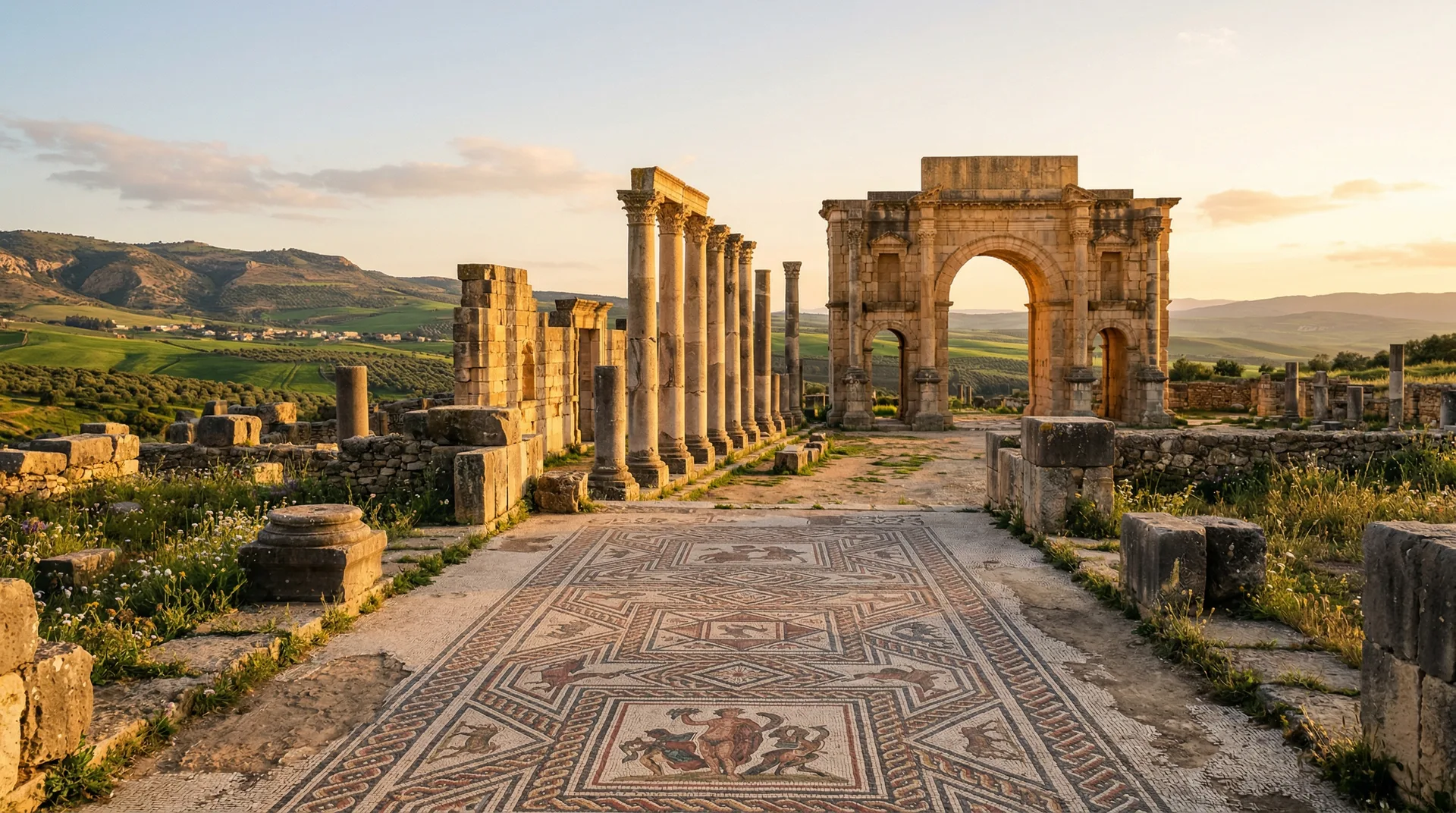
Meknès & Volubilis
The classic full day from Fes. The Roman ruins of Volubilis — mosaics, the Arch of Caracalla and a basilica on a fertile plain — pair with the imperial city of Meknès and its monumental Bab Mansour gate, and the whitewashed holy town of Moulay Idriss Zerhoun above. A perfect, low-effort day between matches.
≈ 1 hr south
Ifrane & the Azrou cedar forest
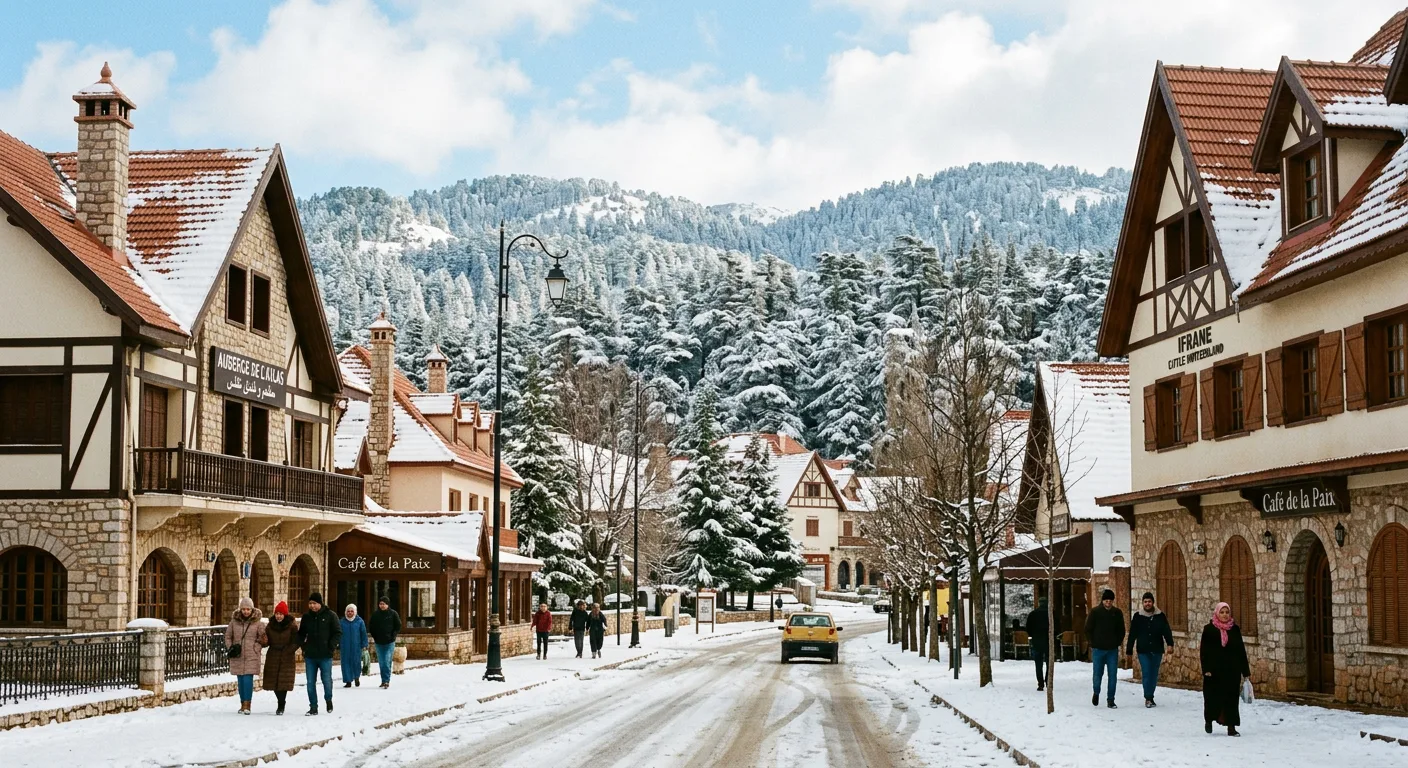
A cool, green contrast to the medina. The alpine-style town of Ifrane ('Little Switzerland') climbs into the Middle Atlas cedar forests near Azrou, where troops of wild Barbary macaques live by the road. Easy to combine with a mountain lunch and be back in Fes by evening.
≈ 3.5–4 hrs each way
Chefchaouen, the Blue City
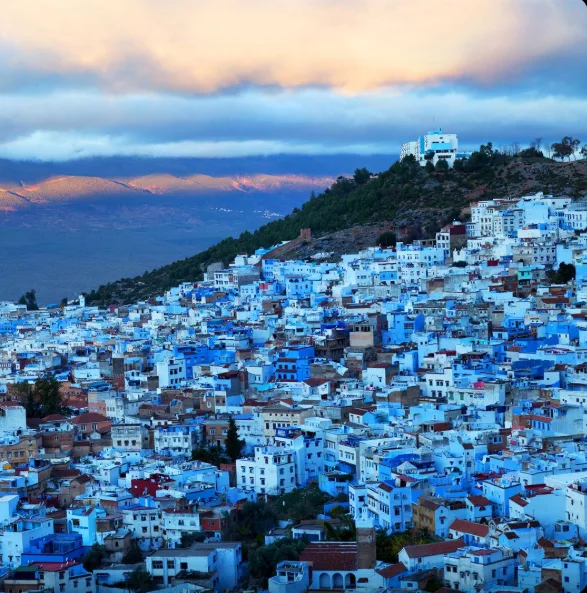
Morocco's most photogenic town, blue-washed into the Rif mountains. There is no train, so it is a drive — long enough that an overnight beats a there-and-back day. If your match days leave a clear gap, it makes a memorable side trip.
We can arrange any of these as a private day from Fes — a Volubilis & Meknès day trip, a Chefchaouen excursion, or the longer imperial cities tour. For more on the region, see our guide to Fes and the best day trips and the dedicated Fes to Chefchaouen transport guide.
Is Fes worth visiting beyond the football?
Emphatically yes. The World Cup is the timely reason this question is being asked, but Fes has been one of Morocco's great destinations for over a thousand years and will be long after. It is the country's spiritual and cultural capital, with the most intact medieval medina anywhere in the Arab world, a living crafts economy you can watch at work, and the imperial heartland on its doorstep. Whether you score a match ticket or not, two unhurried days in Fes is one of the most rewarding things you can do in Morocco. The best months for all-day walking are spring and autumn — see our best time to visit Fes guide, and how many days you need to plan the length of your stay.
Frequently asked
Is the 2030 World Cup schedule confirmed yet?
Not in detail. It is confirmed that Morocco is co-hosting the 2030 FIFA World Cup with Spain and Portugal, and that Fes is one of the announced Moroccan host cities. The fine print most travellers care about — the exact match schedule, the precise dates Fes will host, ticket prices and sales windows, final stadium capacity after any renovation, and official fan-zone locations — has not been finalised. Treat any specific figure you see online with caution and confirm against official FIFA and local Moroccan announcements closer to the event.
Is Fes a confirmed host city for the 2030 World Cup?
Yes. Fes has been announced as one of Morocco's host cities for the 2030 tournament, and the city already has a stadium — the Complexe Sportif de Fès. Renovation or expansion work has been discussed in connection with the event, but the final capacity and the building programme are not yet confirmed, so we are not quoting numbers until official sources do.
How do I get to Fes — does the high-speed train reach it?
Fes has its own airport, Fès–Saïss (FEZ), with regional and seasonal international flights, and the country's main international gateway is Casablanca (CMN), from which you can continue by train. Conventional ONCF trains reliably connect Fes with Casablanca, Rabat and Tangier every day — that part is real and usable today. The Al Boraq high-speed line, however, does not currently reach Fes: the live high-speed service runs Tangier–Kenitra–Rabat–Casablanca only. An extension toward Meknes and Fes has been discussed but is not yet in service, so plan around the conventional trains and treat high-speed rail to Fes as a possibility, not a certainty.
When should I start planning and booking a Fes World Cup trip?
Start thinking about it early — interest in Morocco around 2030 is likely to be high and the best riads in Fes el-Bali are small and book out — but hold off on locking in non-refundable dates until the match schedule and official ticketing are published. A sensible approach: shortlist accommodation and read up on the city now, then commit once FIFA and the Moroccan organisers confirm specifics.
Where should I stay in Fes for the World Cup?
Two broad choices. A restored riad inside Fes el-Bali puts you in the heart of the medieval medina, steps from the sights, with courtyard calm behind the noise — magical, but expect to walk (and sometimes get lost) to reach it. The Ville Nouvelle, the French-built new town, offers more conventional hotels, easier car access and a short taxi ride to the medina. For a once-in-a-lifetime trip, most people choose a riad for atmosphere; our neighbourhood guide weighs both in detail.
Is Fes worth visiting outside of the World Cup?
Absolutely — the football is the timely hook, but Fes is a year-round destination in its own right. It is Morocco's spiritual and cultural capital, home to Fès el-Bali, the world's largest car-free urban area, and the Qarawiyyin, founded in 859 AD and often called the oldest continuously operating university in the world. Whether or not you come for a match, two days here is one of the richest experiences in Morocco.
Plan it once, properly
We'll build your Fes days around the football.
Tell us your dates once the schedule is confirmed and we will arrange a licensed medina guide, a riad chosen for its restoration, airport and station transfers, and the day trips — Meknès & Volubilis, the Middle Atlas or Chefchaouen — that fit the gaps between matches.