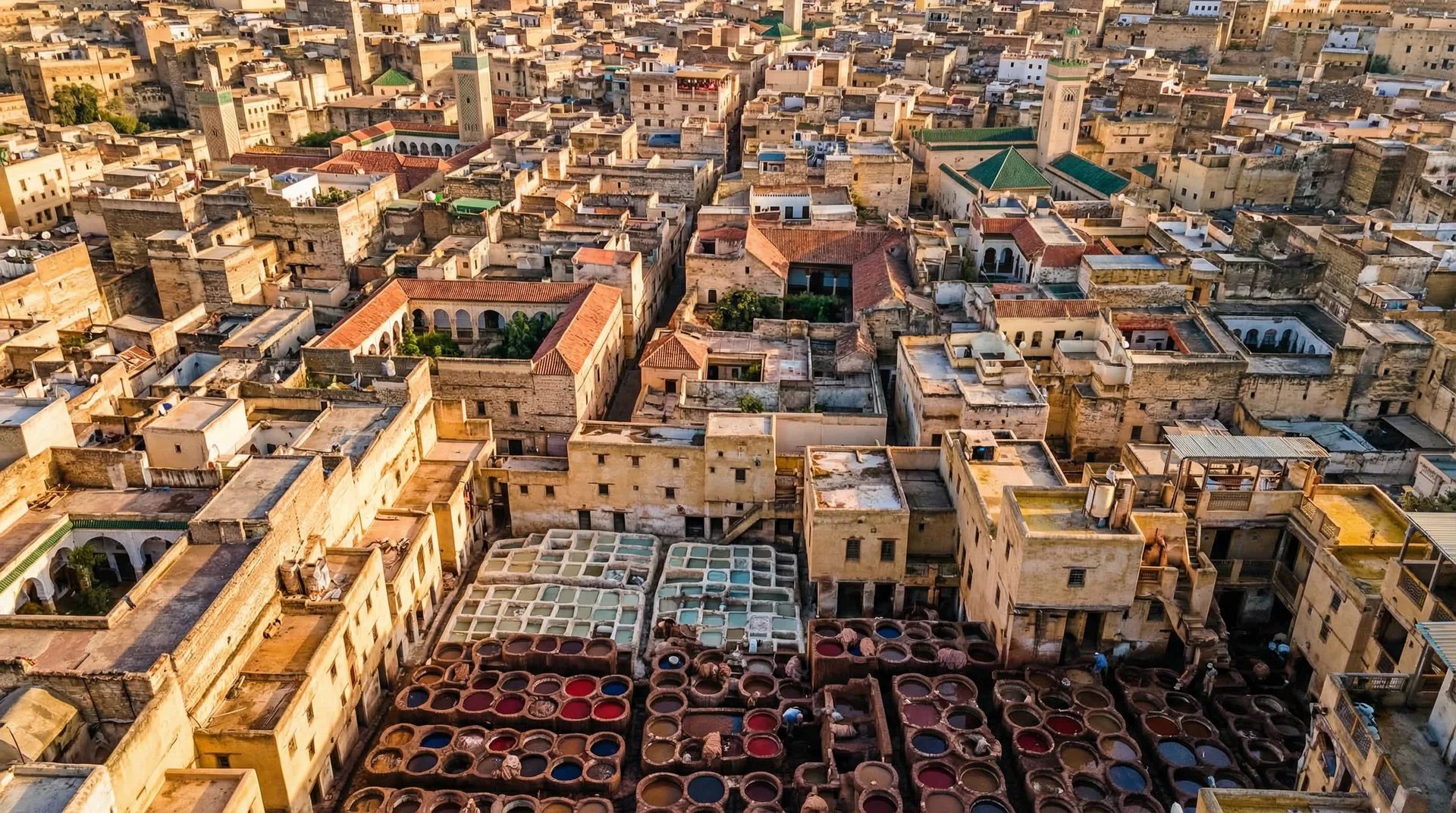
Here is the short answer. Yes, Fes is worth visiting — for many travellers it is the highlight of Morocco. Give it two nights: spend the first full day in the medina (ideally with a licensed guide), and the second either wandering on your own or out on a regional day trip. In the medina, do not miss the Chouara tanneries, the Bou Inania and Al-Attarine medersas, the Qarawiyyin and the Bab Boujloud blue gate. Nearby, the best day trips are Meknès with the Roman ruins of Volubilis (about an hour west), Ifrane and the Azrou cedar forest (about an hour south), and Chefchaouen, the blue city (a longer 3.5–4 hours, better as an overnight). Come in spring or autumn for the most comfortable walking. The rest of this piece unpacks each of those.
How long
2 days
1 for the medina, 1 for a trip
When
Spring / Autumn
Mar–May, Sep–Nov
The medina
Car-free
9,000+ lanes, on foot
So, is Fes actually worth visiting?
Yes — and for a particular kind of traveller, emphatically so. Fes el-Bali, the old medina, is the world's largest car-free urban area: a maze of unsigned lanes that has been a working city since the 9th century. The Qarawiyyin, founded in 859 AD, is frequently described as the oldest continuously operating university in the world. The crafts are not a performance for visitors — the coppersmiths, tanners, weavers and woodcarvers are running real businesses you happen to be allowed to watch. Compared with Marrakech, Fes is less polished, less geared to nightlife and less crowded, which is exactly why people who want the unstaged version of Morocco tend to fall hardest for it. The honest caveat: it asks a little more of you. There is more sales attention, fewer rooftop bars and a steeper learning curve in the lanes. If you want that depth, two days here will be the part of the trip you remember.
If you are weighing it against the Red City, our Marrakech vs Fes comparison lays out the trade-offs side by side.
What you should not miss in the medina
Fes el-Bali rewards a mix of headline sights and unhurried wandering. These are the ones worth building your route around:
- The Chouara tanneries. The image of Fes: honeycomb dye pits worked by hand, viewed from the terraces of the leather shops that ring them. Go in the late morning when the vats are fullest; you will usually be handed a sprig of mint for the smell. More detail in our Chouara tannery guide.
- Bou Inania & Al-Attarine medersas. Two 14th-century Quranic schools, both masterclasses in zellige tilework, carved cedar and stucco. Al-Attarine sits right by the Qarawiyyin in the spice merchants' quarter.
- The Qarawiyyin. You cannot enter the prayer hall as a non-Muslim, but you can glimpse the green-tiled courtyard through its doors and walk the lanes that wrap around the world's oldest university.
- Nejjarine fountain & woodwork museum. A beautifully restored fondouk (caravanserai) with a rooftop terrace and one of the prettiest tiled fountains in the city.
- Bab Boujloud, the blue gate. The ceremonial western entrance — blue on the outside, green within — and a natural place to start or end a day in the medina.
For the full on-foot route, see our practical Fes medina guide, and if you are short on time, the medina highlights list distils it to the essentials.
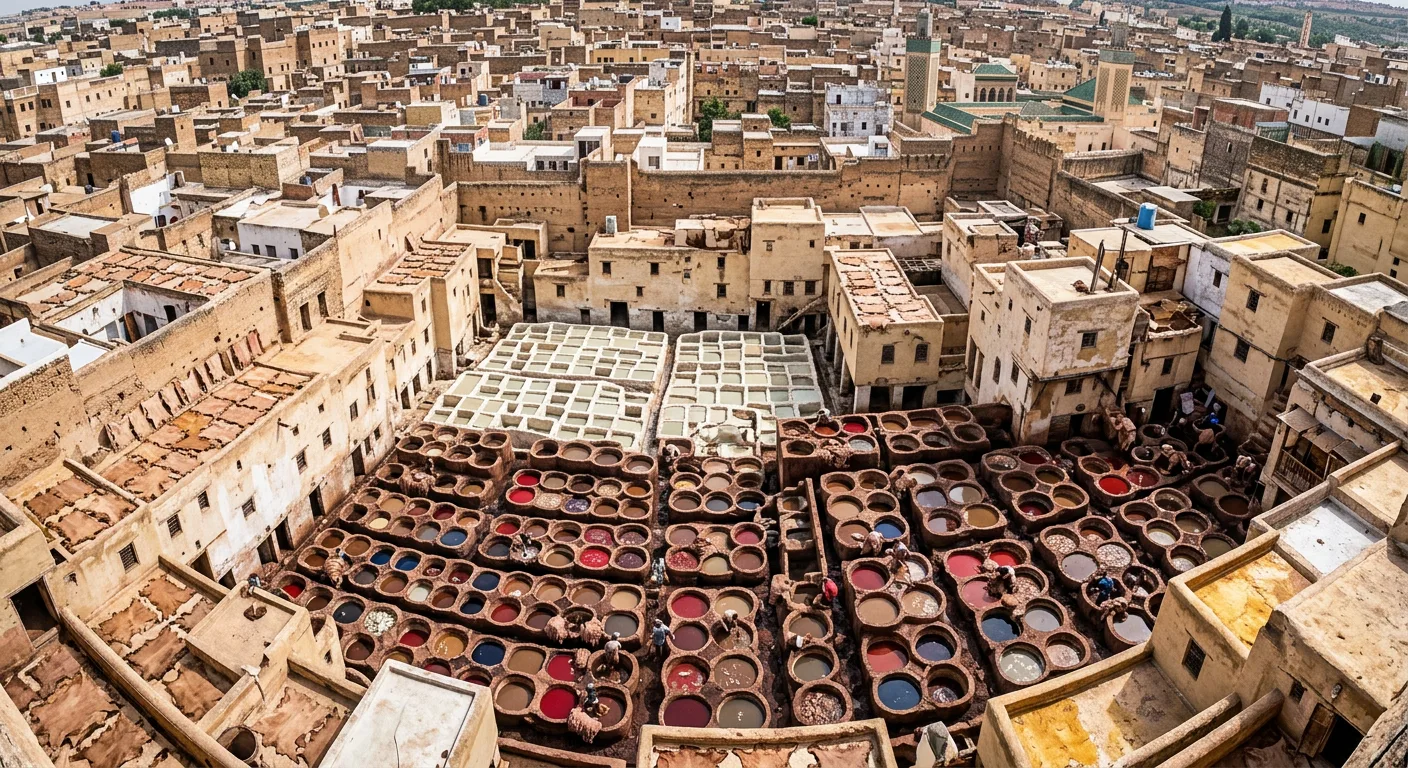
A word on the tanneries
People ask whether the tanneries are a tourist trap. They are not — they are a centuries-old working leather industry — but the viewing of them is commercial. You watch from the terrace of a leather shop, and there is a gentle expectation that you might look at the bags and babouches on the way out. That is fair enough: you do not have to buy, a polite "just looking, thank you" is completely normal, and the view costs nothing beyond a small tip if someone shows you up. Go in the morning for the best light and the fullest pits, and do not be put off by the smell — the mint sprig genuinely helps.
Which day trips nearby are best — with real drive times
Fes is the gateway to a surprisingly varied region: Roman ruins and imperial Meknès to the west, the cool cedar forests of the Middle Atlas to the south, and the blue Rif town of Chefchaouen to the north. Here is how they stack up, and how far each really is.
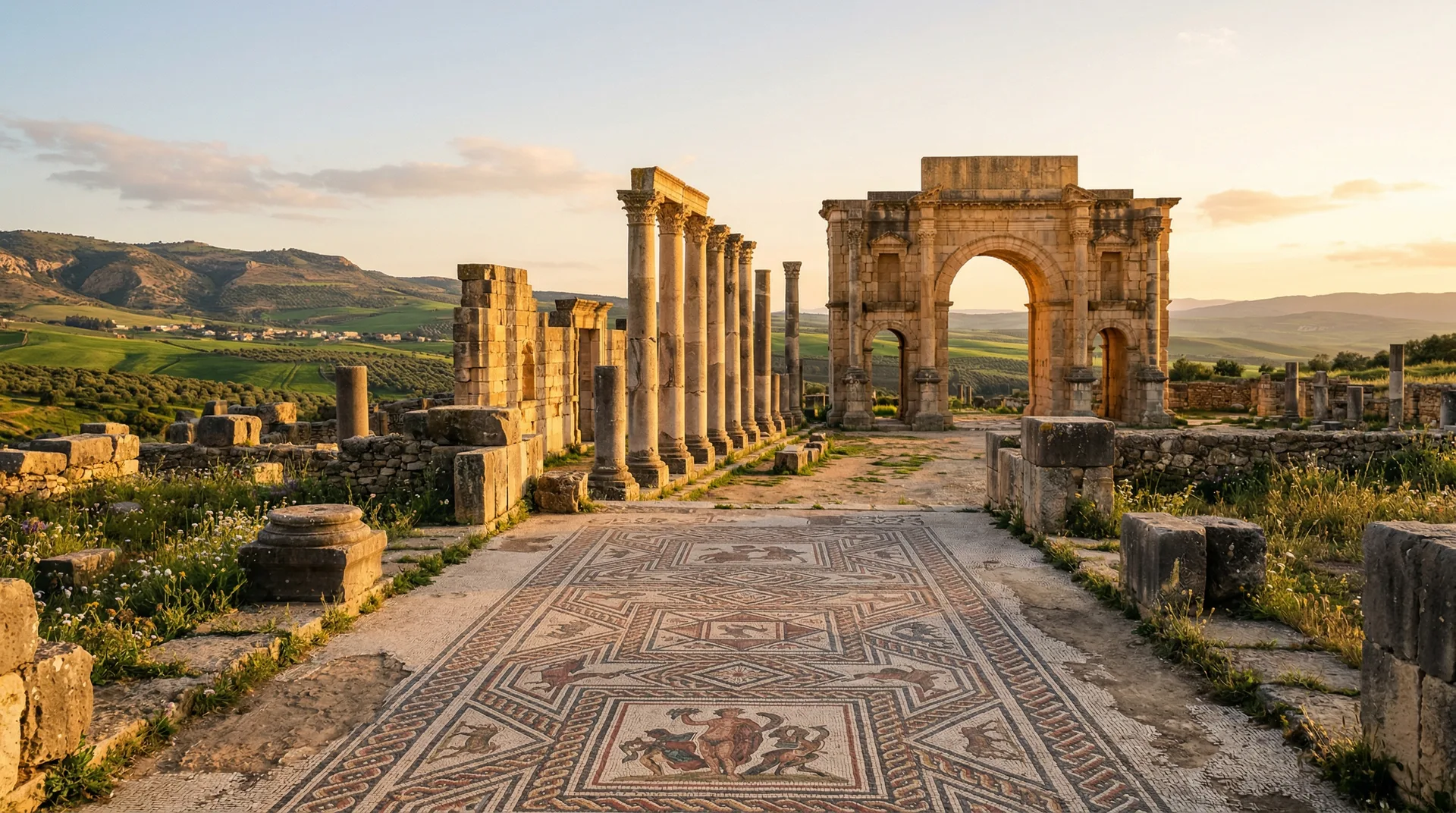
≈ 1 hr west
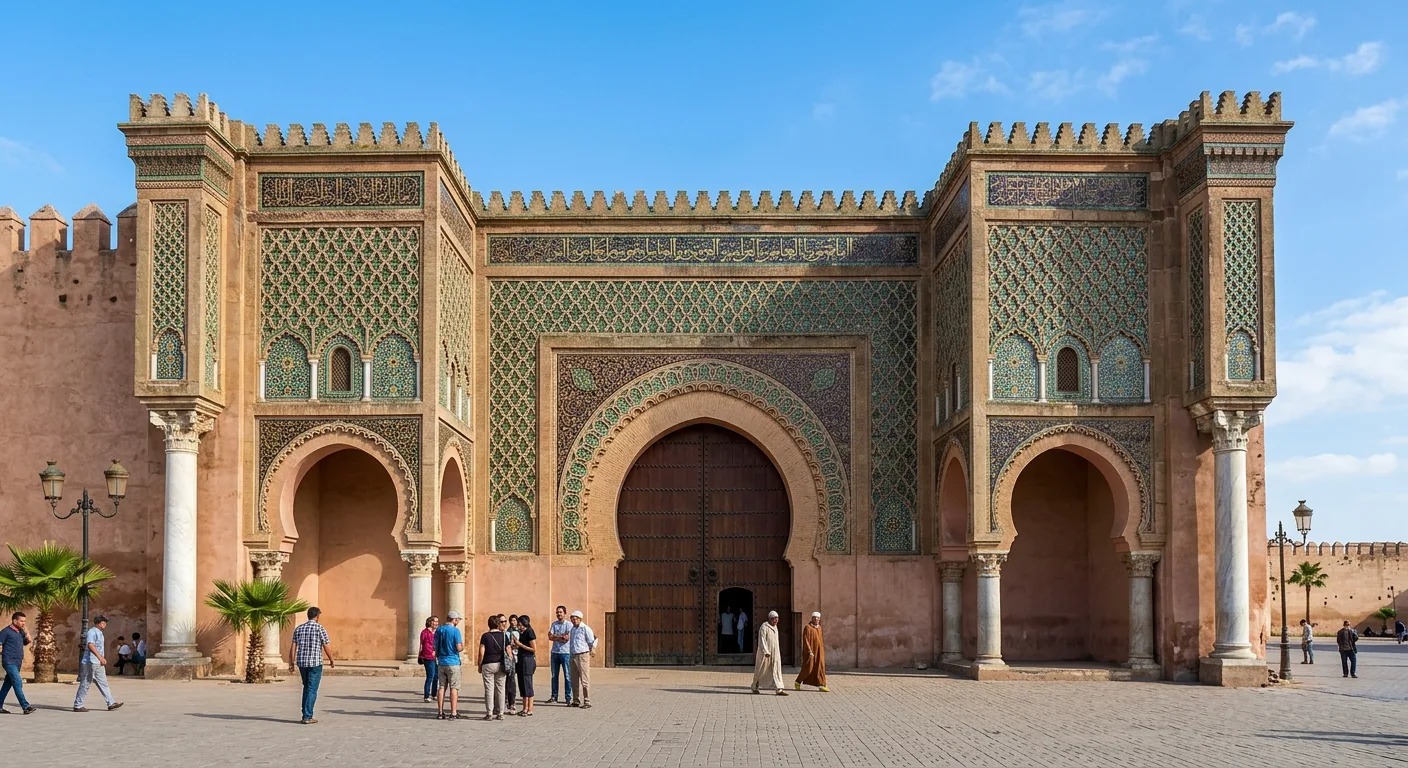
Meknès & Volubilis
The classic full day from Fes. The Roman ruins of Volubilis — mosaics, the Arch of Caracalla and a basilica on a fertile plain — pair with the imperial city of Meknès and its monumental Bab Mansour gate, and the whitewashed holy town of Moulay Idriss Zerhoun on the hill above. Three sights, one logical loop.
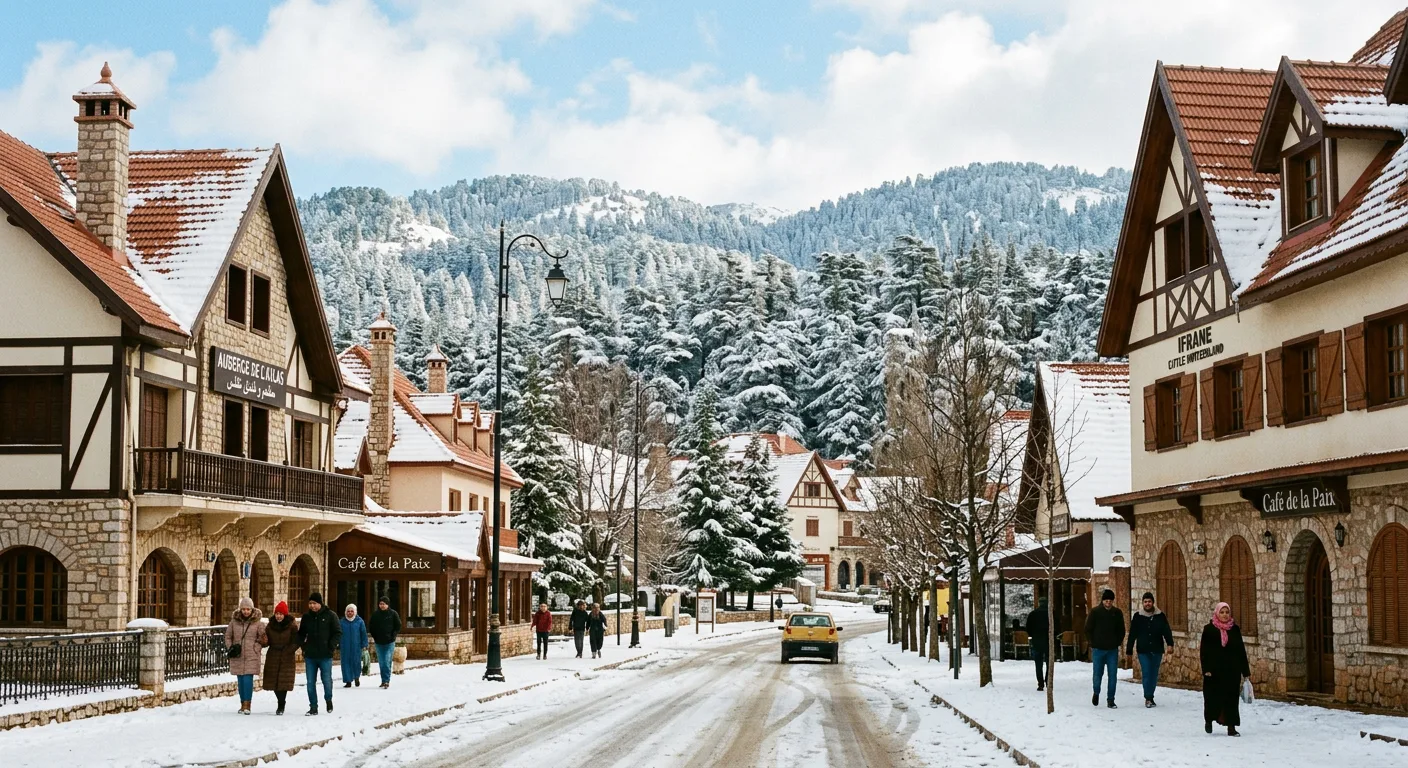
≈ 1 hr south
Ifrane & the Azrou cedar forest
A cool, green contrast to the medina. The alpine-style town of Ifrane ('Little Switzerland') leads up into the Middle Atlas cedar forests near Azrou, where troops of wild Barbary macaques live by the road. Easy to combine with a mountain lunch and back to Fes by evening.
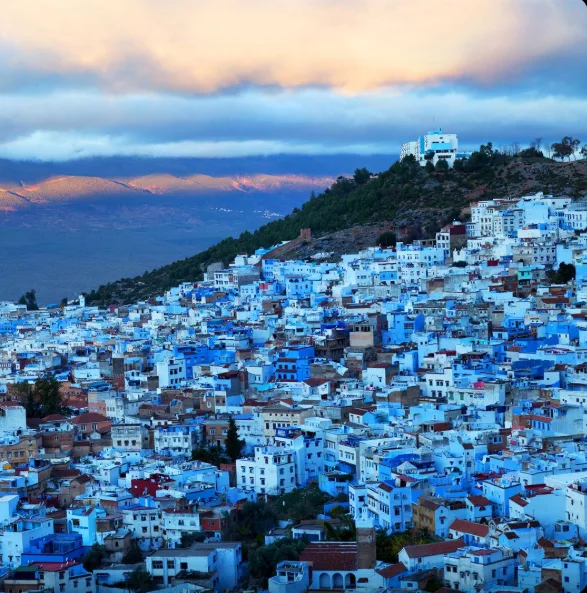
≈ 3.5–4 hrs each way
Chefchaouen, the Blue City
Morocco's most photogenic town, blue-washed into the Rif mountains. There is no train, so it is a drive — long enough that we usually suggest an overnight rather than a there-and-back day. If you only have one day, start before dawn or treat it as a stop on the way north.
Honourable mentions for a quieter half-day: Sefrou and the Bhalil cave houses, about 30 minutes south. For the full menu of options and how to combine them, see day trips from Fes, or our dedicated Fes to Chefchaouen transport guide. Volubilis and Meknès together easily fill one day; Chefchaouen is best as an overnight.
How many days do you really need?
Our honest planning rule: one day covers the medina headlines if you are passing through; two days is the sweet spot — a guided medina day plus a free day or one regional trip; three days lets you add both a Meknès & Volubilis day and a Middle Atlas or Chefchaouen excursion without rushing anything. We go deeper on this in how many days you need in Fes.
When is the best time to go?
Spring (March–May) and autumn (September–November) are the best windows: mild, dry days that make all-day medina walking comfortable and the day-trip drives pleasant. Summer is genuinely hot, and the airless midday lanes can sap you; winter is cool, quiet and atmospheric, though riads can feel cold and the day-trip mountain roads occasionally see snow. If your dates land in Ramadan the rhythm of the day shifts — many kitchens close until sunset — so it is worth checking the year's dates. The full month-by-month breakdown is in our best time to visit Fes guide.
Frequently asked
Is Fes worth visiting?
Yes — for most travellers Fes is well worth two nights and is many people's favourite stop in Morocco. Fes el-Bali is the world's largest car-free urban area and a living medieval city, with the Chouara tanneries, the Qarawiyyin (founded 859 AD and often called the oldest still-operating university in the world) and a dense crafts economy you can still watch at work. It is less polished and less touristed than Marrakech, which is exactly why people who like the real, unscripted version of a Moroccan medina tend to prefer it.
What should I not miss in the Fes medina?
The unmissables are the Chouara tanneries (viewed from the leather-shop terraces, best in the late morning), the Bou Inania and Al-Attarine medersas for their zellige and carved cedar, the green-tiled gate of the Qarawiyyin, the Nejjarine fountain and woodwork museum, and the Bab Boujloud blue gate at the medina's western edge. Build in time simply to get lost along the spine, Talaa Kebira, where the souks are at their most alive.
How many days do you need in Fes?
Two full days is the sweet spot: one for the medina with a guide, one to wander on your own or take a regional day trip. One day is enough for the headline sights if you are tight on time; three days lets you slow right down and add both a Meknès & Volubilis day and a Middle Atlas or Chefchaouen excursion without rushing.
What are the best day trips from Fes?
The classic is Meknès and the Roman ruins of Volubilis (with the holy town of Moulay Idriss), about an hour west and easily combined into one full day. For nature, Ifrane and the cedar forests around Azrou — home to wild Barbary macaques — sit about an hour south. The blue city of Chefchaouen is the most photogenic but the longest, roughly 3.5 to 4 hours each way, so most people stay overnight rather than rushing it as a day trip.
When is the best time to visit Fes?
Spring (March–May) and autumn (September–November) are ideal: mild days for all-day walking and comfortable in the airless lanes. Summer is genuinely hot and the midday medina can be stifling; winter is cool, quiet and atmospheric but riads can feel cold. If your dates fall in Ramadan, daytime rhythms shift and some kitchens close until sunset, so it pays to check the year's dates.
Is Fes better than Marrakech?
They are different rather than better or worse. Marrakech is more set up for visitors — bigger nightlife, more rooftop bars, faster to enjoy. Fes is older, more inward and more about craft and history; its medina feels less staged. If you want polish and energy, Marrakech; if you want the deepest, most intact medieval medina in Morocco, Fes.
Plan it once, properly
We'll build your Fes days and day trips around you.
Tell us your dates and we will arrange a licensed medina guide, a logical sightseeing route, a riad chosen for its restoration, and the day trips — Meknès & Volubilis, the Middle Atlas or Chefchaouen — that fit your time.