Fes, Morocco· Concierge · Mon–Sat · 09:00–18:00 GMT+1
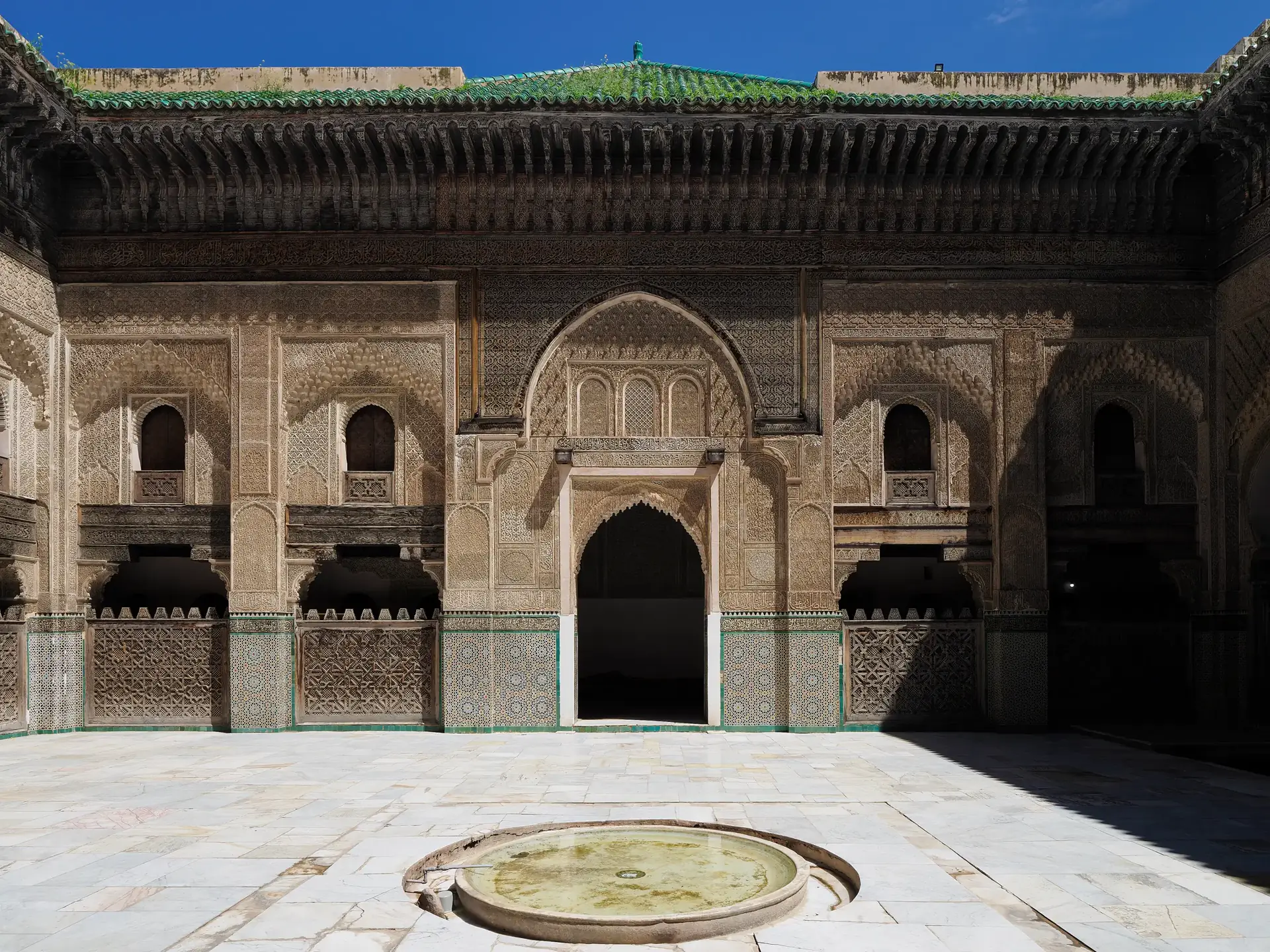
Bou Inania Madrasa, Fes · Photo: Petar Milošević, CC BY-SA 4.0
The madrasas and mosques of Fes el-Bali
Carved cedar, stucco and zellige in the Marinid colleges, and the doorways of the Qarawiyyin: a morning through the religious heart of Fes el-Bali with a licensed guide, from Bou Inania to the Saffarin of 1271, half a century older than the Attarine.
- Private or small-group
- Licensed Fassi guide
- Dates and sources on the page
The walk, stop by stop
1.4 km on foot, about 21 minutes of walking between 6 stops, along the OpenStreetMap foot route. Half day, morning, at your pace.
Where the walk begins
Where we meet, 1913
Bab Boujloud باب أبي الجنود
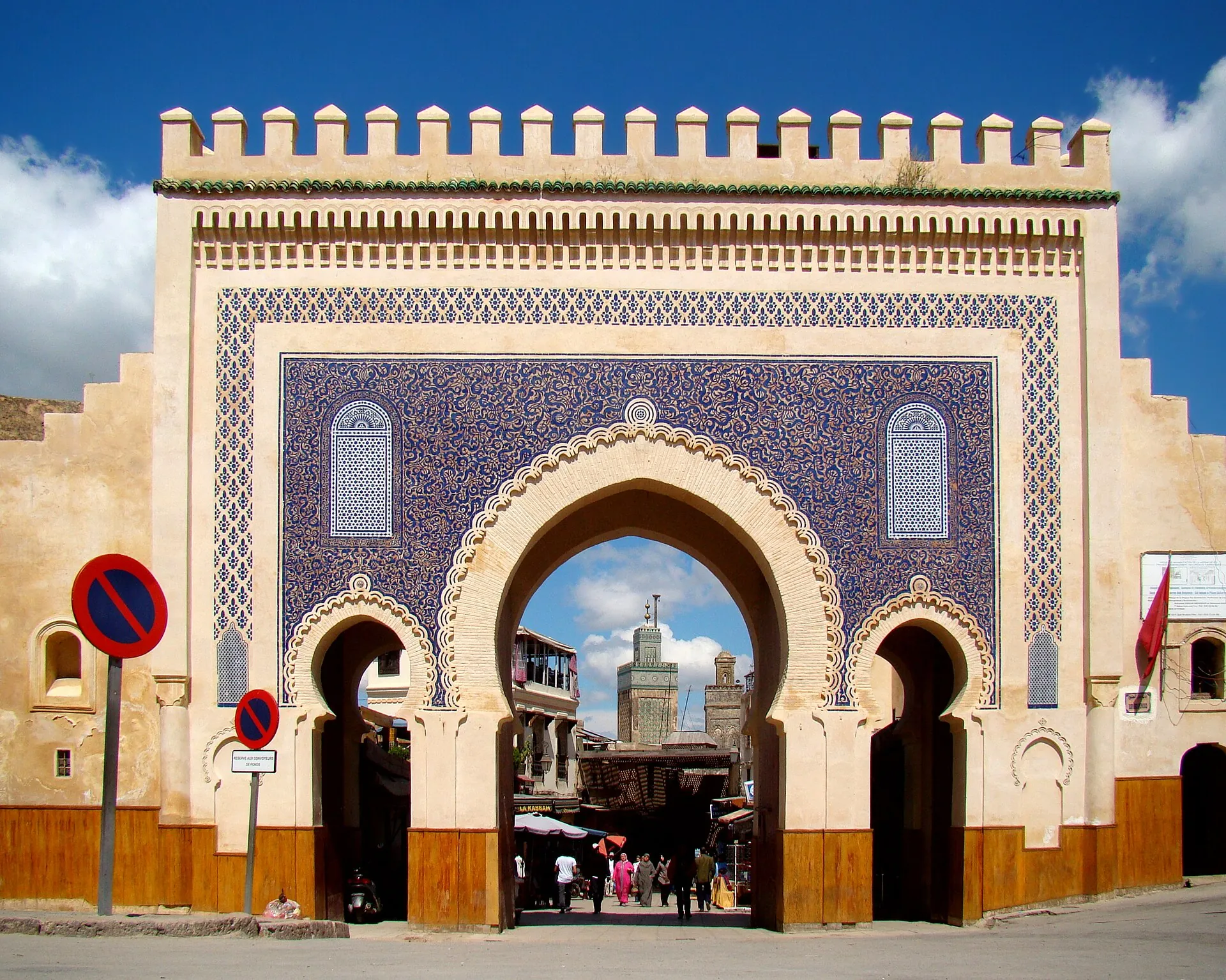
The tiled gate at the western end of Fes el-Bali: blue on its outer face, green on its inner face. Through the main arch you see the minarets of the Bou Inania madrasa and the Sidi Lazzaz mosque. Your guide meets you here, or at your riad door.
More about Bab Boujloud2 min on foot from Bab Boujloud, 140 m
Marinid, 1350 to 1355
Bou Inania madrasa المدرسة البوعنانية
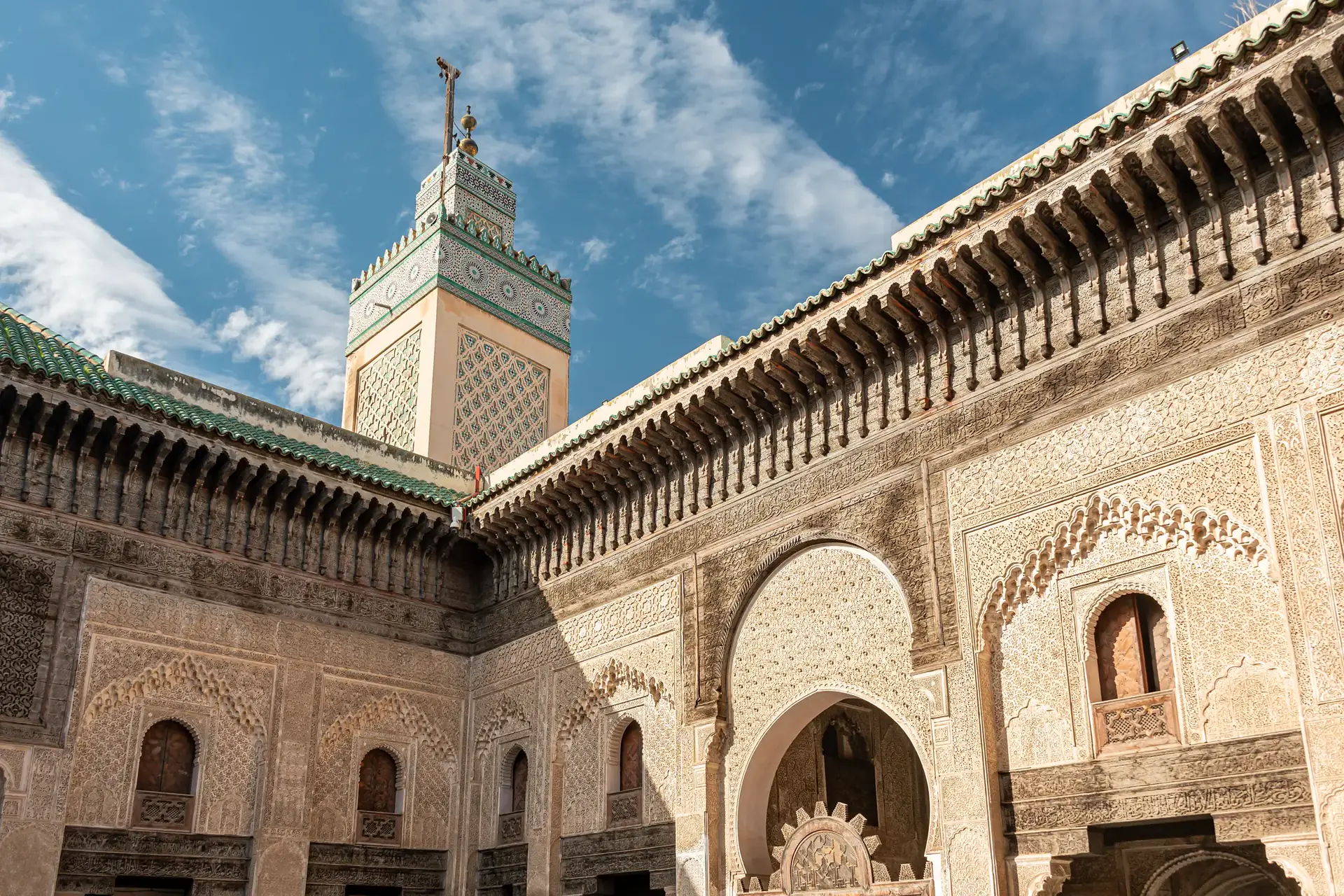
Built for the Marinid sultan Abu Inan Faris between 1350 and 1355, and one of the only Moroccan madrasas with a prominent minaret. It was the only madrasa in Morocco that also served as a congregational mosque, and its prayer hall is off-limits to non-Muslim visitors. Nearby is the Dar al-Magana, with a famous hydraulic clock on its facade that no longer works.
More about Bou Inania madrasa14 min on foot from Bou Inania madrasa, 900 m
Rebuilt 1717 to 1720
Zawiya of Moulay Idris II ضريح المولى إدريس الثاني
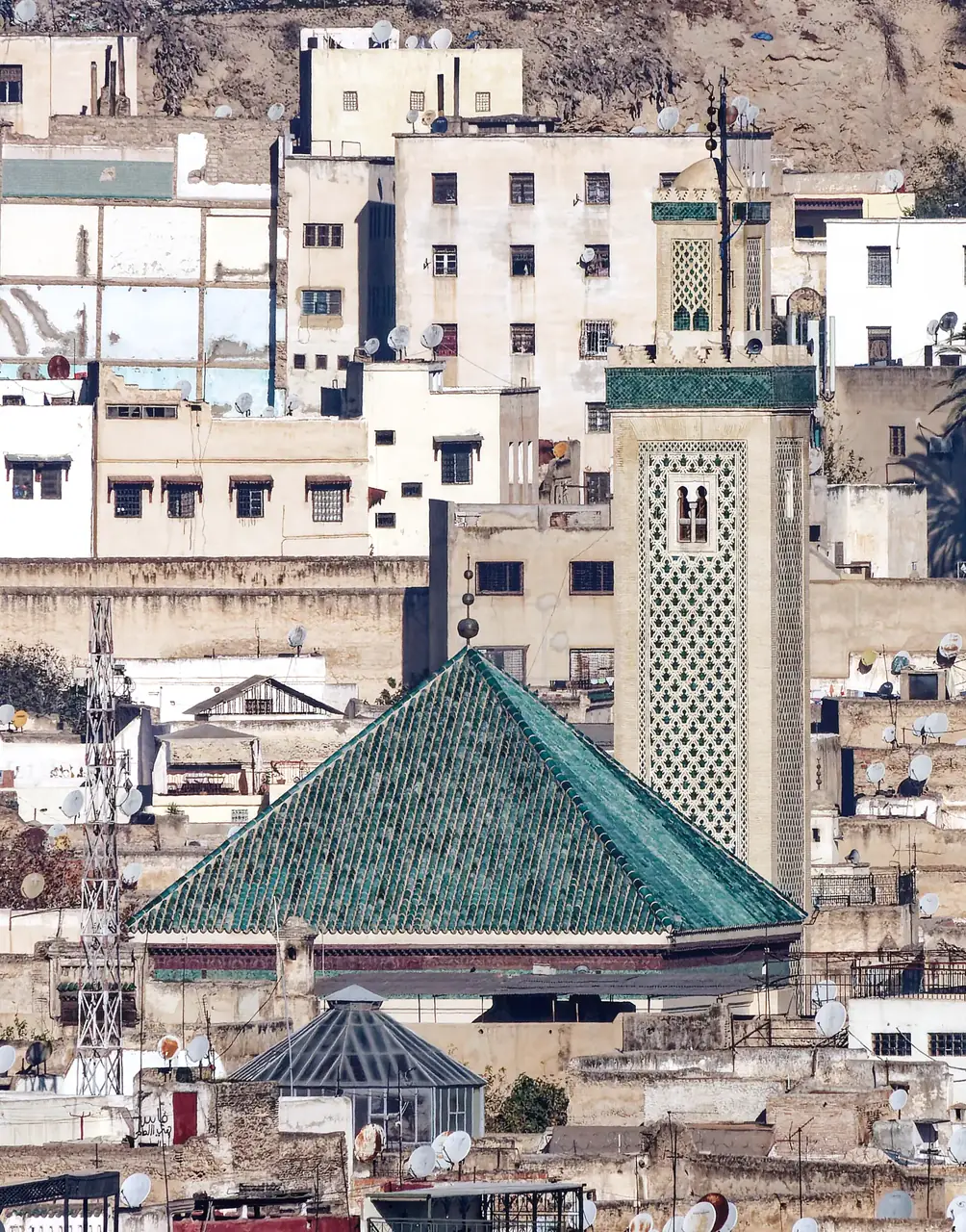
The shrine holds the tomb of Idris II, who ruled from 807 to 828. Sultan Moulay Ismail had it rebuilt between 1717 and 1720, including its minaret. Non-Muslims cannot enter the building, but can walk up to its doors and around it.
More about Zawiya of Moulay Idris II2 min on foot from Zawiya of Moulay Idris II, 130 m
Marinid, 1323 to 1325
Attarine madrasa مدرسة العطارين
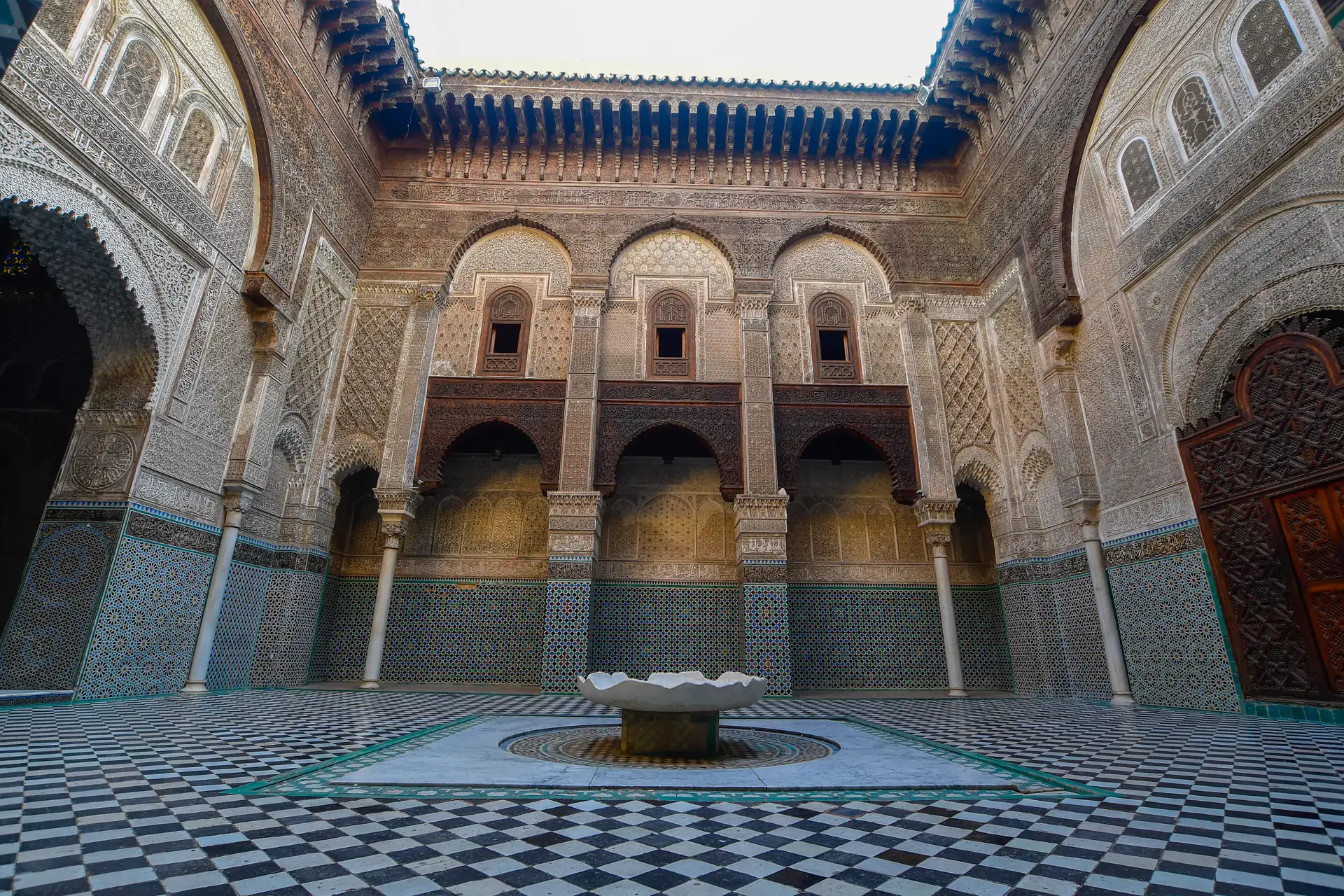
Built by the Marinid sultan Uthman II Abu Said between 1323 and 1325, near the Qarawiyyin. It takes its name from the Souk al-Attarine, the spice and perfume market.
More about Attarine madrasa1 min on foot from Attarine madrasa, 20 m
Founded 857 or 859
The Qarawiyyin جامع القرويين
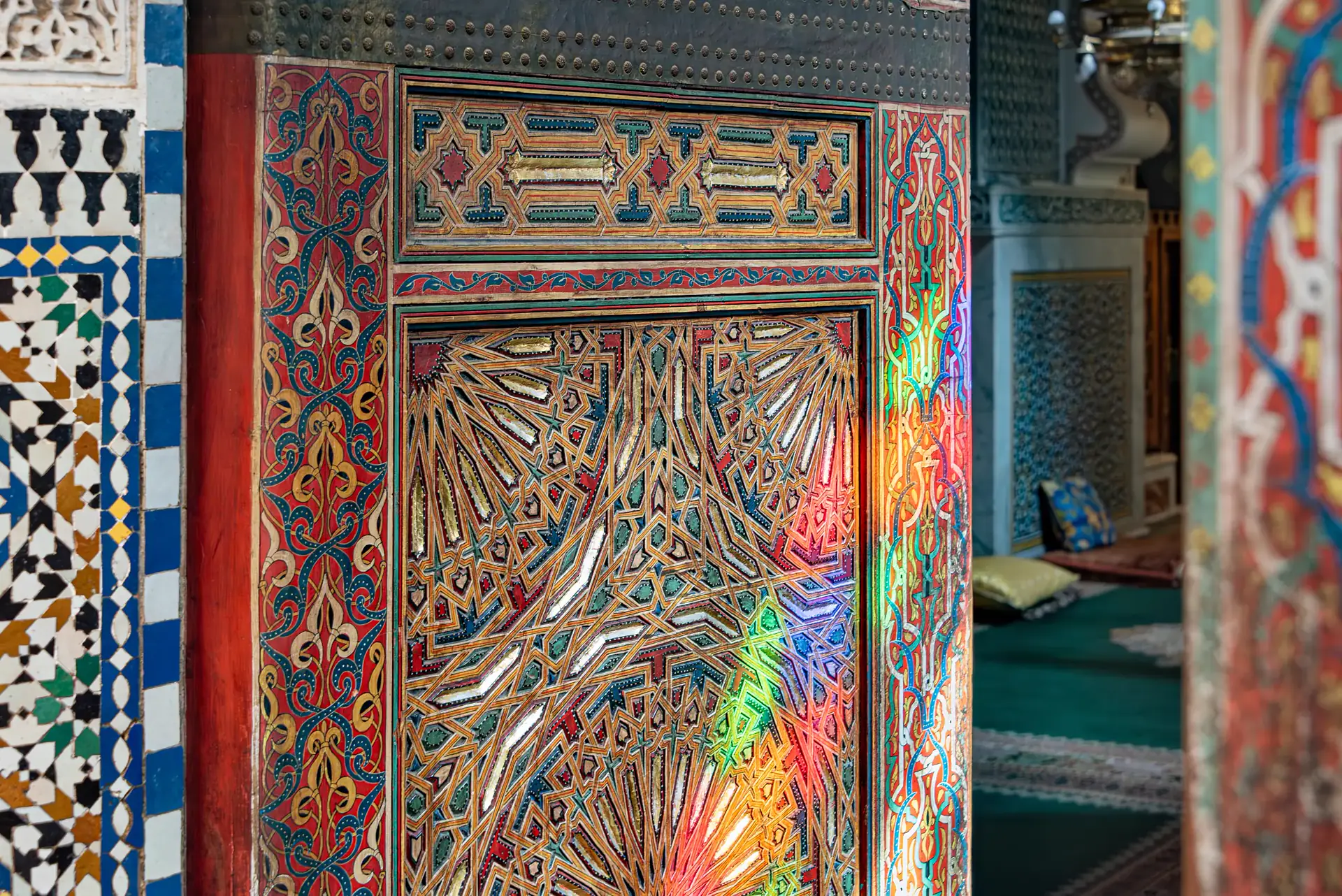
By tradition founded as a mosque in 857 or 859 by Fatima al-Fihri, though some modern historians question that account. We see it from its doorways and from the streets round it; your guide explains what lies inside.
More about the Qarawiyyin3 min on foot from the Qarawiyyin, 190 m
Marinid, 1271
Saffarin madrasa مدرسة الصفارين
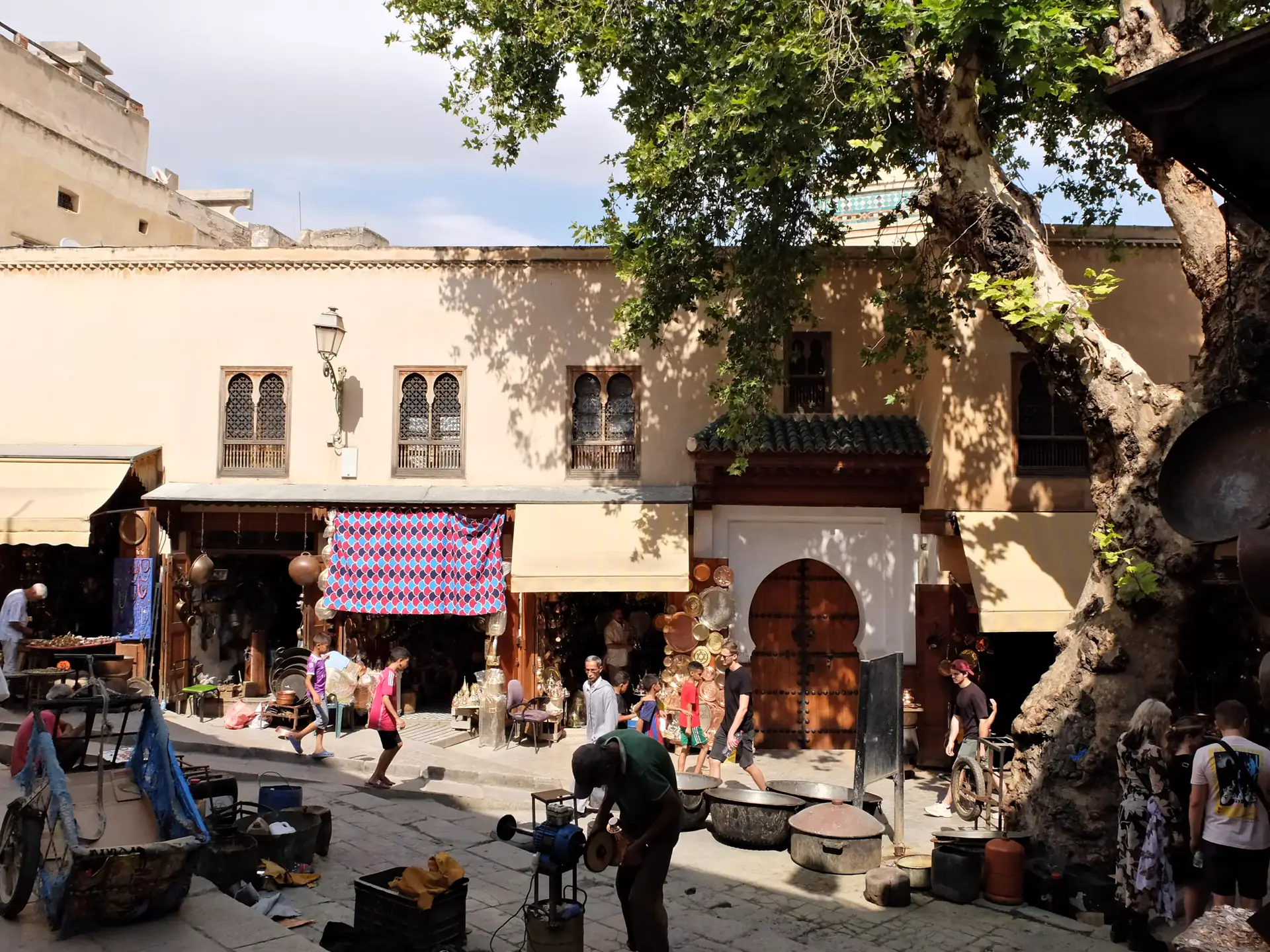
Its entrance is on Place Seffarine. It was built in 1271 by the Marinid sultan Abu Yusuf Ya'qub, half a century before the Attarine.
Why walk it with a guide
Private or small-group, planned around your date and your questions.
Read the walls
The inscriptions, the carved cedar, the zellige: your guide shows you what each band of decoration is and what the words say.
Short walks, long looks
The whole route is under 1.5 km. Most of the morning is spent standing still in courtyards, which is how these buildings are meant to be seen.
Respectful by design
We go where visitors are welcome and look in where they are not. Your guide knows the difference at every door.
A person writes back with a plan and a quote. No prices online, no obligation.
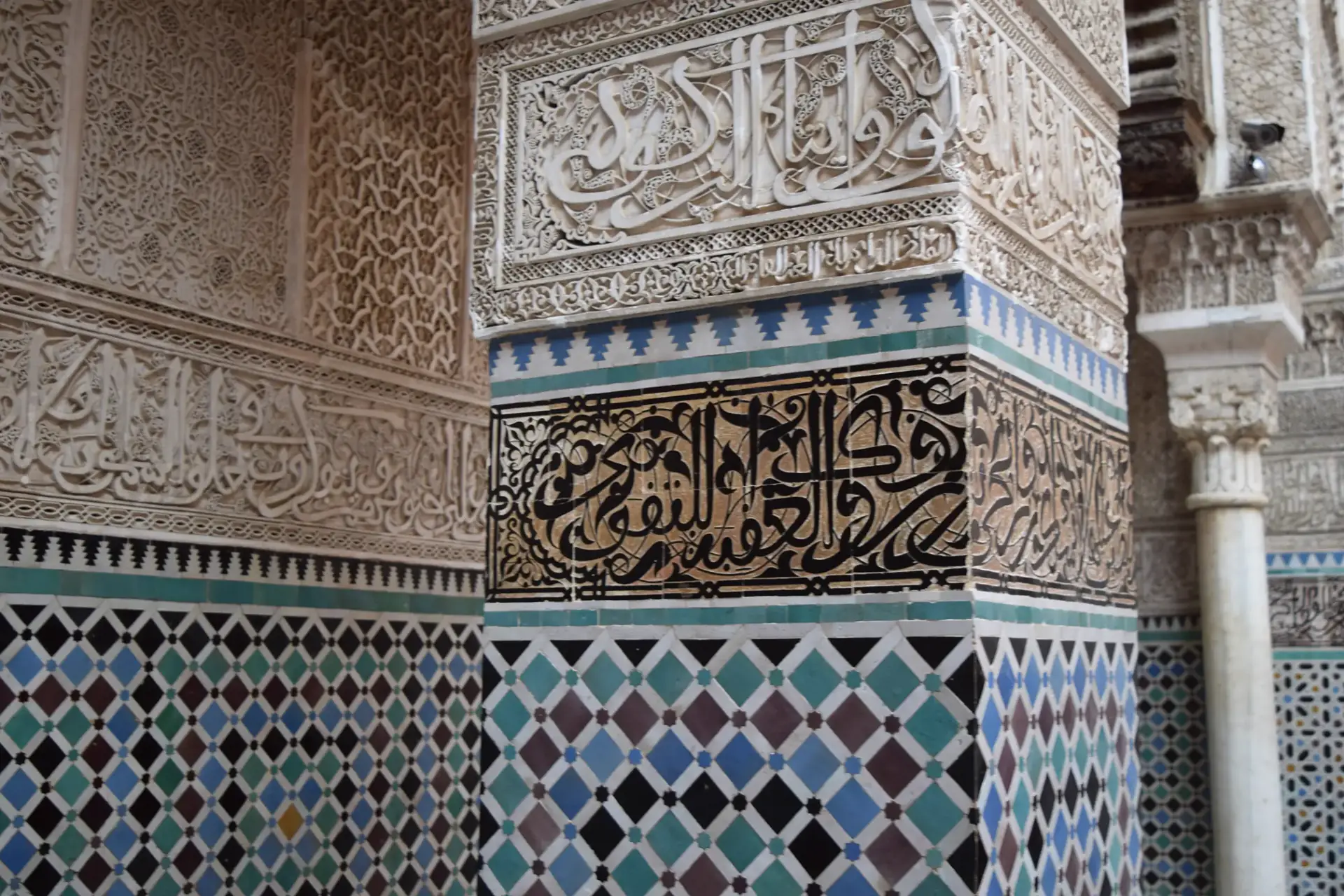
Cedar, plaster and tile, carved so finely the walls look woven.
Al-Attarine Madrasa, FesWhat we checked
Every date on this page, and where it comes from. Opening days and hours change, so we confirm them for your date.
Bou Inania was built in 1350–55 by the Marinid sultan Abu Inan Faris; construction started on 28 December 1350.
Source: Wikipedia, Bou Inania Madrasa (opens in a new tab)The Attarine madrasa was built by Uthman II Abu Said between 1323 and 1325, near the Qarawiyyin Mosque.
Source: Wikipedia, Al-Attarine Madrasa (opens in a new tab)The Qarawiyyin was founded as a mosque in 857 or 859 by Fatima al-Fihri, a foundation narrative some modern historians have questioned.
Source: Wikipedia, University of al-Qarawiyyin (opens in a new tab)The Saffarin madrasa, entered from Place Seffarine, was built in 1271 by Abu Yusuf Ya'qub.
Source: Wikipedia, Place Seffarine (opens in a new tab)Moulay Ismail had the Zawiya of Moulay Idris II rebuilt between 1717 and 1720.
Source: Wikipedia, Zawiya of Moulay Idris II (opens in a new tab)
More walks in the medina
Each one on its own OpenStreetMap route, each planned for you.
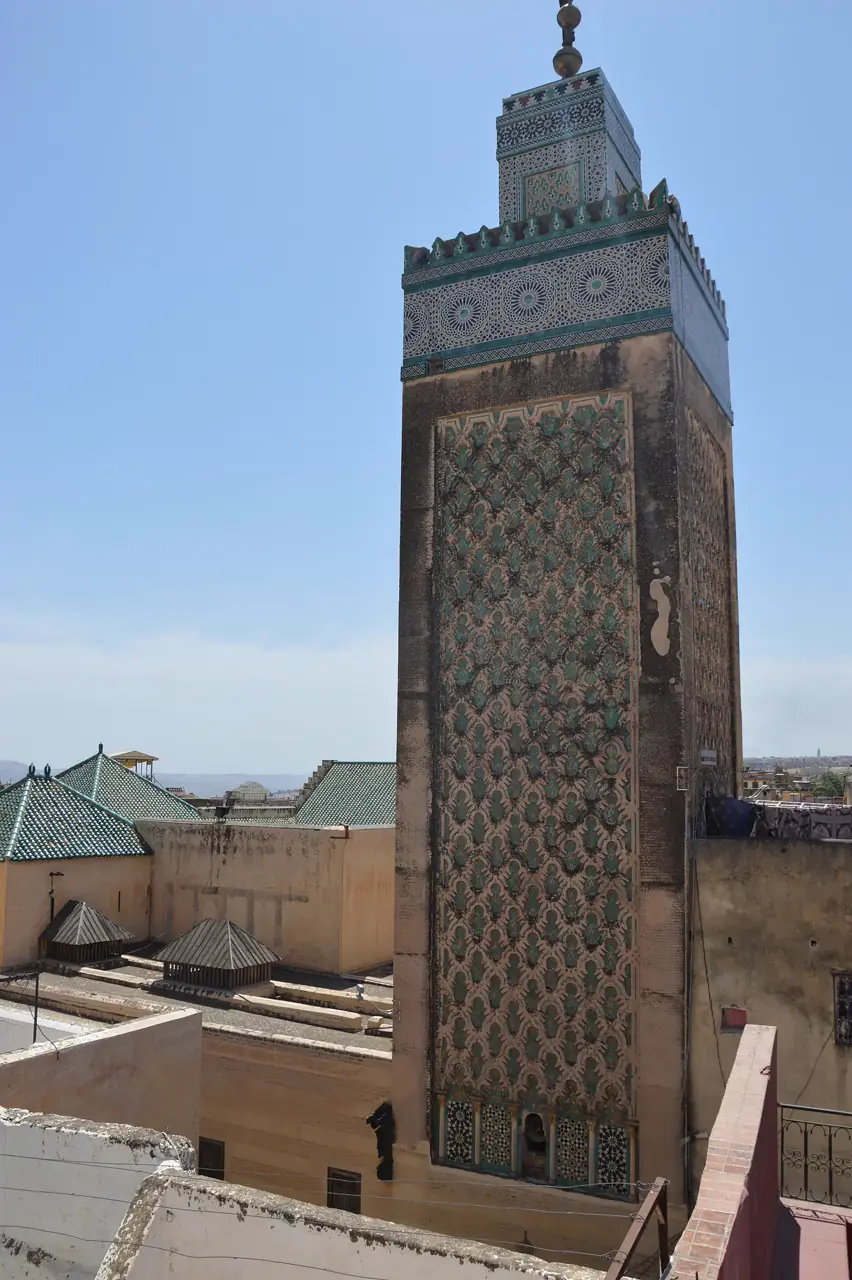 Bou Inania madrasaOur guide to the madrasa by Bab Boujloud.Read the guide
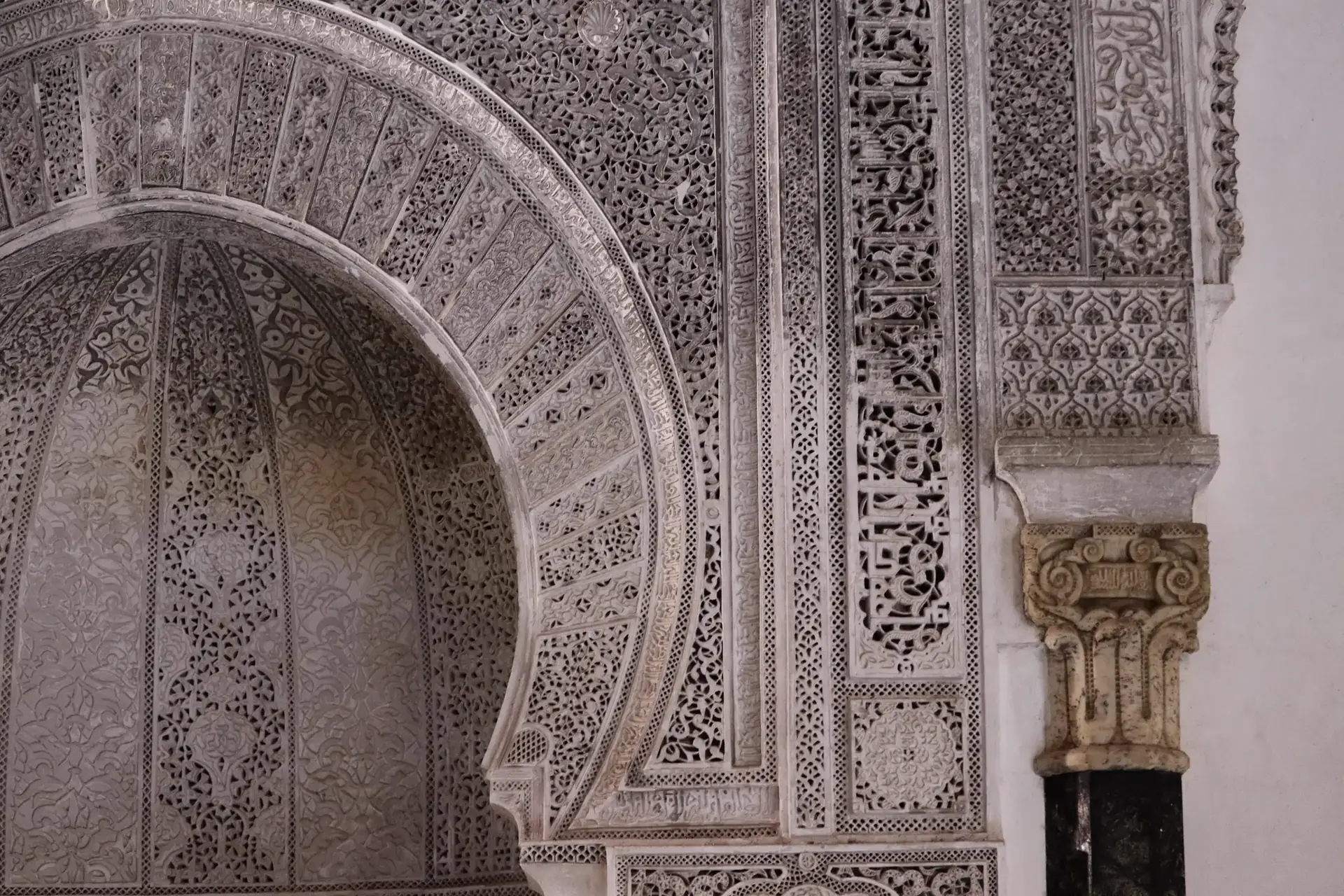 The Attarine madrasaOur guide to the madrasa by the spice souk.Read the guide
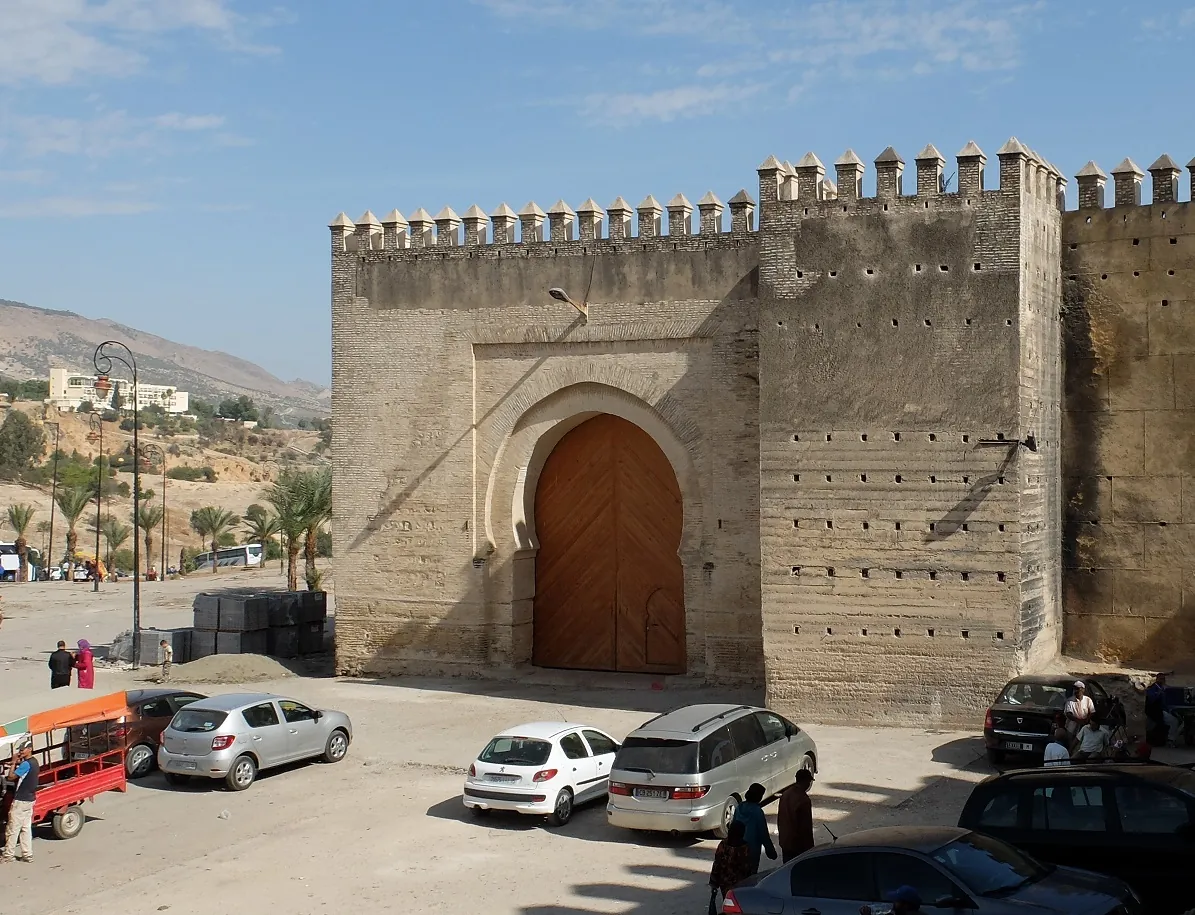 The ten gates of Fes walkBoujloud to Segma, all ten gates in a day, with the story of each.See the walk
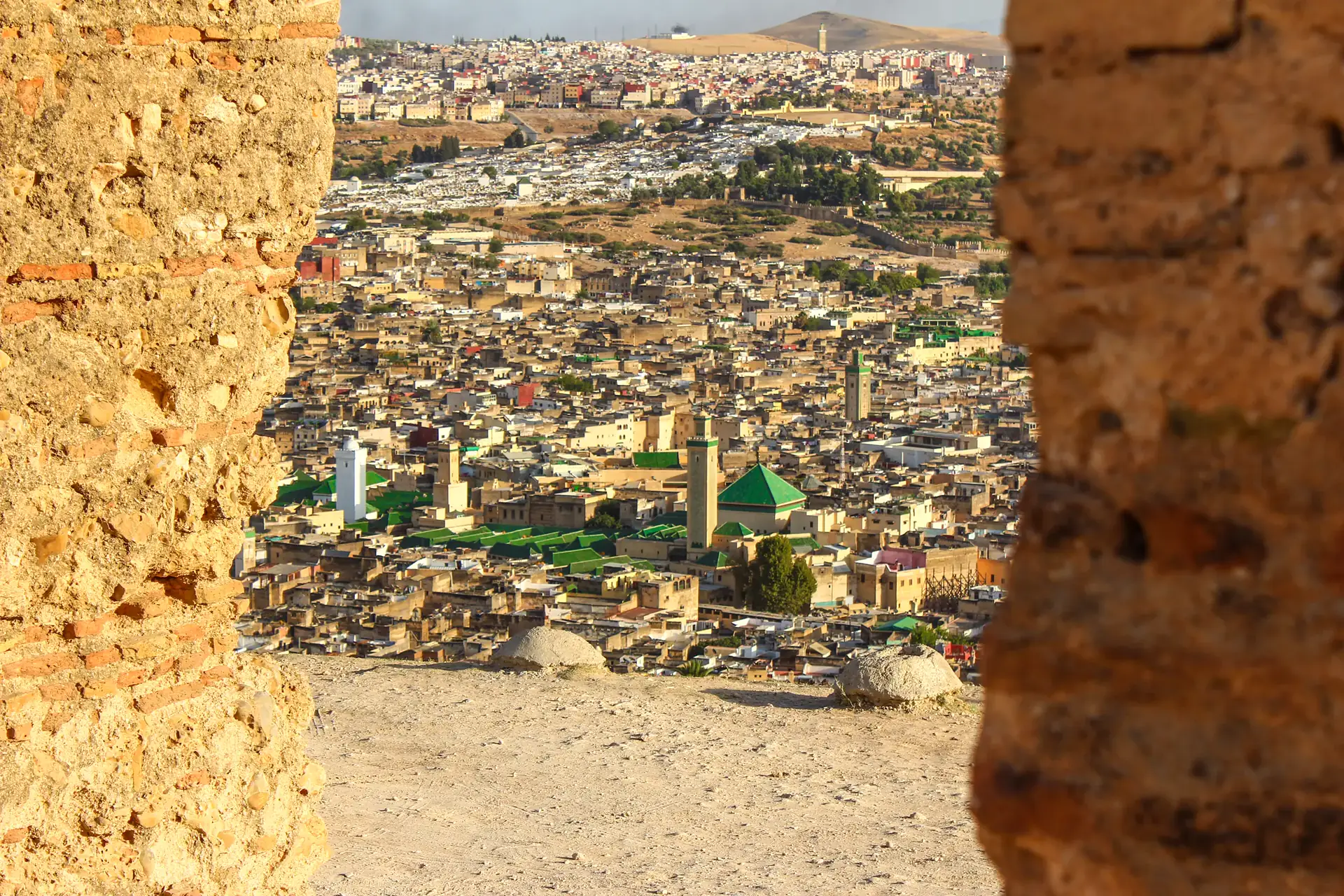 Merinid Tombs and Borj Nord at sunsetUp the northern hill on foot to watch the sun set over the medina.See the walk
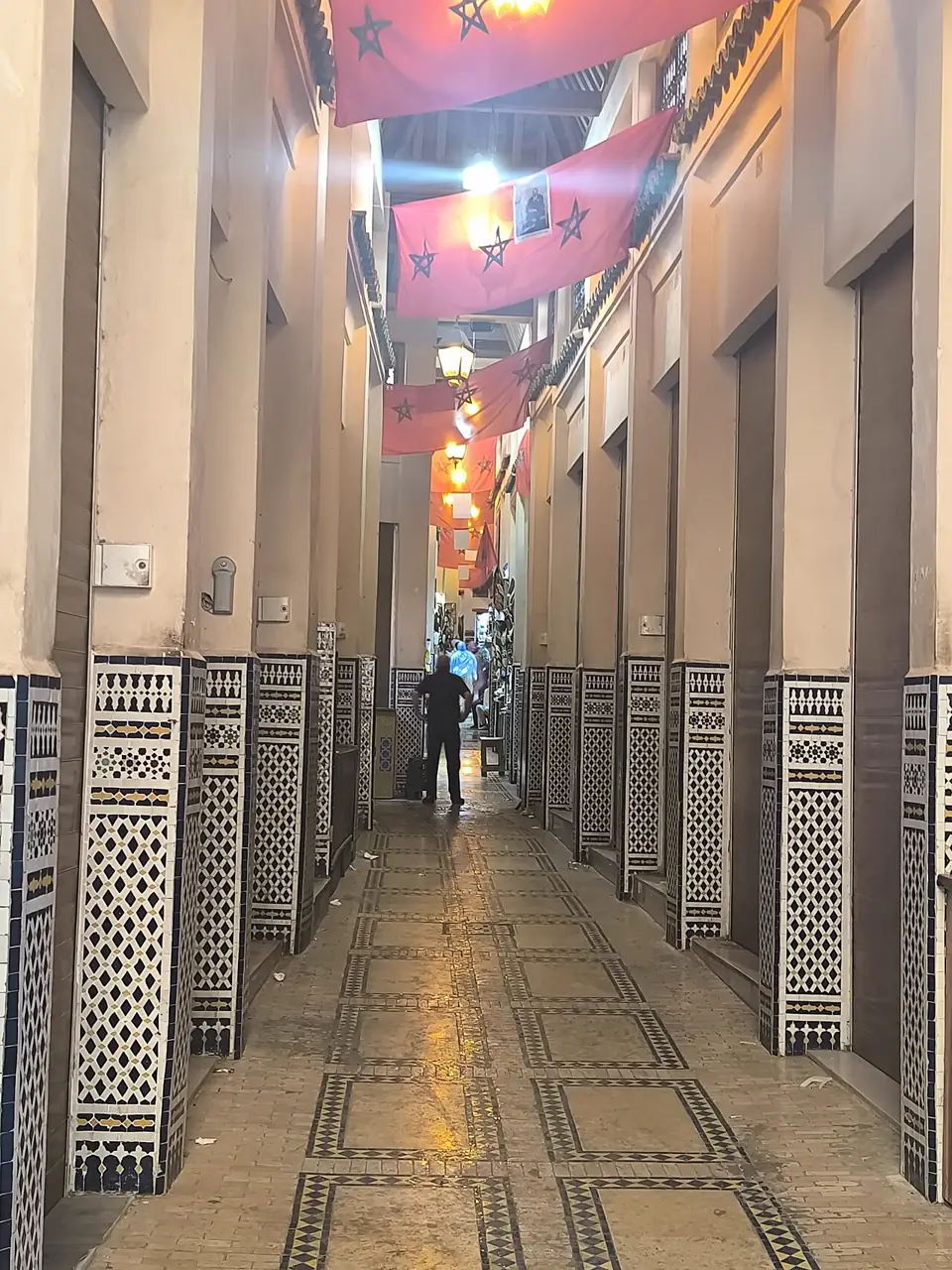 The Fes souk walkTalaa Kebira, the Henna souk, the Kissaria and the coppersmiths.See the walk
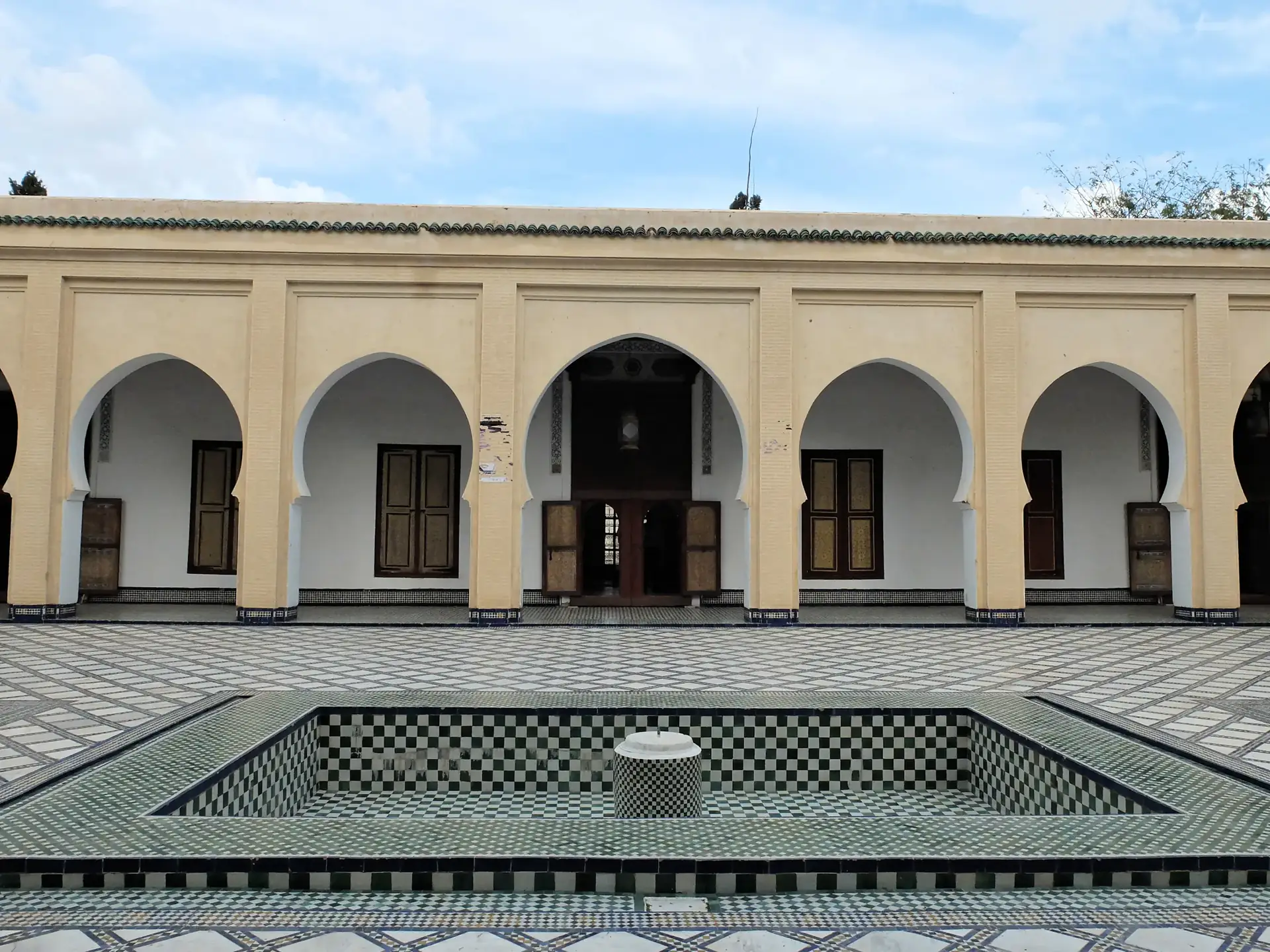 Dar Batha and Nejjarine museumsThe Al Batha palace museum and the cedar fondouk of the carpenters.See the walk
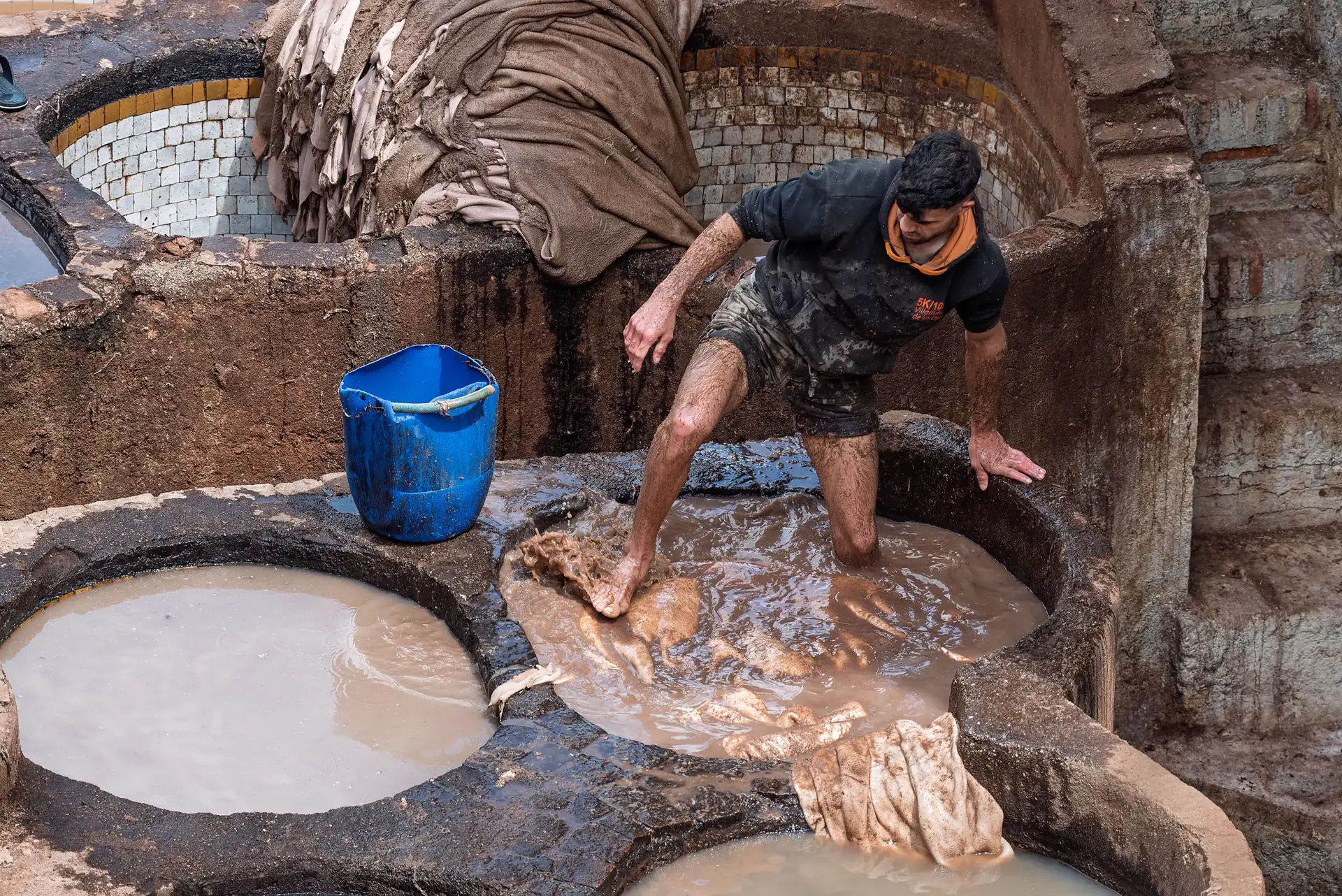 Golden-hour photo walkJnan Sbil to the Chouara tannery, paced for photographs.See the walk
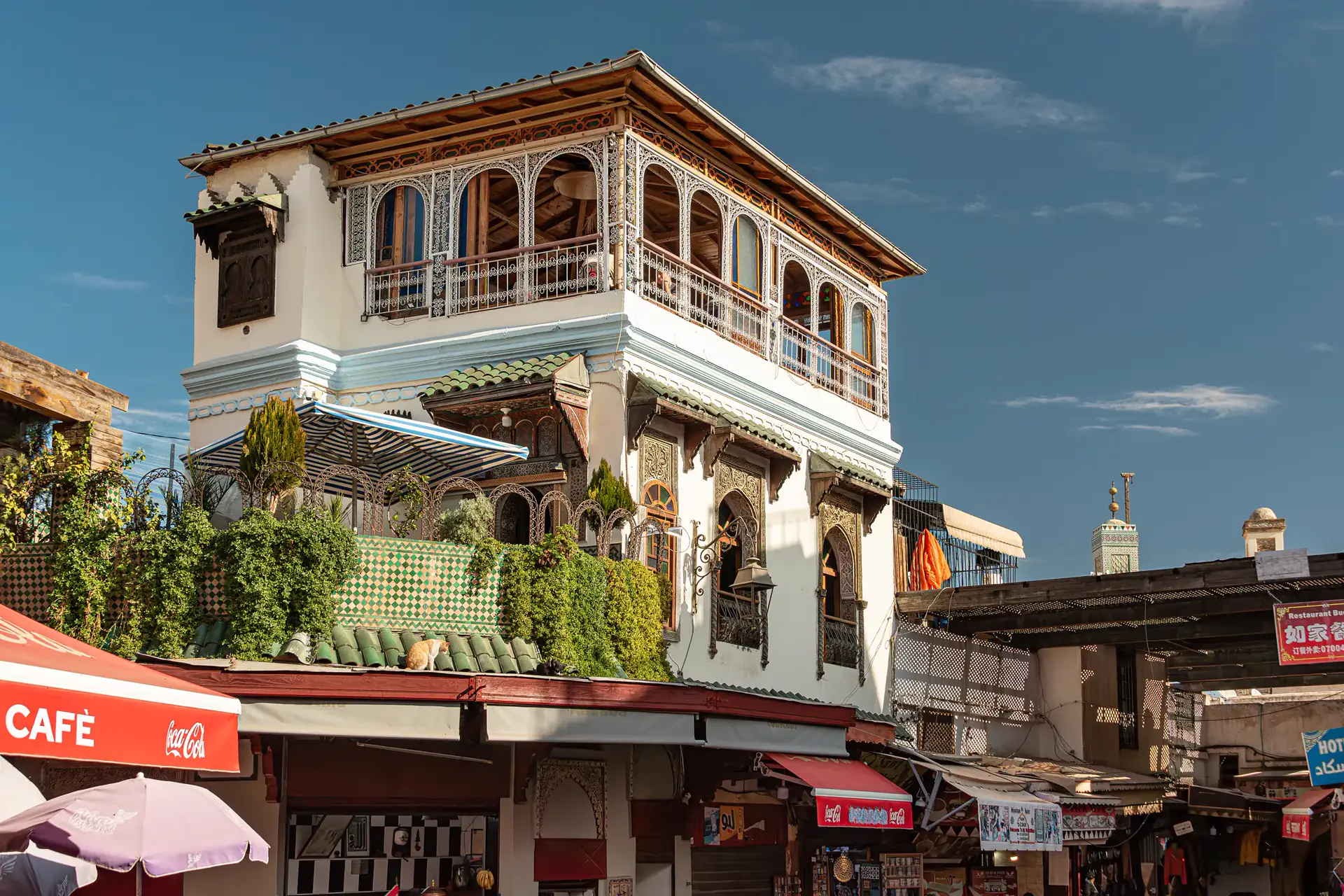 First-day orientation walkThe landmarks, the two main streets and the way home.See the walk
Questions before you walk
The questions people ask us most before they plan a trip.
Can we go inside the madrasas?
Can we go inside the Qarawiyyin?
What should we wear?
How much does it cost?
Tell us your date. We'll plan the morning.
- Tell us what drew you in. Your dates, who is travelling and what you want to see.
- A person reads it. We write a day-by-day plan for your group, private or small-group.
- You change anything. Then we confirm the guides, drivers and riads.