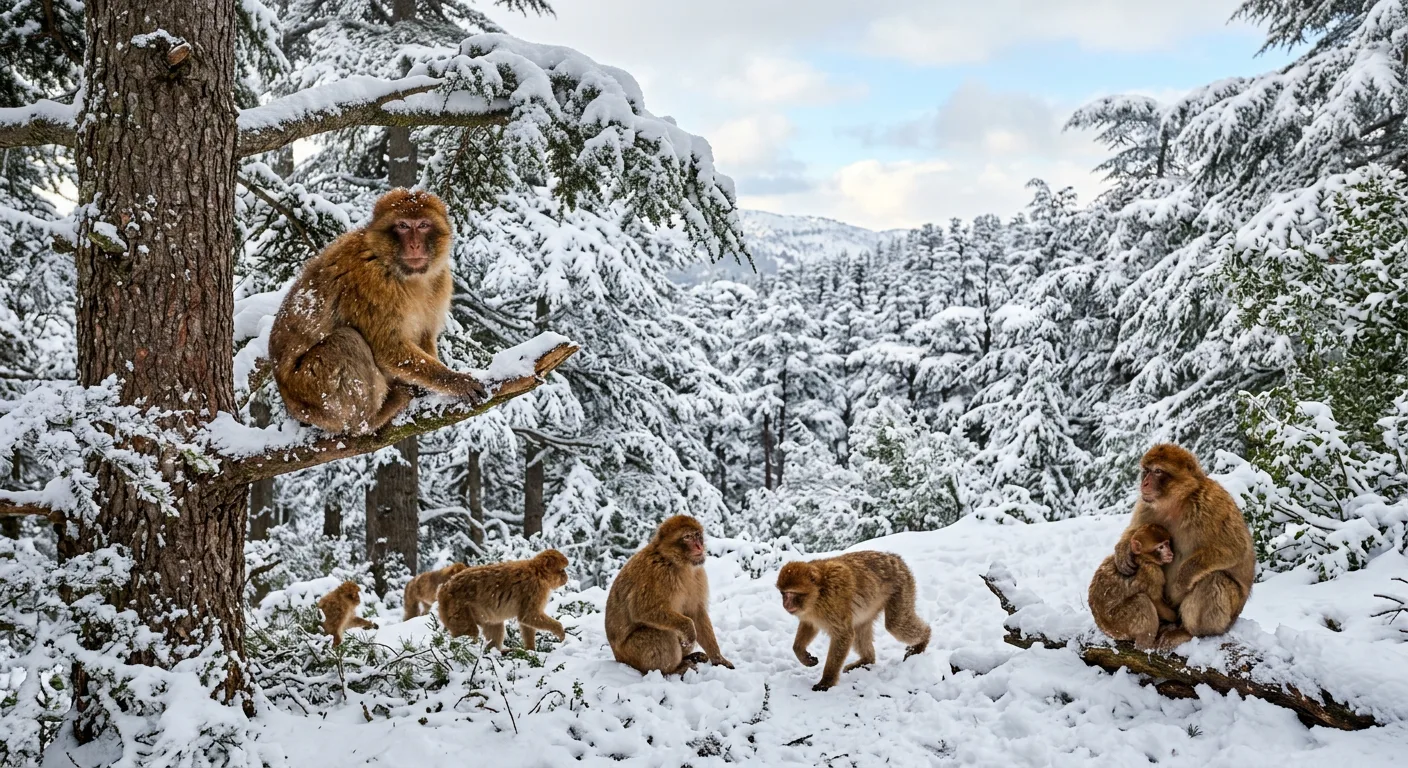
Short answer: yes, you can see wild monkeys near Fes — troops of Barbary macaques live in the Middle Atlas cedar forest around Azrou, roughly 1.5 hours and 80 km south of the city — and the day that takes you there also bundles in the alpine town of Ifrane and the Berber market of Azrou. Is it worth it? For a change of scene, cool mountain air and an easy wildlife encounter, very much so. The one rule that matters: do not feed the monkeys. Here's how to do the day well.
From Fes
~1.5 hrs
~80 km to Azrou
Cedar forest
~1,650 m
Cool, fresh, year-round
The monkeys
Wild
Barbary macaques
The monkeys: what to expect (and the one rule)
The Barbary macaque is the only macaque in Africa and an endangered species, and the cedar forests of the Middle Atlas are one of its last strongholds. Near the popular forest pull-offs beyond Azrou you can usually find a troop within minutes — foraging in the trees, grooming on a fallen log, or ambling along the verge. They're wild, but the roadside groups have grown used to people, so close, quiet observation is easy and you rarely walk away without a sighting.
Here's the part responsible travellers should take seriously: please don't feed them. Vendors sell peanuts at the stops, but feeding changes the macaques' diet, makes them dependent and bold, lures them onto roads where many are killed, and can pass disease both ways. The troops nearest the road already live a diminished, junk-fed version of wild life because of tourists. Keep a few metres back, never touch them, keep food and even visible snacks out of sight, and just watch. You'll get better photos and leave the forest no worse than you found it.
The day, stop by stop
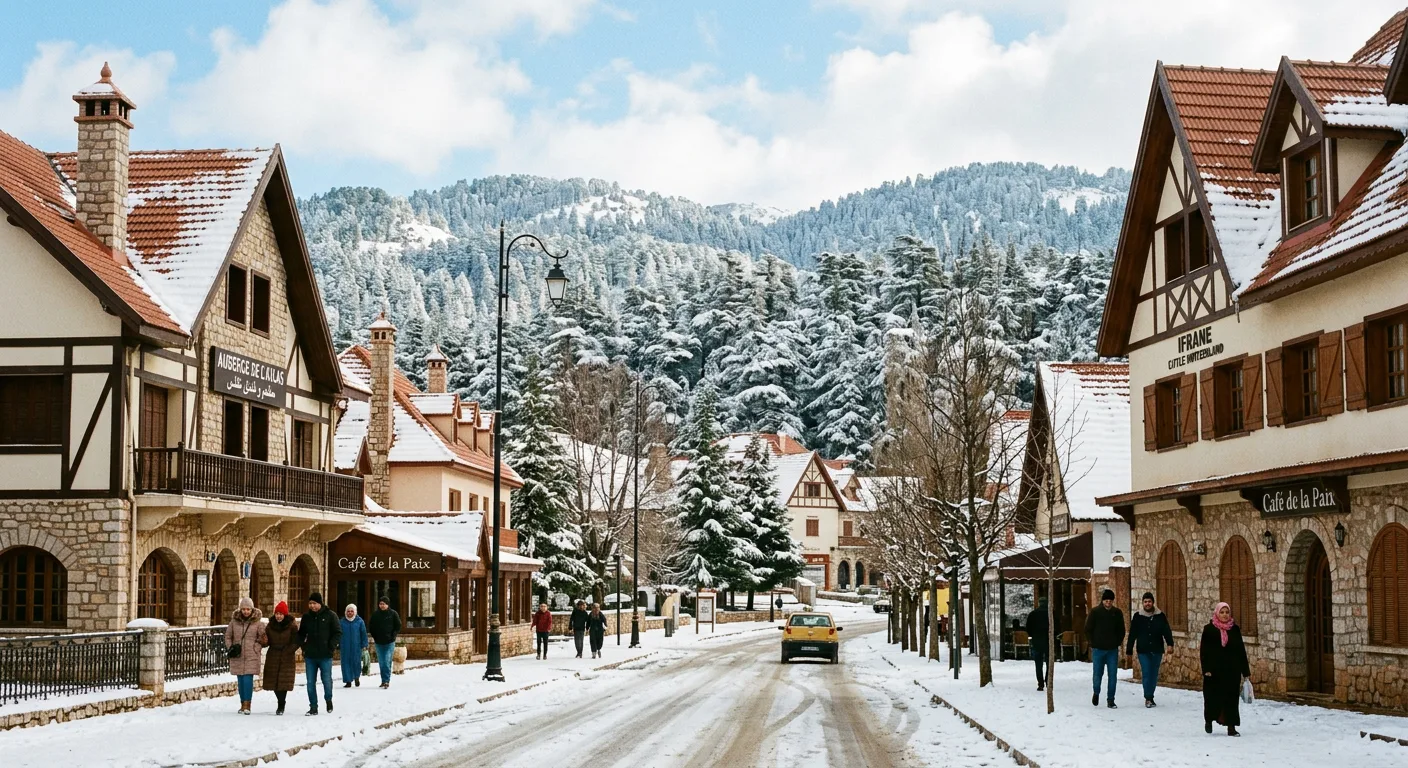
Ifrane, Azrou and the cedar forest sit within twenty to thirty minutes of one another, so the trip is a tidy little loop up onto the plateau and back. Here's what each part adds.
The cedar forest & the macaques. The headline. Just beyond Azrou at around 1,600 m, the Atlas cedar forest is home to wild Barbary macaques you can usually see within minutes — plus towering cedars several centuries old and easy walking trails near the legendary Gouraud Cedar area. Watch quietly, keep your distance, and don't feed them.
Ifrane — 'Little Switzerland'. A planned alpine town with steep roofs, flower gardens, clean streets and Al Akhawayn University — it looks like nowhere else in Morocco. Snap the stone Lion of Ifrane, walk the central park, and in winter watch the snow settle on the peaks. An hour here is plenty before moving on.
Azrou & Dayet Aoua lake. Azrou is a relaxed Berber market town known for cedar woodcarving and Beni M'Guild carpets; its Tuesday souk is the big one, and the local smoky honey with fresh goat cheese is a treat. Nearby Dayet Aoua, a tranquil highland lake, is a lovely picnic and birdwatching stop to round out the day.
The same cedar forest, Ifrane and Azrou are the opening act of the drive south to the dunes, so if the desert is also on your list, our 3-day Fes to Sahara tour crosses exactly this country on day one before continuing over the Atlas to Merzouga — see the full picture in our Sahara desert tour from Fes guide. Prefer something gentler and closer? Our Sefrou countryside day from Fes is another easy escape into the hills, and you can browse everything on our Fes tours page.
When to go, and how to get there
Spring and autumn are ideal — green forest, wildflowers and mild air on the plateau. In summer the Middle Atlas is a cool refuge, often well below the heat of the medina, which makes this the perfect day to escape a sweltering Fes; see our best time to visit Fes and Fes in spring guides for the seasonal picture. Winter brings snow, skiing near Ifrane and postcard cedars, but mountain roads can ice up, so go with a careful driver and check conditions.
Reaching the towns is simple — frequent CTM coaches and shared grand taxis link Fes with Ifrane and Azrou in around 1.5 hours. The catch is that the monkeys and the cedar forest sit outside the towns with no public transport to the pull-offs, so to actually see the macaques and link everything in a day you really want a car. Most people take a private driver or a small-group tour; for how the local transport works either way, our getting around Fes guide has the detail. To read up on the towns themselves first, see the Ifrane destination guide and the Azrou guide.
A few practical notes
- Don't feed or touch the macaques. It harms them and it's how people get bitten or scratched. Skip the peanut sellers, keep snacks out of sight, and keep a respectful distance.
- Dress in layers. Even in summer the plateau is noticeably cooler than Fes, and mornings and evenings can be cold. In winter it's a snow zone — pack accordingly.
- Bring a little cash. For honey and goat cheese at the Azrou market, woodcarving, parking and café stops — small mountain towns don't always take cards.
- Go in the morning. The light in the cedars is best early, the macaques are active, and you'll have the afternoon back in Fes — this pairs neatly with two days in the medina (see how many days in Fes).
Frequently asked
Can you see wild monkeys near Fes?
Yes. Troops of wild Barbary macaques live in the cedar forests of the Middle Atlas around Azrou, roughly an hour and a half south of Fes — and they're one of the easiest places anywhere to see this endangered species in the open. These are the only macaques in Africa, and in the high, cool cedar woods you can usually spot them within minutes of parking, foraging among the trees or sitting by the roadside. They are genuinely wild but have become habituated to people near the popular forest pull-offs. Spring and autumn give the greenest, most comfortable conditions; the monkeys are present year-round, including in winter snow.
How far is the cedar forest and Azrou from Fes?
Azrou sits about 80 km south of Fes, a drive of roughly 1.5 hours on good roads that climb steadily up onto the Middle Atlas plateau via the towns of Imouzzer and Ifrane. The cedar forest where the macaques live is just beyond Azrou, at around 1,600 to 1,700 metres of altitude — high enough that it feels markedly cooler and fresher than the city, which is exactly why locals escape here in summer. Because Ifrane, Azrou and the forest are all bunched together within 20–30 minutes of each other, the standard outing folds all three into one comfortable day trip from Fes of about 7 to 8 hours.
Should you feed the Barbary macaques?
No — and this matters. Local vendors sell bags of peanuts at the forest pull-offs, and it's tempting, but feeding the macaques harms them: it changes their natural diet, makes them dependent on people, draws them dangerously onto roads where many are killed, and can spread disease in both directions. The Barbary macaque is endangered, and the habituated troops nearest the road already live in a degraded version of wild life because of tourist feeding. Enjoy them properly instead — keep a few metres back, never touch them (they can bite and scratch), don't hold food or even visible snacks, and watch quietly. You'll get better photos and do no harm.
Is Ifrane worth visiting?
Ifrane is worth a stop, mostly for the novelty and the setting rather than a long list of sights. Nicknamed 'Little Switzerland', it's a planned town from the French era with steep alpine roofs, tidy flower gardens, clean streets and the prestigious Al Akhawayn University — it looks and feels nothing like anywhere else in Morocco. The famous stone Lion of Ifrane statue is the obligatory photo, and in winter it's a genuine ski town with snow on the surrounding peaks. An hour there is plenty. The real reason to come up is the package: Ifrane's alpine oddity plus the cedar forest, the monkeys and the Berber market town of Azrou make a varied, scenic day.
What else is there to see on a Middle Atlas day trip from Fes?
Beyond the monkeys and Ifrane's alpine streets, the day has more than you'd expect. The cedar forest itself is the headline — towering Atlas cedars, some several centuries old, near the legendary Gouraud Cedar area, with easy walking trails. Dayet Aoua is a pretty highland lake popular with picnicking families and birdwatchers (red kites, eagles, waterfowl). Azrou has a lively Berber market — Tuesday is the big souk day — where you can taste the region's dark, smoky honey and fresh goat cheese, and find the cedar woodcarving and Beni M'Guild carpets the town is known for. It's a gentle, scenic day rather than a blockbuster, which is exactly its charm.
When is the best time to do this day trip from Fes?
Spring (April–June) and autumn (September–October) are the sweet spots: the forest is green, wildflowers are out, and temperatures up on the plateau are pleasant. In summer the Middle Atlas is a cool refuge — often 10°C or more below sticky, hot Fes — so it's a popular way to beat the medina heat. Winter is beautiful but a different proposition: snow blankets Ifrane and the cedars, the nearby Michlifen and Mischliffen slopes draw skiers, and mountain roads can be icy, so you want a careful driver and to check conditions. The macaques are there in every season; only the scenery and the comfort change.
How do you get from Fes to Ifrane and Azrou?
There are regular CTM and Supratours coaches and shared grand taxis from Fes up to Ifrane and Azrou, taking around 1.5 hours, so reaching the towns by public transport is easy and cheap. The catch is the cedar forest and the monkeys: they're outside the towns, with no public transport to the pull-offs, so to actually see the macaques and link everything in a day you really want a car. Most visitors take a private driver or a small-group tour from Fes, which handles the forest stop, the Dayet Aoua lake and the timing; doing it by bus means basing yourself on the towns and arranging a local taxi for the forest leg.
Want the day arranged?
Cool cedar air, wild monkeys and alpine Ifrane — from Fes.
Tell us your dates and we'll set up a private driver from your riad up to the cedar forest for the macaques, a stop in Ifrane and Azrou, and a lake picnic if you like — done responsibly, no feeding the wildlife, back in Fes by evening.