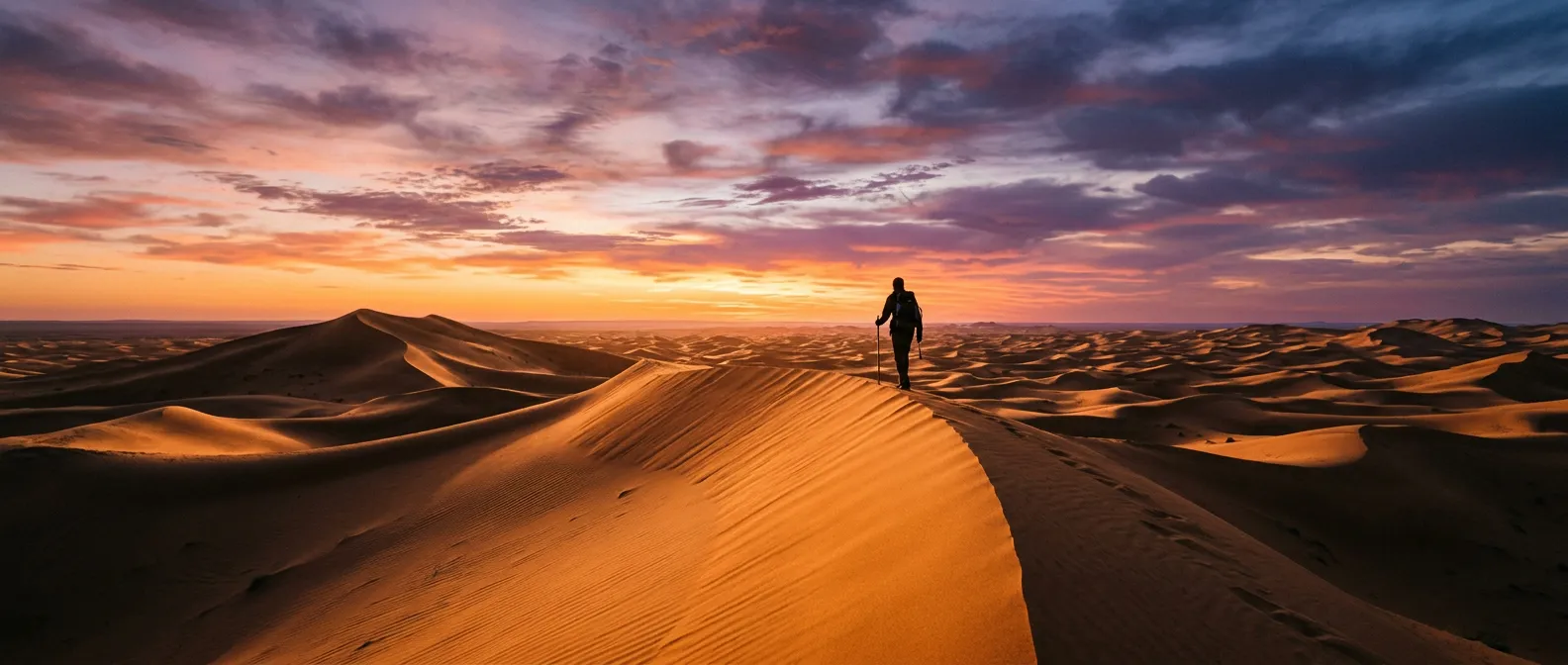
Here's the direct answer. Yes, you can do a Sahara desert tour from Fes — and Fes is actually the closer of Morocco's two main desert gateways to the Erg Chebbi dunes at Merzouga. The standard trip is three days and two nights, which is also the sweet spot for most people. The dunes are a long way off — roughly 460–480 km and about eight to nine hours' driving across the Middle Atlas and down the Ziz Valley — so you really spend one day getting there, a night and a sunrise on the dunes, and a day coming back (or continuing on to Marrakech instead of doubling back). Two days is possible but rushed; one day is not enough and shouldn't be attempted.
Sweet spot
3 days
2 nights, 1 on the dunes
The dunes
Erg Chebbi
At Merzouga
The drive
~8–9h
Each way, scenic road
Can you really reach the Sahara from Fes?
You can, and plenty of people do — it's one of the most popular trips we arrange. Morocco's big Saharan dune fields lie in the far southeast, and there are two cities most travellers launch from: Marrakech and Fes. Fes is closer to Erg Chebbi, the tall, classic dunes near Merzouga that most people picture when they think of the Moroccan Sahara. There's no rail line and no usable airport at the dunes, so a desert trip from Fes is an overland one, almost always with a private driver in a 4x4 or comfortable minivan. The driving is the trade-off, but it's also a large part of the appeal: you cross cedar forest, high mountain passes and a palm-filled valley to get there, watching the country turn slowly into desert.
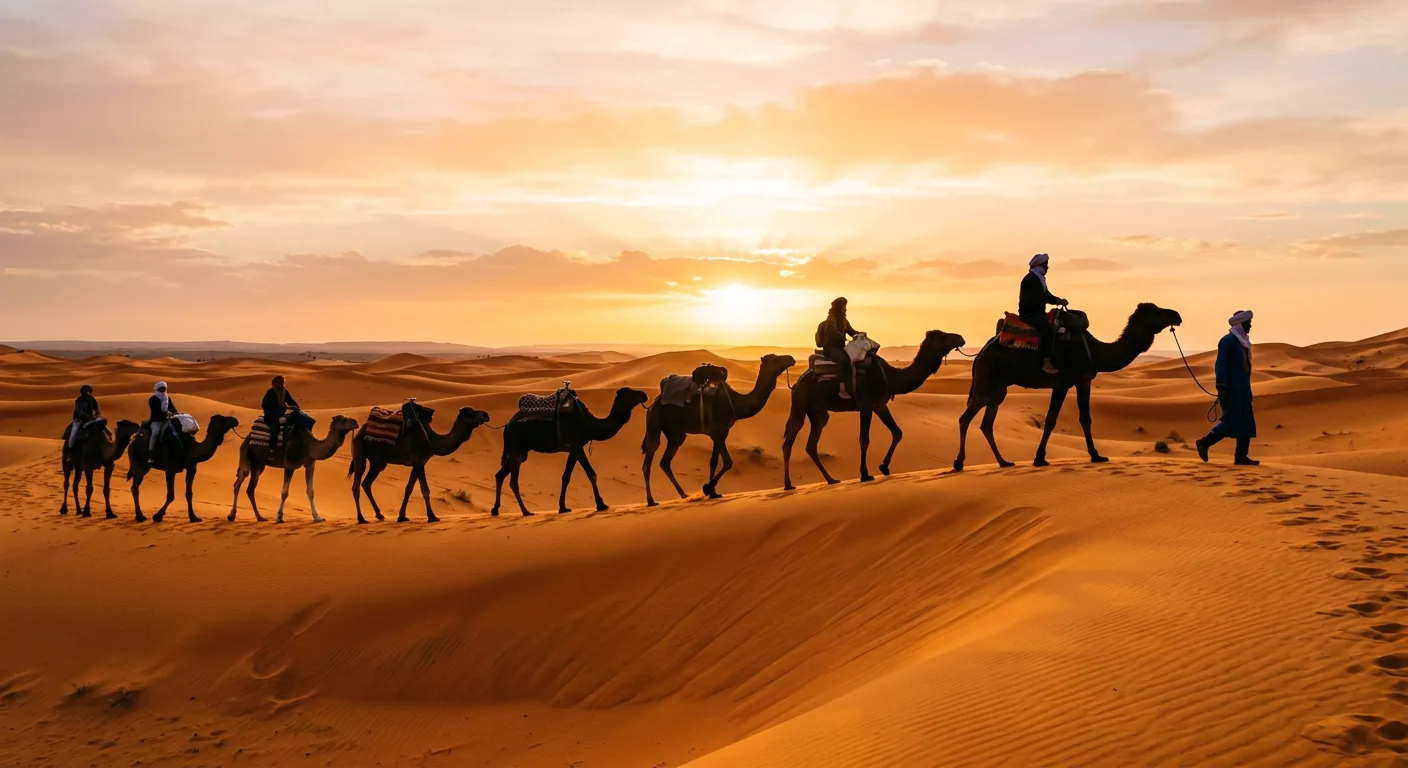
How many days do you need — 2, 3 or 4?
This is the question that decides the whole trip, so here's the honest breakdown.
- Two days, one night. Doable, but it's the rushed version: a long drive down on day one, a night in the dunes, and the same long drive back on day two. You get the headline experience — sunset, a night under the stars, sunrise — but almost all of your daylight is spent in the car. Only choose this if two days is genuinely all you have.
- Three days, two nights. The sweet spot. A scenic drive down with proper stops, a full evening and a sunrise on the dunes without watching the clock, and a relaxed return — or the option to carry on to Marrakech. This is what we recommend for most travellers.
- Four days or more. Best if you want to slow right down or weave in the Todra and Dades gorges, the Valley of Roses, Ouarzazate and the kasbah route. Four days turns a there-and-back into a genuine grand loop, especially if you finish in Marrakech.
For the wider question of how long to give the city itself before you head south, see our how many days in Fes guide — two days for Fes plus three for the desert is a very satisfying week.
The route: what you actually drive through
The drive from Fes to Merzouga isn't a featureless motorway slog — it's a sequence of distinct landscapes, which is why it's worth taking at an unhurried pace with a few stops.
Fes → Ifrane & Azrou. The first couple of hours climb into the Middle Atlas. Ifrane is the tidy, alpine-looking 'Switzerland of Morocco', and the cedar forests around Azrou are home to wild Barbary macaques — a common photo stop on the way up.
Across the Atlas to Midelt. The road crosses the high plateau and the Midelt area, the rough halfway point and a typical lunch stop. The landscape opens out and dries as you leave the cedars behind for bare mountain and high steppe.
Down the Ziz Valley. South of the pass the road drops into the Ziz Valley, a green ribbon of palm groves and ksour cut into red rock — one of the most beautiful stretches of the whole drive, and where the Sahara starts to feel near.
Erfoud, Rissani & Merzouga. The last leg passes the date town of Erfoud and old caravan market of Rissani before the dunes of Erg Chebbi rise out of the flat hammada at Merzouga. From here you swap the vehicle for a camel or a 4x4 out to the camp.
What a night in the desert camp is like
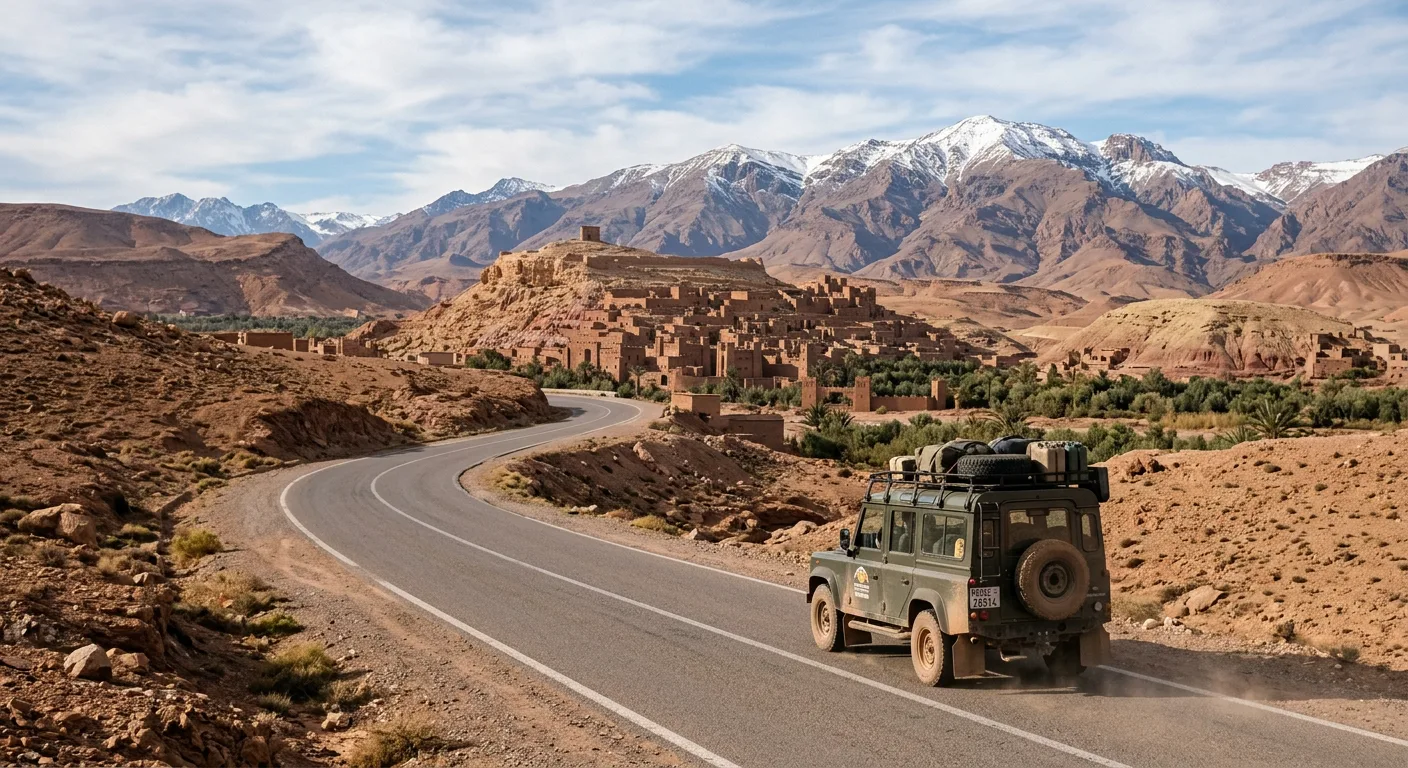
You arrive at the edge of the dunes in the late afternoon, swap the vehicle for a camel (or a 4x4 if you'd rather), and ride out over the sand to camp as the light softens. Camps range from simple, well-run tents to elaborate setups with private bathrooms and proper beds — dinner is usually a tagine under the stars, often with drumming around a fire, and the night sky out there, far from any town, is genuinely extraordinary. You're woken for sunrise over the dunes, which is the moment most people remember most. For the detail on what to expect and how camps differ, read staying in a Moroccan desert camp and our breakdown of standard vs luxury camps.
Merzouga or Zagora — which desert from Fes?
From Fes, the answer is almost always Merzouga. Erg Chebbi at Merzouga is the tall, sculpted sea of dunes most people have in mind, and it's the natural target from Fes. Zagora and the smaller dunes of Erg Lehoudi are closer to Marrakech and quicker to reach from there, but lower and less dramatic, and they're a long way round from Fes. So if you're starting in Fes, point yourself at Merzouga. If you want the full comparison, see Merzouga vs Zagora.
Where the desert fits in a wider Morocco trip
Fes makes an excellent start or end for a Morocco itinerary, and the desert is the natural way to link it to the south. The smartest routing, if your flights allow, is to treat the Sahara as the middle of a journey rather than an out-and-back: start in Fes, drive down for a night in the dunes, then continue west through the Todra and Dades gorges, Ouarzazate and over the High Atlas to finish in Marrakech. That way you never repeat the same road. If both your flights are in and out of Fes, a three-day there-and-back loop works perfectly well — you simply retrace the Ziz Valley on the way home.
We build exactly these trips. The 3-day Fes to the Sahara tour is the classic Merzouga run, while the Fes to Marrakech via the Middle Atlas route is the overland alternative if you'd rather end in the Red City. For a fuller framework, our 7-day Morocco itinerary and the Sahara desert tour guide map out how the pieces connect.
A sample 3-day Fes-to-Sahara plan
Day 1 — Fes to Merzouga. An early start, over the Middle Atlas via Ifrane and the Azrou cedars, lunch around Midelt, then down the Ziz Valley to the dunes by late afternoon. Camel trek out to camp for sunset, dinner and a night under the stars.
Day 2 — the dunes (and a choice). Sunrise over Erg Chebbi. From here you either begin the return to Fes, or — the better option if time allows — carry on west toward the gorges and Ouarzazate, aiming to finish in Marrakech.
Day 3 — return or onward. A relaxed drive back up the Ziz Valley to Fes, or the final leg over the High Atlas into Marrakech, depending on the routing you chose.
Prefer to see it laid out as a fixed plan? The Fes to Marrakech via the Sahara itinerary shows the four-day, end-in-Marrakech version day by day.
Practical tips before you book
- Go private, not rushed. A private driver lets you stop for the macaques, the Ziz viewpoints and photos, and set your own pace. Shared group runs are cheaper but stick to a fixed schedule and can feel like a conveyor belt.
- Time it for spring or autumn. The desert is very hot in high summer and the nights turn cold in winter. March–May and September–November are the most comfortable windows — see our best time to visit Fes guide, which broadly applies to the route south too.
- Pack layers and a scarf. Desert nights cool down fast even after a hot day, and a light scarf is useful against blowing sand. Our Morocco packing list covers the rest.
- Bring an overnight bag. You don't need to haul a big suitcase out to camp — pack a small bag for the one night and leave the rest in the vehicle.
- It's doable with kids, but the long drive is the main consideration; breaking the journey with stops makes a big difference.
Frequently asked
Can you do a Sahara desert tour from Fes?
Yes. Fes is one of the two main gateways to the Moroccan Sahara — the other is Marrakech — and it is actually the closer of the two to the great Erg Chebbi dunes at Merzouga. Tours run year-round, almost always with a private driver in a 4x4 or minivan, because the dunes are a long overland drive across the Middle Atlas and down the Ziz Valley. There is no train and no airport at Merzouga, so the journey is part of the trip.
How many days do you need to go from Fes to the desert?
Three days and two nights is the standard, and the length we recommend for most people. The dunes are a full day's drive from Fes, so a three-day trip gives you a day to get there, a night and a sunrise on the dunes with time to slow down, and a day to come back — or to carry on to Marrakech instead of doubling back. Two days is physically possible but means roughly eight to nine hours of driving on each of two days for a single night, which is a lot of road for little dune time. Four days lets you fold in the Todra or Dades gorges and the road of a thousand kasbahs on the way out.
How far is Merzouga from Fes and how long is the drive?
Merzouga sits roughly 460–480 km southeast of Fes, and the drive takes about eight to nine hours including stops — it is mountain and valley road, not motorway, so it is slower than the distance suggests. The route climbs through Ifrane and the cedar forests around Azrou, crosses the Middle Atlas near Midelt, then follows the palm-lined Ziz Valley down to Erfoud and Rissani before the final stretch to the dunes. Most of that time is genuinely scenic, which is why the journey is treated as part of the experience rather than dead time.
Is the Fes to Merzouga desert tour worth it?
For most travellers, yes — a night on the Erg Chebbi dunes is one of the highlights of a Morocco trip, and the drive itself crosses several distinct landscapes. The honest caveat is the driving: it is a long way each way, so it is best suited to people who don't mind road time and ideally have three days to give it. If you only have a single spare day in Fes, a desert trip is the wrong choice — you would spend it almost entirely in the car. In that case a closer day trip to Volubilis and Meknes or Chefchaouen makes far more sense.
Should you go back to Fes or continue to Marrakech after the desert?
If your plans allow it, continuing to Marrakech is the smarter routing — it turns the desert into the middle of a journey rather than an out-and-back, so you don't repeat the same long drive. A common shape is to start in Fes, spend a night in the dunes, then carry on west through the Dades and Todra gorges, Ouarzazate and over the High Atlas to Marrakech over three to four days. If your flights are both in and out of Fes, a there-and-back three-day loop works fine; the second drive simply retraces the Ziz Valley.
When is the best time to do a desert tour from Fes?
Spring (roughly March–May) and autumn (September–November) are the most comfortable: warm days, cool but bearable desert nights, and good light on the dunes. Summer is very hot in the Sahara, often well above 40°C by day, though the camps are quieter and the nights still cool down. Winter days are pleasant but desert nights get genuinely cold, so pack layers. Exact conditions vary year to year, so treat these as broad guidance rather than a guarantee.
Fes to the dunes
We'll build your Sahara trip around your dates.
Tell us how many days you have and whether you want to loop back to Fes or finish in Marrakech, and we'll arrange a private driver, the scenic route through the Middle Atlas and Ziz Valley, and a night on the Erg Chebbi dunes.