Sidi Ifni, Morocco

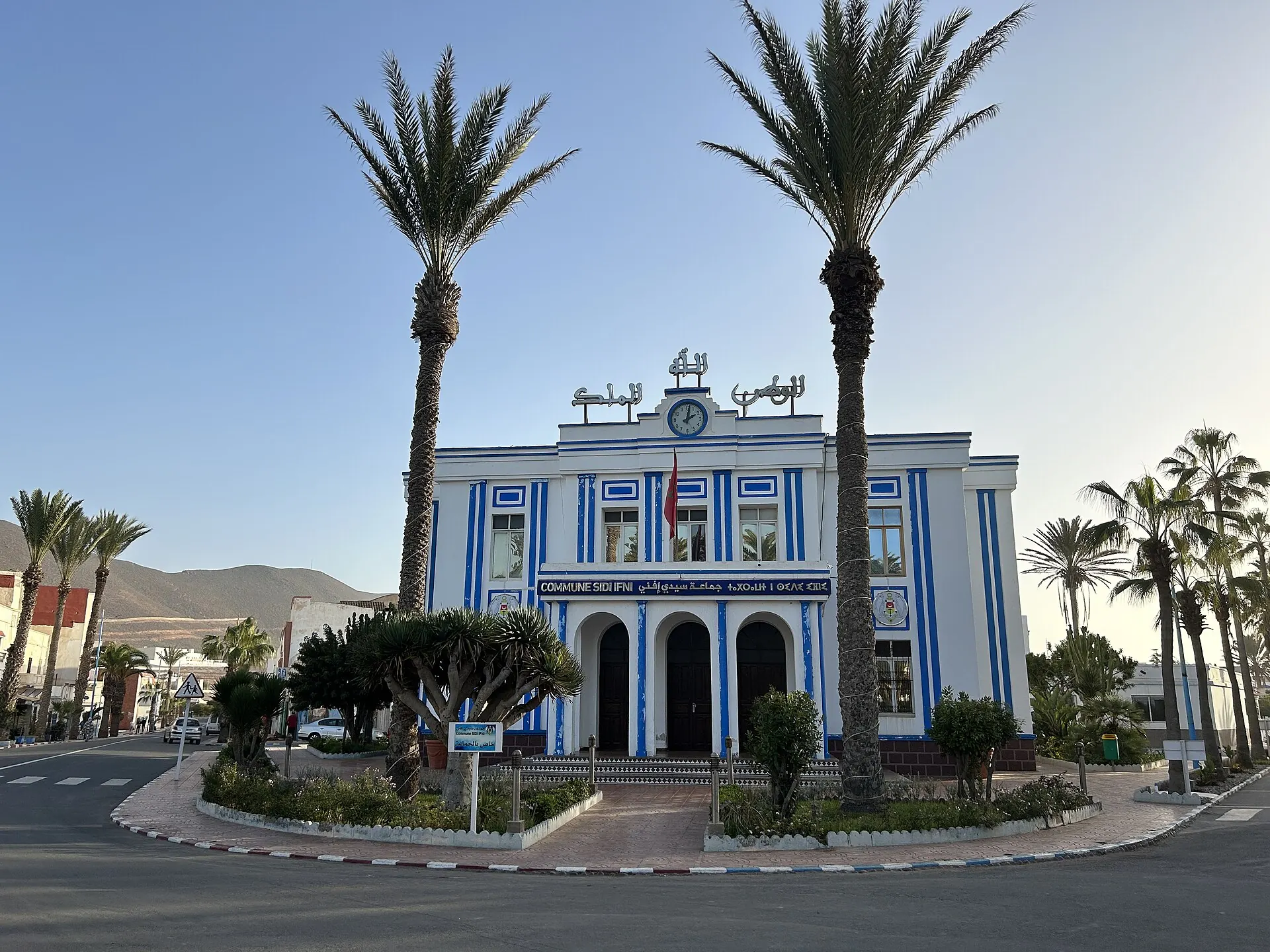
Sidi Ifni's town hall has a ramp in place of steps, built for the Spanish governor's horse. Spain held the town as Ifni from 1934 until 1969, and its Art Deco streets survive intact. It sits about 170 km south of Agadir, so Fes-based trips add it on the deep-south coastal leg.

  • Private or small-group
  • A written quote for your dates
  • WhatsApp support during your trip

Why go to Sidi Ifni

Sidi Ifni sits about as far from Fes as the Atlantic coast runs, slotted onto the deep-south coastal leg rather than the imperial north: a small town of roughly 20,000 inhabitants on Morocco's far-southern Atlantic coast, about 170 km south of Agadir and 80 km west of Guelmim. It was a Spanish colonial enclave — known as Ifni — from 1934 until its retrocession to Morocco in 1969, and the Spanish period left behind an unusually intact Art Deco townscape: the town hall with its ramp in place of steps (to accommodate the Spanish governor's horse), the former consulate, the old court building and a circular church converted to a mosque — all concentrated around the central square in a state of attractive, sun-bleached decay. The town's beach, a wide south-facing crescent, is backed by a Spanish lighthouse; and 15 km to the north, the sea arches of Legzira Beach — two massive red-ochre rock formations punched through by the Atlantic — rank among the most dramatic coastal formations in Africa. Sidi Ifni is the anti-tourist endpoint of Morocco's surf and coastal exploration, appreciated by those who seek frontier atmosphere over finished infrastructure.

Best time
April–October for the coast; surf season October–April
How long
1–2 nights
Nearest airport
Agadir-Al Massira (AGA) + 2h drive
Region
Atlantic coast · Guelmim-Oued Noun

What you'll see in Sidi Ifni

The blue-and-white Spanish-era town hall of Sidi Ifni between tall palms
Sidi Ifni

What remains of Spanish colonial architecture in Sidi Ifni?

The central square of Sidi Ifni — Place Hassan II — is flanked by a cluster of Art Deco buildings from the 1930s–1950s Spanish protectorate period: the hôtel de ville (town hall) with its ceremonial horse ramp, the former Spanish consulate (now a police barracks), an art deco tribunal and the circular Iglesia de San Francisco, deconsecrated and converted into a mosque after 1969. The buildings are largely unrestored but structurally intact — a remarkably legible piece of 20th-century colonial urban design at the edge of the Sahara.
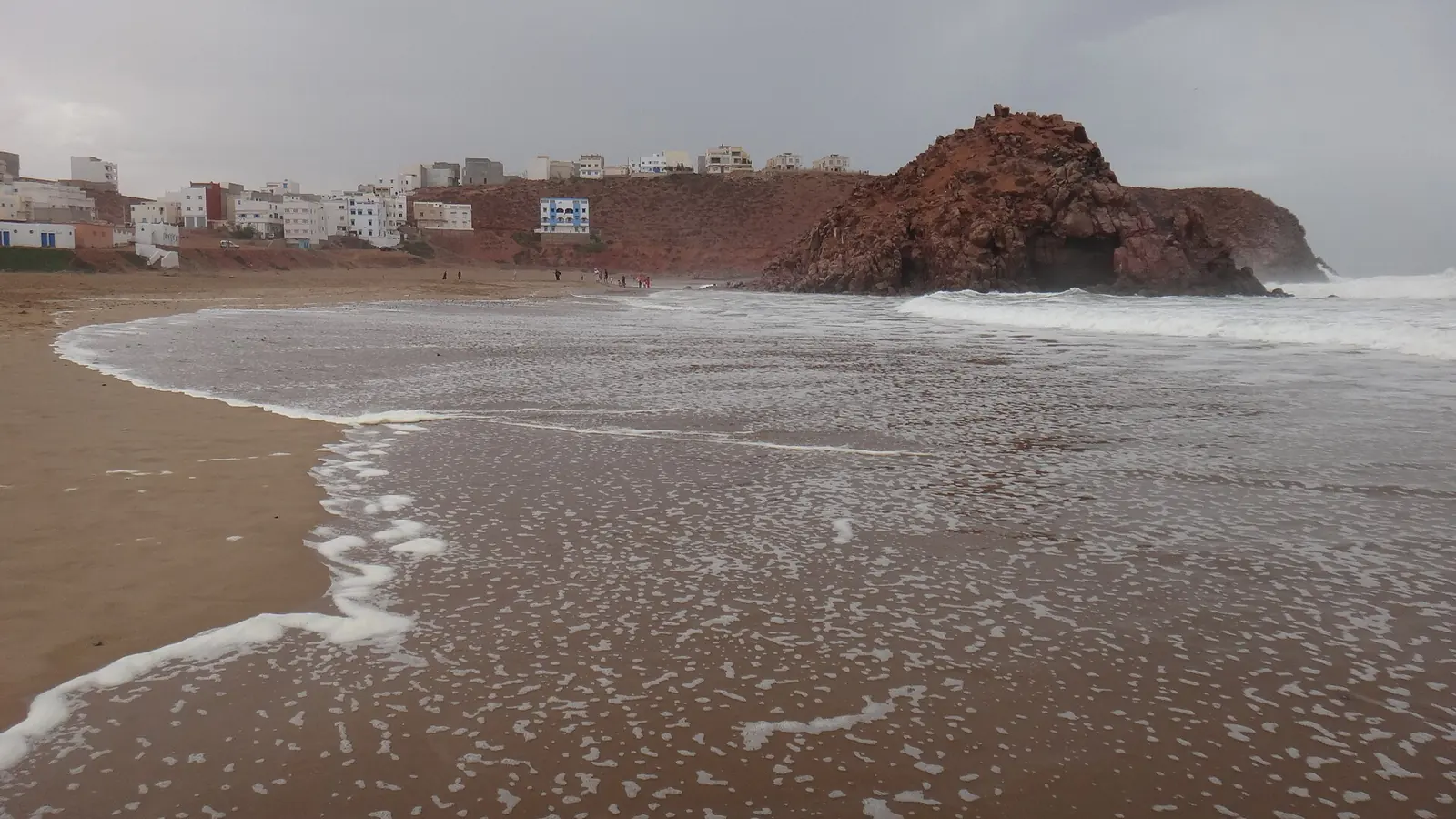
Legzira sea arches

Fifteen kilometres north of Sidi Ifni, the beach of Legzira presents two massive red sandstone arches — natural bridges formed by centuries of Atlantic wave erosion — rising directly from the beach at low tide. One arch collapsed in 2016; the surviving arch is still among the most photographed coastal formations in Morocco. Access is by a steep path from the cliff-top car park.

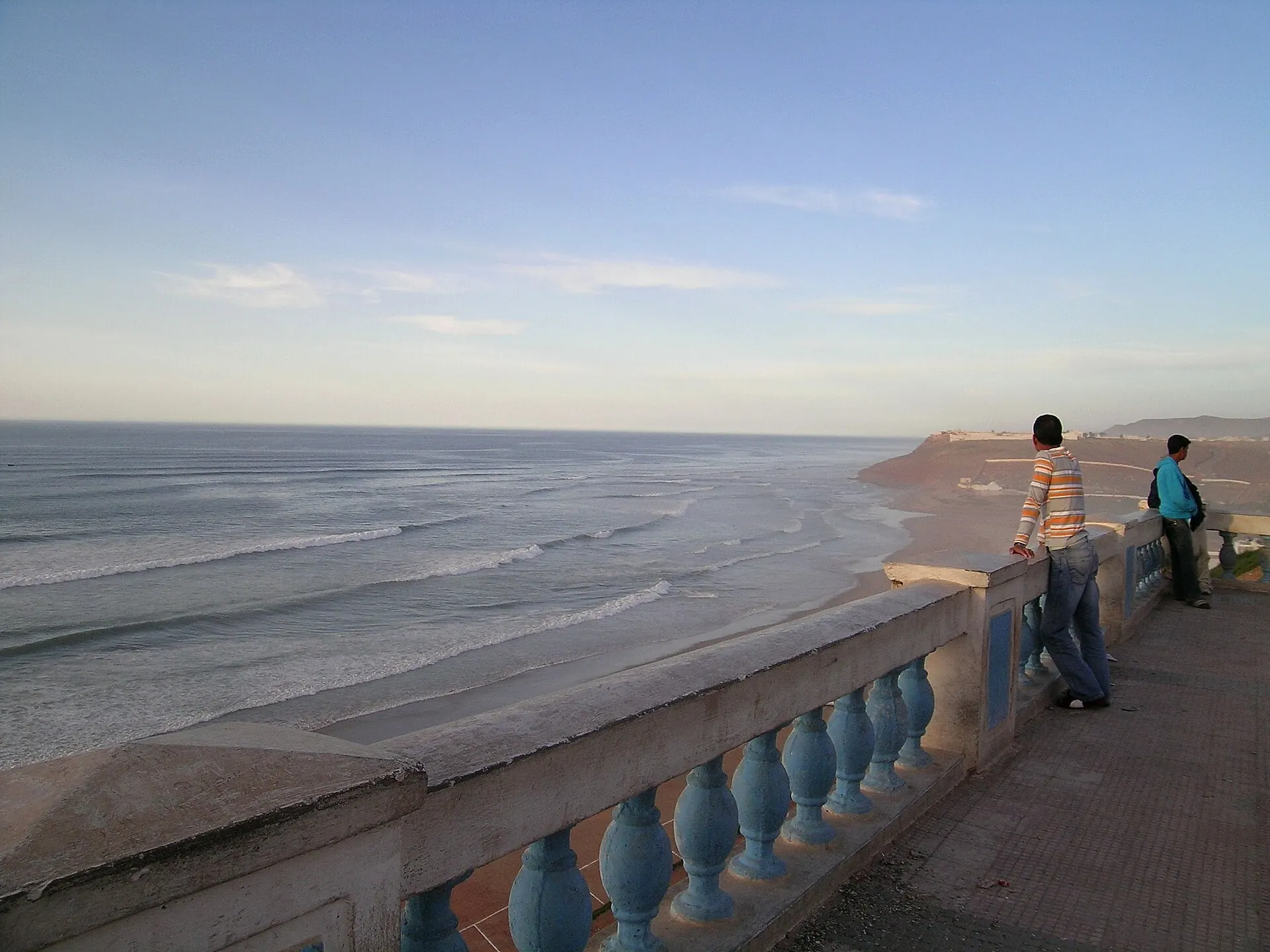
People leaning on the balustrade of the Sidi Ifni seafront promenade above the beach and surf
Sidi Ifni

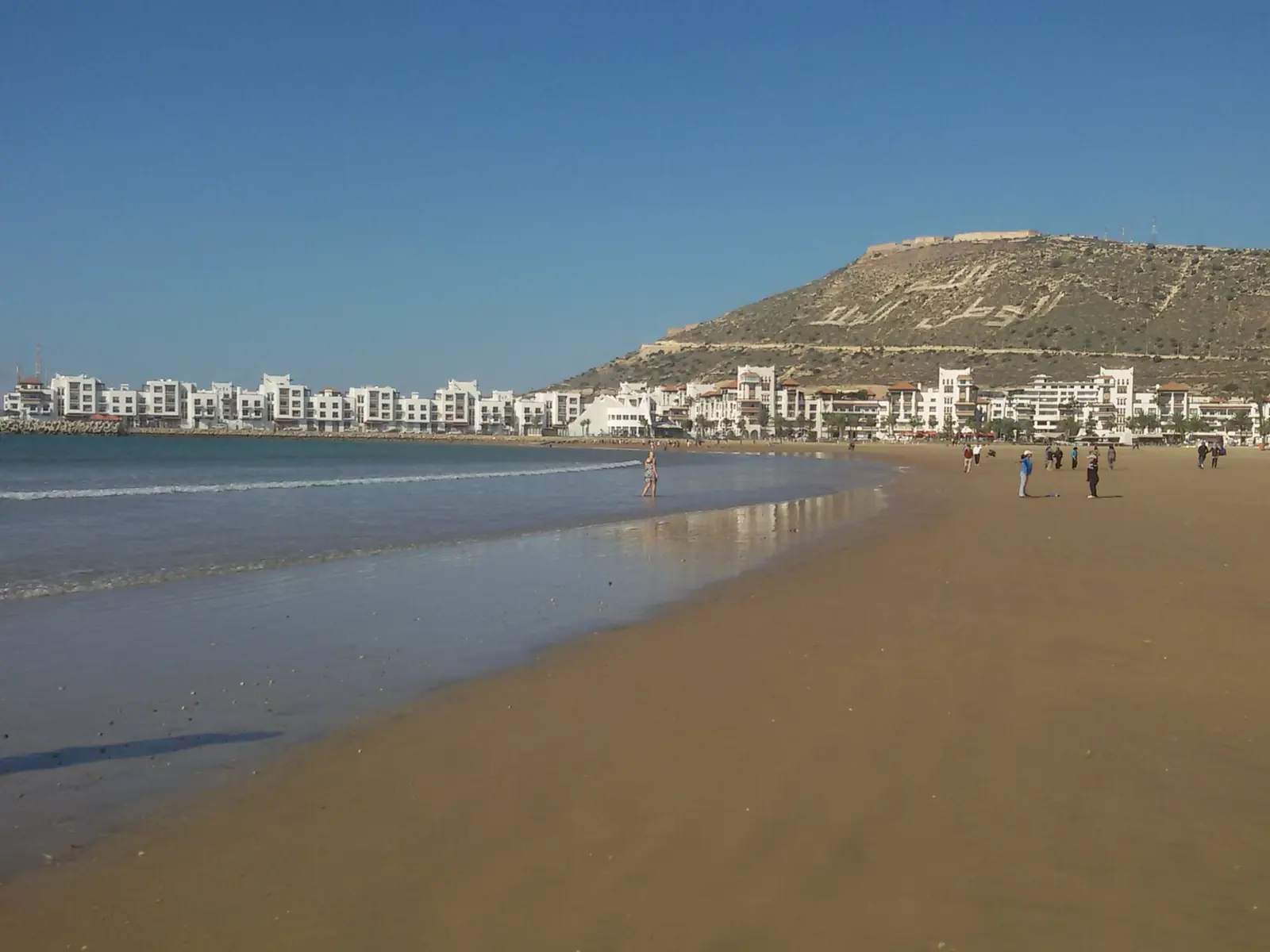
Sidi Ifni beach and surf

The south-facing crescent beach below the Spanish lighthouse receives consistent Atlantic beach-break surf between October and April, with gentler summer conditions. The beach is long, rarely crowded and backed by low cliffs — a very different coastal character from the busier resort beaches of Agadir.

Sunday souk of Sidi Ifni

The weekly market draws rural Berber and Saharan communities from the surrounding Guelmim-Oued Noun region — livestock, raw wool, spices and Saharan blue cloth alongside the standard market goods. One of the large souks on the far-southern Atlantic coast.

Ways to see Sidi Ifni

Trips we build around Sidi Ifni. Tell us which one fits and we'll write the days and quote them for your group.

3 days

Far south Atlantic coast road

A private three-day road trip from Agadir south through Tiznit, Sidi Ifni and Legzira to Guelmim — the anti-tourist Atlantic Morocco.

1 day

Sidi Ifni & Legzira private day

A long day from Agadir or Tiznit: the Art Deco colonial square of Sidi Ifni, the Legzira sea arches and a fresh fish lunch on the beach.

Before you go

Getting there. About 2h (170 km) south of Agadir on the N1 and then the R104 coast road via Tiznit

Best combined with. Tiznit (silversmithing town, 75 km north), Guelmim and the Anti-Atlas road to Taroudant

Infrastructure. Basic — a handful of simple guesthouses and restaurants; no luxury accommodation. Part of the frontier appeal.

Legzira timing. Visit Legzira at low tide so you can walk beneath the arch on the beach; at high tide the base is submerged

Read next. Is Volubilis Worth Visiting, and How Do You Do a Meknes & Volubilis Day Trip from Fes?; Can You See Wild Monkeys Near Fes, and Is the Ifrane & Azrou Cedar Forest Day Trip Worth It?; Is the Fes Medina Overwhelming, and How Do You Avoid Getting Lost?.

Questions about Sidi Ifni

Read these before you add Sidi Ifni to a trip.

Is Sidi Ifni worth visiting?
Yes, for a specific type of traveller — those who enjoy frontier towns, colonial architectural history and empty beaches without tourist infrastructure. It is not a polished destination but that is precisely its appeal. Pair it with Legzira for a rewarding coastal day.
How far is Legzira from Sidi Ifni?
About 15 km north on the coast road — a 20-minute drive. The two are naturally combined: arrive at Legzira in the morning for the best light on the arch, then drive south for lunch in Sidi Ifni and an afternoon walk around the colonial square.
Can you still see the second Legzira arch that collapsed?
No — the smaller northern arch collapsed in September 2016. The surviving larger arch to the south is still intact and accessible at low tide from the beach. The collapse has not diminished the drama of the site.

Tell us your dates. We'll plan Sidi Ifni with you.

  1. Tell us what drew you in. Your dates, who is travelling and what you want to see.
  2. A person reads it. We write a day-by-day plan for your group, private or small-group.
  3. You change anything. Then we confirm the guides, drivers and riads.
Plan this with us