Fes, Morocco· Concierge · Mon–Sat · 09:00–18:00 GMT+1
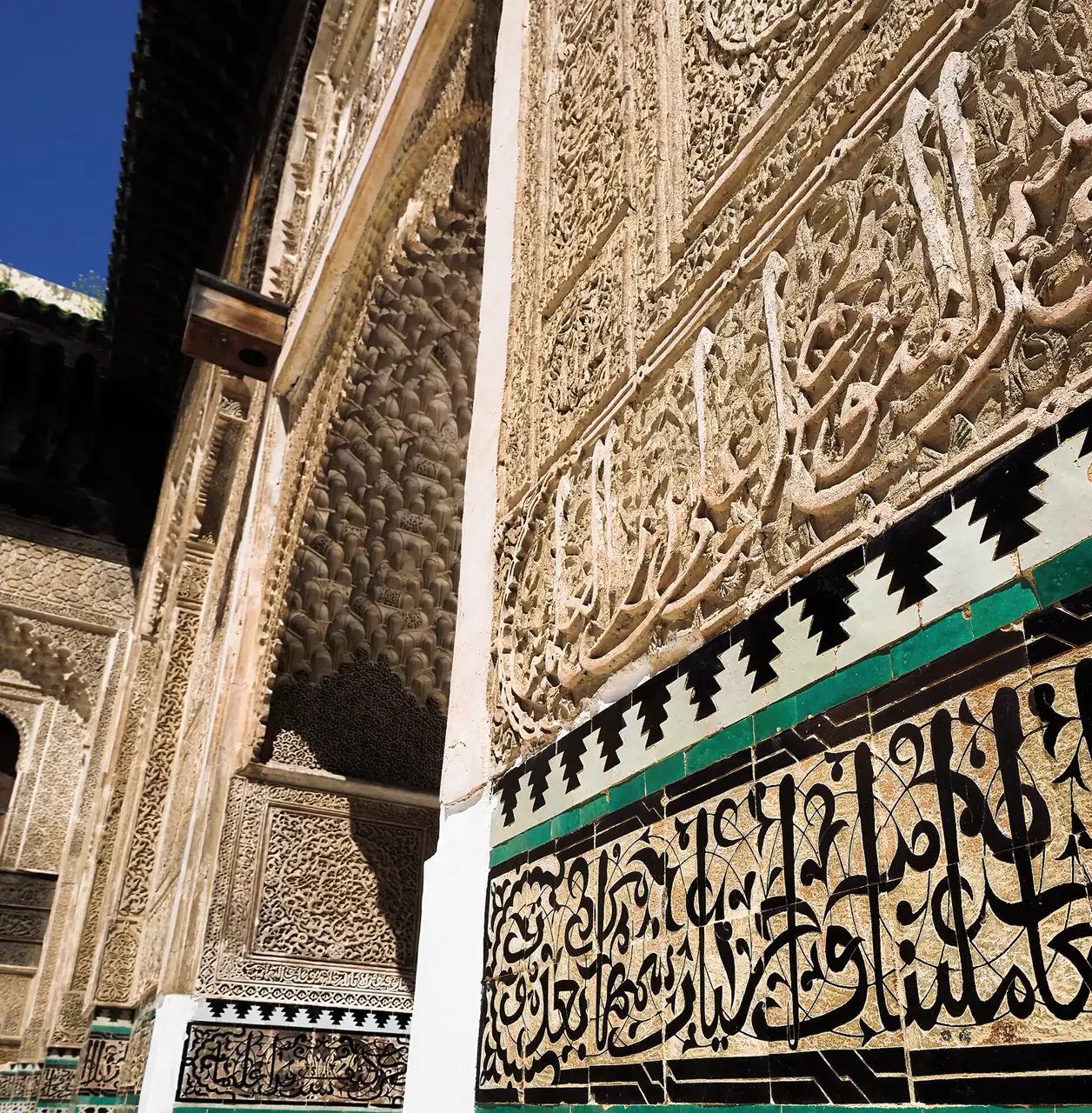
Arabic calligraphy workshop in Fes
Learn Arabic calligraphy with a calligrapher in the Fes medina: cut a qalam from reed, mix the ink, practise the strokes and write your name in Maghrebi script. The workshop takes about 2–3 hours and can end at the Bou Inania or Al-Attarine madrasa, where you read the inscriptions in place.
- Private or small-group
- A local guide with you
- Quoted for your dates
What it's like
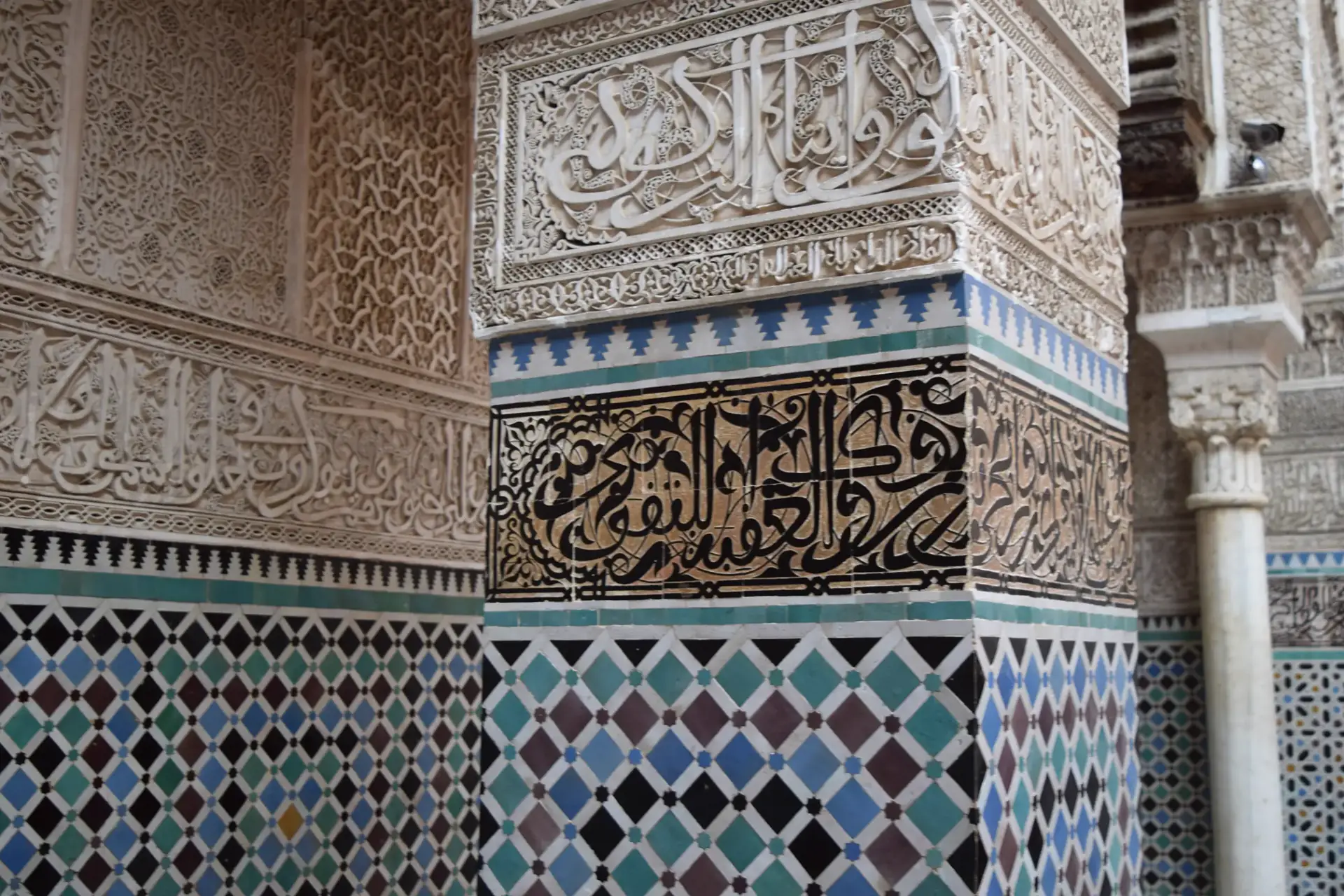
Fes has been a city of scholars and copyists since the founding of the Qarawiyyin, and calligraphy is everywhere in it: carved into cedar, cut into plaster and set in zellige around the courtyards of the madrasas. The local hand is Maghrebi script, the rounded, flowing style of North Africa and Andalusia, while the madrasa walls also carry the angular Kufic.
In this workshop a calligrapher teaches the basics with traditional tools: a qalam cut from reed, ink, and paper. You learn how the letters are proportioned, practise the strokes, and finish by writing a name or a short word to take home. We can pair it with a visit to the Bou Inania or Al-Attarine madrasa to read the inscriptions in place.
Best for: Travellers who love art, books and manuscripts; Families with older children; A calm, indoor afternoon in the medina.
- How long
- About 2–3 hours
- Where
- A calligrapher's studio or riad in the Fes medina, with an optional madrasa visit
- How active
- Gentle, little walking
- Families
- Children welcome
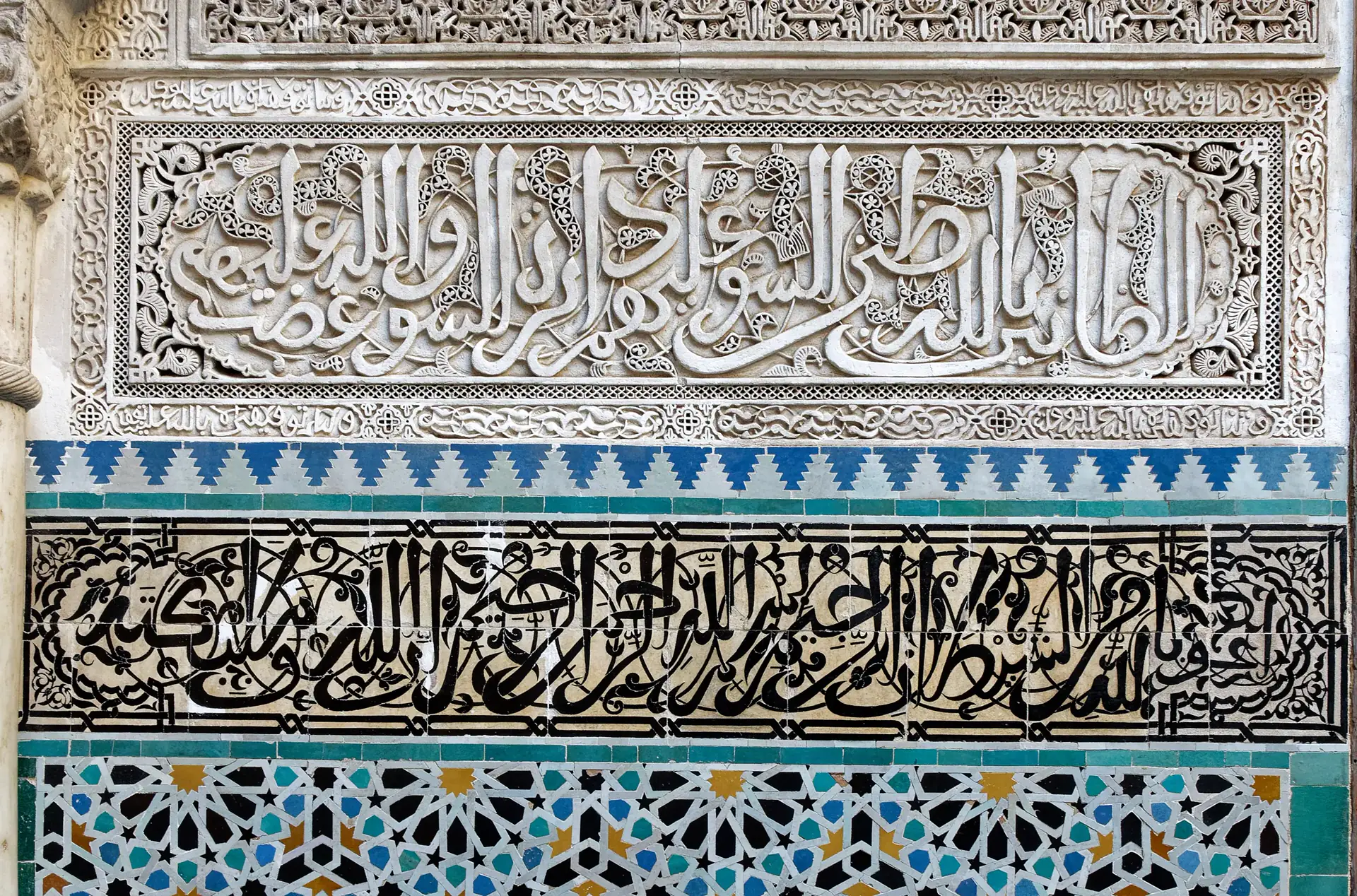
The same letters, carved in plaster and cut in tile at Al-Attarine.
Al-Attarine Madrasa, FesHow it runs
A typical running order. Timings shift with your group, the season and the day of the week.
0:00
Tea and the tools
Meet the calligrapher and look at the tools: reed pens, the knife used to cut the nib, inks and paper.
0:15
Cutting a qalam
See how the nib is cut at an angle, which decides the thick and thin of every stroke.
0:30
Letters and proportion
Learn how letters are measured in dots of the pen and practise basic strokes and a few letters.
1:15
Write your name
With guidance, write a name or a word you choose in Maghrebi script on good paper to take home.
2:00
Optional madrasa visit
Walk to a nearby madrasa to see Kufic and cursive inscriptions in stucco, wood and tile.
Up close
The qalam
A reed pen cut by hand. The angle of the cut nib gives Arabic script its contrast between broad and fine lines.
Maghrebi script
The rounded calligraphic style of North Africa and al-Andalus, used in Moroccan manuscripts for centuries.
Kufic in the madrasas
An angular script carved into the plaster and wood of madrasas such as Bou Inania and Al-Attarine.
Private or small-group
Private
Your party with the calligrapher, at your pace, with the madrasa visit added if you like. Good for a quiet afternoon or a rainy day.
Small-group
A shared session with a few other travellers around one table, each with their own tools.
Practical notes
No Arabic is needed. Ink stains, so avoid your best white shirt. Madrasa visits require modest dress (shoulders and knees covered); non-Muslims can visit Bou Inania and Al-Attarine but not working mosques.
Good to know
You keep the page you write. Madrasa opening hours vary and may change on religious holidays. Left-handed writers are welcome; tell us in advance.
Before you knock
The questions people ask us most before they plan a trip.
Do I need to know Arabic for a calligraphy class?
What will I take home?
Can the class include a madrasa visit?
Pair it with
 Zellige mosaic workshopWatch master cutters chip glazed tiles into geometric pieces by hand, then try the hammer yourself and set a small mosaic of your own.See how it runs
 Medina photography walkGates, fountains, dye vats and rooftops in the best light, with a local guide who knows the angles and how to photograph people respectfully.See how it runs
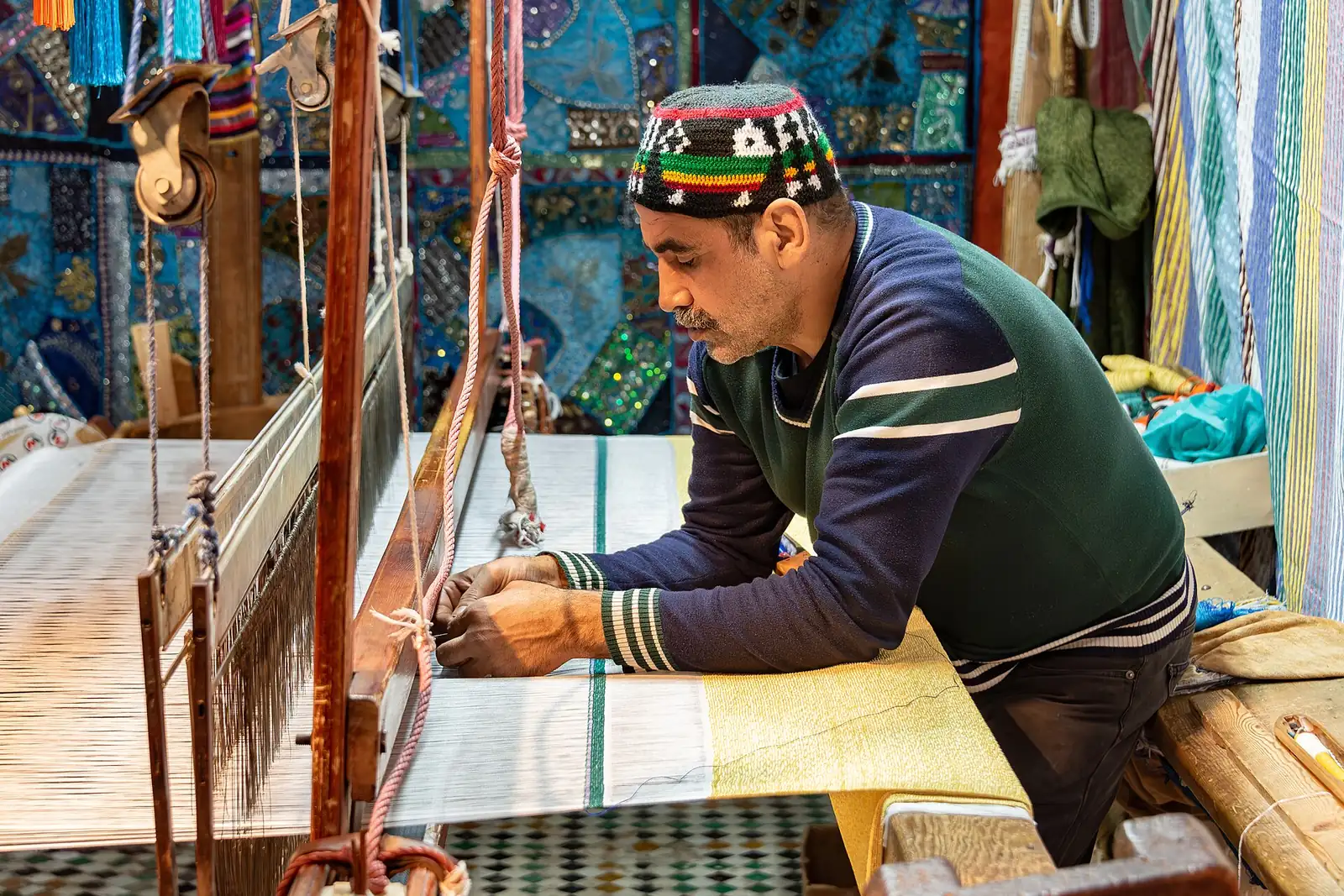 Weaving & Fassi stitchSit at a loom with a weaver, then learn the terz fassi, the double-sided Fes embroidery stitched so the back looks the same as the front.See how it runs
Read before you go: Bou Inania madrasa guide, Al-Attarine madrasa guide, Fes artisans and crafts.
Send your dates. We'll fit this into your Fes days.
- Tell us what drew you in. Your dates, who is travelling and what you want to see.
- A person reads it. We write a day-by-day plan for your group, private or small-group.
- You change anything. Then we confirm the guides, drivers and riads.