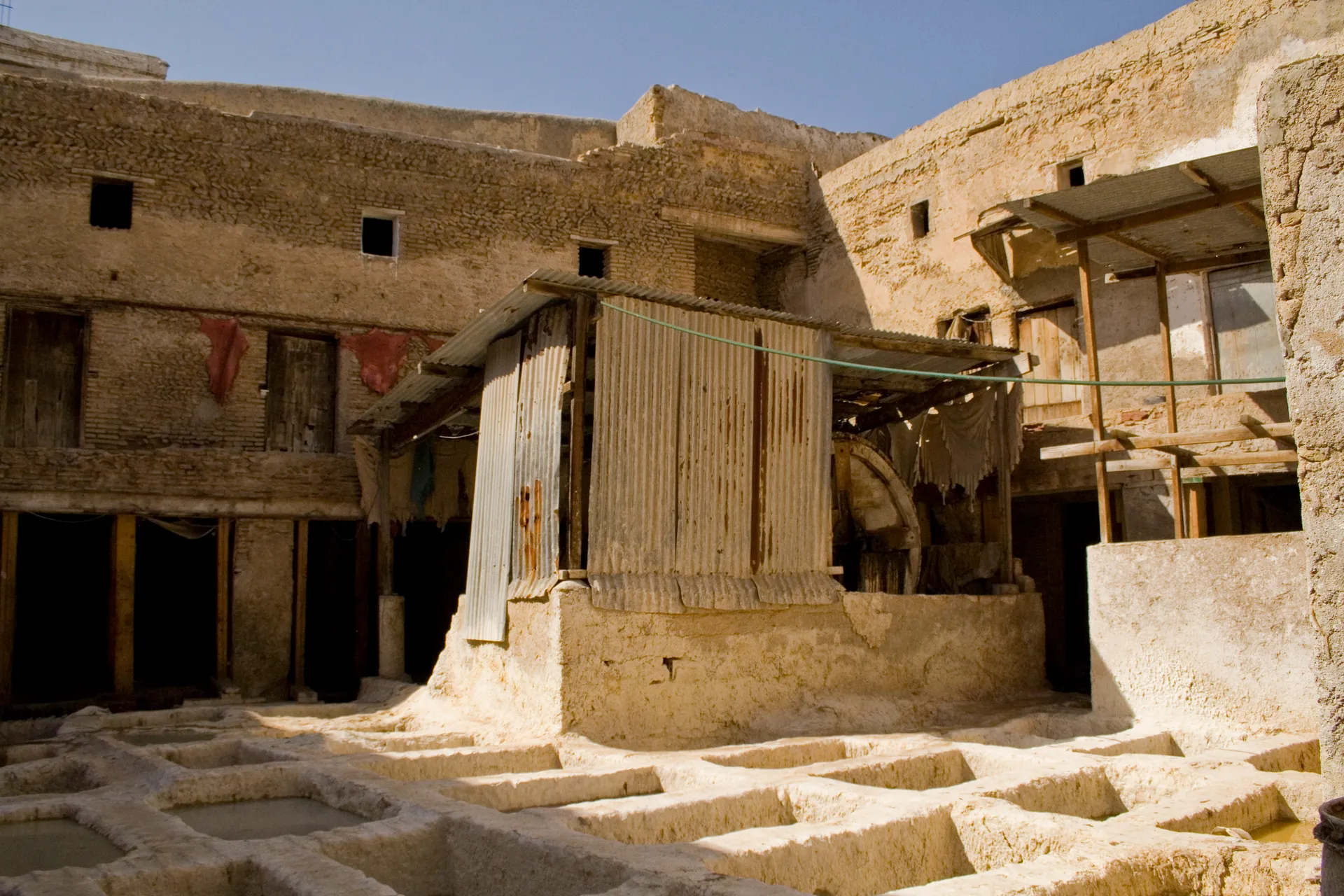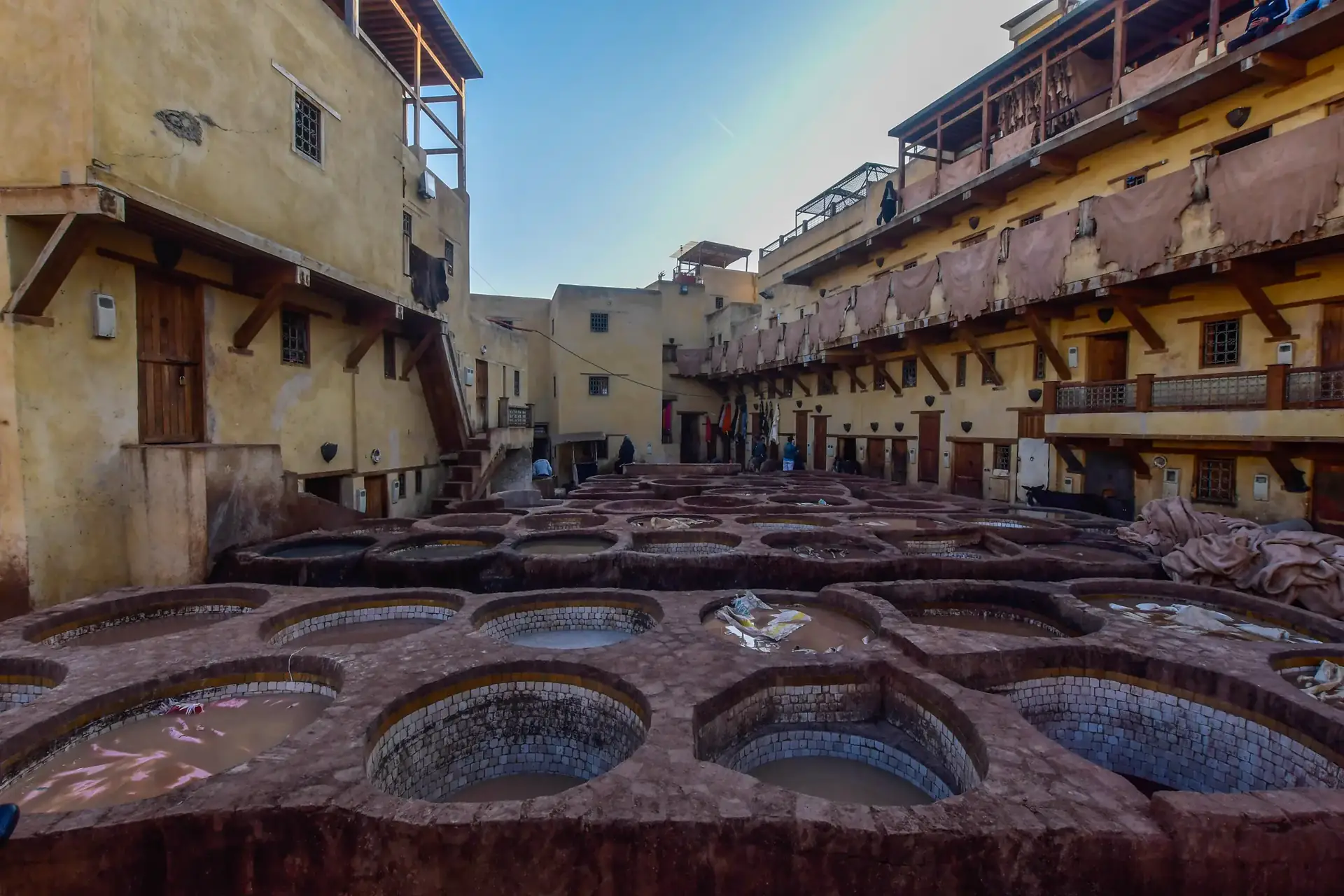
The old stone pits and workshop galleries of the small Ain Azliten tannery in Fes

The three tanneries of Fes

Most visitors see one tannery in Fes, but the medina has three. Chouara is the big one by the Saffarin Madrasa. Sidi Moussa sits near the shrine of Moulay Idris II. Ain Azliten, the smallest, is on the medina's northern edge. Here's how they differ, and how to see them.

  • Licensed Fassi guides
  • Private or small-group
  • A written quote for your date
Ain Azliten tannery, Fes. Photo: İhsan Deniz Kılıçoğlu, CC BY-SA 3.0

Three tanneries, three different visits

All three still work leather by hand, in stone pits along the medina's water.

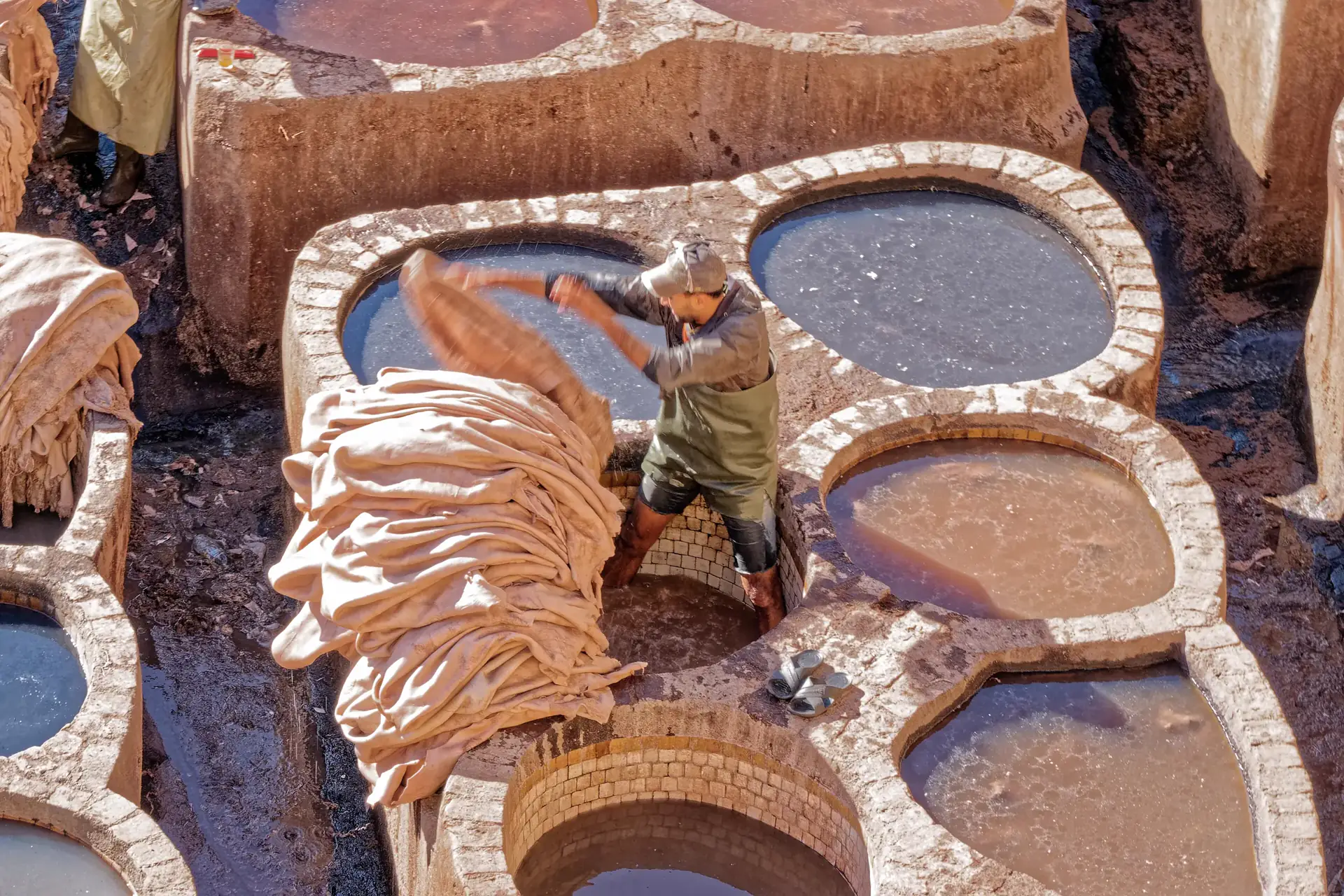
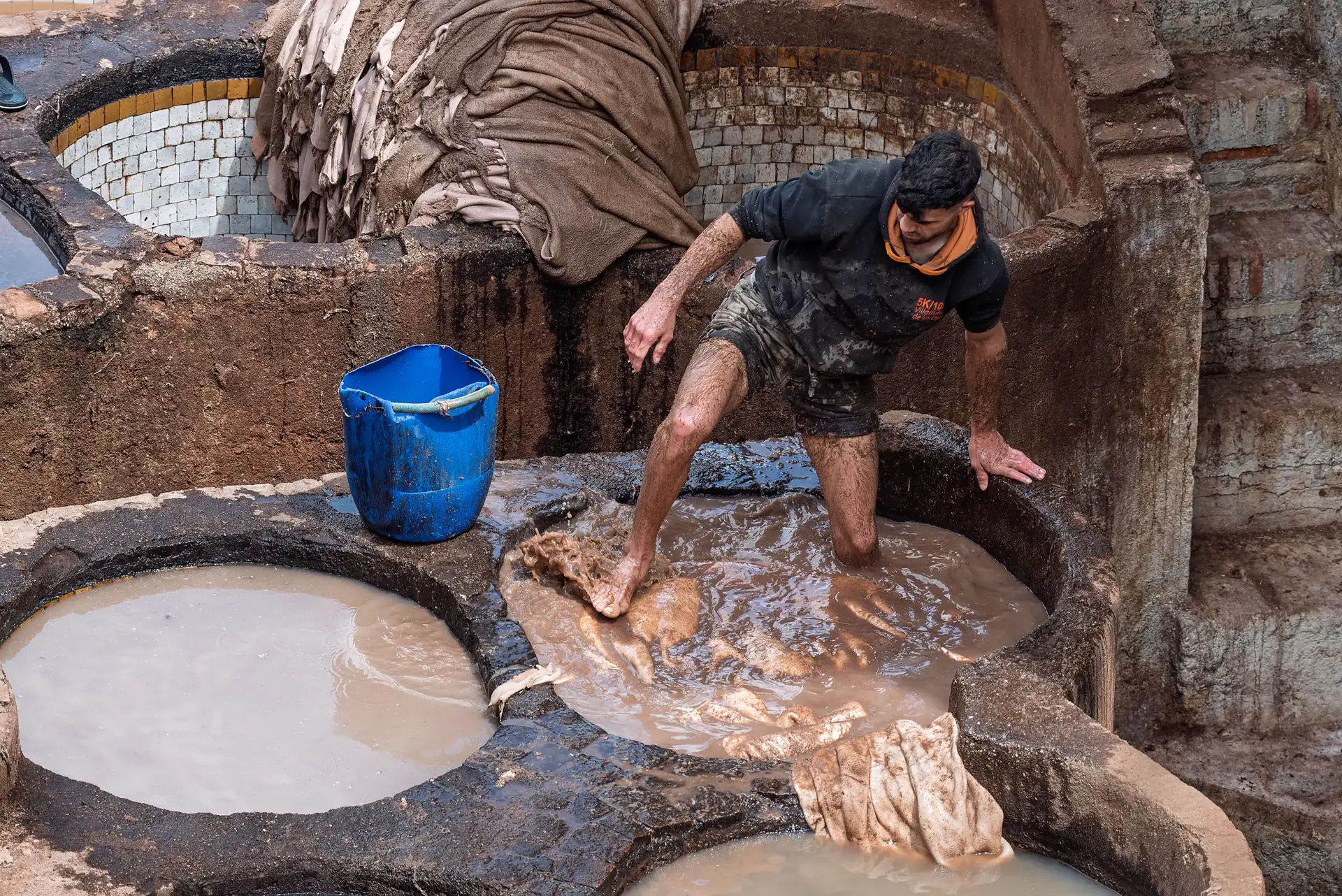
A tanner treading hides in a pit at the Chouara tannery
Chouara tannery, Fes

The largest

Chouara

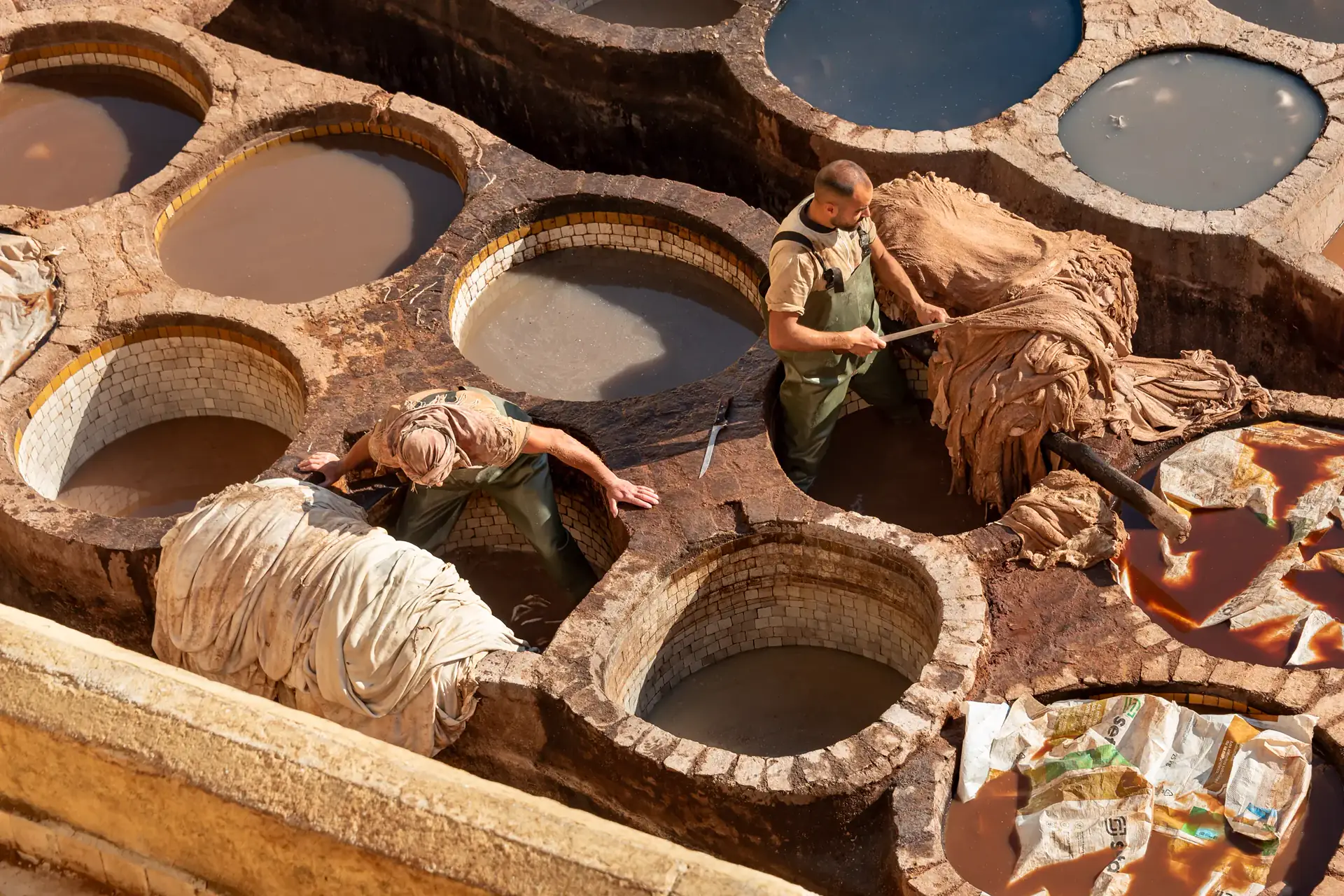
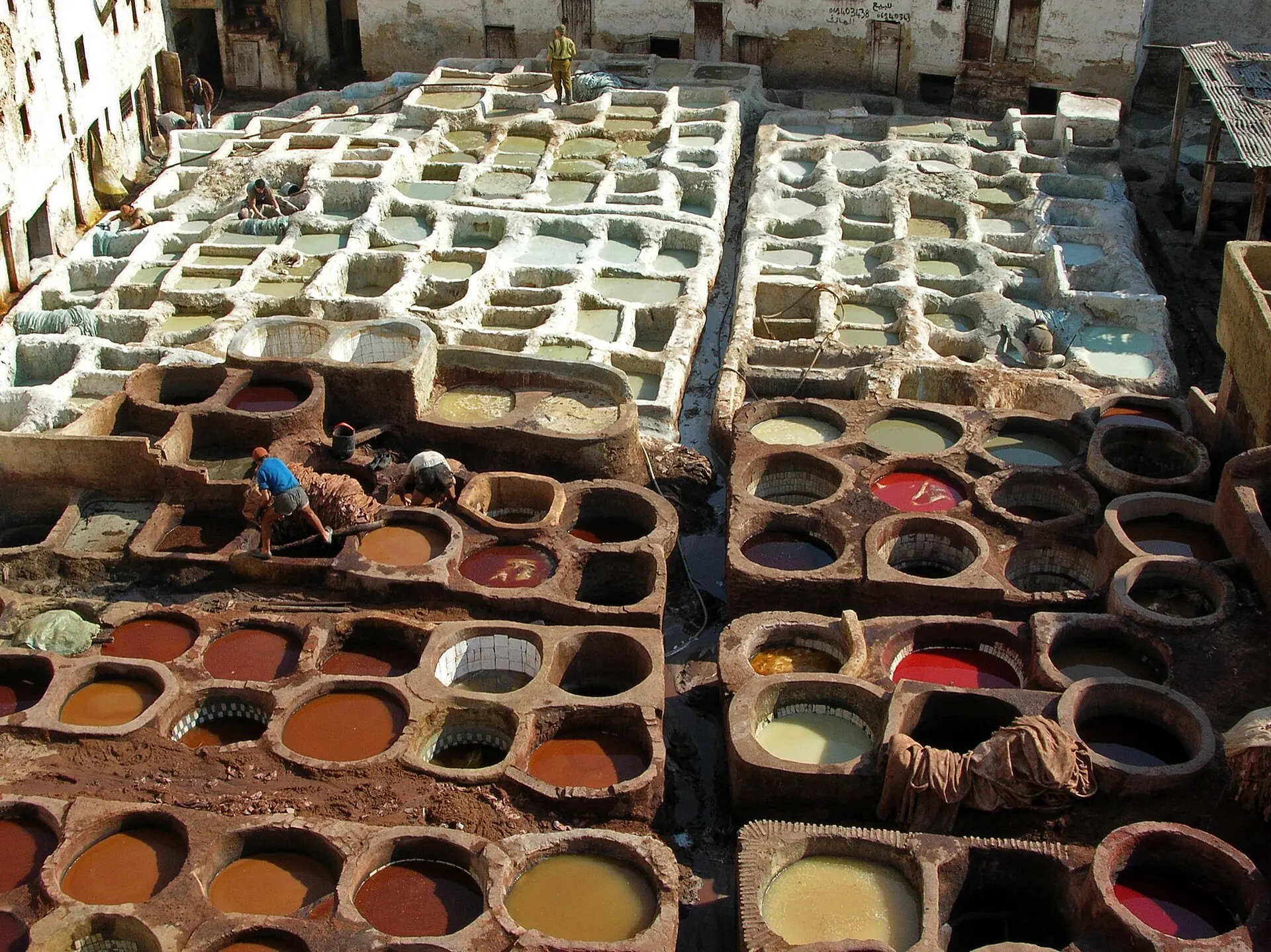
Beside the Saffarin Madrasa, along the Oued Fes. Rows of dye pits, hides drying on the roofs, and leather shops all around with terraces looking down on the work.
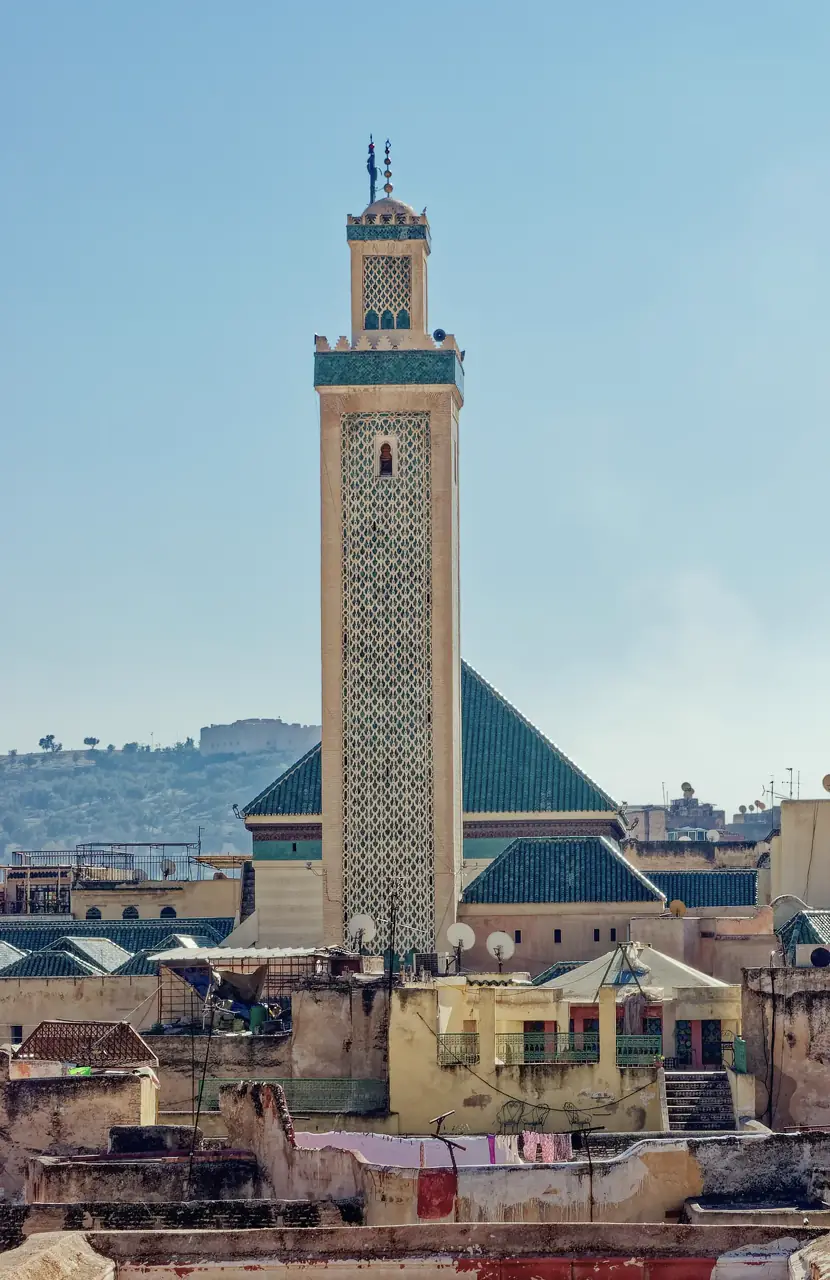
The tall carved minaret of the Zawiya of Moulay Idris II above its green-tiled roofs
Zawiya of Moulay Idris II, Fes

The one by the shrine

Sidi Moussa

Smaller than Chouara, southwest of the Zawiya of Moulay Idris II. A chronicle mentions it in the 12th century, the earliest written record of any of the three. We don't have a photo of it yet, so here is the shrine nearby.
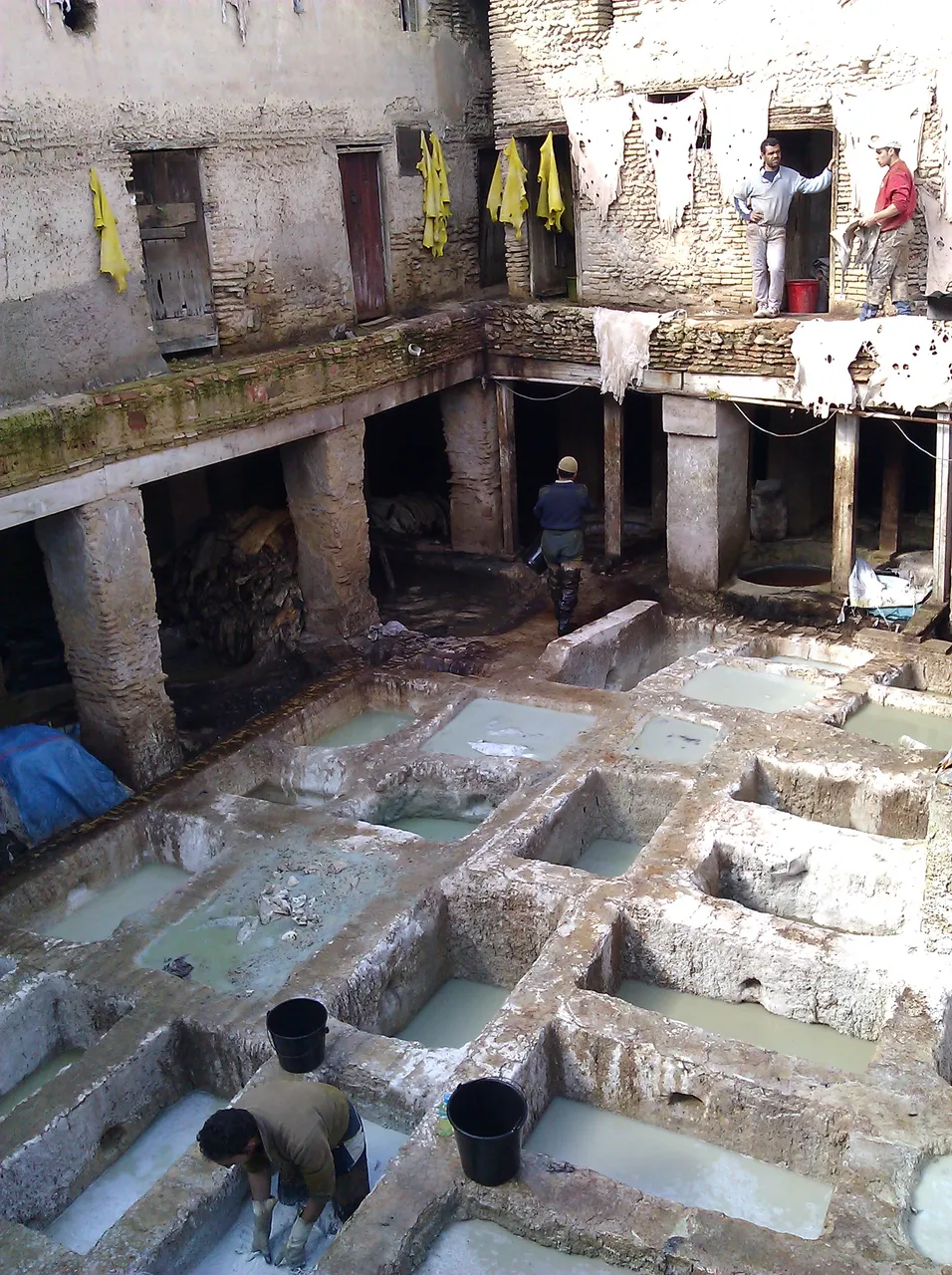
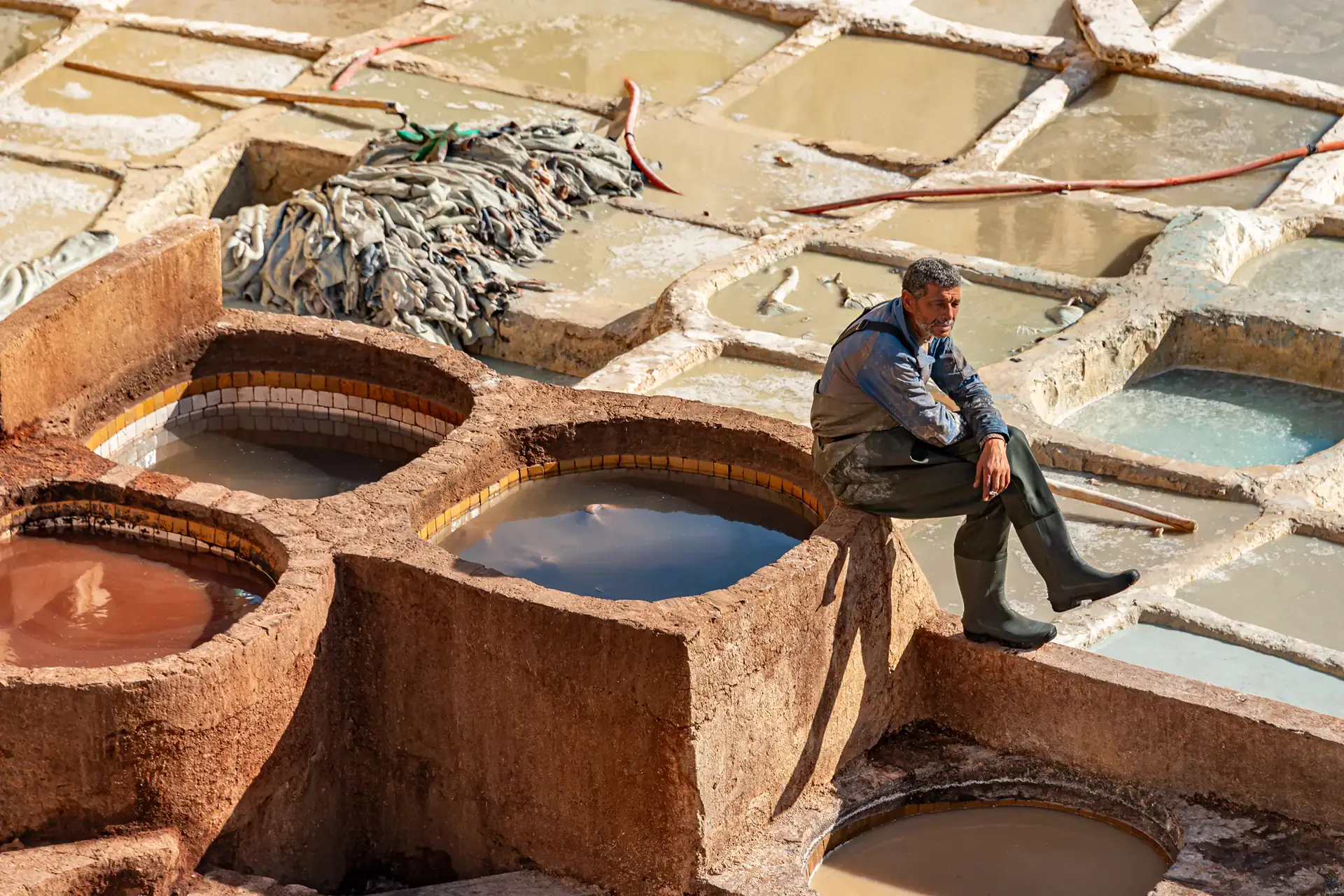
Tanners at work among the lime pits of the Ain Azliten tannery in Fes, seen from the gallery above
Ain Azliten tannery, Fes

The smallest

Ain Azliten

On the northern edge of the medina, created at the end of the 18th century. Few visitors come, so you can watch the tanners at work from the gallery above the pits without a crowd.
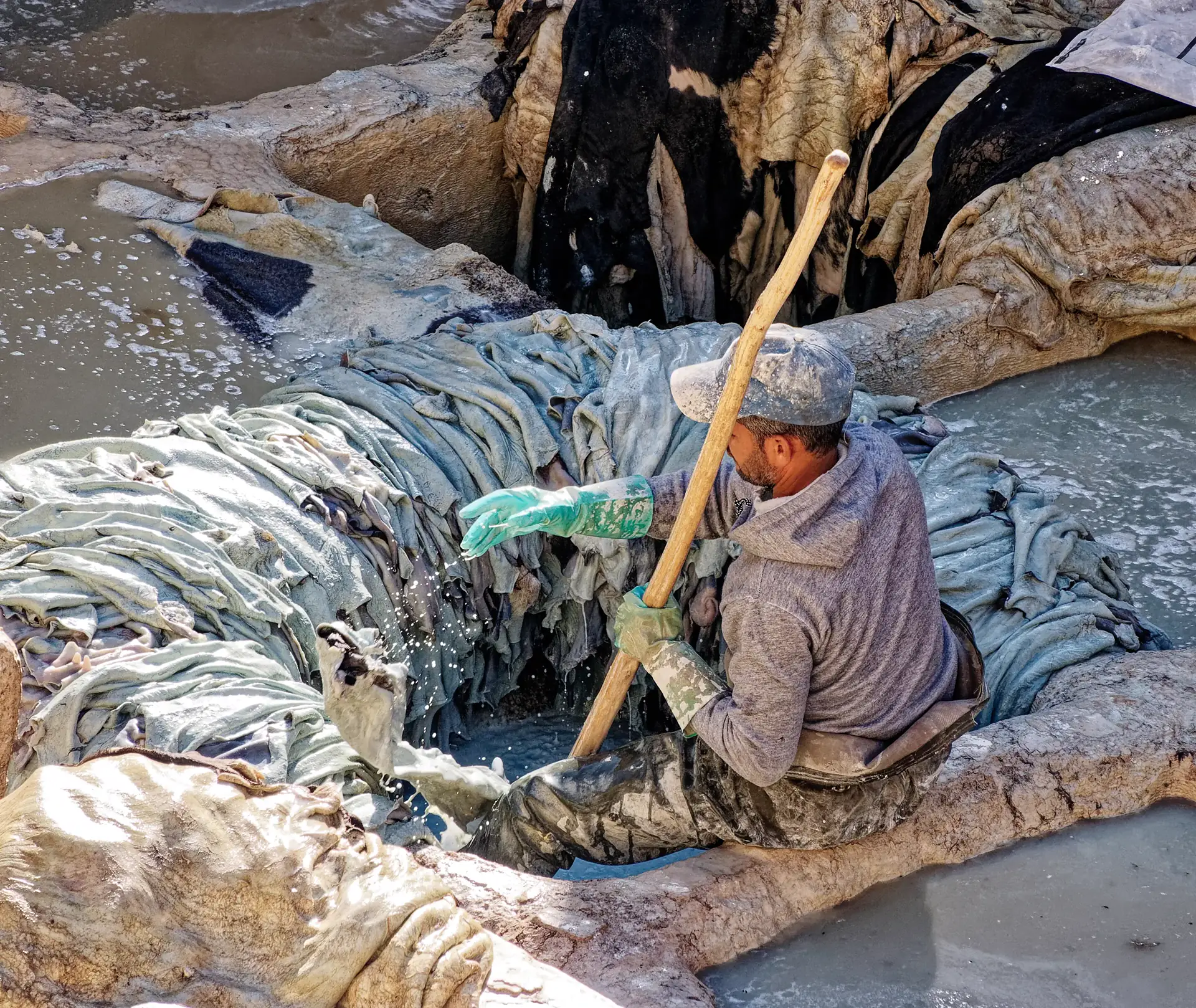
Two tanners at work among the round dye pits of the Chouara tannery, close view

The same work, by hand, in three corners of the city.

Chouara tannery, Fes

From hide to slipper

What you are looking at from the terrace, in the order it happens.

First

The white pits

Hides soak in pits of lime and water to clean them and loosen the hair. These are the pale vats you see first.

Then

Softening

The hides are worked in softening baths. It's hard, wet work, done standing in the pits.

Colour

The dye vats

The coloured pits give each skin its shade: browns, reds and yellows.

Last

Drying on the roofs

Skins are laid out on the roofs and walls to dry, then go to the workshops to become bags, jackets and slippers.

Tannery questions

The questions people ask us most before they plan a trip.
How many tanneries are there in Fes?
There are three traditional tanneries in the Fes medina: Chouara, the largest, near the Saffarin Madrasa; Sidi Moussa, southwest of the Zawiya of Moulay Idris II; and Ain Azliten, the smallest, on the northern edge of the medina.
Which tannery should I visit?
Chouara is the one most people come for: the biggest, with the most colour, seen from the terraces of the leather shops around it. Ain Azliten is smaller and quieter, and good if you'd like to watch the work without a crowd. Your guide can take you to one or both.
How old are the Fes tanneries?
Their exact age isn't known. Local tradition links Chouara and Sidi Moussa to the early city, and Sidi Moussa is mentioned in a chronicle from the 12th century. Ain Azliten is younger, created at the end of the 18th century.
Does it smell?
Yes, especially in summer. The hides are soaked in lime and other natural mixtures before they are dyed. Shops often hand visitors a sprig of mint to hold. Most people find the smell fades after a few minutes.
Do I have to buy leather?
No. The usual way to see Chouara is from the terrace of one of the leather shops around it. The shop will show you its goods on the way out, but you are not obliged to buy. A guide makes the visit easier and keeps it relaxed.

See the tanneries with someone who knows the tanners.

  1. Tell us what drew you in. Your dates, who is travelling and what you want to see.
  2. A person reads it. We write a day-by-day plan for your group, private or small-group.
  3. You change anything. Then we confirm the guides, drivers and riads.
Plan this with us