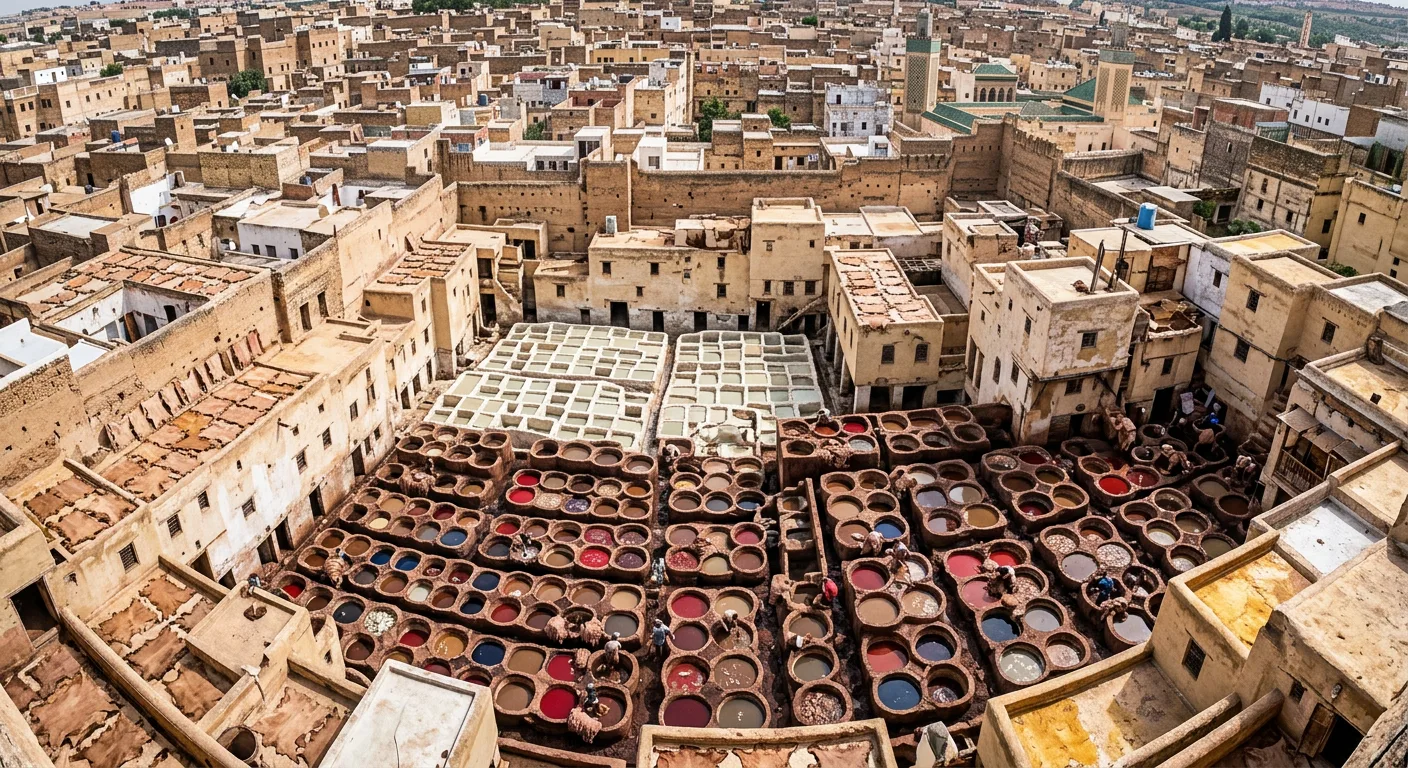
Here's the direct answer. The best way to see the Chouara tannery is from one of the leather-shop terraces that ring the dye pits — there's no public viewing platform, so the iconic overhead view belongs to the shops, and they let visitors up to look. Go mid-to-late morning when the vats are full and the light is good, accept the sprig of mint you'll be handed for the smell, and take your time. And no — you do not have to buy anything. What feels like a "tour" is really a leather shop's hospitality followed by a sales pitch; that's commercial, not a con, and a polite decline is completely normal.
The view
Terraces
From the leather shops, not a platform
Best time
Late AM
Full vats, good light
To buy?
Optional
Look freely, decline politely
How a Chouara tannery visit actually works
The Chouara tanneries are a genuine, centuries-old working operation where hides are still cured, dyed and dried by hand in a honeycomb of stone vats — one of the oldest of its kind anywhere, and the defining image of Fes. What catches first-timers off guard is the mechanics of seeing it. There is no entrance, no ticket window and no municipal viewpoint. The view exists only from the upper floors of the leather shops built around the pits, so to see the tannery you accept a shopkeeper's invitation to come upstairs. In practice the visit runs like this:
Find Chouara in the medina. The tanneries sit in the heart of Fès el-Bali, in the leather quarter not far from the Qaraouiyine. There's no signed entrance — you reach the view through the leather shops around the pits. Follow the lanes (and your nose), or have a guide route you there without the detours.
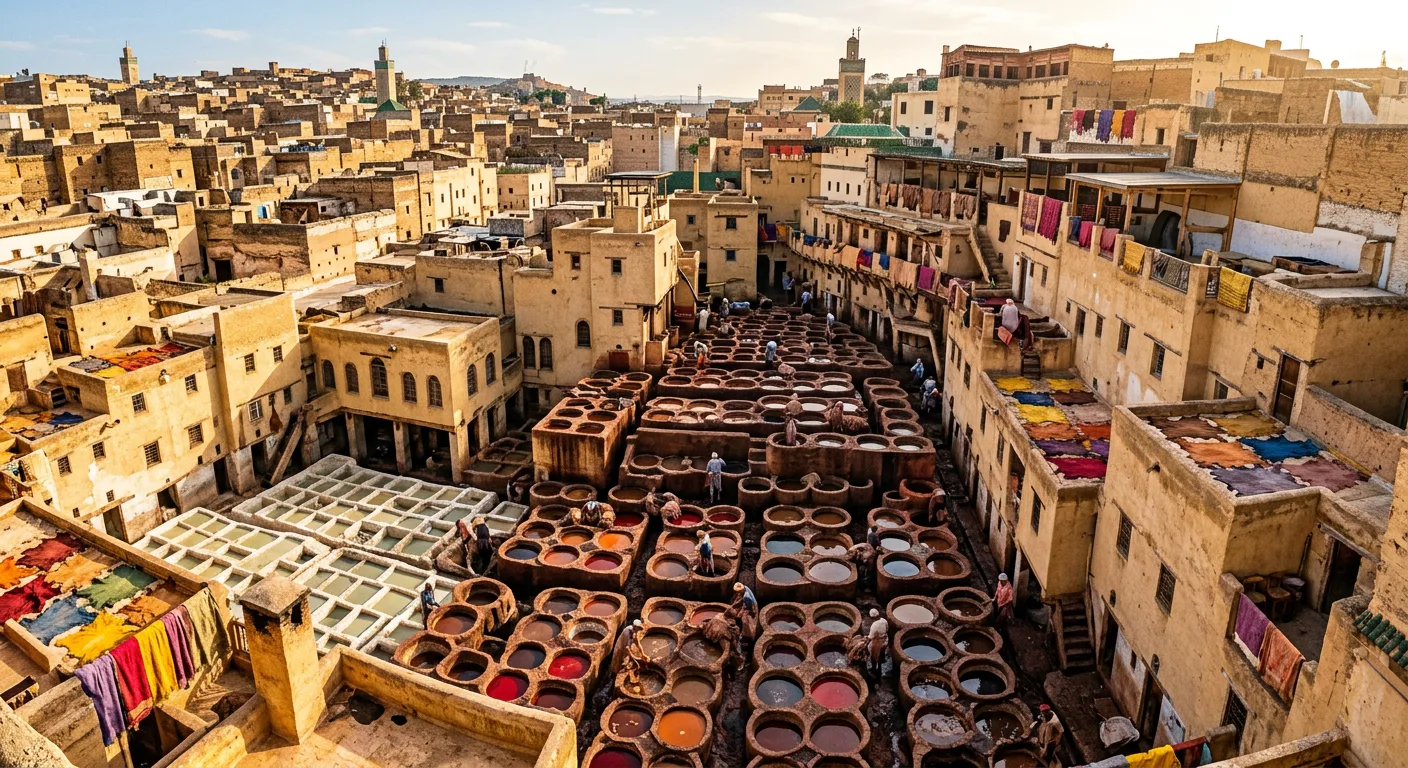
Go up to a terrace for the view. A shopkeeper will invite you upstairs to a balcony or rooftop overlooking the honeycomb of stone dye vats. This is the classic Fes view. You're a guest of the shop, so there's an unspoken hope you'll browse — but you're free to simply look.
Take the mint, take your time. You'll be handed a sprig of fresh mint to hold under your nose; the working pits smell strong, and it genuinely helps. Watch the tanners at work, take your photos, and don't feel rushed.
Browse, or decline — both are fine. Afterwards you'll be shown the leather goods downstairs. If something is beautiful and you'd haggle happily, great. If not, a warm 'thank you, not today' is completely acceptable. You are not obliged to buy.
Do you have to pay or buy anything?
This is the question everyone asks, so let's be clear. The tannery itself has no official admission fee — you're looking from a private shop's terrace, and the understanding is that they hope you'll browse the leather afterwards. Some terraces may ask for a small tip for the view; others won't, and it varies by shop and by how busy they are. We're not going to quote a price, because there isn't a fixed one and any figure would be out of date by the time you read it. The important part is this: you are never obliged to buy. You can enjoy the view, thank them, and leave. If you do want a leather jacket, bag or a pair of babouches, the goods here can be excellent — just expect to bargain, and see our guide to haggling in the souks before you start.
Why they give you mint
The working pits use traditional, natural methods to cure and soften the hides, and they have a strong, earthy smell — much more so on a hot afternoon. Holding a bunch of fresh mint under your nose genuinely takes the edge off, which is why the shops offer it as you arrive. It's a long-standing courtesy rather than a trick, though it naturally comes as part of being a guest on a leather shop's terrace. If you're sensitive to strong smells, the cooler months and the late morning are kinder than peak summer.
The best time of day — and the best terrace
Aim for mid-to-late morning. That's when the tanners are most active, the dye vats are full and vivid, and daylight reaches down into the pits for photographs. The tannery is part of the living medina, so there's no published timetable — activity rises and falls, and Fridays and prayer times tend to be quieter. As for the "best" terrace, the shops around the pits each give a slightly different angle; you don't need to hunt for a specific one, but if you're particular about the view, a guide will know which terraces look down on the fullest, most colourful vats at that hour.
Is it a scam? Common situations to expect
It isn't a scam, but a working medina is a commercial place, and a few situations come up often enough to be worth knowing. None of them are dangerous — Fès el-Bali is generally safe to walk — they're just the texture of a busy old city, best met with a friendly, unbothered firmness.
Unofficial "helpers". Someone may offer to lead you to the tannery, then expect payment, or steer you to a particular shop for commission. You can find Chouara yourself; a warm "no thank you" usually ends it. If you want certainty, book a licensed guide in advance through your riad or an operator.
"It's closed / this way is shut". A classic line is that your route is blocked or the tannery is closed today, followed by an offer to guide you around it. Treat unsolicited "it's closed" claims with friendly scepticism and carry on, or check with a shopkeeper.
The terrace sales pitch. After the view comes the leather showroom. It can be enthusiastic. Remember you're free to decline; you don't owe a purchase for the view. If you do buy, haggle calmly and only agree to a price you're happy with.
Etiquette and photography
Photographing the pits from the terrace is expected and welcome — it's why the shops invite you up. The courtesy that matters is with people: the tanners are working, often in difficult conditions, so photograph the scene rather than singling out an individual up close, and ask before taking a portrait of anyone. A small thank-you, in person or with a purchase if you make one, goes a long way. Dress modestly as you would anywhere in the medina, keep your bag in front of you on the busy lanes, and step aside when you hear "balak!" — a loaded mule or handcart is coming through.
Seeing it with or without a guide
You can absolutely reach Chouara and enjoy a terrace on your own — plenty of independent travellers do. The trade-off is more time spent finding it through the unsigned lanes, and more sales attention to field yourself. A licensed guide takes both off your plate: they route you there efficiently, know the terraces with the best outlook, and quietly absorb the pressure so you can just look. For the bigger picture on this decision, see our honest take on whether you need a guide for the Fes medina, the on-foot Fes medina walking guide, and how to get around Fes. For the full background on the tannery itself, our dedicated Chouara tannery guide goes deeper.
What else not to miss nearby
The tannery sits at the centre of the medina's craft heart, so build a short circuit around it rather than rushing in and out.
- Al-Qaraouiyine. Founded in 859 AD and often called the oldest continuously operating university in the world. Non-Muslims can't enter the prayer hall, but you can glimpse the courtyard through the doorways and walk the lanes around it.
- Bou Inania & Al-Attarine medersas. Two 14th-century Quranic schools and masterclasses in zellige tilework, carved cedar and fine stucco — Al-Attarine is steps from the Qaraouiyine in the spice quarter.
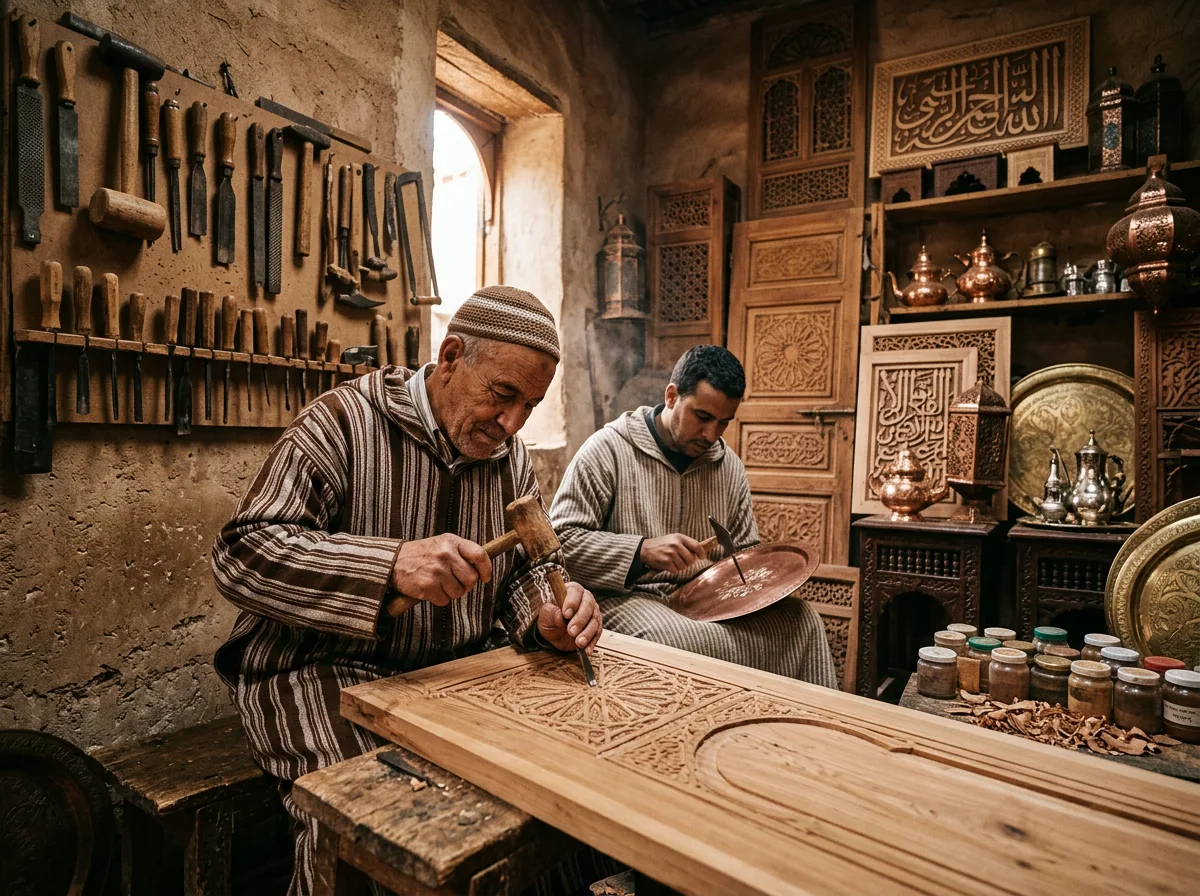
- The leather, brass and weaving souks. The lanes around Chouara are full of working artisans, from coppersmiths to babouche makers — the living crafts economy the tannery belongs to.
- Bab Boujloud, the blue gate. The ceremonial western entrance — blue outside, green within — and a natural place to begin or end a day in the medina.
We can fold all of this into one well-paced day. Our guided medina & tanneries tour finishes at Chouara from a private terrace, and the artisan workshops tour digs into the crafts side. You can also browse things to do in the medina to shape the rest of your day.
Frequently asked
What's the best way to see the Chouara tannery in Fes?
From one of the leather-shop terraces that ring the dye pits. There is no public viewing platform — the famous overhead view is from the rooftops and balconies of the tanneries' surrounding leather shops, who let visitors up to look. Come mid-to-late morning when the pits are in full use and the light is good, accept the sprig of mint you'll be handed for the smell, take your photos, and then decide for yourself whether you want to browse the leather downstairs. You can look without buying.
Do you have to pay to see the Chouara tannery?
There is no official ticket booth for the tannery itself — you view it from a private leather shop's terrace, and the unwritten arrangement is that the shop hopes you'll look at their goods afterwards. Some terraces may ask for a small tip for the view, others won't; it tends to vary by shop and by how busy they are. We deliberately don't quote a figure because it isn't fixed and changes over time. You are not obliged to buy anything, and a polite decline is completely normal.
Is the Chouara tannery a scam?
No — but it helps to know what it is. It is a genuine, centuries-old working tannery, and the rooftop view really is one of the great sights of Morocco. What surprises some visitors is that the 'tour' is essentially a leather shop's hospitality: you're shown up to the terrace, given mint for the smell, and then offered the chance to buy jackets, bags and babouches. That's commercial, not a con. Treat it as a shop with an extraordinary view, enjoy the spectacle, and buy only if you genuinely want to.
Why do they give you mint at the Chouara tannery?
Because the tannery uses traditional methods — including natural agents to cure and soften the hides — and the working pits have a strong, pungent smell, especially in warm weather. Shops hand visitors a bunch of fresh mint to hold under the nose, which genuinely takes the edge off. It's a long-standing local courtesy rather than a sales trick, though it does come with the territory of being on a leather shop's terrace.
What's the best time of day to visit the Chouara tannery?
Mid-to-late morning is the sweet spot: the tanners are at work, the dye vats are full and colourful, and the daylight reaches into the pits for photos. Early afternoon can be quieter underfoot but harsher in summer heat and smell. The tannery is part of the working medina, so activity ebbs and flows — there's no published timetable, and Fridays and prayer times can be slower.
Do you need a guide to see the tanneries?
No, you can find Chouara on your own and walk up to a terrace yourself, but a licensed guide smooths the visit — they know which terraces give the best view, take the pressure off the sales pitch, and fold the tannery into a logical medina route so you're not backtracking through the lanes. If you go alone, be ready to politely wave off unofficial 'helpers' who offer to lead you there.
See it the right way
We'll get you to the best terrace, pressure-free.
Tell us your dates and we'll arrange a licensed Fes guide and a logical medina circuit that ends at the Chouara tanneries from a private terrace — with the context, the best light, and none of the hard sell.