0:00
Walk to the tanneries quarter
Your guide leads you through the medina lanes to the tanneries, explaining the craft on the way.
Fes, Morocco· Concierge · Mon–Sat · 09:00–18:00 GMT+1
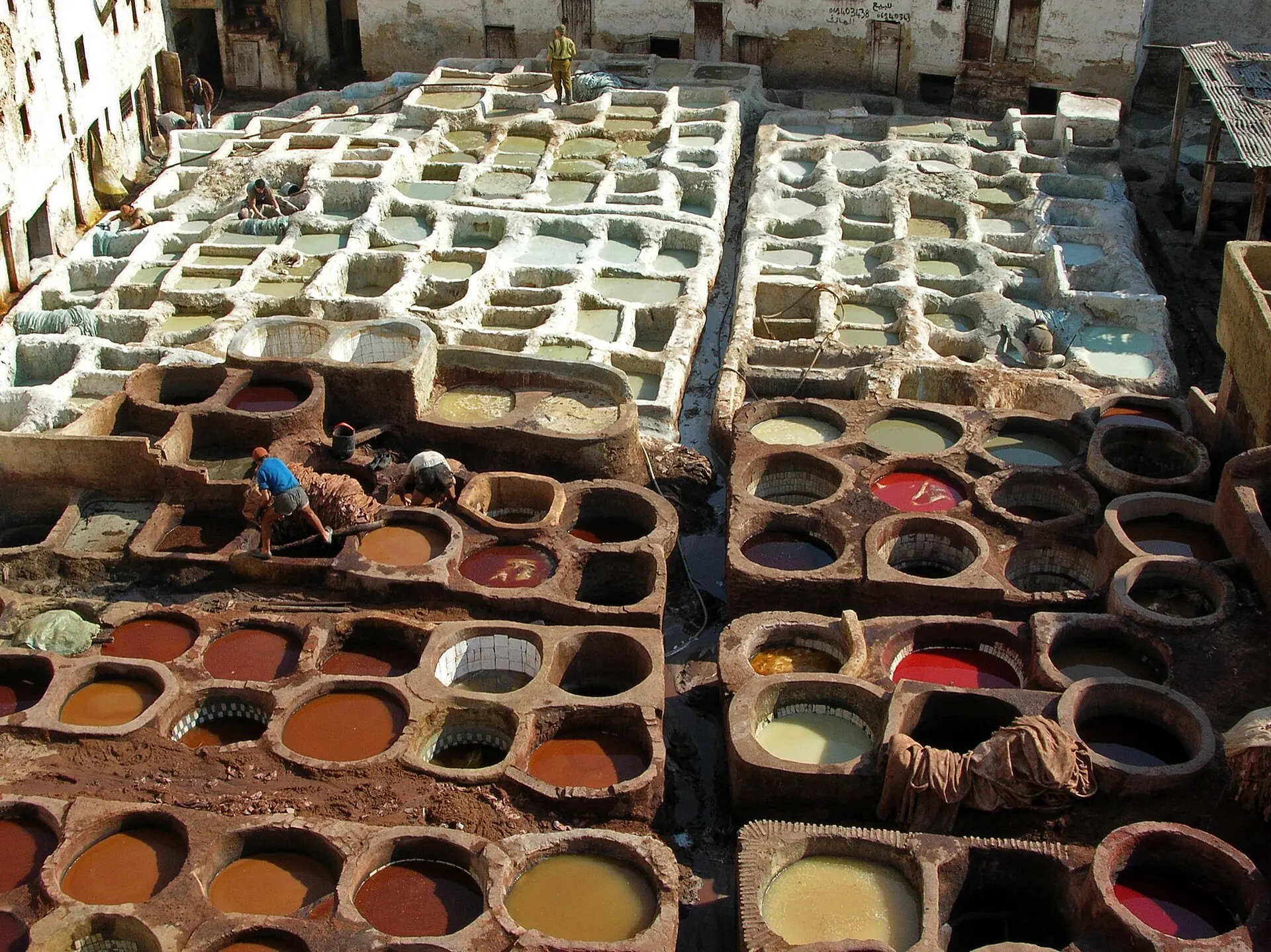
Look down on the stone dye vats of the Chouara tannery in Fes el-Bali, then follow the leather into a nearby workshop where artisans cut and stitch bags, poufs and babouches. You learn how hides are graded and how to tell good leather from poor. Allow about 2–3 hours, mostly on foot.
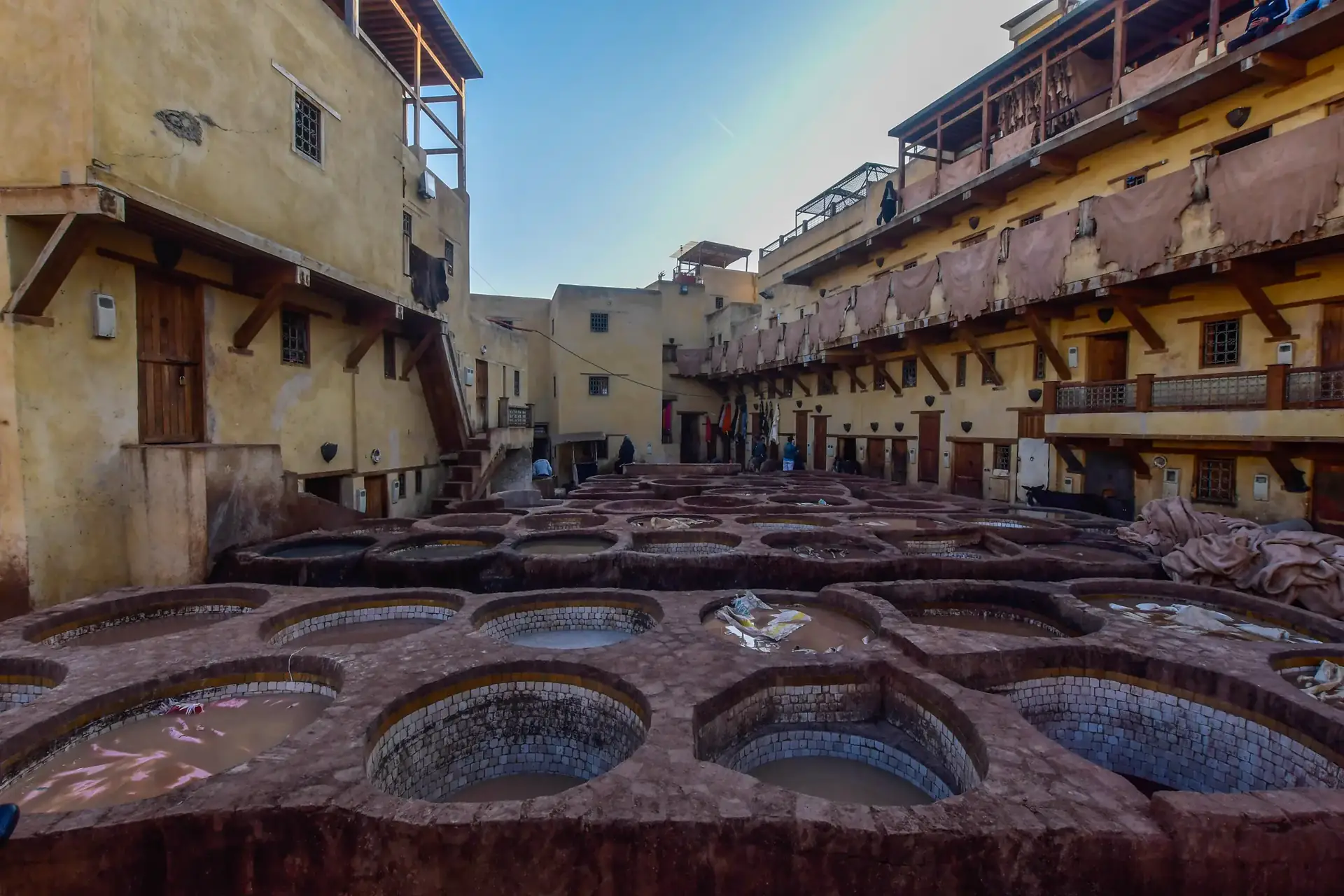
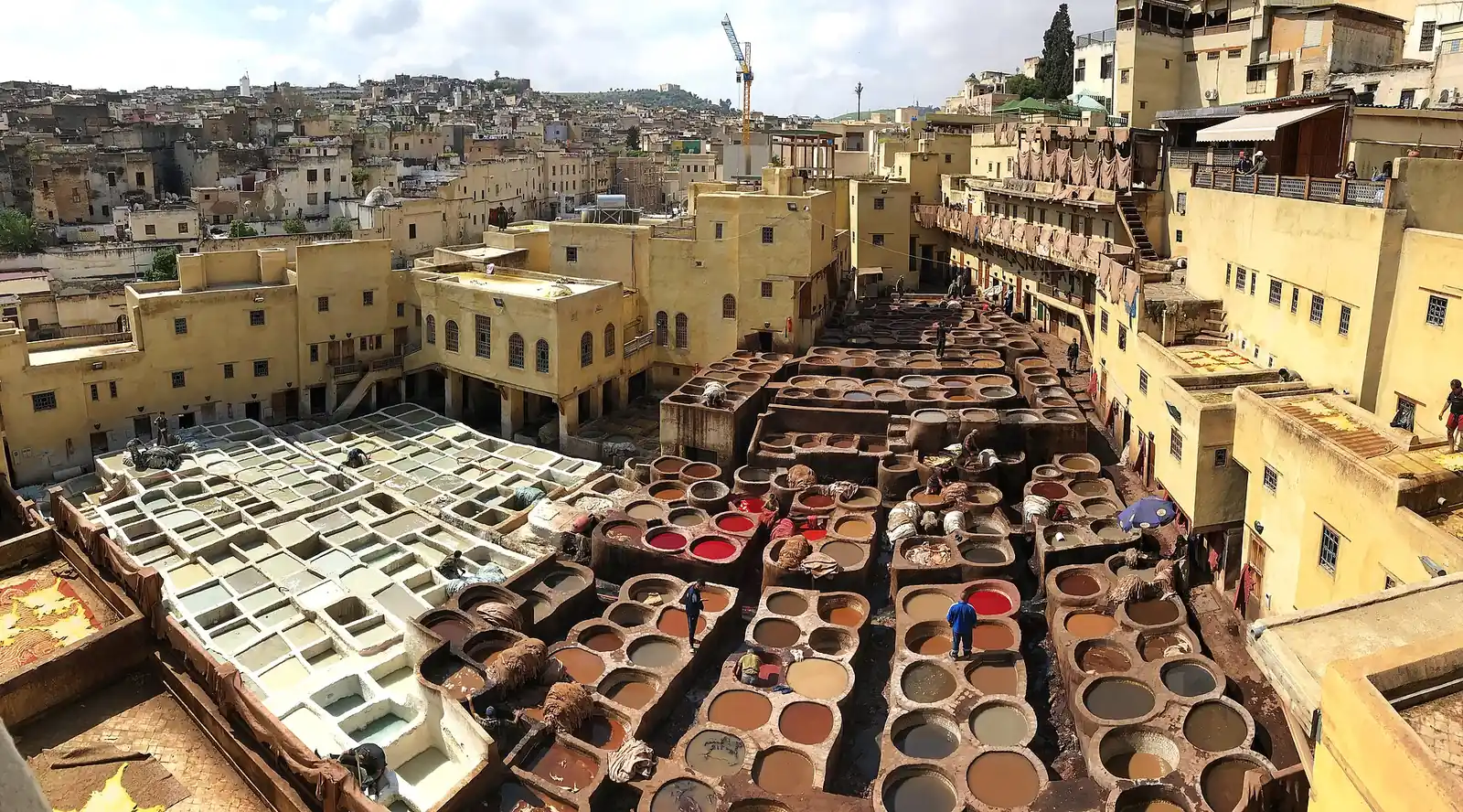
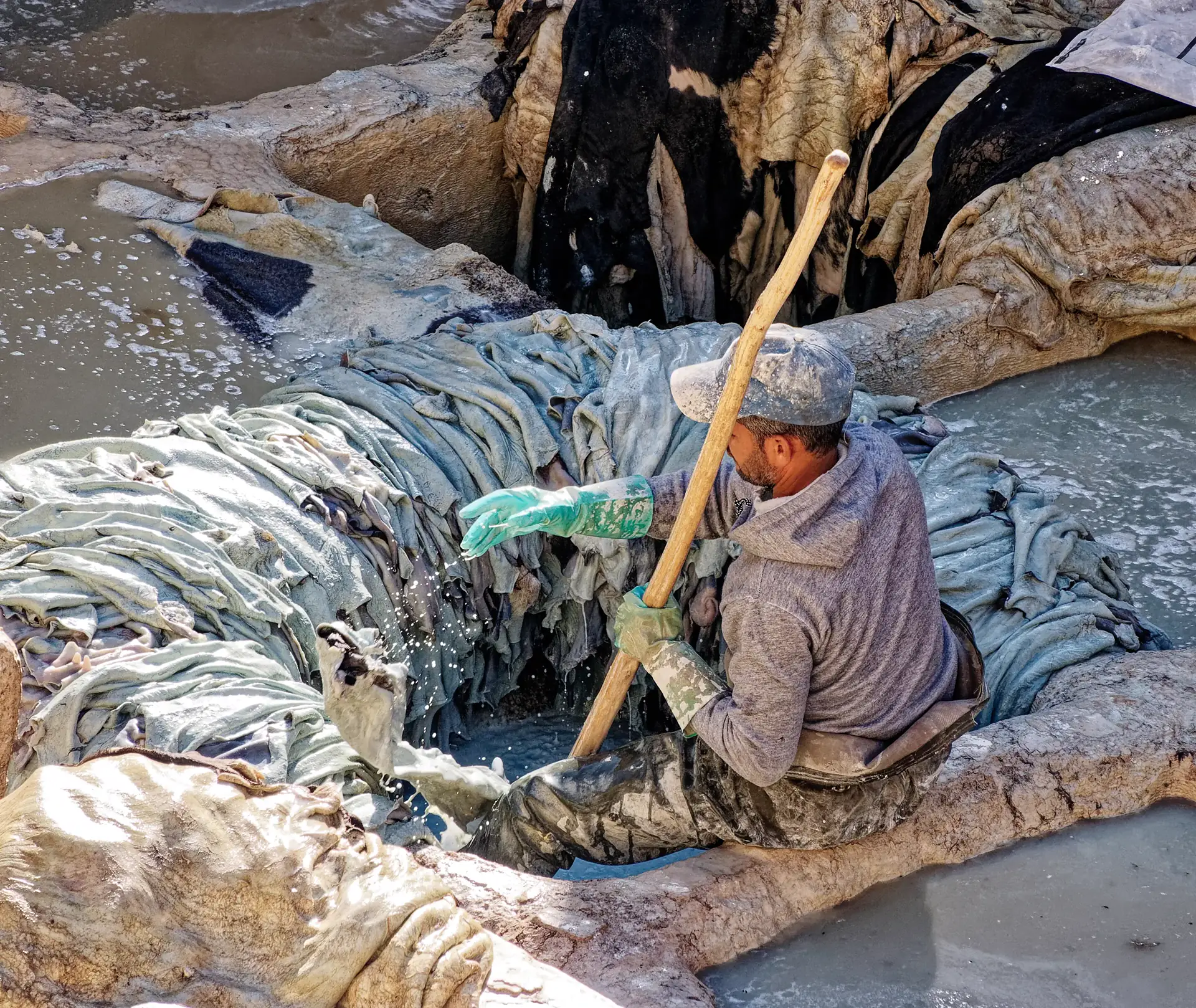
The tanneries are the most photographed sight in Fes and one of the oldest working industries in the medina. At Chouara, beside the river, hides are softened, then dyed in a honeycomb of stone vats, and the work is still done largely by hand. Sidi Moussa is a smaller, quieter tannery in the same old city. You see them from the terraces of the leather shops that ring the pits.
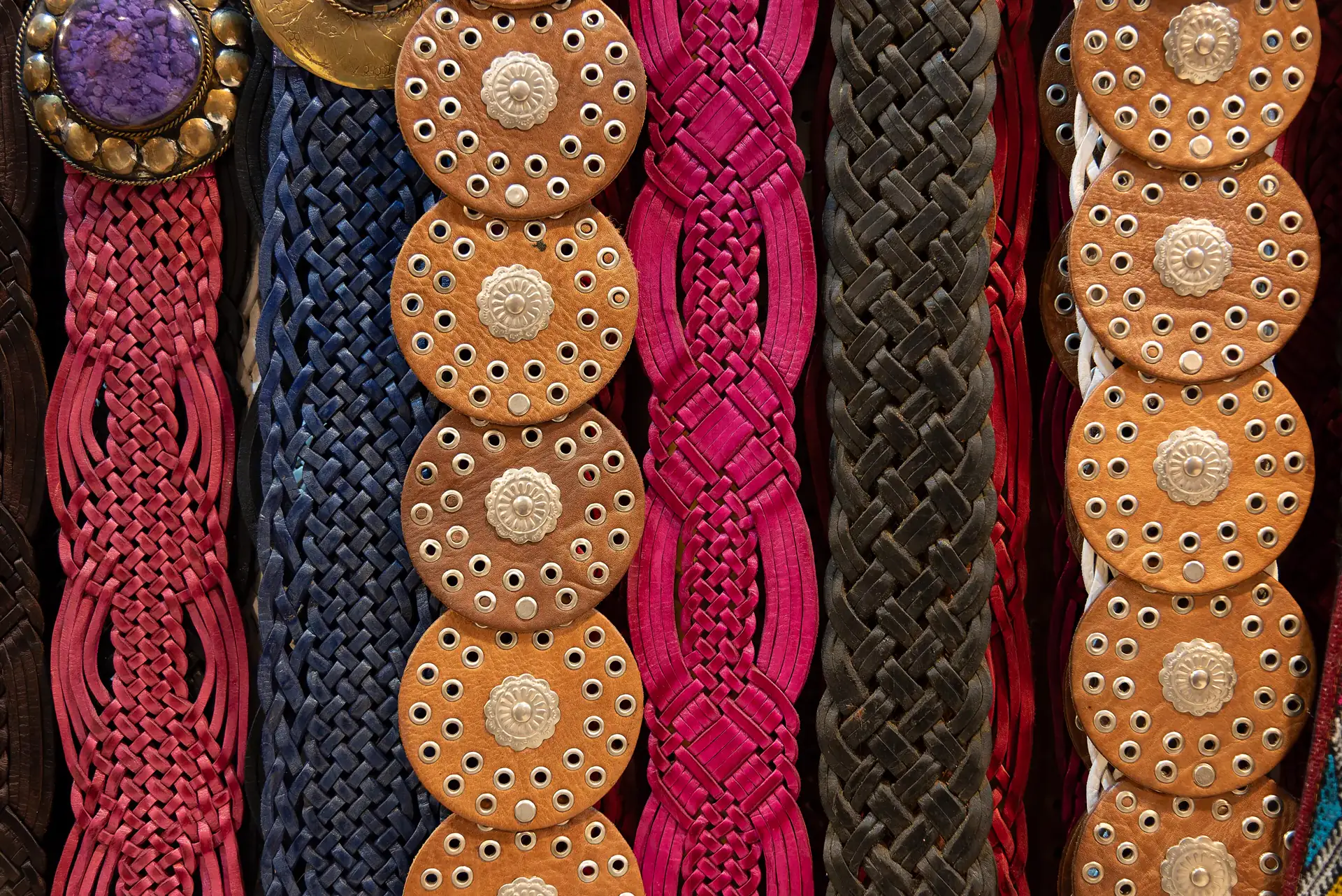
Most visitors stop at the view. This visit follows the leather further, into a workshop where artisans cut, stitch and finish bags, poufs, jackets and babouches, the pointed Moroccan slippers. You see how the hides are graded, how a babouche is made, and how to tell good leather from poor.
Best for: First-time visitors to Fes; Anyone planning to buy leather in Morocco; Photographers wanting the classic tannery view.
A typical running order. Timings shift with your group, the season and the day of the week.
0:00
0:30
1:00
1:20
2:00
The largest and best known of the Fes tanneries, a field of stone dye vats beside the river in Fes el-Bali.
A smaller, quieter working tannery in the old city, worth adding for a less crowded view.
Soft, pointed leather slippers, stitched by hand in the medina in dozens of colours.
Your party with a guide, at your pace, with time to linger at the terrace and the workshop. Easily added to a medina tour.
A guided walk with a few other travellers, following the same route.
Late morning is usually the best time to see the vats in use. The walk involves stairs up to the terraces and uneven lanes. Expect the leather shops to invite you to browse; there is no obligation to buy.
The smell is strong but bearable; you are given mint to hold. Viewing terraces belong to leather shops, which is how access works. Wear shoes with grip; the lanes can be wet.
The questions people ask us most before they plan a trip.
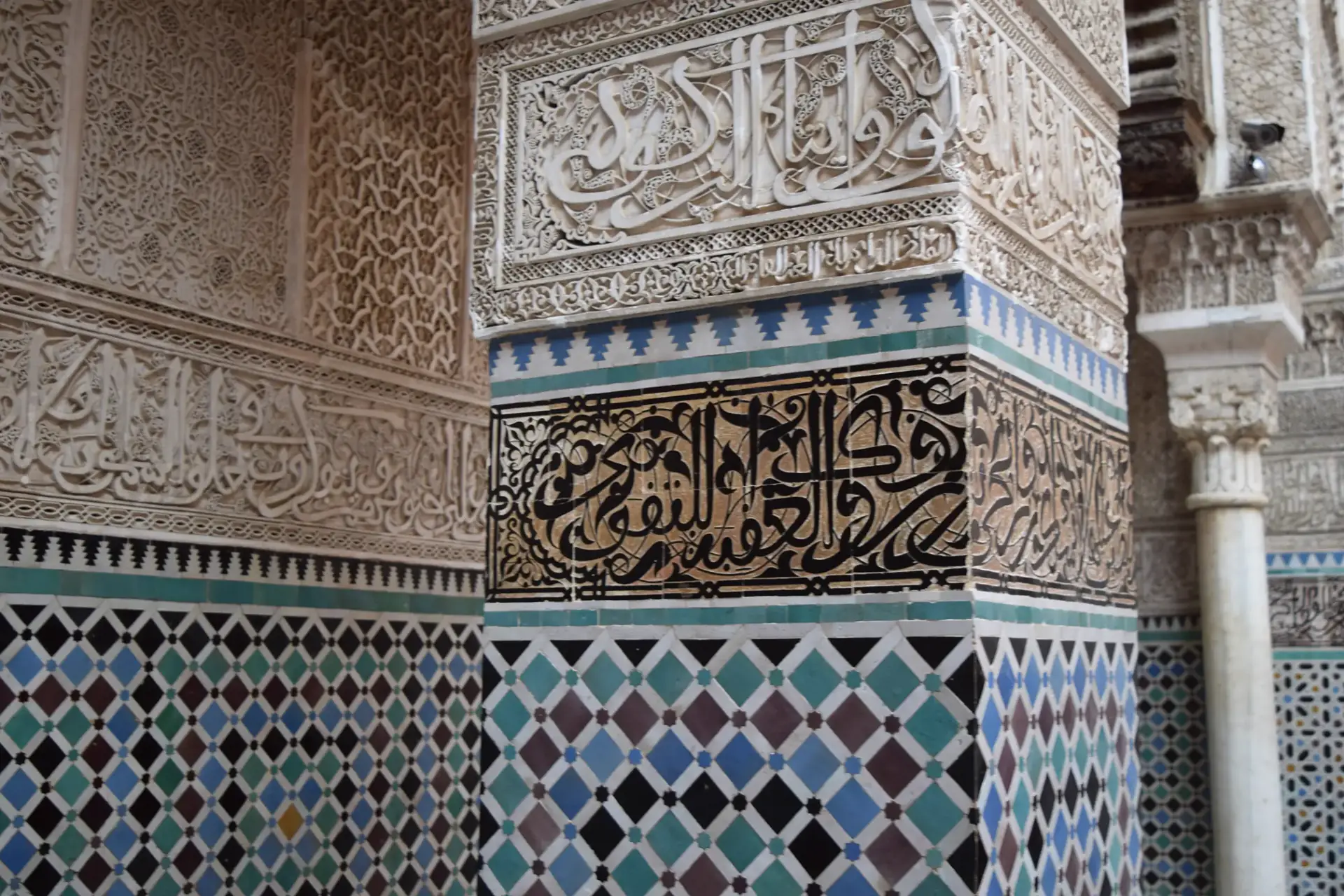 Zellige mosaic workshopWatch master cutters chip glazed tiles into geometric pieces by hand, then try the hammer yourself and set a small mosaic of your own.See how it runs
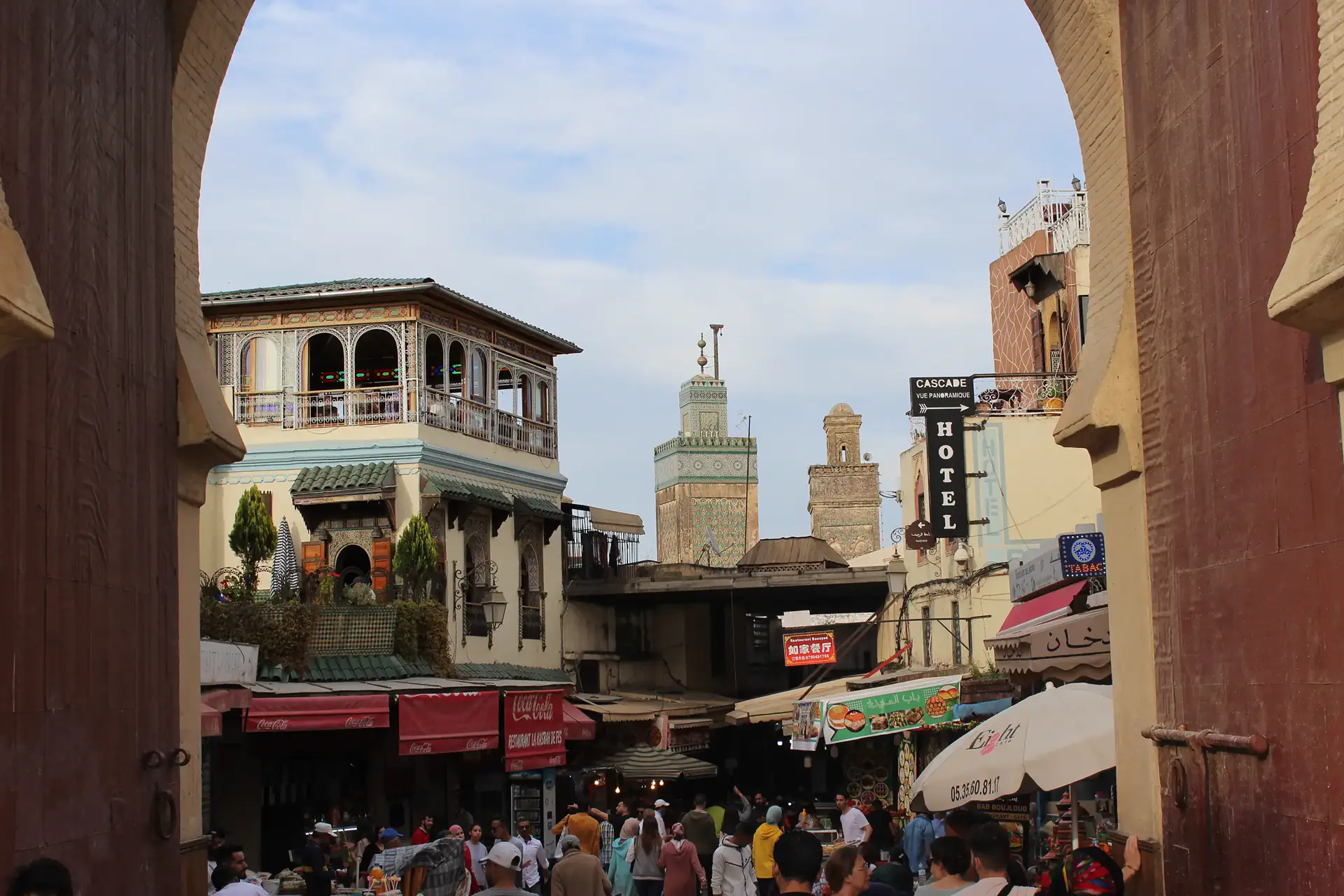 Medina photography walkGates, fountains, dye vats and rooftops in the best light, with a local guide who knows the angles and how to photograph people respectfully.See how it runs
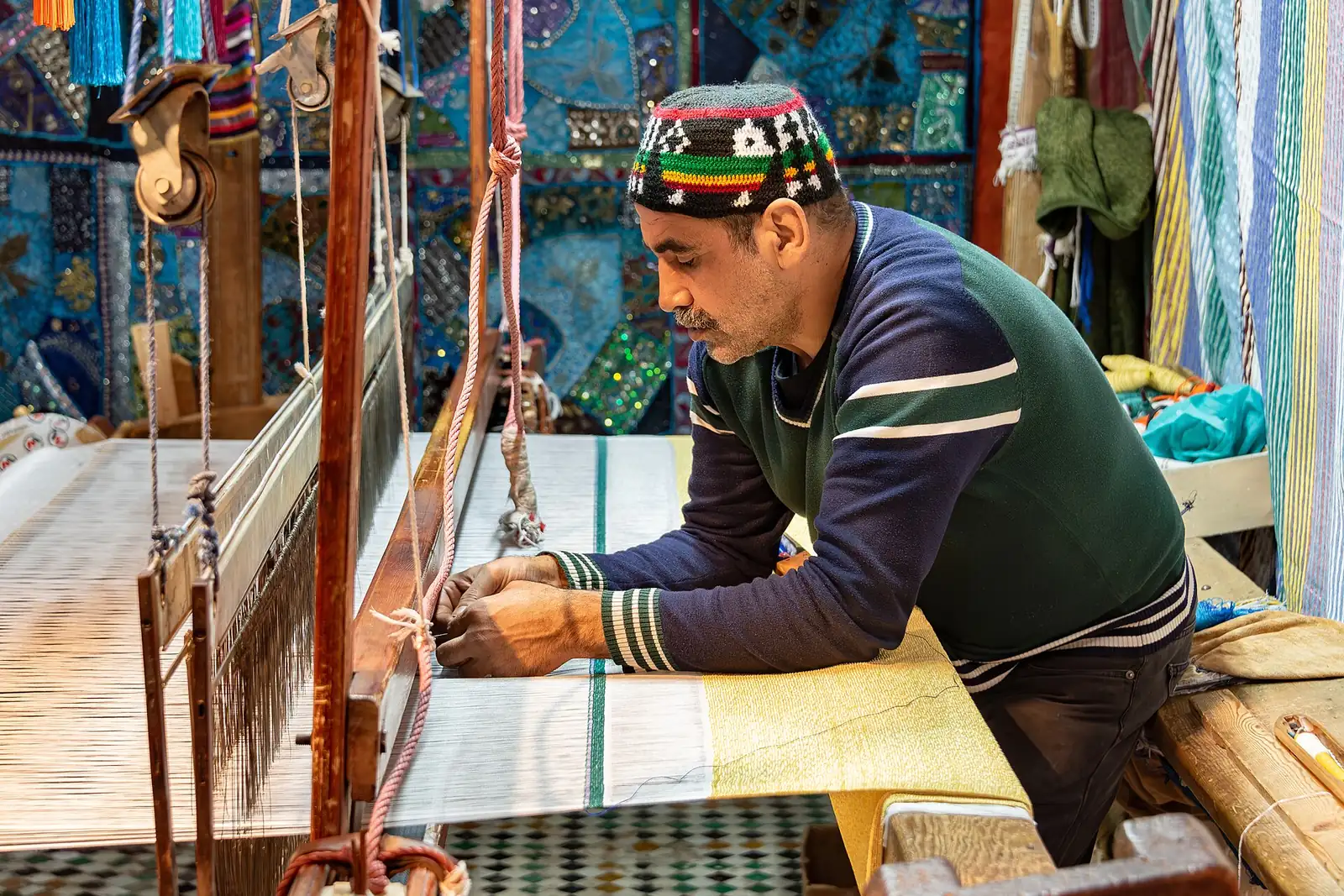 Weaving & Fassi stitchSit at a loom with a weaver, then learn the terz fassi, the double-sided Fes embroidery stitched so the back looks the same as the front.See how it runs
Read before you go: The best way to see the Chouara tannery, Shopping in the souks.