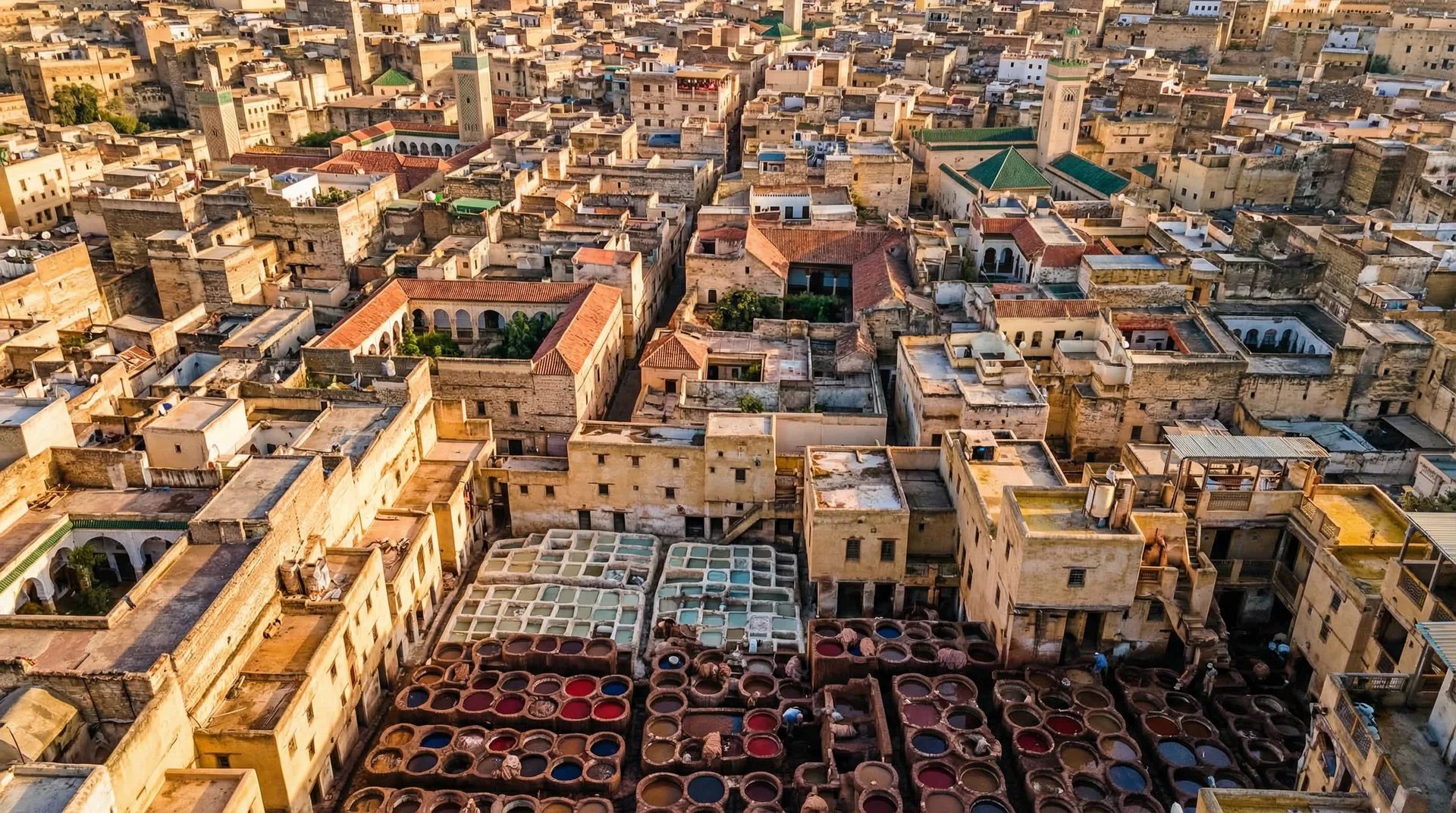
Fes sits well inland, far from the moderating Atlantic, so its summer runs genuinely hot. Through July and August typical daytime highs sit broadly in the mid-to-high 30s °C, with strong sun and a dry, baking heat rather than coastal humidity. It is not a season for marching round the medina at noon — but with the day planned around the sun it's a quiet, low-season way to see the old city, and the long warm evenings are a real pleasure. Everything below is the honest version, with the caveat that these are approximate seasonal norms, not a forecast. Weather varies year to year.
What summer actually feels like
Expect hot, bright, dry days with hard blue skies and a sun that has real bite by mid-morning. The heat builds through the day and the medina's stone holds it, so the middle hours feel heavy. The flip side is the evening: once the sun is off the lanes the temperature eases noticeably, and a rooftop dinner or a late stroll through the cooling old city becomes one of the best parts of the trip. Rain is essentially absent in high summer, so you can count on the weather in a way you can't in winter — it's reliably, relentlessly sunny.
The catch: the airless midday medina
People assume the deep, shaded lanes of Fes el-Bali must be cool — and the tall walls and covered sections do keep direct sun off you, which helps. But those same narrow lanes trap warm, still air, so at the peak of the day they can feel airless and stifling rather than refreshing. Don't plan your hardest walking for the middle of the day on the assumption the medina will shelter you; in real heat it can feel close and heavy, and the crowds of the souk add to it.
One more honest warning: the famous Chouara tanneries are at their most pungent in the heat. The dye vats smell far stronger in high summer than in the cool months, so take the sprig of mint the terraces offer and hold it under your nose — it genuinely helps.
How to cope with the heat
The whole trick to a comfortable Fes summer is to shift your day around the sun:
- Sightsee early and late: do your serious walking in the cool of the morning and again from late afternoon into the evening, when the light is also at its best.
- Rest through midday: retreat from the heat in the worst hours. A riad with a cool, shaded courtyard — or a small plunge pool — turns the midday break into one of the nicest parts of the day.
- Hydrate constantly: carry water and drink steadily; the dry heat dehydrates you faster than you'd expect, and mint tea or fresh juice stops are a pleasure in their own right.
- Sun protection: a hat, sunglasses, sunscreen and light, breathable, covering clothing. Strong sun plus reflective stone lanes is a lot to take unprotected.
For a fuller, country-wide checklist, our seasonal packing guide goes deeper, and the month-by-month best-time-to-visit guide sets summer against the rest of the year.
Why it's worth it
Here's the reward for braving the heat: summer is low season in Fes, and that changes the feel of the city. The coach tours thin out, the medina is quieter, and you can often have corners of Fes el-Bali nearly to yourself that would be shoulder-to-shoulder in spring. Prices for riads and tours tend to be lower, too. And those long, warm evenings are special — dinner on a rooftop as the call to prayer drifts across the medina, the old city glowing in the late light, the heat finally softening into something gentle.
So, should you come in summer?
Come in summer if you'll happily trade midday comfort for a quiet, low-season medina, lower prices and long warm evenings — and you're disciplined about planning the day around the heat, with a cool riad to retreat to. If reliably mild days for all-day sightseeing matter more to you, visit in spring or autumn instead, when Fes is at its most comfortable. Get the rhythm right — early, late, and a shaded rest in between — and a summer Fes can be both rewarding and surprisingly serene.
Frequently asked
How hot does Fes get in summer?
Fes sits well inland, away from the cooling Atlantic, so high summer is genuinely hot. Through July and August typical daytime highs sit roughly in the mid-to-high 30s °C, and on the hottest spells they can push higher. It's a dry, strong-sun heat rather than humid, and the evenings cool down pleasantly once the sun is off the lanes. Treat these as approximate seasonal norms rather than a forecast; weather varies year to year.
Is it worth visiting Fes in summer?
It's doable and has real upsides, as long as you plan around the midday heat. Summer is low season in Fes, so the medina is quieter, there are fewer tour groups, prices for riads and tours tend to be lower, and the long warm evenings on a rooftop are lovely. The trade-off is the heat: sightseeing in the middle of the day is hard work. If milder weather matters more to you than quiet and value, spring or autumn are the easier seasons.
What's the best way to cope with the heat in Fes?
Shift your day around the sun. Sightsee early in the morning and again in the late afternoon and evening, and rest through the hottest hours around midday — a riad with a cool, shaded courtyard or a small plunge pool makes a big difference. Hydrate constantly, wear a hat and sunscreen, choose light, breathable clothing, and duck into shaded lanes, mosques' courtyards (where open to visitors), cafés and museums when the heat peaks.
Are the deep medina lanes cooler than the open streets?
Partly. The tall walls and covered sections of Fes el-Bali keep direct sun off you, which helps, but the narrow lanes also trap warm, still air, so at midday they can feel airless and stifling rather than refreshing. They're more comfortable early and late in the day. Don't assume the medina is automatically cool just because it's shaded — in peak heat it can feel close and heavy.
Are the Chouara tanneries open in summer, and what are they like?
Yes — Fes is a living, working city year-round, so the tanneries, souks and workshops keep their normal rhythms through summer. Be warned that the tanneries are at their most pungent in the heat: the dye vats smell far stronger in high summer than in the cool months. The sprig of mint the terraces hand you to hold under your nose is genuinely useful here.
When is the heat in Fes most intense during the day?
The hardest hours are broadly from late morning through mid-afternoon, when the sun is high and the medina's stone has soaked up the heat. Mornings start cooler and are the best time for serious walking, and from late afternoon the temperature eases and the evenings become genuinely pleasant — which is why rooftop dinners and late strolls are one of the joys of a Fes summer.
Travelling in the hot season?
We'll shape a cool, well-timed Fes trip around the summer heat.
From a riad with a shaded courtyard or plunge pool to early-and-late sightseeing and cooler day trips into the Middle Atlas, every Fes & Imperial Cities programme is built for the season you actually travel in — licensed guide, the right places, the right timing.
Request a summer Fes itinerary