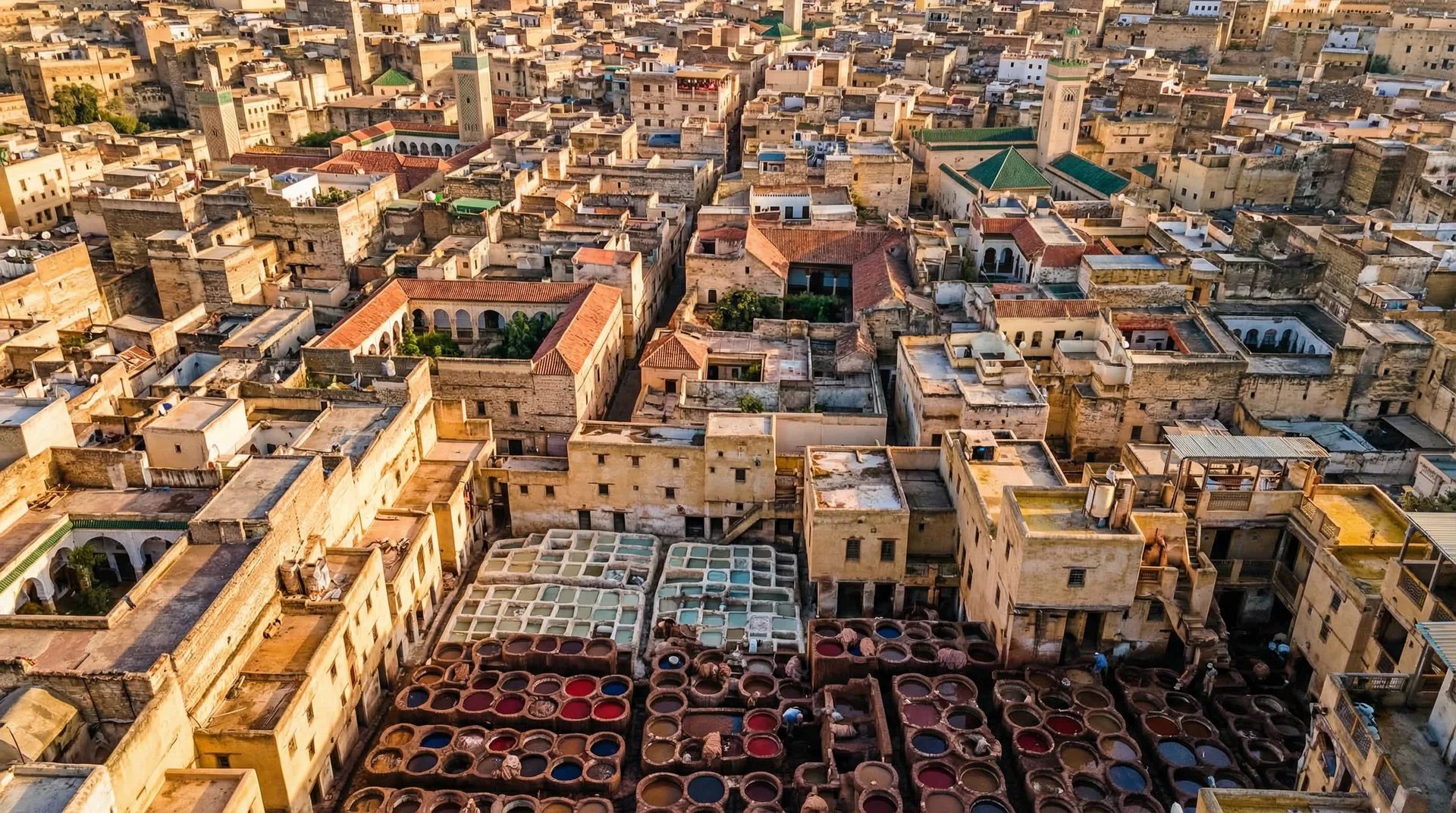
Fes sits inland, well away from the moderating Atlantic, so its winter bites harder than Morocco's coastal towns. From roughly December to February the city is cool and often cold, with grey skies, real rain and a damp chill that settles into the medina's stone lanes. These are typically the wettest months of the year. It is not a sunbathing trip — but with the right clothes it's one of the most atmospheric ways to see the old city: quiet, soft-lit and stripped of the high-season crowds. Everything below is the honest version, with the caveat that these are approximate seasonal norms, not a forecast. Weather varies year to year.
What winter actually feels like
Expect daytime highs broadly in the mid-teens °C, with chilly mornings and genuinely cold nights that can drop toward freezing in a cold snap. Rain comes in spells rather than all day, and between the showers the light over the rooftops turns soft and silvery — flattering for the whole medina. One quiet upside of all that rain: the hills and olive groves around Fes turn green through the winter, a contrast to the dusty gold of summer. Snow in the city itself is rare; if you want snow, it's the nearby Middle Atlas around Ifrane that delivers it, not the medina.
The catch: cold riads and wet lanes
The single thing first-time winter visitors underestimate is how cold a medina riad can feel. Those beautiful thick stone-and-plaster walls that keep rooms cool in summer hold the chill in winter, so a room can feel colder inside than it is in the street at midday. Before you book, check the listing for heating, and don't hesitate to ask the riad directly about heaters and extra blankets — most are happy to help, but you want to know before you arrive shivering. A room set back from the open central courtyard tends to feel warmer than one opening straight onto it.
Outside, the medina's stone and tile lanes get wet and slippery in the rain, and the ground is uneven at the best of times. Good closed shoes with proper grip aren't optional here — they're the difference between a comfortable day and a wary, careful shuffle. Carry a compact umbrella or a waterproof shell so a sudden shower doesn't end your afternoon.
Why it's worth it
Here's the reward for braving the cold: this is Fes el-Bali at its quietest and most atmospheric. The coach groups are gone, the souks and workshops keep their normal working rhythm with far fewer visitors threading through them, and the famous Chouara tanneries are both less crowded and — in the cool air — far less pungent than in high summer. Prices for riads and tours tend to be lower in the off-season, too. And the small comforts land harder when it's cold: a glass of hot mint tea in a tiled café, a steaming bowl of harira, or an afternoon at a traditional hammam feels like exactly the right thing to do on a grey, wet winter day.
How to pack for it
Pack as you would for a wet European winter, layered so you can adjust through the day:
- Warm layers: a proper jacket, jumpers or a fleece, a hat, and warm socks. The damp cold goes through thin clothing, so over-pack warmth rather than under-pack.
- Waterproofing: a waterproof shell or a compact travel umbrella. December–February are the wettest months, and rain comes in spells.
- Good shoes: closed, broken-in shoes with grip for wet, uneven medina lanes. This is the most important single item.
- A warm-up plan: know your riad has heating and blankets, and build hot tea, soup stops and maybe a hammam into the day.
For a fuller, country-wide checklist, our seasonal packing guide goes deeper, and the month-by-month best-time-to-visit guide sets winter against the rest of the year.
So, should you come in winter?
Come in winter if you'd trade warm sunshine for a quiet, moody, beautifully atmospheric medina — soft light, green hills, low-season prices and uncrowded souks — and you're happy to pack like you mean it. Don't come expecting terrace lounging or reliably blue skies. Get the clothes right and book a riad you know will be warm, and a cold, quiet Fes can be the most memorable version of the city there is.
Frequently asked
What is the weather like in Fes in winter?
Winter in Fes runs roughly December to February and is cool, often grey and frequently wet — these are typically the wettest months of the year. Daytime highs sit broadly in the mid-teens °C, mornings are chilly and nights get cold, sometimes near freezing. The surrounding hills turn green after the rain. Treat these as approximate seasonal norms rather than a forecast; weather varies year to year.
Is it worth visiting Fes in winter?
If you pack for it, yes. Winter is the quietest, most atmospheric season in Fes el-Bali — the medina, souks and Chouara tanneries are far less crowded, prices tend to be lower, and the old city looks wonderful in soft winter light and after rain. It is a cool, moody-medina trip rather than a sunbathing one, so go in with the right expectations and the right clothes.
Do riads in Fes have heating in winter?
Not always, and it matters. The thick stone-and-plaster walls of a medina riad hold the chill, so rooms can feel genuinely cold even when it's mild outside. Before booking, check the listing for heating, and don't be shy about asking the riad directly about heaters and extra blankets. A central courtyard room can feel colder than one set back from it.
What should I pack for Fes in winter?
Warm layers you can build up — a proper jacket, jumpers, a hat and warm socks — plus a waterproof shell or a compact umbrella for the rain. Good closed shoes with grip matter most: the medina's stone lanes get wet and slippery, and you'll be walking on uneven ground for hours. Over-pack warmth rather than under-pack; the damp cold goes through thin clothing.
Are the tanneries and souks open in winter?
Yes. Fes is a living, working city year-round, so the tanneries, souks, workshops and monuments keep their normal rhythms through winter — just with far fewer visitors. The Chouara tanneries are also more comfortable to view in the cool months, when the dye vats are far less pungent than in high summer.
Does it snow in Fes?
Snow in the city itself is rare; winter in Fes is much more about cold rain and damp chill than snowfall. The nearby Middle Atlas — around Ifrane and the cedar forests — does get snow and can make a striking cool-weather day trip, but in Fes proper you should plan for wet, cold days rather than a white medina.
Travelling in the cool season?
We'll shape a warm, well-timed Fes trip around the winter weather.
From a heated riad in the heart of the medina to indoor-friendly days and a Middle Atlas snow excursion if you want one, every Fes & Imperial Cities programme is built for the season you actually travel in — licensed guide, the right places, the right timing.
Request a winter Fes itinerary