The souks of Fes are not a market in the ordinary sense. They are a living city inside the city — a labyrinth of thousands of shops and working ateliers organised by trade, much as they have been since the ninth century. Wandering in without a plan is half the joy. Wandering in without any knowledge is how you leave with a "camel-leather" bag that starts peeling before your flight lands.
What are the best things to buy in the souks?
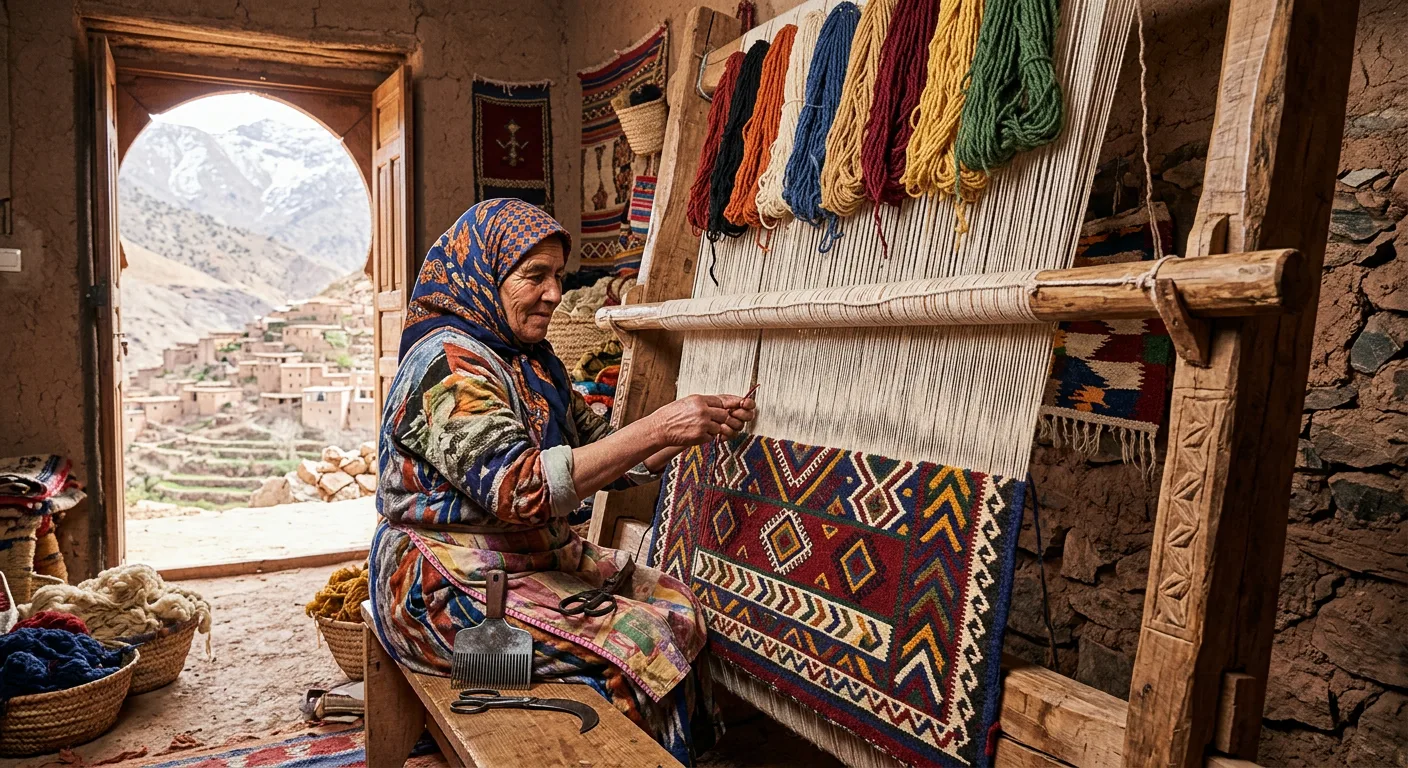
The purchases worth making are those tied to genuine Fassi craft traditions. Babouche slippers in Chouara-tanned goatskin are a sensible start — soft, light and cut a few lanes from where you stand. Hand-hammered copper and brass from the Seffarine quarter — trays, lanterns, teapots — are among the medina's signature pieces; reckon US$20–60 for a medium lantern. Berber rugs and kilims woven in the Middle Atlas villages around Fes have been traded here for centuries; a good flat-weave kilim runs US$80–300 by size and knot density. Argan oil — pressed from the endemic argan tree of the Souss — is worth buying cold-pressed in 100 ml amber bottles from a certified cooperative. For the rest, look to Fassi zellige and blue-and-white pottery, hand-embroidered kaftans, and resist-dyed scarves from the dyers' quarter.
Approach these with caution: mass-produced ceramics imported and painted to look Moroccan, synthetic "leather" with a chemical smell, and "original" Berber jewellery that is really white metal from a factory. The surest defence is to watch something being made before you buy it — in Fes, you usually can.
Which quarter should you visit for each craft?
The medina's trades cluster by quarter along the spine of Talaa Kebira and the lanes below it. Around Chouara and souk Cherratine you find the tanners and leatherworkers, where babouches, belts and bespoke bags are still cut to order. The dyers' souk (souk Sabbighine) is best in the morning, when freshly dyed skeins of wool hang vivid over the lane — as much a photograph as a purchase. Place Seffarine, set about with the steady tap of hammers on metal, is the coppersmiths' and brass-beaters' square. The lanes around the Attarine medersa form the historic spice and perfume market. For Fassi pottery and zellige, the potters' quarter outside Bab Ftouh is where the kilns still fire.
How does bargaining actually work?
The Fes medina runs on a dual-price system: an opening price for the newcomer and a closing price reached by negotiation. This is not a con — it is a centuries-old social ritual, and taking part respectfully is expected. A few principles we give every guest:
- Start at 40–50% of the first quoted price and work up slowly.
- Never reveal how much you want to spend; let the seller make all the moves first.
- Smile. Bargaining is social, not adversarial. If the atmosphere turns sour, walk away.
- Walking away genuinely — heading for the door — is the most effective negotiating tactic and almost always produces a better offer.
- Once a price is agreed, honour it. Changing your mind after acceptance is considered rude.
- Fixed-price cooperatives exist throughout the medina and are marked as such. These are useful reference points for fair value.
How do you ship large purchases home?
Reputable rug and furniture dealers in the medina hold longstanding relationships with international freight agents. A rolled Berber rug shipped to London or New York typically costs US$150–250 and arrives in two to four weeks. Flat-packed copper trays and zellige panels ship for US$80–150 a box. Always ask for a detailed receipt listing the item, dimensions, material and agreed price, and photograph it. Moroccan customs requires an export declaration for antiques over 100 years old; reputable dealers know the process.
For smaller items, DHL and FedEx offices in the Ville Nouvelle will accept packages at the counter. Postal shipping via La Poste Maroc is cheap but slow, and best kept for non-fragile textiles.
What should you know about the tanneries?
The Chouara tanneries are the beating heart of leather Fes — the place where raw hides are soaked, scraped, dyed in the honeycomb of stone vats and dried on the surrounding rooftops, a craft worked here since the eleventh century. The viewing terraces above are reached through the ringing leather shops, and while it is not a hard sell, buying is optional. The best pieces from these shops are the simple ones: natural tan, burgundy or midnight-navy babouches; undyed goatskin coin purses; and classic satchels without fussy stitching. Steer clear of anything sold as "camel leather" — it is a marketing line; the hide is almost always goat or sheep.
How do you navigate the souks with a guide?
A knowledgeable local guide changes the day entirely. We take our guests off the main artery and into the working quarters — lanes where a master sets zellige tiles by hand, or a weaver in his fifties threads an eight-colour warp across a pit loom. These ateliers sell direct, at fair prices, and you leave understanding what you bought. Our private medina guides are licensed and independent — they take no commission from any shop, which means they steer you toward the quality rather than the margin. See our Fes destination guide for the wider picture, or browse our private tours that include a curated souk morning.
Frequently asked
What are the best things to buy in the Fes souks?
Chouara leather (babouche slippers, bags, belts), hand-hammered copper and brass from the Seffarine quarter, zellige tilework and Fassi blue-and-white pottery, Berber rugs and kilims, argan oil and rose water, and hand-embroidered kaftans are the standout buys. All are made in Morocco — much of it within a few lanes of where you stand — and carry genuine artisan value.
Is bargaining expected in the Fes medina?
Yes — in the souks, the first price named is rarely the last. A calm, good-humoured counter at 40–60% of the opening figure is normal. Agree only when you are genuinely happy with the number; walking away is entirely acceptable and often draws out a better offer.
How do I avoid buying low-quality goods in the souks?
Buy from artisan cooperatives or workshops where you can watch the craft happening — easy in Fes, where the tanners, brass-beaters and tile-cutters work in the open. For rugs, ask to see the knot count and feel the weight. For leather, genuine goatskin carries a faint animal smell; synthetic does not. Cosmetic-grade argan oil should be golden-green, not pale yellow.
Can I ship large purchases from Morocco back home?
Yes. Most reputable carpet and furniture dealers have arrangements with international freight agents. Expect US$150–400 for a rolled rug shipped to Europe or North America, with delivery in two to four weeks. Always get a receipt listing the item, dimensions and agreed price.
Which Fes souks are best for which crafts?
The dyers' quarter (souk Sabbighine) is the place for dyed wool and yarn. Around Chouara and souk Cherratine you find the leatherworkers. Place Seffarine, ringed by the rhythmic tap of hammers, is the coppersmiths' and brass-beaters' square. The lanes around the Attarine medersa are the historic spice and perfume market. For Fassi ceramics and zellige, head to the potters' quarter outside Bab Ftouh.
Do the souks accept credit cards?
Most small stalls are cash-only. Larger shops and fixed-price cooperatives increasingly take Visa and Mastercard, though some add a 2–3% surcharge. Carry Moroccan dirhams (MAD) for the stalls; ATMs are available near the main medina gates such as Bab Boujloud.
Shop smarter
Let a commission-free guide lead the way.
Our licensed Fes guides take you to the craftspeople at Chouara, Seffarine and the Attarine — not the tourist shops — and never earn a cut from what you buy.
Request an itinerary