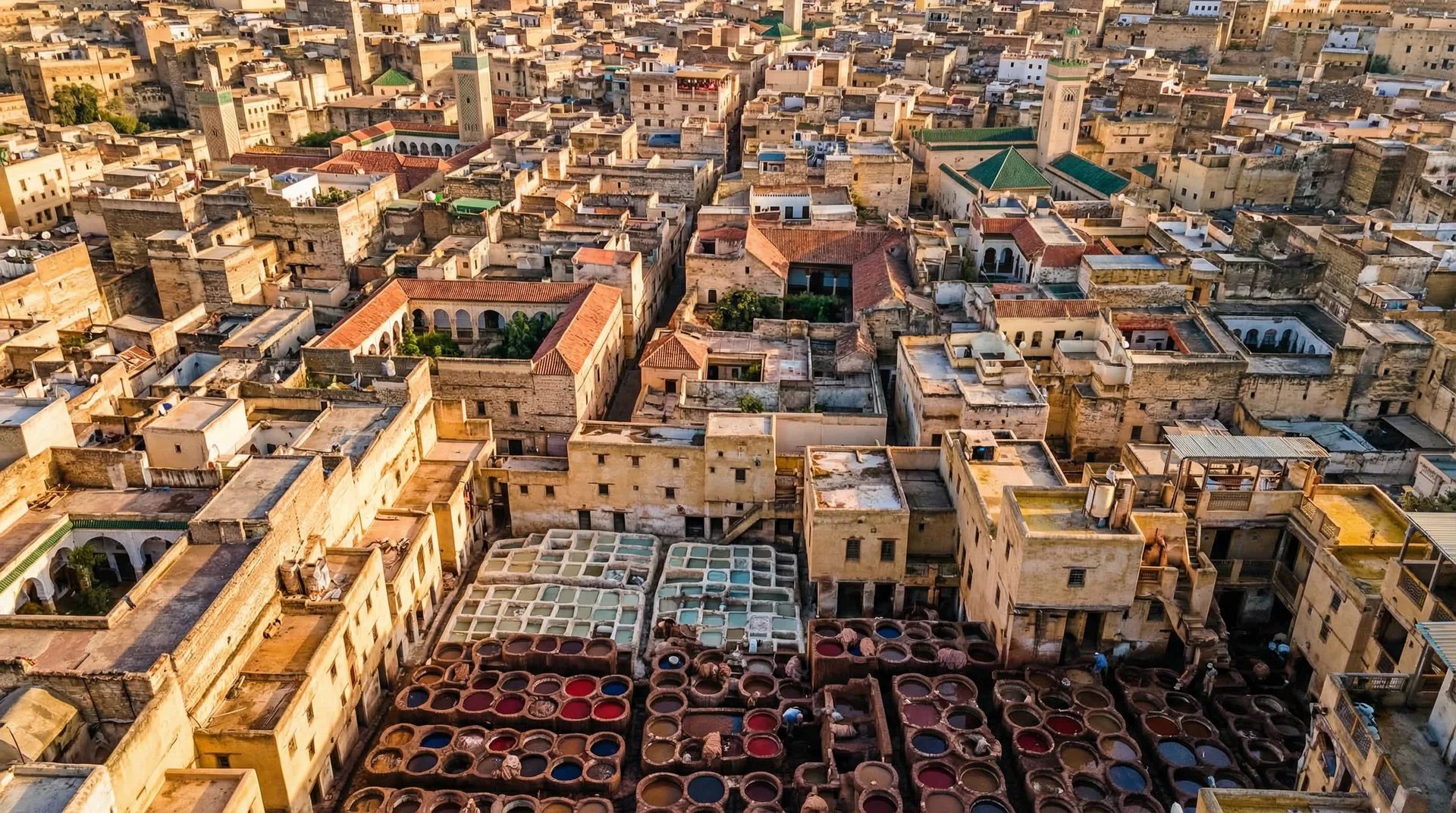
Fes is one of those rare great cities where the single most extraordinary thing to do costs absolutely nothing. Walking Fes el-Bali — the old, walled medina, one of the largest car-free urban areas on earth — is the main event, and it is entirely free. You can lose whole days in its labyrinth of lanes, climb to a hillside for a panorama over the whole sea of rooftops, and sit over a glass of mint tea for the price of small change. What follows is a practical, honest look at how to see Fes on a budget — the free highlights, the cheap eats, the few sights that do charge, and the small spends that are genuinely worth it. We have kept prices deliberately vague, because they change; treat everything as "modest, varies — check on the ground" rather than a fixed figure.
The free highlight: simply walking the medina
Start here, because this is the heart of a budget trip to Fes. The medina is free to enter and free to wander, and the wandering is the attraction. Thousands of lanes thread between workshops, food stalls, fountains and madrasa doorways; you will pass coppersmiths hammering, dyers stirring vats, donkeys laden with hides and bread ovens shared by whole quarters. You need buy nothing to soak all of this up. Wear comfortable closed shoes, carry a little cash for tea and snacks, download an offline map, and give yourself permission to get pleasantly lost. The deeper you go, the less it costs and the more you see.
The Blue Gate and Place R'cif
Bab Boujloud — the famous Blue Gate, blue on the outside and green within — is the postcard entrance to the medina, and standing under its tiled arch costs nothing. From there the main artery of cafés and stalls pulls you inward. At the other end of the medina, Place R'cif is the local, less touristy gateway: a busy square where the city goes about its day, ringed by cheap food and a transport point for petits taxis. Both gates are free to enjoy, and walking the line between them is one of the best free things you can do in Fes.
The Chouara tannery — free to look
The Chouara tannery, with its honeycomb of stone dye-pits, is one of the iconic sights of Fes — and seeing it costs nothing. You view it from the terraces of the leather shops that ring the tannery, and stepping up to look is free. The shops naturally hope you will buy a bag or a pair of slippers, but there is no obligation whatsoever. The graceful thing is to leave a small tip for whoever shows you up to the terrace, or simply to be warm and polite if you choose not to buy. (You may be handed a sprig of mint to hold against the smell — also free.) Look, photograph, thank them, and move on; no purchase required.
Jnan Sbil — the free public gardens
When the lanes start to feel close, the Jnan Sbil gardens are a free, shaded refuge between the old and new medinas: avenues of tall trees, water channels and a calm that the souks never offer. It is a genuine public garden, used by Fassi families, and entry is free. Bring a juice or a pastry from a nearby stall and you have a budget afternoon sorted — green space, shade and people-watching, all for the cost of a snack.
The hillside viewpoint: Borj Nord & the Merinid Tombs
For the single best free view in Fes, climb to the hillside above the medina on the north side, where the Borj Nord fortress and the ruined Merinid Tombs look out over the whole city. From up here the entire medina spreads below you — a tight, tawny sea of rooftops and minarets — and at golden hour it is unforgettable. The panorama itself is free; you walk up or take a cheap petit taxi to the foot of the hill. (The fortress houses an arms museum which charges a small entry fee, but the view from outside costs nothing.) It is the budget traveller's perfect end to a day in the lanes.
Cheap eats — where Fes is kindest to your wallet
Food is where a Fes budget really stretches. The medina is full of cheap, delicious street eating: a steaming bowl of bissara, the silky fava-bean soup dressed with olive oil and cumin, is a classic cheap breakfast; msemen, the folded, flaky flatbread, and sfenj, the ring doughnuts fried fresh in the morning, cost only coins. Add filled sandwiches, grilled skewers from a stall, a glass of just-pressed orange juice and endless pots of mint tea, and you can eat very well for very little.
The rule of thumb is simple: eat where Moroccans queue, not where photos of the dishes hang on the wall in four languages. Tourist-facing restaurants in the medina cost noticeably more. Mix the two — street food and stalls by day, the occasional proper dinner when you fancy it — and your daily food spend stays modest. Prices vary from stall to stall, so glance at what others pay and ask before you order.
Cheap transport and where to sleep
Inside the medina there is no transport cost at all, because there is no transport — you walk everywhere, since no car fits the lanes. Beyond the walls, the red petits taxis are cheap for short hops between the gates, the Ville Nouvelle and the train station; ask the driver to use the meter, or agree the fare before you set off, especially at the station and the gates. Arriving in Fes by train rather than flying is also gentle on the budget, as the city sits on Morocco's national rail network. For beds, the medina is full of small budget guesthouses and simple riads; our Fes neighbourhood guide weighs up the options at every level.
The honest bit: what actually costs money
To be fair rather than rose-tinted: not everything in Fes is free. The grand madrasas and museums charge an entry fee — the spectacular Bou Inania madrasa, for instance, asks a small admission, as do various museums and the occasional terrace. These fees are generally low, and the headline sights are well worth the modest spend. Shopping in the souks can run up a bill fast if you let it, so set yourself a limit and remember that haggling is expected. And a licensed guide for roughly a half-day is, for most first-timers, the one small spend we would actively recommend: the medina is a true labyrinth, and a good guide's orientation pays for itself in the days you then explore confidently on your own. Agree the scope and fee up front, carry cash (cards are little use in the lanes), and you will find Fes one of the most rewarding cities in Morocco for travellers watching the budget.
Frequently asked
Is Fes expensive to visit?
Fes is one of the better-value cities in Morocco. The single greatest sight — walking Fes el-Bali, the old medina — costs nothing at all, and you can fill whole days on free wandering, viewpoints and public gardens. Your real spending goes on where you sleep, on the few paid monuments, and on shopping in the souks if you choose to. Eat where locals eat and the daily cost stays modest. Prices change, so treat any figure you read as a rough guide and confirm on the ground.
What are the best free things to do in Fes?
Walking the medina itself is free and is the main event. Add the Blue Gate (Bab Boujloud), the Jnan Sbil public gardens, the hillside panorama from the Borj Nord and Merinid Tombs area, and the bustle of Place R'cif and the souks. You can also look down on the Chouara tannery from a leather shop's terrace — that view is free to enjoy, though a small tip for the shopkeeper is the polite thing to do.
How much should I budget for food in Fes?
Street food and hole-in-the-wall stalls keep eating very cheap: a bowl of bissara (fava-bean soup), a folded msemen, a few sfenj doughnuts, a filled sandwich, a glass of fresh orange juice or a pot of mint tea each cost only a little. A sit-down meal in a tourist-facing restaurant costs more. Mixing the two — street food by day, the odd proper dinner — keeps a day's food budget low. Exact prices vary, so check as you go.
Do you have to pay to see the Fes tanneries?
No. The famous Chouara tannery is viewed from the terraces of the leather shops that surround it, and stepping up to look is free — the shops hope you will buy, but there is no obligation. It is customary to leave a small tip for the person who shows you the terrace, or simply to be gracious if you decline the leather. You are never required to buy anything to enjoy the view.
Is it worth hiring a guide if I'm on a budget?
For most first-time visitors, yes — a licensed guide for roughly a half-day is one of the most worthwhile small spends in Fes. The medina is a famous labyrinth with little signage, and a guide threads the highlights into one logical circuit and hands you a mental map you can reuse on your own for the rest of your stay. Agree the scope and fee in advance, and be firm with unofficial 'faux-guides', whose income comes from shop commissions.
How do I get around Fes cheaply?
Inside the medina everything is on foot, which is free and unavoidable — no cars fit the lanes. Beyond the walls, the red petits taxis are inexpensive for short hops between the gates, the Ville Nouvelle and the train station; ask for the meter or agree a fare before you set off. Arriving by train rather than flying is also easy on the budget, as Fes sits on the national rail network.
Travelling Fes on a budget?
We'll build a trip that spends where it counts.
Tell us your budget and we'll shape a Fes itinerary around the free highlights and the few paid sights truly worth it — a licensed guide for your first orientation, a well-chosen guesthouse, and plenty of room left for street food and wandering.
Request a Fes itinerary