01Tannery
Chouara Tannery
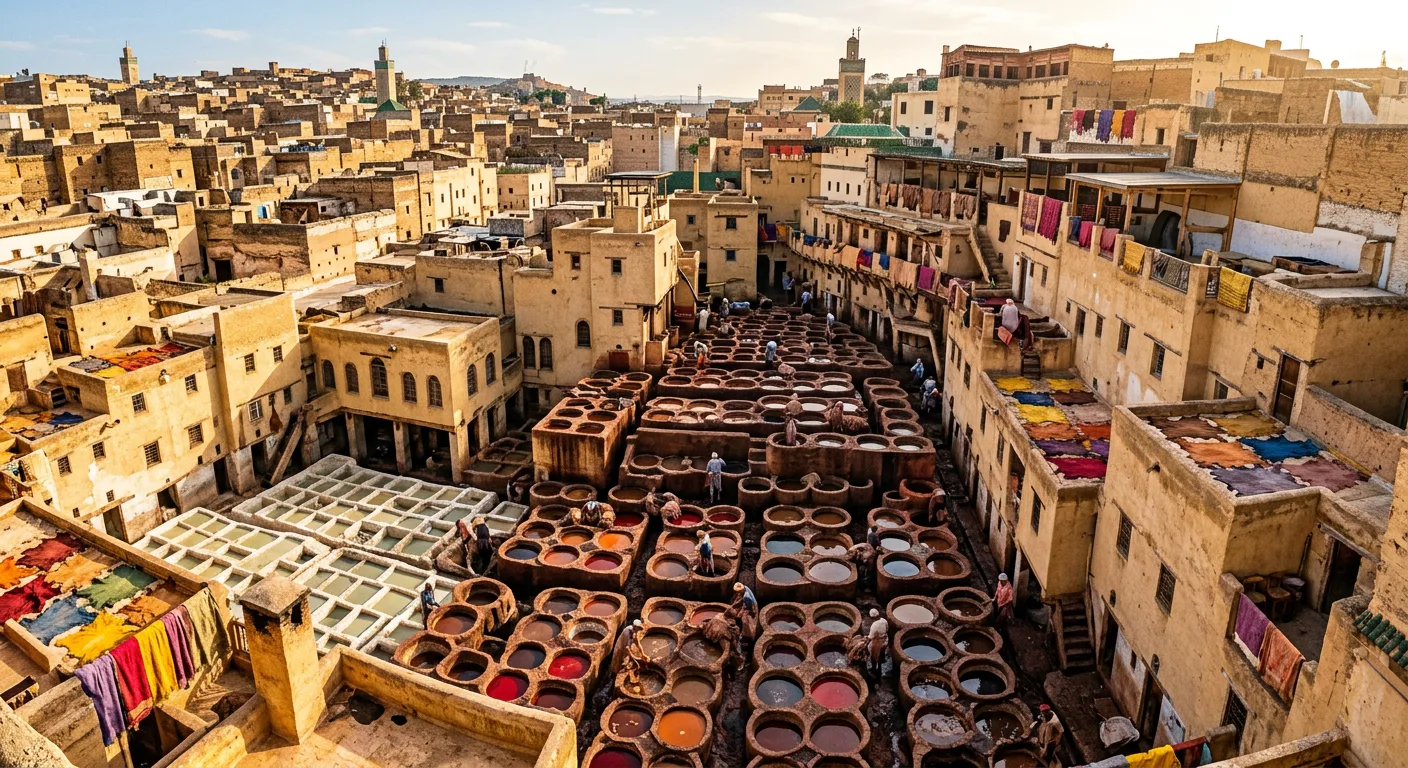
The largest and best-known of Fes's tanneries, dating to medieval times. Its honeycomb of round stone vats — white for curing, coloured for dyeing — is the iconic image of the city and the centrepiece of any tannery visit.
Things to do · Fes
The tanneries are Fes's signature sight — medieval leather works where hides are still cured and dyed by hand much as they were centuries ago. The largest and most famous is the Chouara, but the medina has others, and knowing how the process works and how to visit makes the experience far richer.
10 experiences
The largest and best-known of Fes's tanneries, dating to medieval times. Its honeycomb of round stone vats — white for curing, coloured for dyeing — is the iconic image of the city and the centrepiece of any tannery visit.
You do not walk among the vats; instead you look down on the Chouara from the rooftop terraces of the leather shops that surround it. Shops let you up to the terrace, usually in the hope you will browse their goods afterwards.
On arrival at a terrace you are typically handed a sprig of fresh mint. Holding it to your nose helps mask the powerful smell of the tannery — the natural curing process is famously pungent.
A smaller, quieter tannery in the medina, less visited than the Chouara. It offers a closer, calmer look at the same traditional methods without the crowds, and is also typically viewed from a surrounding shop.
Another of the medina's working tanneries, more modest in scale than the Chouara. Seeing one of the lesser-known tanneries gives a sense of how leather-working is woven throughout the old city, not just at the famous site.
Hides are first soaked and softened in white vats containing a lime-and-natural mixture, then moved to coloured vats where they are dyed using natural sources — traditionally indigo for blue, poppy for red, saffron for yellow and mint for green — and laid out to dry.
The terraces sit above leather shops selling babouche slippers, bags, jackets and poufs made from the tannery's hides. Prices are negotiable; taking time, comparing a few shops and bargaining politely is part of the experience.
Mornings are the most active time at the vats and the light is good for photos. The tanneries are quietest of all in the heat of summer; in the hottest months the smell is also stronger, so an earlier visit is more comfortable.
Access to a terrace is generally free or by a small tip, but there is an expectation you will at least look at the shop's leather. It is courteous to browse, and to decline politely rather than abruptly if you do not wish to buy.
The view over the coloured vats is one of the most photographed scenes in Morocco. Photograph the tannery freely from the terrace, but ask before taking close pictures of the workers labouring among the pits.
You view the Chouara from the rooftop terraces of the leather shops that surround it, looking down on the stone dye pits rather than walking among them. Shops let visitors up to the terrace, usually hoping you will browse their leather goods afterwards.
The natural curing and dyeing process gives the tanneries a very strong smell. On arrival at a terrace you are typically handed a sprig of fresh mint to hold against your nose, which helps mask the odour while you take in the view.
Yes. The Chouara is the largest and most famous, but the medina also has smaller working tanneries such as Sidi Moussa and Ain Azliten, which are quieter and less touristed while using the same traditional methods.
Hides are first softened in white vats, then moved to coloured vats and dyed using natural sources — traditionally indigo for blue, poppy for red, saffron for yellow and mint for green — before being laid out to dry in the sun.
See it with a local
We'll build a private, guided plan around the experiences you care about — with a driver, hand-picked riads and a written quote in 24 hours.
Contact us for pricingMore cities