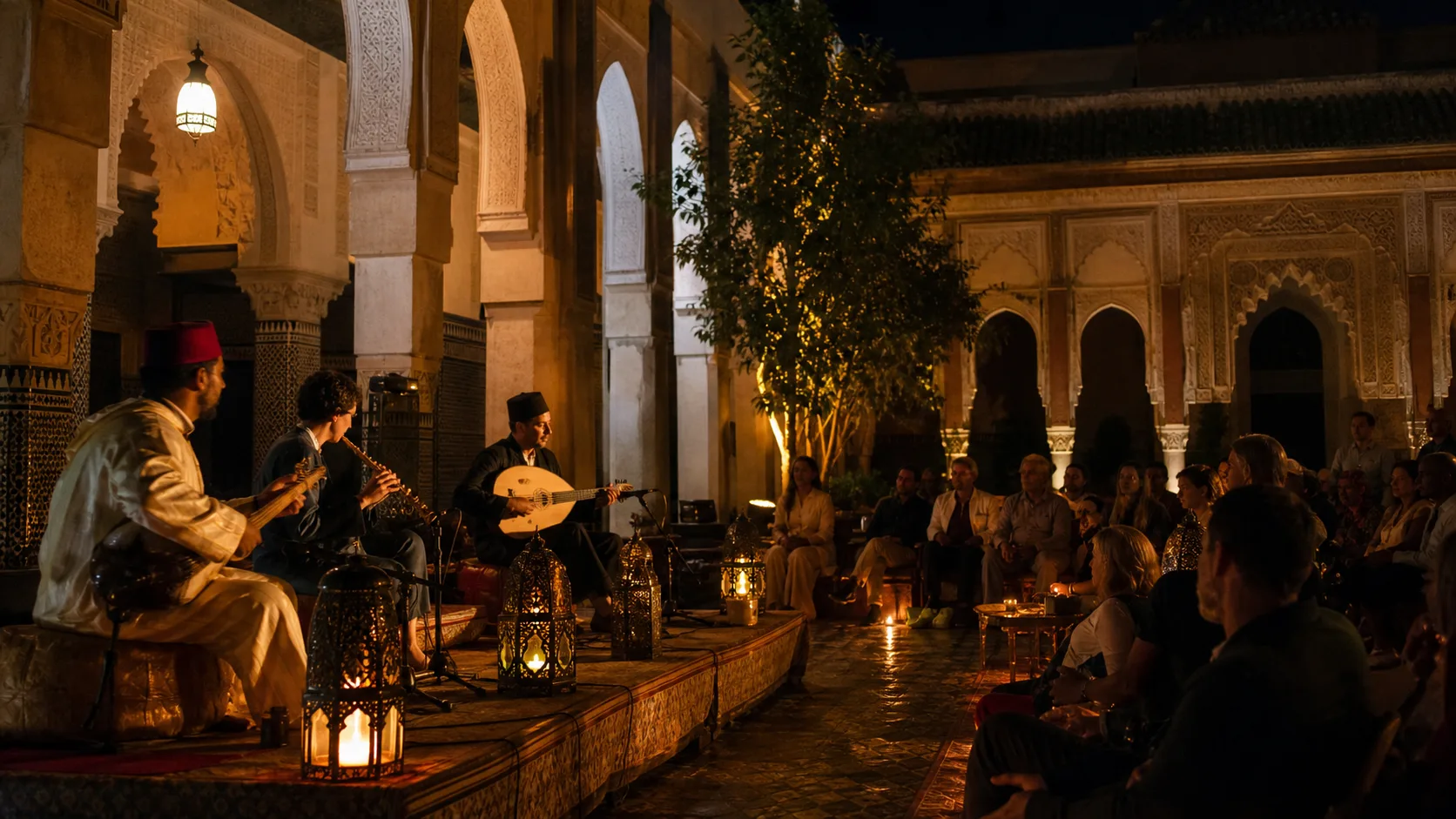
Fes is one of Morocco's great cities of music and the spirit. It is best known internationally for the Fes Festival of World Sacred Music (Festival des Musiques Sacrées du Monde), an annual gathering that brings sacred and spiritual music from many traditions to atmospheric venues across the city — historic sites such as Bab Makina, the garden of the Dar Batha palace-museum, the Jnan Sbil gardens and other medina locations. The festival is generally held around late spring or early summer (often in June), but the exact dates change from year to year, so anyone planning a trip around it should always check the current official programme rather than rely on a fixed date. Alongside the main concerts there is usually a strand dedicated to Sufi culture, with nightly sama (devotional gatherings of music and dhikr) led by the city's Sufi brotherhoods — fitting for a place that is one of the deepest centres of Sufism in Morocco. Fes is also strongly rooted in the classical Andalusian (Al-Ala) music tradition, the refined orchestral heritage carried from Muslim Spain. This guide explains what the Sacred Music Festival is, its venues and its June-ish but variable timing, the Sufi nights and sama, the Andalusian tradition, where music fits into a Fes visit year-round, and how to plan respectfully — with no invented dates, prices or line-ups, only documented, hedged facts.
The Festival des Musiques Sacrées du Monde (Fes Festival of World Sacred Music) is the city's flagship cultural event and the reason Fes is on the map for many music lovers. It gathers sacred and spiritual music from many cultures and faith traditions for a series of concerts and events across the city. The exact line-up, theme and schedule are set fresh each year, so treat it as a celebrated annual festival rather than a fixed programme, and consult the official festival website for the current edition's details.
02What to see
Atmospheric venues across the city
Part of what makes the festival special is its setting in some of Fes's most evocative historic places. Concerts have traditionally been staged at landmark venues such as Bab Makina, the garden of the Dar Batha palace-museum, the Jnan Sbil gardens and other medina sites. Which venues are used, and which performances appear where, varies from year to year, so check the current programme — but the pairing of sacred music with these atmospheric spaces is a defining part of the experience.
03Tips
When it takes place (June-ish, but dates vary)
The festival is usually held around late spring or early summer, often in June, and typically runs for several days. Crucially, the dates change every year and are announced ahead of each edition, so never assume a fixed week — always check the current official programme before booking flights or accommodation. If your trip depends on attending, build in some flexibility in case the dates differ from what you expect.
04Tips
Booking ahead and where to stay
During the festival, Fes is busier than usual and well-placed riads and hotels can fill up, so booking accommodation early is wise if you plan to visit around festival time. Ticketing arrangements and any free or paid events are set by the organisers each year; rather than rely on remembered details, check the official sources for how to attend, as these can change between editions.
05What to do
The Sufi nights and sama
Alongside the main concerts, the festival has long included a strand dedicated to Sufi culture, often featuring nightly sama — devotional gatherings of music, chanting and dhikr (the remembrance of God) led by the city's Sufi brotherhoods. These are spiritual occasions rather than ordinary concerts, with a contemplative, devotional atmosphere. Exact formats and locations vary by year, so check the current programme, and approach them with the respect due to an act of worship.
06History
Fes as a centre of Sufism
Fes is one of the deepest centres of Sufism in Morocco, home to a number of Sufi brotherhoods (tariqas) whose gatherings, music and devotional practices are woven into the city's spiritual life. This long Sufi heritage is the living tradition behind the festival's sama nights, and it helps explain why Fes feels so closely tied to sacred and spiritual music — the city's reputation for sacred music grows out of a genuine, centuries-old religious culture.
07History
The Andalusian (Al-Ala) music tradition
Fes is strongly rooted in the classical Andalusian music tradition, known as Al-Ala — the refined orchestral art carried to Morocco from Muslim Spain (al-Andalus) and preserved over centuries. This is suite-based instrumental and vocal music performed by ensembles, and Fes, with its strong Andalusian heritage, is one of its important homes. It is a distinct tradition from the Sufi sama, though both belong to the city's rich musical fabric.
08What to do
Hearing music in Fes year-round
You do not have to visit during the festival to encounter music in Fes. Some riads, cultural venues and restaurants host evenings of Andalusian or traditional Moroccan music, and devotional gatherings continue as part of religious life throughout the year. These are not fixed, scheduled performances, so ask your riad or a local guide what is happening during your stay rather than expecting a set timetable.
09Itinerary
How music fits into a Fes visit
For most travellers, music is something to weave into a broader Fes itinerary of the medina, madrasas, museums and souks rather than the sole reason to come. If you are visiting around festival time, an evening concert at a venue like Bab Makina or the Dar Batha garden can be a memorable cap to a day of sightseeing. Outside the festival, an arranged evening of Andalusian music at a riad makes a gentle, atmospheric end to the day.
10Etiquette
Etiquette at sacred and devotional events
Sacred and Sufi gatherings deserve respect: dress modestly, keep quiet and attentive during performances, and follow the lead of those around you, especially at devotional sama where the gathering is an act of worship. Ask before photographing or filming, as it may not be welcome, and be sensitive to the difference between a concert for a general audience and a religious occasion. When in doubt, observe quietly and take your cue from local custom.
11Tips
Planning around the festival
If the Sacred Music Festival is the centrepiece of your trip, plan around it deliberately: confirm the year's dates and programme from the official source first, then book accommodation and any tickets early, and allow a few extra days to enjoy the medina at a relaxed pace. If your dates are fixed and don't align with the festival, you can still enjoy Fes's musical heritage through riad evenings and the city's everyday cultural life.
12Tips
Checking current details before you go
Because festival dates, venues, line-ups, ticketing and event formats are set fresh each year and can change, the single most useful piece of advice is to verify the current details from the official festival programme and trusted local sources close to your travel dates. Avoid relying on old write-ups or fixed schedules — treat the picture in this guide as the enduring character of music in Fes rather than a timetable for any particular year.
Frequently asked
What is the Fes Festival of World Sacred Music?
The Festival des Musiques Sacrées du Monde (Fes Festival of World Sacred Music) is the city's flagship annual cultural event, gathering sacred and spiritual music from many traditions for concerts and events staged at atmospheric venues such as Bab Makina, the Dar Batha palace-museum garden, the Jnan Sbil gardens and other medina sites. The theme, line-up and schedule are set fresh each year, so check the official programme for the current edition.
When is the Fes Sacred Music Festival held?
It is usually held around late spring or early summer, often in June, and typically runs for several days. However, the dates change every year and are announced ahead of each edition, so you should always check the current official programme before booking, rather than assuming a fixed week.
What are the Sufi nights and sama at the festival?
Alongside the main concerts, the festival has long included a strand dedicated to Sufi culture, often with nightly sama — devotional gatherings of music, chanting and dhikr led by Fes's Sufi brotherhoods. These are spiritual, contemplative occasions rather than ordinary concerts. Fes is one of the deepest centres of Sufism in Morocco, which is why such gatherings are so rooted here. Formats and locations vary by year, so check the current programme and attend respectfully.
Can I hear traditional music in Fes outside the festival?
Yes. Fes is strongly rooted in the classical Andalusian (Al-Ala) music tradition, and some riads, cultural venues and restaurants host evenings of Andalusian or traditional Moroccan music through the year, while devotional gatherings continue as part of religious life. These are not fixed, scheduled performances, so ask your riad or a local guide what is on during your stay.
See it with a local
Turn this into a private Fes trip.
We'll build a private, guided plan around the experiences you care about — with a driver, hand-picked riads and a written quote in 24 hours.