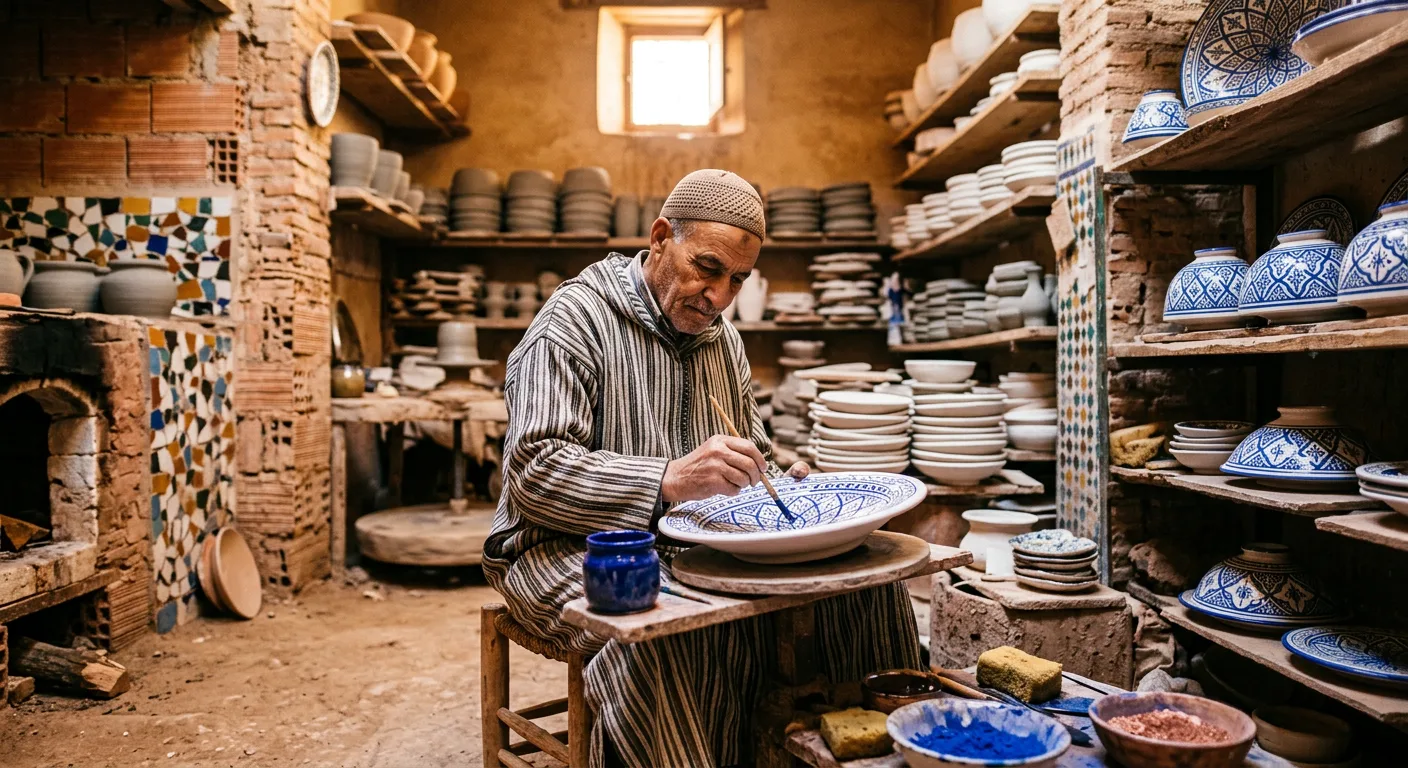
Fes is the home of Morocco's most celebrated ceramics — the deep cobalt 'Fes blue', the intricate hand-painted patterns and the cut-tile mosaic known as zellige. Most of the city's large kilns and wheels sit just outside the medina in the Ain Nokbi potters' quarter, where the whole craft happens under one roof: digging and preparing the grey Fassi clay, throwing on the wheel, firing in wood and olive-pit kilns, hand-painting the glaze and cutting tiles by hand. This is the hands-on angle — watching the makers, understanding each stage, trying the wheel yourself, and buying authentic pieces straight from the source.
Most of Fes's large ceramic workshops are gathered in Ain Nokbi, a dedicated potters' district on the edge of the city. Moving the kilns here kept the smoke out of the medina, and today it is the best place to see the full ceramic process — clay, wheel, kiln, paint and tile — in working ateliers rather than only shops.
02Process
Preparing the Fassi clay
The craft begins with the local grey clay, which is soaked, kneaded and cleaned of grit and air before it can be worked. Watching this first stage explains why Fes ceramics are so durable, and how much labour happens before a pot ever reaches the wheel.
03Demonstration
Throwing on the potter's wheel
At the heart of every workshop is the wheel, where a potter centres a lump of clay and raises a bowl, plate, tagine or vase in a few practised minutes. Many ateliers still use the traditional kick wheel, and seeing a master throw a perfectly even form is the highlight of a visit.
04Process
The wood-fired kilns
Pieces are fired in large kilns traditionally fuelled with wood and recycled olive pits left over from the oil presses. The first firing hardens the raw clay; after glazing and painting, a second firing fixes the colour. The kilns are why the workshops sit outside the medina walls.
05Demonstration
Hand-painting the 'Fes blue'
Fes's signature is its cobalt 'Fes blue', painted freehand in fine geometric and floral patterns by artisans who often specialise in this one skill. Watching a painter work without a stencil, repeating an intricate motif by eye, shows the precision behind every decorated bowl and tile.
06Demonstration
Cutting zellige mosaic by hand
Alongside the pottery, the same workshops produce zellige — the cut-tile mosaic seen on fountains and walls across Morocco. Glazed tiles are chipped into precise shapes with a sharp hammer, then laid face-down to assemble the pattern. It is one of the most skilled crafts to watch in Fes.
07Hands-on
Try the wheel yourself
Many workshops offer a hands-on turn at the wheel, guided by a potter who helps you centre the clay and shape a simple bowl or cup. It is humbling, messy and genuinely fun, and gives you real respect for how effortless the masters make it look.
08Hands-on
A painting or tile-cutting workshop
Beyond the wheel, some ateliers let you try hand-painting a tile or piece of pottery, or attempt cutting a few zellige tesserae. These short hands-on sessions are a good option for those who would rather decorate than throw, and you can often take your piece away once fired.
09Shopping
Buying authentic Fes ceramics
Buying at the workshop means you see exactly where and how a piece was made. Look for even glazing, crisp hand-painted lines and a clear, ringing note when a bowl is tapped. Prices are negotiable; take your time, compare pieces and bargain politely as part of the exchange.
10Tips
Shipping and packing
Larger workshops are used to tourists and can pack ceramics carefully for travel or arrange international shipping for bigger items like tables, fountains or full dinner sets. Confirm packing, costs and timescales before you buy, and keep your receipt and any tracking details.
Frequently asked
Where can you do a pottery workshop in Fes?
Most of Fes's large ceramic and zellige workshops are in the Ain Nokbi potters' quarter, just outside the medina, where the kilns are kept away from the old city. These workshops welcome visitors to watch the full process and many offer hands-on turns at the wheel or at painting and tile-cutting.
What is 'Fes blue' pottery?
Fes blue is the distinctive deep cobalt colour that Fes ceramics are famous for, hand-painted in fine geometric and floral patterns on bowls, plates, tagines and tiles. The colour and the painting style are closely tied to the city's centuries-old ceramic tradition.
Can you try making pottery yourself in Fes?
Yes. Many workshops in the potters' quarter offer a hands-on turn at the wheel, guided by a potter, and some also let you try hand-painting a tile or cutting zellige mosaic. It is a fun, beginner-friendly experience, and you can often collect your piece once it has been fired.
How is Fes pottery made?
The local grey clay is soaked, kneaded and cleaned, then thrown on the wheel into bowls, plates and tagines. Pieces are fired in wood and olive-pit kilns, hand-painted with the cobalt 'Fes blue' glaze, and fired again to fix the colour. The same workshops also cut and assemble zellige tile mosaic by hand.
See it with a local
Turn this into a private Fes trip.
We'll build a private, guided plan around the experiences you care about — with a driver, hand-picked riads and a written quote in 24 hours.