01Gate
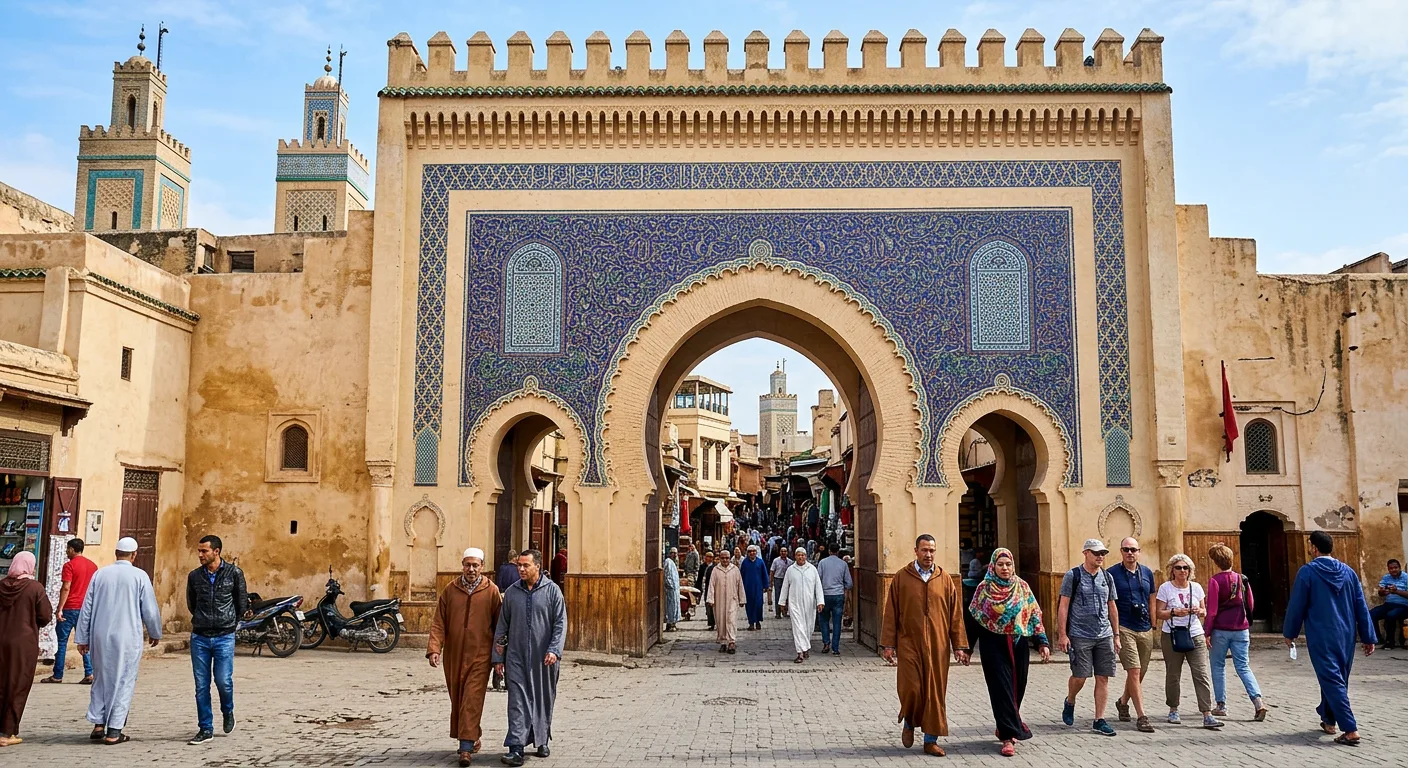
Bab Bou Jeloud (the Blue Gate)
The ornate early-20th-century gate is the medina's most famous entrance — blue zellij on the outer face, green (the colour of Islam) on the inner — opening onto the main Talaa Kebira and Talaa Seghira streets.
Things to do · Fes
Fes el-Bali, founded in the 9th century, is the world's largest car-free medina — a UNESCO World Heritage maze of roughly nine thousand lanes. It can overwhelm on a first visit, so these are the landmarks and quarters to anchor your wandering around.
8 experiences
The ornate early-20th-century gate is the medina's most famous entrance — blue zellij on the outer face, green (the colour of Islam) on the inner — opening onto the main Talaa Kebira and Talaa Seghira streets.
Founded in 859 by Fatima al-Fihri, the Kairaouine is one of the oldest universities in the world still in operation and the spiritual heart of the medina. Non-Muslims can glimpse the courtyard from the doorways.
A 14th-century Marinid college and one of the few religious buildings in Fes open to non-Muslims, with extraordinary carved cedar, stucco and zellij around a marble courtyard.
Near the spice and perfume market that gives it its name, this small 14th-century medersa is considered one of the most beautiful, with intricate tilework and a cedar canopy.
The largest of the city's medieval tanneries, its honeycomb of stone dye pits is best seen from the surrounding leather shops' terraces. A sprig of mint helps with the powerful smell of the natural dyeing process.
A beautifully tiled fountain beside the Nejjarine Museum of Wooden Arts and Crafts, set in a restored funduq (merchants' inn) — a calm stop with a rooftop view.
The coppersmiths' square, where artisans still hammer pots and trays by hand under a great plane tree — one of the most atmospheric working corners of the medina.
In adjoining Fes el-Jdid, the historic Jewish quarter (Mellah) and the golden brass gates of the Royal Palace show a different, more orderly face of the old city.
Fes el-Bali is the world's largest car-free urban area, a UNESCO World Heritage Site with thousands of lanes — often cited as around nine thousand. It is easy to get lost, which is part of its character.
The Bou Inania and Al-Attarine medersas are the two finest open to visitors, both 14th-century Marinid colleges with exceptional zellij, carved stucco and cedar woodwork.
Yes. You view the Chouara tannery from the terraces of the leather shops that surround it, looking down on the stone dye pits. Shopkeepers often offer a sprig of mint to soften the strong smell.
See it with a local
We'll build a private, guided plan around the experiences you care about — with a driver, hand-picked riads and a written quote in 24 hours.
Contact us for pricingMore cities