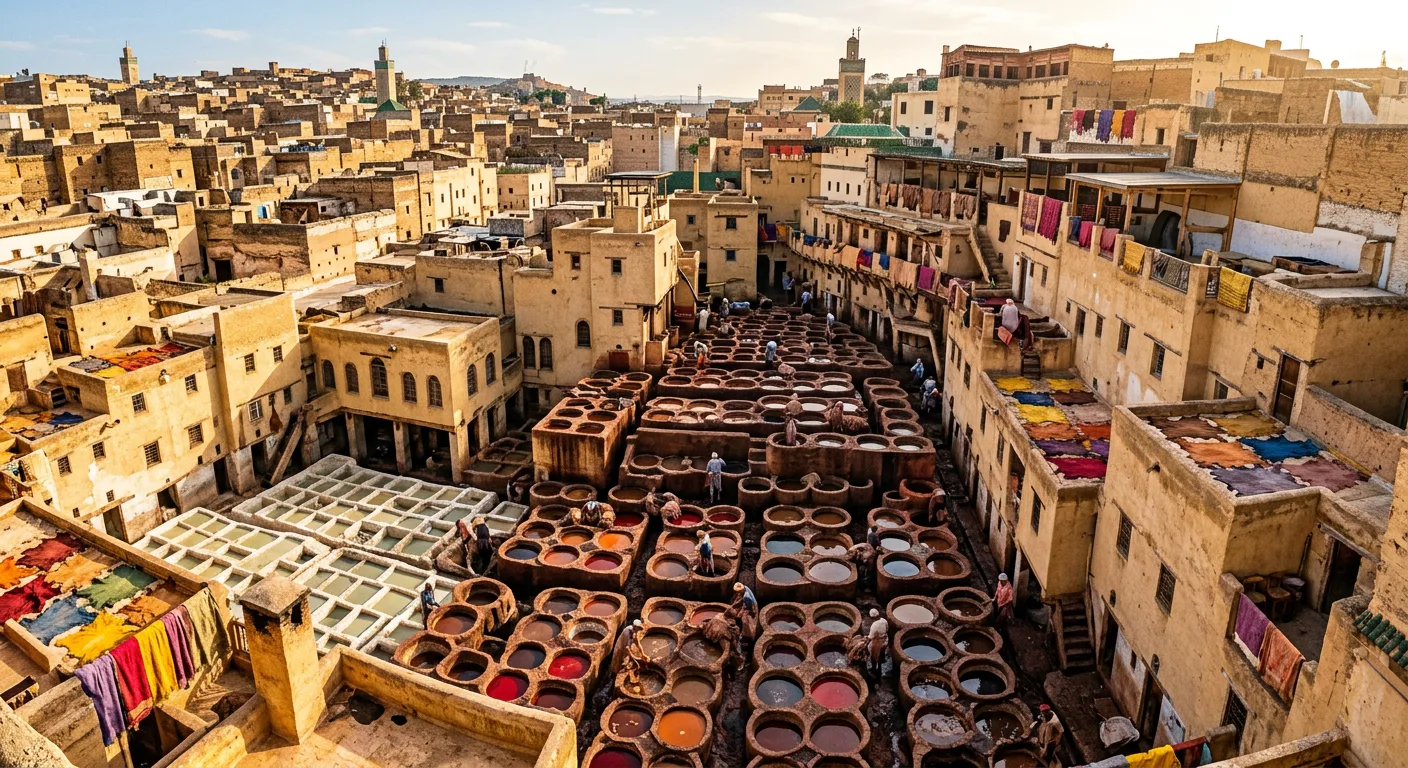
Fes is famous for leather, and the tanning is still done largely by hand using techniques that have changed little for centuries — hides soaked, stripped, then steeped in honeycombs of stone vats filled with natural dyes. Two tanneries draw visitors. The Chouara tannery, in the Qarawiyyin quarter of Fes el-Bali, is the big one: the largest and oldest, and the source of the iconic photograph of colourful dye-vats seen from above. You view it from the terrace of one of the leather shops that ring it, where you'll typically be handed a sprig of mint to hold against the smell — and where, having shown you the view, the shop will hope you buy a bag or a jacket on the way out. The Sidi Moussa tannery sits on the other side of the medina, nearer the river, and is a smaller, far quieter affair: the same workaday process, the same terrace-from-a-shop view, but a fraction of the crowds. Both are part of the medina's living leather quarter, and both involve the same gentle commercial choreography — being steered to a terrace and then a showroom — that is simply part of the Fes experience.
Option A
Chouara Tannery
The iconic, centuries-old tannery — the postcard view of colourful stone dye-vats
Best for
First-time visitors who want the famous spectacle and don't mind crowds or a sales pitch
Option B
Sidi Moussa Tannery
A smaller, quieter tannery across the medina near the river — far fewer tourists
Best for
Travellers wanting a calmer, more low-key look at the same traditional process